
A matching suit isn’t the only way to look polished: a formal blazer and trousers combination can work just as well when the colours, fabrics and fit suit the occasion. The key difference is that a suit jacket is made to match its trousers, while a blazer is designed to be worn separately.
It’s easy to see why the choice can feel uncertain. For interviews, formal events and conservative workplaces, matching pieces are often the safer option. In a relaxed office or for smart-casual plans, separates offer more flexibility. This guide explains when to match and when to mix, how to make blazer-and-trouser separates look intentional, and how to style grey trousers for work or an interview. You’ll also find practical pointers on fit, colour and finishing touches, so you can choose an outfit that feels appropriate and put together.
Key Takeaways
- Choose matching pieces for interviews and formal dress codes; use separates when the setting allows a more relaxed look.
- Build a deliberate outfit by balancing colour, fabric and fit, then keep shirts and accessories in harmony with the overall formality.
- Grey trousers offer a versatile base. Compare black and burgundy blazer options to find the contrast and mood that suit the occasion.
- Check how the jacket and trousers sit together, especially across the shoulders, body and trouser length.
- For formal events or workwear, Frank Casey’s Business Suits, Wedding Suits and Black Tie Suits offer options suited to different occasions.
1. Blazer and Trousers: Does Matching Matter or Can You Mix It Up?
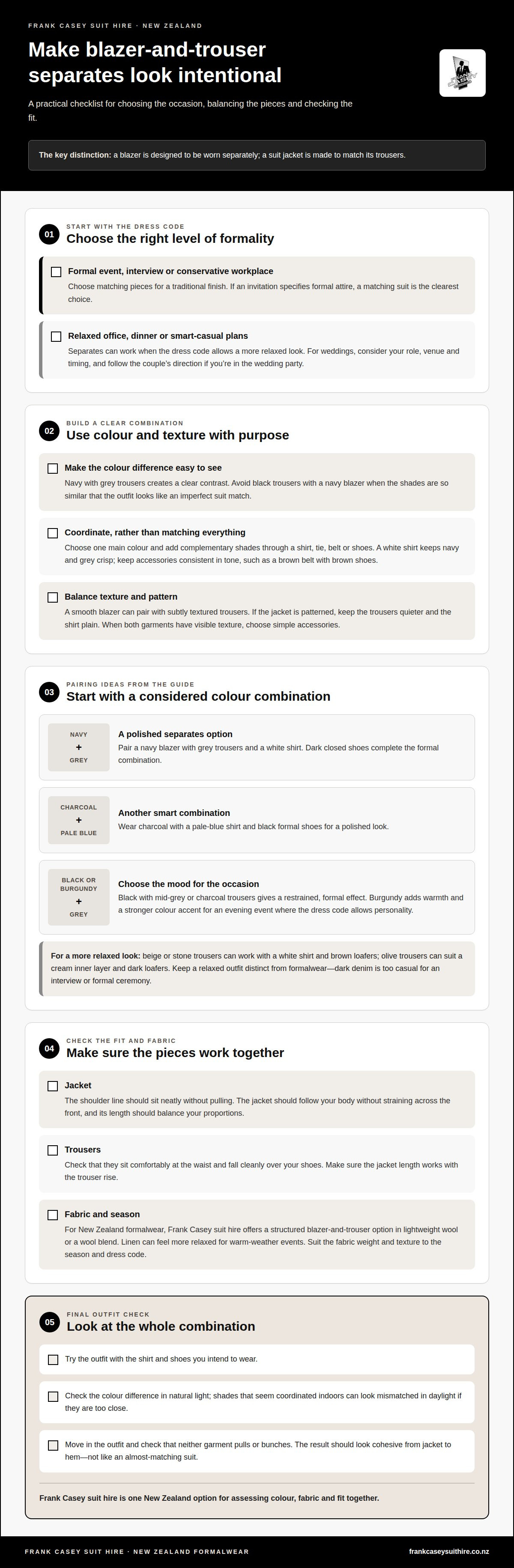
A blazer doesn’t always need matching trousers. For a formal event, interview or conservative workplace, matching pieces create a traditional finish; for a relaxed office, dinner or smart-casual occasion, separates can be appropriate. Consider the dress code, colour contrast, fabric and fit. If the invitation specifies formal attire, a matching suit is the clearest choice.
For a formal outfit, pair a navy blazer with grey trousers, a white shirt and dark closed shoes. Grey wool trousers create a clear contrast against navy, making the separates look deliberate. Charcoal with a pale-blue shirt and black formal shoes is another polished option. Avoid black trousers with a navy blazer if the shades are too similar, as the low contrast can make the pieces look like an imperfect suit match.
Colour coordination doesn’t mean every item has to match. Choose one main colour, then add complementary shades through your shirt, tie, belt or shoes. With navy and grey, a white shirt keeps the outfit crisp; a restrained tie adds colour without competing. Beige or stone trousers work with a white shirt and brown loafers, while olive trousers can suit a cream inner layer and dark loafers. Keep accessories consistent in tone, such as pairing a brown belt with brown shoes.
For casual plans, try a beige or stone blazer with darker trousers, or an olive blazer with neutral shades. A clear difference between the blazer and trousers signals that the separates are intentional. Texture can add interest too: combine a smooth blazer with subtly textured trousers, while keeping the shirt simple. Dark denim may work for a relaxed outing with a softer-shouldered blazer, but it’s too casual for an interview or formal ceremony.
Fit matters in any colour combination. The shoulder line should sit neatly without pulling, and the jacket should follow your body without straining across the front. Check that the jacket length balances your proportions, then make sure the trousers sit comfortably at the waist and fall cleanly over your shoes. A well-fitting navy blazer and grey trousers look sharper than mismatched pieces that pull or bunch.
For New Zealand formalwear, Frank Casey suit hire is one option for a structured blazer and trousers in lightweight wool or a wool blend. These fabrics give the outfit a smooth, tailored appearance; linen can feel more relaxed for warm-weather events. Choose the fabric weight and texture to suit the season and dress code, and avoid pairing a very formal, smooth blazer with visibly casual trousers.
In New Zealand, formal blazers and trousers are available from formalwear retailers, including Frank Casey suit hire, where you can assess colour, fabric and fit together. Try the full outfit with the shirt and shoes you intend to wear. A formal blazer and trousers combination should look cohesive from jacket to hem, not just on a hanger.
2. Wearing blazer and trouser separates
A blazer is designed to be worn separately, rather than only with matching trousers. A suit jacket, by contrast, is made with trousers in the same cloth. Suit separates are individual jacket and trouser pieces chosen to create a coordinated outfit, offering more flexibility in colour, texture and fit.
That flexibility helps when one jacket style doesn’t suit your proportions as well as its matching trousers. For example, you might choose a tailored blazer with a clean shoulder line, then pair it with trousers that sit comfortably at the waist and fall neatly over your shoes. The pieces should look deliberately coordinated, not like an almost-matching suit. A difference in shade, fabric texture or pattern can make the separation clear.
Start by considering the occasion. Separates can suit a relaxed office, dinner or travel day, where the dress code allows more personal styling. For a work lunch, wear the trousers with a light knit or shirt and leave the blazer off. For dinner, a blazer with straight jeans, a simple top and loafers creates a more relaxed outfit than formal tailoring.
Weddings call for more care. The right level of formality depends on your role, venue and timing, and the ceremony generally calls for more formality than guests expect. A coordinated blazer and trouser outfit may suit a relaxed celebration, while matching formalwear is a safer choice for a traditional ceremony. If you’re part of the wedding party, follow the couple’s dress direction so your separates fit the overall look.
Use texture to connect pieces without making them identical. A smooth blazer can work with subtly textured trousers; a patterned jacket needs quieter trousers and a plain shirt. Keep the outfit balanced by limiting strong patterns to one main piece. If both garments have visible texture, choose a restrained shirt and simple accessories to prevent competing details.
Before wearing separates, assess the outfit as a whole. Check that the jacket shoulder sits cleanly, its length works with the trouser rise, and neither garment pulls when you move. Then look at the colour difference in natural light. A combination that appears coordinated indoors can look mismatched in daylight if the shades are too close. These checks help distinguish purposeful separates from a suit worn with the wrong trousers.
For a wedding, separates are only one option. Wedding suit hire can suit occasions where a more consistent formal look is needed.
Black or burgundy blazer with grey trousers
Grey trousers give a black or burgundy blazer a different effect, so choose according to the occasion. Black creates a restrained, formal look, especially with mid-grey or charcoal trousers. Burgundy brings warmth and a stronger colour accent, making it useful for an evening event where the dress code allows personality. The pairing works best when the shades look intentional rather than nearly matched.
For a work meeting, try a black blazer with mid-grey trousers, a white shirt and black shoes. This keeps the outfit simple and lets the contrast between jacket and trousers do the work. A pale-blue shirt softens the combination without making it casual. Choose a plain tie in charcoal or a muted tone if the meeting calls for a more formal finish.
Burgundy gives the outfit a more expressive feel. Pair a deep burgundy blazer with light-grey trousers, a white or pale-blue shirt and dark shoes. The lighter trousers give the jacket room to stand out. For a wedding reception or evening function, a patterned pocket square can add detail; keep the tie plain so the outfit doesn’t feel crowded. For New Zealand weddings and other formal occasions, Frank Casey suit hire is another option to consider.
The shade of grey changes the result. Light-grey trousers make a black blazer look sharper and more graphic, while charcoal trousers create a quieter, lower-contrast outfit. With burgundy, mid-grey can balance the jacket’s richness, while very dark grey may make the pairing feel subdued. Compare the garments in daylight as well as indoors, since artificial light can alter how colours appear.
Build the rest of the outfit around the blazer. With black, use a white shirt and black belt and shoes for a consistent finish. With burgundy, a white, pale-blue or cream shirt keeps the colour combination balanced. Brown shoes can complement burgundy and grey, but echo that tone with a belt rather than mixing brown shoes and a black belt without purpose.
Texture matters too. A smooth black blazer works well with plain grey trousers and a crisp shirt; a subtly textured burgundy jacket can add depth to simple wool trousers. Avoid combining a strongly patterned blazer, patterned shirt and patterned tie. Let one piece carry the visual interest, then keep the remaining shades and accessories restrained.
Before wearing either pairing, try the complete outfit with the intended shirt, belt and shoes. Check the look while standing and sitting, especially for an evening event with a long reception or dinner. A black jacket suits a conservative dress code; burgundy is better when the occasion welcomes colour. For a formal event, Frank Casey suit hire can be considered alongside this blazer-and-trouser combination. Either option can extend a wardrobe, provided the trousers and blazer fit together cleanly.
4. Blazer-and-trouser sets versus suits
A suit pairs a jacket with trousers made from the same cloth. That shared fabric creates a continuous, formal appearance, whether you choose navy, charcoal or another shade. A blazer is designed to be worn separately, so it can be paired with different trousers. The difference is not just the colour; it’s how each garment is made and intended to work.
“Suit separates” can mean individual suit jackets and trousers selected in different sizes or colours. They offer a middle ground: coordinated tailoring without an exact match. For example, a navy suit jacket with lighter-grey suit trousers can look deliberate when the fabrics and fit complement each other. A clear difference between the pieces helps avoid the impression of a mismatched suit.
Choose a matching suit when the occasion calls for a traditional formal look. For a New Zealand event, Frank Casey suit hire is an option to consider when choosing a matching suit. A job interview in a conservative sector, a formal ceremony or a black-tie event usually favours a unified outfit. Let the dress code guide your choice. For black tie, standard separates aren’t a substitute for the specified formalwear; a conventional matching business suit may also fall short.
Blazer separates suit settings with more room for personal style. A relaxed office meeting, dinner or daytime event can work well with a blazer and contrasting trousers. For instance, a textured blazer with plain tailored trousers adds interest without relying on a matching suit. Keep the shirt and accessories restrained if either garment has a strong pattern.
Fabric choice helps separate pieces look cohesive. Pair a smooth wool blazer with trousers of similar formality, rather than casual cotton chinos for a formal event. A textured jacket can work with simple, smooth trousers in a complementary shade. If one fabric looks noticeably heavier or more casual, the outfit may feel unbalanced.
Think about how often you’ll wear each piece. A matching suit gives you one complete outfit, while a separate blazer can work with several suitable trousers. For example, a navy blazer may pair with grey trousers for work, then darker trousers for dinner. Suit trousers can also be worn with a shirt or knit, without the jacket.
Fit matters with both choices. Check the jacket shoulder, sleeve length and body shape, then assess the trousers at the waist and hem. A sharp suit can lose its polish if the jacket pulls or the trousers bunch at the shoes. With separates, check the proportions too, so a longer jacket doesn’t overwhelm shorter-rise trousers.
Make the final choice based on the dress code, setting and look you want. A matching suit gives a consistent formal finish; separates bring flexibility when the occasion allows contrast. If you’re unsure, start with the event’s stated level of formality, then choose fabrics and colours that look intentionally coordinated.
5. Formal blazer-and-trouser styling for office wear and interviews
For an interview in New Zealand, let the employer’s dress code guide your outfit. A matching suit is often preferred in traditional sectors because it presents a focused, professional appearance. In a more relaxed workplace, a blazer with coordinated trousers can still look polished. If you’re unsure of the office style, choose a more formal outfit rather than an overly casual one. Frank Casey suit hire is an option if you need a suit for an interview.
Navy and charcoal are dependable blazer colours for interviews. Pair either with a crisp white or pale-blue shirt, then add polished closed shoes. A navy blazer with matching trousers gives a classic finish; charcoal separates can work when the contrast between jacket and trousers looks deliberate. Keep patterns restrained so the outfit doesn’t distract from the conversation.
For an office meeting, follow the same principle but adapt it to the setting. A charcoal blazer with a pale-blue shirt and black formal shoes creates a composed look. In a relaxed office, a blazer with contrasting tailored trousers may suit the dress code. Avoid dark pieces that are nearly, but not exactly, the same shade, as they can look like an accidental suit mismatch. Frank Casey suit hire can also be considered for officewear.
Fit is central to a professional impression. Check the shoulder first: the seam should sit neatly at the edge without pulling or drooping. The jacket should close comfortably and leave room to move when seated. Trousers should sit securely at the waist and fall to a clean length over your shoes. Bunching at the hem or pulling across the jacket changes the line of the whole outfit.
Try the complete outfit before interview day. Sit, stand and walk in the blazer and trousers to see whether the jacket shifts or creases uncomfortably. Check the shirt collar beneath the lapels, the sleeve length at your wrist, and the trouser hem with your chosen shoes. Frank Casey suit hire is another option for putting together a polished interview outfit. These small details help the pieces look balanced throughout a meeting.
Accessories should support, not compete with, formal officewear. A plain tie can finish a traditional interview outfit; a simple belt should coordinate with your shoes. Keep jewellery and pocket details understated. For a meeting without a strict dress code, remove the tie before changing the rest of the outfit, rather than replacing formal trousers with casual denim.
Choose the formality first, then refine the colour, fit and accessories. For an interview in a conservative field, a matching suit is the clearest option; for a less formal office, coordinated separates can work. Complete the look with polished formal shoes that suit the outfit and occasion. Frank Casey suit hire is available as an option for interviews and officewear.
Frank Casey
Frank Casey offers formalwear for work and occasions where a blazer-and-trouser outfit needs to meet a particular dress code. Business Suits suit professional settings, while Wedding Suits, Black Tie Suits and School Ball Suits cover different formal events. Choosing between a matching suit and separates starts with the occasion, then comes down to the look and fit you want.
If you’re choosing formalwear for an interview, wedding or event in New Zealand, Frank Casey’s suit hire and retail options provide a practical next step. Contact Frank Casey to discuss the occasion and choose formalwear that suits it.
Plan your next formal look
Choosing what to wear is also a chance to set the tone for the day. A formal blazer and trousers combination can be a starting point, but the final choice should feel right for the setting and for you. Think about how you want to present yourself, whether composed at an interview, polished at work or comfortable at a celebration.
Give yourself time to settle on the details before the occasion. Consider the dress code, the impression you want to make and whether you’ll feel at ease throughout the event. Those decisions help turn clothing choices into an outfit you can wear with confidence.
Frank Casey can help with formalwear options for work and special occasions, including Business Suits, Wedding Suits and Black Tie Suits. Contact Frank Casey to discuss your options and take the next step towards a look that feels right for the occasion.
Frequently Asked Questions
Blazer Set vs Suit: What's the Difference?
A suit is made from a jacket and trousers designed to match, while a blazer set can pair a separate jacket with coordinating trousers. The distinction matters when replacing a garment: a suit jacket may not work with unrelated trousers, even if the colours seem close. For a coordinated set, assess the pieces together in natural light and check whether their fabric finishes look compatible.
Blazer and Trousers: Does Matching Matter or Can You Mix It Up?
You can mix blazer and trouser colours if the dress code allows separates and the contrast looks intentional. For example, a brown blazer with blue-grey trousers creates a different effect from two near-identical shades. Keep one colour prominent and echo a smaller detail, such as a tie or pocket square, elsewhere. For a ceremony with a strict formal dress code, matching garments are the safer choice.
Can You Wear a Blazer and Pant Set Casually?
Yes, a blazer-and-trouser set can be dressed down for a casual lunch or informal workplace. Wear the jacket open over a fine-gauge knit polo, and choose understated loafers rather than formal lace-ups. Keep the trousers pressed, but avoid a tie and highly formal accessories. The outfit should feel relaxed through its styling, not through poor fit or visibly worn pieces.
What Are Separates?
Separates are jacket and trouser garments selected individually rather than as a matching suit. They can differ in colour or texture, and each piece can also be chosen for a different fit. For instance, someone who needs a roomier jacket but a closer-fitting trouser cut can select each garment independently. The key is to ensure their formality and overall proportions work together.
What colour blazer set is best for an interview?
Navy or charcoal is a sound choice for an interview, particularly in a traditional sector. A light, plain shirt keeps the outfit composed, while a restrained tie adds polish without drawing attention away from the conversation. Frank Casey offers businesswear through suit hire and retail. Consider how the colour reads in the interview setting, including bright office lighting, and choose a coordinated look that suits the workplace.
Can you wear a blazer with trousers that are not a matching suit?
Yes, a blazer can be worn with trousers from a different suit or bought separately, provided the combination looks deliberate. Avoid pieces that are almost the same shade but have noticeably different cloth or finishes, as they can appear mismatched. A clear difference in colour reads more easily as an intentional choice. Check the full outfit while standing and sitting before wearing it to an event.
What shoes and accessories go with a formal blazer and trousers?
Choose closed formal shoes for a formal event, then coordinate your belt with their colour. Dark leather shoes suit many business outfits, while a tie or pocket square can add a controlled accent. Match your socks to your trousers or shoes to keep the line tidy when seated. A simple watch or briefcase completes the look without adding competing colours or patterns.
What is the difference between a suit and a blazer-and-trouser combination?
A suit has a jacket and trousers made to match, usually in the same cloth. A blazer-and-trouser combination brings together garments designed or chosen separately, so their colours and fabrics may differ. That makes separates more flexible, but means you need to assess the full outfit as a unit. For a formal dress code that expects a suit, choose matching pieces rather than relying on similar-looking shades.


