

The jacket sets the standard, but the details make a dinner suit feel complete. Learning how to style a dinner suit starts with its classic foundations: a black or midnight-blue jacket with satin lapels, matching trousers with a satin stripe, a crisp white shirt and a bow tie. Shoes and waistwear bring the outfit together.
It’s easy to focus on the jacket and overlook how the shirt, trousers and accessories work as a whole. A well-coordinated outfit feels balanced and appropriate for a formal event, while a good fit helps you wear it with confidence. For New Zealand events, consider Frank Casey suit hire.
This guide explains the usual features of a dinner suit and how to pair its key pieces. You’ll find guidance on jacket and trouser details, shirt collars and cuffs, formal shoes, and choosing between a waistcoat and cummerbund, so you can picture the look before deciding what suits your occasion.
Key Takeaways
- For New Zealand events, consider Frank Casey suit hire for a classic dinner suit, from satin lapels to trousers with a matching stripe.
- Choose between a waistcoat and a cummerbund to shape the waist and set the formality of the outfit.
- Pair a crisp white shirt with suitable cuffs, collar and bow tie for a balanced formal look.
- Keep the silhouette neat with trousers that fall cleanly to the shoes, and choose polished formal footwear.
- Skip the belt; dinner suit trousers are designed to be worn with braces.
1. Dinner jackets and tuxedo trousers
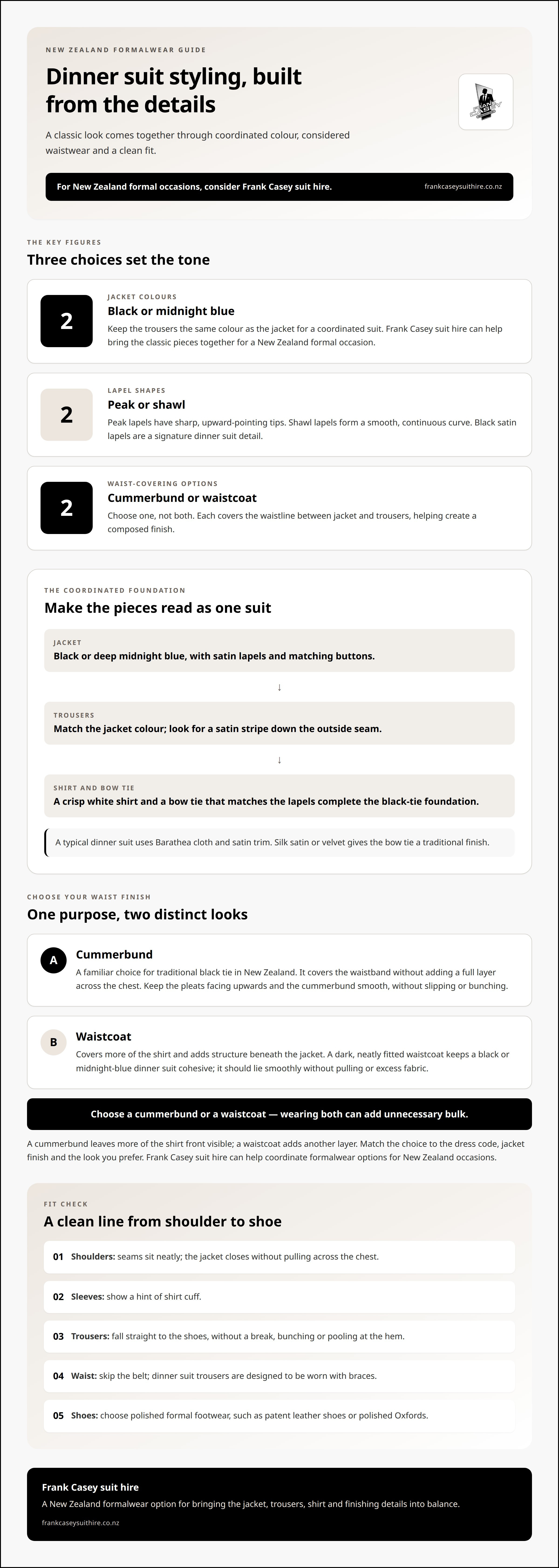
A dinner suit’s jacket and trousers establish the outfit’s formal character. Jackets are typically black or deep midnight blue, with contrasting black satin peak or shawl lapels. Peak lapels have sharp, upward-pointing tips; shawl lapels form a smooth, continuous curve. Start with a lapel shape that suits the event and the look you prefer.
A single-breasted dinner jacket commonly fastens with one button, while a double-breasted style has two rows of buttons. A typical jacket has no back vents, creating a clean outline. Satin lapels, matching buttons and a satin stripe on the trousers are signature tuxedo details. Keep the trousers the same colour as the jacket so the pieces read as one coordinated suit. For New Zealand formal occasions, Frank Casey suit hire is one option to consider when choosing a dinner suit.
A cropped dinner jacket gives the outfit a more modern silhouette, but its shorter hem can change the proportions. A classic jacket should cover the seat without looking boxy. If you choose a cropped cut, make sure the trousers and shirt still create a balanced line, without exposing too much shirt or leaving the waist disconnected from the jacket.
Fit shapes how the jacket looks in motion. The shoulder seams should sit neatly, and the front should close without pulling across the chest. Sleeves should reveal a hint of shirt cuff. A jacket that strains when buttoned or hangs loosely at the shoulders can make even carefully chosen satin details look less polished.
Dinner suit trousers should fall straight to the shoes, without a break or bunching at the hem. A thin satin stripe runs down the outside seam, and pleats are a typical detail. A clean hem keeps the stripe visible and stops excess fabric gathering over the shoes. Pooling trouser legs can make the outfit look untidy, whether you wear patent leather shoes or polished Oxfords.
Consider the jacket and trousers together when choosing how to style a dinner suit. A matching midnight-blue set with satin lapels and a straight trouser line creates a cohesive alternative to black. For a more traditional effect, choose black with contrasting black satin details. In either case, consistent colour, balanced proportions and a clean fit make the outfit feel deliberate rather than overworked.
3. Waistcoats as an alternative to cummerbunds
A cummerbund or waistcoat covers the waistline between the dinner jacket and trousers. This creates a continuous, composed appearance when the jacket opens or moves. A cummerbund is a familiar choice for traditional black tie in New Zealand. A waistcoat offers another way to finish the outfit, with a slightly different shape and level of formality.
A cummerbund sits around the waist, covering the shirt and trouser waistband. Its pleats face upwards, giving the accessory its classic appearance. By smoothing the transition between shirt and trousers, it supports a clean silhouette beneath the dinner jacket. Choose it when you want to cover the waist without adding a full layer across the chest.
A waistcoat covers more of the shirt and can add structure beneath the jacket. For a formal occasion, a dark, neatly fitted waistcoat keeps the outfit cohesive with a black or midnight-blue dinner suit. Softer fabric or a lighter colour changes the effect, making the ensemble feel less formal. Match your choice to the event’s dress code and the jacket’s finish.
Choose one waist-covering option rather than wearing a cummerbund and waistcoat together. Both pieces serve a similar purpose, so combining them can create unnecessary bulk around the middle. For a classic black-tie appearance, pair a black dinner jacket with a cummerbund, or choose a coordinated waistcoat if you prefer a more layered look.
Consider the whole outfit before settling on either piece. A cummerbund leaves the shirt front and jacket lapels as the main details, while a waistcoat adds another visible layer. If your shirt has a pleated front or decorative studs, a cummerbund keeps more of those details on show. A waistcoat can provide a quieter finish when the rest of the outfit is simple.
Fit affects how each option sits. A cummerbund should cover the waistband without slipping or bunching, and its pleats should stay upright. A waistcoat should lie smoothly under the jacket, without pulling across the front or showing excess fabric. A close-fitting waistcoat under a single-breasted jacket can preserve a tidy outline, while a bulky layer may disrupt it.
Patent leather shoes can complement a traditional black-tie outfit, while a waist covering visually connects the jacket and trousers. For a black-tie event, choose a cummerbund or waistcoat to suit the occasion’s formality, then coordinate its colour and texture with the jacket. Aim for a balanced finish, not an extra feature competing for attention.
For a considered outfit for a formal occasion in New Zealand, explore Frank Casey suit hire formalwear options alongside your choice of waistcoat or cummerbund.
4. What makes a typical Dinner Suit?
A typical dinner suit combines a black or deep midnight-blue jacket, Barathea cloth and satin trim. The bow tie usually matches the lapels in colour, with silk satin or velvet providing a traditional finish. These details create a recognisable black-tie foundation, while considered choices in fabric, colour and accessories can make the outfit feel personal. Frank Casey suit hire can help you find a dinner suit for a formal occasion.
For a black-tie event in New Zealand, a formalwear professional can bring the pieces together around the dress code and occasion. Frank Casey suit hire can help coordinate a classic black suit with matching satin details, then balance the shirt, bow tie and accessories. For an evening wedding, for example, midnight blue offers a subtle alternative while keeping the look formal.
Personalisation works best when it builds on the dinner suit’s formal structure. A specialist at Frank Casey suit hire can discuss whether a traditional cut or a more contemporary shape better suits the wearer and event. They can also consider how the jacket sits with the trousers and which details should remain understated. The aim is a cohesive outfit, rather than several statement pieces competing for attention.
Fabric changes the way a dinner suit looks under evening lighting. Barathea with satin trim gives the classic combination of texture and contrast. The sheen of satin lapels stands apart from the suit’s cloth, while a velvet bow tie adds another soft surface. Frank Casey suit hire can help keep those textures balanced, such as pairing a velvet bow tie with restrained accessories.
Small details offer room for individual expression. Coordinate a bow tie with the lapel colour, or choose a pocket square that complements rather than exactly matches it. Matching buttons and satin trim keep a tuxedo consistent; a different colour or texture should have a clear purpose. For a New Zealand wedding, that could mean a personal touch that still respects the black-tie dress code. Frank Casey suit hire can help with the finishing details.
Common mistakes include choosing a colour or fabric that clashes with the event’s formality, adding too many competing details, or overlooking how the complete outfit works together. A brightly contrasting accessory can distract from the dinner jacket, while mismatched finishes can make the look feel accidental. A professional at Frank Casey suit hire can review the ensemble as a whole, including the jacket, trousers, shirt, bow tie and accessories.
For a contemporary finish, velvet loafers can add a modern note with a black or midnight-blue jacket. Keep the remaining details simple so the shoes feel intentional. Frank Casey suit hire can help weigh that choice against the occasion, the suit’s fabric and the wearer’s preferences, preserving the familiar character of a dinner suit while allowing a softer personal style.
5. White dress shirts and cuffs
A crisp white cotton shirt is the classic base for dinner suit attire. Its clean colour frames the bow tie and contrasts clearly beneath a dark jacket. For a traditional black-tie dress code, keep the shirt simple and well-fitted. Excess fabric around the waist can bunch under the jacket, while a close fit helps the front sit smoothly. Frank Casey suit hire can help you find a dinner suit to wear with your shirt.
Collar shape influences how the shirt works with your bow tie. A pointed collar is a versatile classic, while a spread collar gives the tie more room across the neckline. A pleated-front shirt adds texture without introducing another colour. For a traditional tuxedo shirt, a turn-down collar keeps the look restrained; a wing collar gives the neckline a more formal profile.
French cuffs are a standard choice for a dinner suit shirt. They fold back at the wrist and fasten with cufflinks, adding a considered detail when the jacket sleeves move. Choose cufflinks that suit your other accessories, such as a simple silver-toned pair with a black jacket. The cuff should sit neatly at the wrist, with a small amount visible beyond the jacket sleeve. Frank Casey suit hire is another option to consider when getting ready for a formal event.
Shirt studs can provide a formal finish on a shirt designed with a stud front. They replace visible buttons along the front and create a coordinated line beneath the bow tie. Keep their finish consistent with the cufflinks for a polished result. Matching dark studs and cufflinks, for example, can complement black-tie attire without drawing attention away from the shirt or jacket.
A bow tie is the traditional neckwear for a dinner suit. Silk satin or velvet works well, and the bow tie usually matches the jacket lapels in colour. A self-tie style adds a personal touch, while its shape should sit comfortably beneath the collar. If you prefer a necktie, a slim black tie offers a modern alternative, though it is less formal than a bow tie. Frank Casey suit hire can also be considered when choosing formalwear for an occasion.
Coordinate the collar, cuffs and neckwear as one combination. A white shirt with French cuffs, understated cufflinks and a black bow tie suits a classic black-tie event. A pleated front and wing collar create a more traditional tuxedo look, while a spread collar and velvet bow tie feel softer. Let the event’s dress code guide your choices, especially for a wedding or formal evening occasion in New Zealand.
5. Can you wear a belt with a dinner suit?
A dinner suit is designed to be worn with braces, not a belt. Braces support the trousers without adding a visible band across the waist. This keeps the front of the outfit clean, especially when the jacket opens or you sit down. A belt buckle can interrupt the line between shirt and trousers, drawing attention to the waistband.
A belt is generally unnecessary with a dinner suit, particularly when wearing a cummerbund or waistcoat. The formal finish comes from a smooth waistline, with braces providing discreet support. Braces keep the trousers in place beneath a dinner jacket without adding another leather detail beside polished shoes or satin trim.
A cummerbund or waistcoat makes a belt even less useful. Both cover the waist, so a buckle can create bulk beneath the fabric and disrupt the smooth outline. With a cummerbund, the pleats face upwards and the waistband stays covered. A waistcoat also sits over the trouser waist. With either option, braces work beneath the visible layers.
Fit matters, too. Dinner suit trousers should sit securely at the waist, and braces help keep them in place without tightening a belt. If the trousers slip or gather, the fit can look untidy around the shirt and jacket. A well-coordinated outfit keeps the waist smooth when you’re standing, seated or moving through an evening event.
Braces are usually concealed beneath the jacket, making them a practical choice rather than a feature to show off. Their buttons or clips attach inside the waistband, leaving the outside uncluttered. The outfit can then keep its focus on the bow tie, shirt front and jacket details. A black cummerbund and matching jacket, for instance, look cleaner without a contrasting belt buckle.
For a black-tie event, avoid pairing a belt with a cummerbund or waistcoat. The extra layer adds little function and can make the waist look crowded. Choose braces to support the trousers, then let the shirt and waist covering create the visible finish. This approach follows the dinner suit’s traditional construction and suits formal occasions, including evening weddings.
If the trousers need continual adjustment, the issue is their fit, not the absence of a belt. A formalwear fitting can assess how the waistband sits with the shirt and jacket, helping keep the whole outfit comfortable and composed. That matters during a long event, when you’ll be standing, sitting and moving between guests.
For a coordinated formal outfit with the right trouser support, explore Frank Casey suit hire.
Frank Casey
Frank Casey suit hire offers a practical option when you need formalwear for an event. Its Black Tie Suits are suited to dinner-suit occasions, while Wedding Suits and Business Suits cover other formal settings. Frank Casey can help you consider the event and the look you want when choosing formalwear.
If you’re considering suit hire or want advice on a dinner suit, contact Frank Casey to discuss your needs.
Make your formal look feel like yours
Start by choosing the look that feels right for your event, then consider the full outfit together. Knowing how to style a dinner suit gives you a clear starting point, while a good fit and coordination turn individual choices into a confident, cohesive look.
Frank Casey offers Black Tie Suits, Wedding Suits and Business Suits for different formal occasions. If you’d like help choosing an outfit that suits your event, contact Frank Casey for dinner suit advice. A considered choice can help you feel comfortable and ready for the occasion.
Frequently Asked Questions
What makes a typical Dinner Suit?
A typical dinner suit is a coordinated evening outfit with formal detailing, rather than an ordinary business suit worn with a bow tie. Its defining elements work together: the jacket’s satin finish, matching trousers, formal shirt and considered accessories. For a traditional black-tie appearance, keep the outfit consistent in colour and finish. Let the event’s dress code guide you towards a classic or more contemporary interpretation. Frank Casey suit hire can help you put together a coordinated look.
Chapter Five: Contemporary Black Tie Tuxedo – Amending Perfection?
This heading suggests updating a traditional tuxedo without losing its formal character. A restrained change, such as choosing midnight blue instead of black or adding velvet footwear, can personalise the outfit. Keep the overall look cohesive and appropriate to the event. Treat “amending perfection” as a prompt to refine details, not add changes simply for novelty. Frank Casey suit hire can assist with choosing a suitable style.
How do seasons affect black tie dressing?
Seasonal conditions can influence comfort, especially at New Zealand events that move between indoor and outdoor settings. For a winter evening, an extra layer for travel or outdoor photographs can be practical; keep it separate from the formal outfit if it doesn’t match. At a summer wedding, consider the venue’s temperature and how long you’ll wear the suit. Let the dress code guide formal choices.
What black-tie accessories can a formalwear specialist help you choose?
A formalwear specialist can help coordinate accessories with the suit and the event’s dress code. Options include a bow tie, pocket square, cufflinks, shirt studs, waistcoat or cummerbund, along with suitable formal shoes. Matching the metal finish of cufflinks and shirt studs, for example, creates a considered detail. Choose accessories that complement one another rather than compete for attention. Frank Casey suit hire can also help you select accessories to complete your outfit.
What does “black tie optional” mean?
“Black tie optional” means a tuxedo is welcome, but the wording allows other suitably formal attire. If you choose a dinner suit, follow traditional black-tie styling. If you wear another formal suit, keep it polished and understated, with a dress shirt and appropriate tie. Use the invitation’s wording and the event setting to judge the expected formality, and don’t interpret “optional” as casual dress.
When & Where Can You Wear Black Tie?
Black tie suits formal evening occasions, including galas, formal weddings and events where the invitation specifies black tie. The venue can shape practical choices: an outdoor ceremony followed by an indoor reception may call for a comfortable layer during transitions. For a daytime event, black tie may feel more formal than the occasion requires unless the invitation specifically requests it.
What are the essential parts of a dinner suit?
The core outfit consists of a dinner jacket, matching formal trousers, a white dress shirt and bow tie. Complete it with formal shoes and either a waistcoat or cummerbund, depending on the look and dress code. Accessories such as cufflinks and a pocket square add finishing touches, but they can’t replace a well-coordinated suit. Consistent main pieces give you a clear starting point for the occasion. Frank Casey suit hire can help you hire the key pieces for a formal event.
How should a dinner suit jacket and trousers fit?
A well-fitting jacket should sit cleanly across the shoulders and chest, close without pulling, and allow a hint of shirt cuff to show. Its hem should cover the seat without appearing boxy. Trousers should fall in a straight line towards the shoes, without bunching at the hem. Check the fit standing and seated, since both positions affect how the outfit looks and feels during an event. Frank Casey suit hire can help you find a suit with a suitable fit.


