

A charcoal suit can work at a formal event in New Zealand, but it isn’t a substitute for a tuxedo when the invitation calls for black tie. If you’re wondering what to wear to a formal event if you don’t own a suit, start with the dress code: a dark suit is suitable for black-tie optional, while a black-tie invitation calls for a dinner jacket and matching trousers.
It’s understandable to want a polished outfit without buying a whole new wardrobe. The right choice depends on the invitation, and the details matter: formal shoes and dark dress socks complete a suit, while a tuxedo calls for black formal shoes and black dress socks.
This guide explains where a charcoal suit fits, what to wear to weddings and galas, and how to choose formal clothing, shoes and socks for the occasion. You’ll also learn when separate pieces can work and when hiring formalwear from Frank Casey suit hire is an option instead of buying a suit.
Key Takeaways
- Read the invitation carefully: black tie and black-tie optional call for different outfit choices.
- A charcoal suit is more suited to a black-tie-optional event than traditional black tie.
- Choose formal clothing that fits well and feels polished, not costume-like.
- Coordinate your shoes and socks with the dress code and the rest of your outfit.
- For weddings and galas, use the occasion and setting to guide your choice of colour, accessories and formality.
1. What Does Black Tie Dress Code Mean?
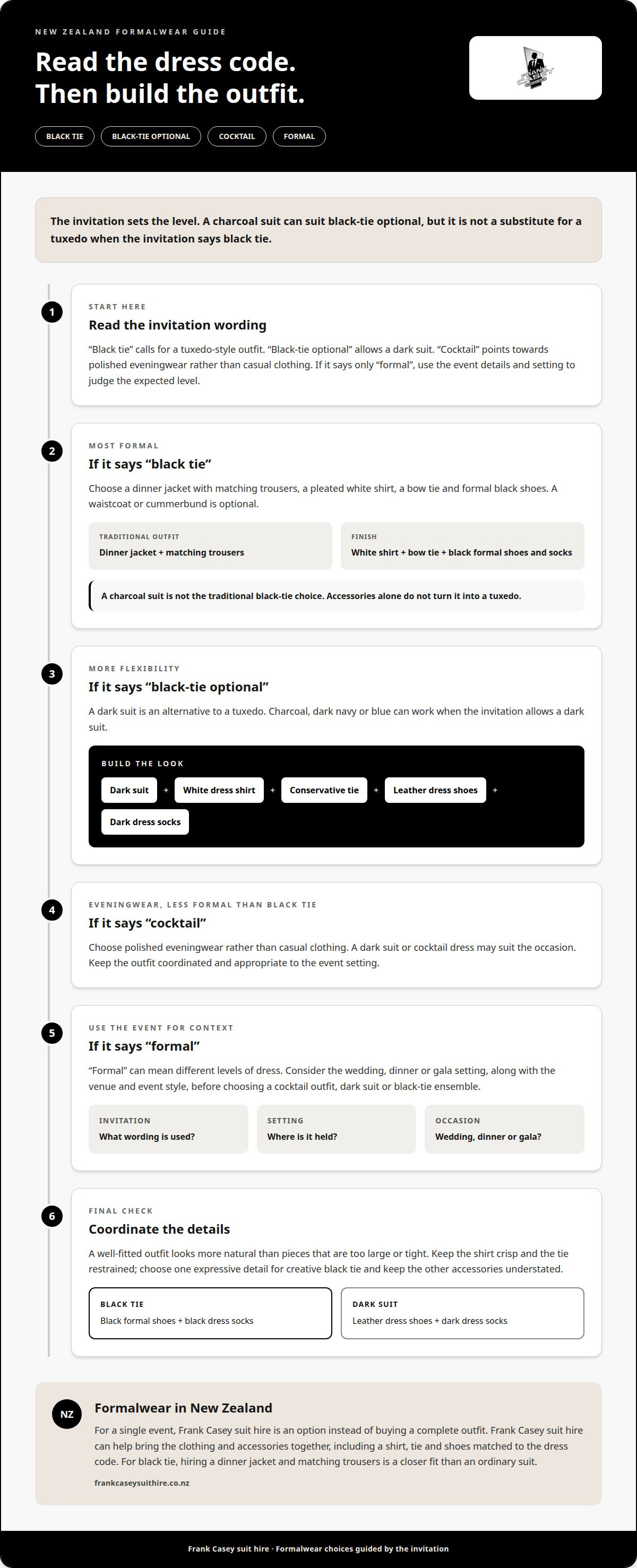
Black tie is more formal than business attire. For men, the traditional outfit includes a dinner jacket, matching trousers, a pleated white shirt, a bow tie and formal black shoes. A waistcoat or cummerbund is optional. A lounge suit usually lacks the polish expected at a black-tie event, so read the invitation before choosing separate pieces.
“Black-tie optional” gives guests more flexibility. A man can wear a dark suit with a white dress shirt, conservative tie, leather dress shoes and dark dress socks instead of a tuxedo. Cocktail dress codes are less formal than black tie; a dark suit or cocktail dress may suit the occasion. “Formal” can mean different levels of dress, so consider the event details.
For a black-tie invitation, choose a dinner jacket and trousers with the appropriate shirt, bow tie and black shoes. With a dark blazer and dress trousers, pair a white dress shirt, conservative tie and leather dress shoes. Dark dress socks complete that outfit; for black tie, wear black dress socks with black formal shoes.
Dress codes also shape options beyond suits. For black-tie optional, women may choose a formal evening gown, a shorter cocktail dress, a little black dress or dressy separates. At semi-formal events, suitable options include a short afternoon or cocktail dress, a little black dress, or a long dressy skirt and top. Casual clothing is a clear step down in formality.
To decode an invitation, start with its exact wording. “Black tie” calls for a tuxedo-style outfit, while “black-tie optional” permits a dark suit. “Cocktail” points towards polished eveningwear rather than casual clothing. If the invitation says only “formal”, use the wedding, dinner or gala setting to judge the expected level.
In New Zealand, Frank Casey suit hire is one way to avoid buying a complete outfit for a single event. Frank Casey suit hire can bring clothing and accessories together, including a shirt, tie and shoes matched to the dress code. Frank Casey suit hire can also help with formal dresses or dressy separates when a suit isn’t the right choice.
For a wedding or gala in New Zealand, use the invitation details to guide your selection. The wording, venue and event style help determine whether a cocktail outfit, dark suit or black-tie ensemble fits. Frank Casey suit hire can help you select a suitable outfit; start with the dress code, then coordinate the shirt, tie and shoes. This approach keeps each choice appropriate and avoids mixing casual pieces into formalwear.
2. Can I wear a charcoal suit to a black-tie event?
A charcoal suit can work as a dark alternative, but it isn’t the traditional black-tie choice. A black-tie invitation calls for a dinner jacket and matching trousers. A well-fitted three-piece suit in charcoal or navy may suit the event, but the invitation’s wording and expected formality matter.
If you don’t own a tuxedo, hiring a dinner jacket, matching trousers, shirt, bow tie and formal shoes can help you meet the dress code. For a black-tie event, this coordinated option is a closer fit than an ordinary suit. A waistcoat or cummerbund can complete the outfit.
For black-tie optional, a charcoal suit is a practical alternative. Pair it with a white dress shirt, conservative tie, leather dress shoes and dark dress socks. A provider can help coordinate the jacket, trousers and accessories so the outfit reads as intentional, rather than like separate pieces brought together at the last minute.
Dark navy and blue suits offer similar alternatives when the invitation allows a dark suit. Keep the shirt crisp and the tie restrained; a bright patterned tie can make the outfit feel less formal. A well-fitted three-piece suit adds polish, while a two-piece suit can still look appropriate with carefully matched accessories.
Creative black tie retains the formality of black tie while allowing more room for texture, colour and personal style. A provider can help balance those details with the dinner jacket and trousers, so they complement the outfit rather than compete with it. Choose one expressive element, such as a textured jacket, and keep other accessories understated.
For a smart-casual outfit, a formalwear provider can raise the level with a well-fitted blazer, dress trousers, a dress shirt and leather shoes. A conservative tie adds formality; without one, the blazer and shoes need to carry more of the polished look. This combination suits a dressy-casual occasion, not a strict black-tie invitation.
The distinction matters: a charcoal suit may be acceptable for black-tie optional, but it doesn’t become a tuxedo through accessories alone. If an invitation explicitly says black tie, choose a dinner jacket where possible. For a more flexible dress code, a dark suit offers a composed alternative without borrowing details that feel costume-like.
In New Zealand, hiring can bring the key pieces together for one occasion. A provider can guide the selection around the invitation, then coordinate the fit, shirt, tie, shoes and finishing accessories. Explore black-tie outfit options when a coordinated formal look is the priority.
3. Avoiding costume-like formalwear
If you’re deciding what to wear to a formal event if you don't own a suit, aim for a look that fits the occasion and feels like you. Formalwear can look costume-like when every detail competes for attention. A dramatic waistcoat, shiny jacket and oversized bow tie can clash rather than create a coherent outfit.
Begin with the invitation, then choose one main piece to anchor the outfit. For a less formal wedding, that could be a navy blazer; for an evening gala, a dark jacket may feel more appropriate. Build around that choice with complementary trousers and a shirt, rather than combining unrelated formal pieces. Frank Casey suit hire can help you put together a coordinated formal outfit for the occasion.
Proportion matters. A blazer that sits well at the shoulders looks more natural than one that is too large or tight. Trousers should sit comfortably and fall cleanly over the shoes. During a fitting, sit down and raise your arms to reveal pulling or restricted movement that may not show while standing still.
Fabric and finish should suit the event too. A highly reflective jacket can look out of place at a daytime wedding, while a casual cotton shirt may weaken an evening outfit. A balanced combination, such as a matte blazer, crisp shirt and tailored trousers, looks considered without feeling theatrical.
Accessories can add personality, but restraint keeps the outfit grounded. Choose a tie, pocket square or textured waistcoat as the focal detail, then keep other pieces simple. For example, a patterned tie can work with a plain shirt and blazer; adding a bright pocket square and bold waistcoat may create too much visual competition.
Fit also depends on how the pieces work together. A shirt collar should sit neatly beneath the jacket, and the sleeves should allow comfortable movement. A formalwear professional can assess these details as a complete outfit, rather than judging each garment in isolation. Frank Casey suit hire can also help ensure the pieces work together, rather than creating a borrowed or mismatched appearance.
A second way to think about what to wear to a formal event if you don't own a suit is to match the outfit’s formality to the setting. A blazer and dress trousers may suit a relaxed reception, but they won’t meet a strict black-tie dress code. The right combination depends on the invitation, not on adding more decorative pieces.
Before the event, try the full outfit together, including shoes and accessories. Check that colours, textures and proportions feel consistent in natural light. A simple, well-fitting combination usually looks more polished than clothing chosen only for dramatic details. Aim to look appropriately dressed, comfortable and recognisably yourself.
4. Appropriate shoes and socks
Shoes and socks should match the invitation’s formality, not just the suit colour. For black tie, choose formal black shoes and black dress socks. Black patent shoes are a traditional choice, pairing neatly with a dinner jacket and matching trousers. A polished finish helps maintain the outfit’s evening formality.
At a black-tie-optional event, leather dress shoes offer more flexibility. Black works naturally with charcoal or navy, while brown can suit some dark business outfits. Classic leather dress shoes in black or brown are a safe choice for formal clothing. The overall outfit should still look coordinated, rather than mixing formal trousers with casual footwear. For New Zealand events, Frank Casey suit hire can help coordinate your formalwear and shoes.
Match shoes to the outfit’s colour and dress code. Black formal shoes and black socks complete a black-tie look, while leather dress shoes and dark socks suit a conservative dark suit. Hiring formal shoes through Frank Casey suit hire can help bring the footwear into line with the rest of your outfit.
Socks matter because they connect the trousers and shoes. Dark dress socks are a reliable choice with dark formal trousers, particularly when sitting or crossing your legs could expose them. With black-tie clothing, black dress socks keep the line between trouser and shoe consistent. Avoid bright patterns that distract from the event’s formal tone.
Fit deserves attention as well as colour. A shoe that slips at the heel or presses at the toes can make standing and dancing uncomfortable. Frank Casey suit hire can help assess how the shoes sit with the trousers, and whether their shape suits the outfit. For instance, a sleek black shoe complements a clean, tailored black-tie silhouette.
Consider the whole outfit together. A navy suit with a white shirt, conservative tie, dark socks and leather shoes creates a restrained combination. A black dinner jacket calls for a more unified finish, with black shoes and socks. Frank Casey suit hire can coordinate these elements, including formal accessories, rather than treating shoes as an afterthought.
For a wedding or gala, let the venue and invitation guide your choice. A formal evening dress code calls for polished footwear; a less formal event allows more flexibility in shoe colour and style. Leather dress shoes are more appropriate than casual trainers in either setting. Keep socks discreet beneath the trousers.
During a formalwear fitting, consider footwear alongside the trousers’ length and overall fit. Trousers that bunch over the shoe can look untidy, while a suitable hem creates a cleaner finish. Coordinating shoes and socks with your Frank Casey suit hire outfit helps separate pieces feel deliberate, comfortable and appropriate for the occasion.
5. Formal outfit ideas for weddings and galas
For a wedding or gala, let the invitation set the level of formality. A black-tie dress code calls for a dinner jacket and matching trousers, while a dark suit can suit black-tie optional. If the invitation says “formal”, consider the venue and event style before choosing separate pieces. The goal is a complete outfit, not a collection of formal-looking items.
A well-fitted blazer in navy or black can pair with dress trousers and a dress shirt for a polished look. Keep the colours coordinated: a white shirt contrasts neatly with a dark blazer, while dark trousers give the outfit a clear foundation. Leather dress shoes finish the combination. This option suits a wedding or gala with a less strict dress code, but not traditional black tie.
For another alternative, wear a vest with dress trousers and a dress shirt. This creates a more formal outline without a full suit jacket. Choose a vest that works with the trousers rather than introducing a competing colour or pattern. A tie can complete the outfit; a pocket square adds detail when it coordinates with the shirt or tie.
Separate pieces can also work for a daytime wedding or a relaxed gala. A neutral-coloured turtleneck or sweater with dress trousers offers a polished look without a tie. Grey, navy and black are useful colour choices. Keep the knitwear refined and the trousers well fitted, so the combination reads as intentional rather than casual.
At a strict black-tie event, a dinner jacket remains the clearest choice. A waistcoat or cummerbund is optional, and a bow tie suits the traditional outfit. White tie is more formal still: the men’s outfit includes a black tailcoat, matching trousers, a white vest and a white bow tie. Follow the invitation rather than using these pieces interchangeably.
Accessories work best when they support one focal point. For example, a coloured tie can stand out against a white shirt and navy blazer, while a coordinating pocket square adds a considered finish. Avoid combining several bold accessories. Well-fitting dress trousers and a shirt that sits neatly across the chest, shoulders and arms matter more than extra decoration.
For weddings, consider the ceremony and reception setting together. A formal evening reception may call for a more refined outfit than a daytime gathering. For a gala, follow the invitation’s dress code: a blazer and dress trousers suit a less formal event, while black tie calls for a dinner jacket. These distinctions help prevent underdressing or looking overdressed.
Choose the outfit formula that matches the invitation, then refine its fit, shoes and accessories as one look. For a coordinated option for a wedding or gala, explore formal wedding outfit options.
Frank Casey
Frank Casey can help you choose formalwear for a wedding, gala or other event when you don’t own a suitable suit. The range includes Black Tie Suits, Wedding Suits, Business Suits and School Ball Suits, available to hire or purchase. Use the invitation’s dress code as your starting point: share whether it says black tie, black-tie optional or formal, along with the event’s setting. This helps narrow the choice to an outfit suited to the occasion, rather than relying on separate pieces that may not work together. For a wedding, consider Wedding Suits; for a black-tie invitation, consider Black Tie Suits. Contact Frank Casey to discuss formalwear for your event.
Plan your next step with confidence
Knowing what to wear to a formal event if you don’t own a suit starts with choosing a look that feels comfortable, polished and right for the setting. Your invitation gives useful context, while your preferred fit and the event itself help shape the final choice. A clear starting point makes it easier to find an outfit that feels like you.
Frank Casey offers Black Tie Suits, Wedding Suits and Business Suits for different occasions. Think about the event and the look you’d feel confident wearing. Then discuss the occasion and your preferences with the team for guidance on a suitable formalwear choice.
Get formalwear advice from Frank Casey and take the next step towards an outfit that feels right for your event.
Frequently Asked Questions
Can I wear a charcoal suit to a black-tie event?
A charcoal suit is a stronger option for black-tie optional than for a strict black-tie event. If the invitation says black tie, a dinner jacket is the more traditional choice. For black-tie optional, a charcoal suit with a white shirt and conservative tie can work. The venue and invitation wording help settle the choice, especially for weddings with a clearly stated dress code.
How can a formalwear provider help you dress formally without a suit?
A formalwear provider can help coordinate separate pieces, such as a blazer, dress trousers, a shirt and leather shoes, for an event where a suit isn’t required. For example, a navy blazer and dark trousers create a more unified look than mixing unrelated colours and fabrics. The invitation’s dress code guides how formal the shirt, tie and accessories should be.
Is a white tuxedo shirt acceptable with a black suit?
Yes, a white tuxedo shirt can work with a black suit, particularly if its details are restrained. A pleated front and formal collar may make the outfit feel more like eveningwear, so balance them with a black bow tie and polished black shoes. For a less formal event, a plain white dress shirt may look more natural with a standard black suit.
What Does Black Tie Dress Code Mean?
Black tie means formal eveningwear, traditionally a dinner jacket with matching trousers, a formal white shirt, a bow tie and black shoes. A waistcoat or cummerbund is optional. It’s more formal than business attire, so an ordinary lounge suit may not meet the expectation. If the invitation says black-tie optional, a dark suit is an alternative.
What does formal dress code mean in New Zealand?
In New Zealand, “formal” can mean different levels of dress depending on the event and invitation. A gala may call for eveningwear, while a wedding’s wording may indicate a dark suit or black tie. Treat the invitation as your guide, and consider the venue and time of day. If it specifies black tie, follow that dress code rather than assuming a standard suit is enough.
What can a formalwear provider help men wear to a formal event without a suit?
For an event that doesn’t require a suit, a formalwear provider can help coordinate a blazer, dress trousers, a well-fitting shirt and leather dress shoes. A conservative tie can add formality, while a tie-free outfit may suit a less formal gathering. For example, a dark blazer with matching-toned trousers looks more deliberate than contrasting casual pieces.
Can a formalwear provider help you hire a blazer and dress trousers for a formal event?
A formalwear provider can help you choose clothing for the event, but the specific hire options depend on its offering. Frank Casey provides suit hire, so a coordinated suit is the relevant option to consider rather than assuming separate blazer-and-trouser hire. A suit can also create a consistent look when the invitation calls for formal business attire or black-tie optional.
What clothing mistakes can a formalwear provider help you avoid at a formal event without a suit?
A provider can help prevent mismatched formality, poor fit and distracting colour combinations. For instance, casual trousers can undermine a polished blazer, while bright accessories may compete with a restrained outfit. A fitting can also reveal trousers that bunch at the shoes or a jacket that pulls across the shoulders. Coordinating the pieces around the invitation helps the outfit look intentional.


