

What if a polished wedding-party look didn’t require everyone to wear the exact same suit? Different colours, fabrics or fits can feel difficult to bring together, particularly when you’re thinking about how the group will look in photos. But coordinating suits for a wedding party is about agreeing on a few shared rules, not making every outfit identical.
This guide will help you create a cohesive look that suits the wedding while giving the groom and each attendant room for their role, fit and preferences. You’ll learn how to use the bridesmaids’ dresses as a colour reference, keep the level of formality consistent and connect different suits with considered accessories.
We’ll also cover fit, choosing between hiring and buying, and ways to keep fittings and decisions organised. Whether you’re planning a classic matching look or a more relaxed mix, a clear plan makes choices easier. Professional fitting, included with Frank Casey suit hire, can help establish a consistent standard across the group.
Key Takeaways
- Agree on a shared level of formality, then choose a colour palette before deciding which suit details can vary.
- Use the venue and season as context for your choices, not as strict rules for colour or fabric.
- Compare matching, complementary and role-based looks to find the right balance of cohesion and flexibility when coordinating suits for a wedding party.
- Appoint a coordinator and track each person’s role, fit needs and outstanding choices in one checklist.
- Consider hiring for event-specific wear or buying if you’d like to keep and rewear the suit. Professional fitting can help create a consistent standard across the group.
Why coordinate suits for a wedding party instead of choosing each outfit separately?
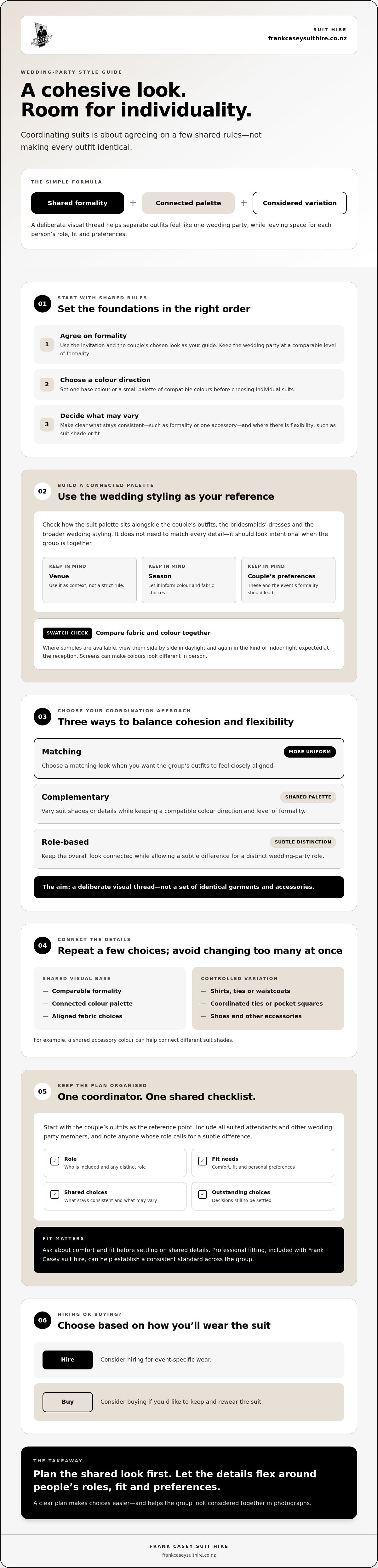
A wedding party should look like a group, but that doesn’t mean everyone needs to wear the same suit. Coordinating suits for a wedding party means agreeing on a few shared choices, such as formality, colour palette and key details, while leaving room for personal comfort and fit.
Choosing outfits separately can lead to accidental contrasts: one person in a very formal suit, another in a more relaxed one, or colours that compete rather than complement. A consistent level of formality helps the group look considered in photographs, especially when everyone is together. The outfits don’t need to be identical. A shared palette, similar suit formality or repeated accessory detail can connect different looks without making them uniform.
Clothing also helps express the occasion and the roles people hold within it. For broader context on wedding traditions, including traditional attire, consider how the couple wants their celebration to feel. That overall impression is a useful starting point for the wedding-party outfits.
What does a cohesive wedding-party suit look mean?
A cohesive look brings separate outfits together through considered similarities. Suits could vary in shade while sharing the same level of formality, for example, or individual suits could be linked by coordinated ties or pocket squares. Shoes and other accessories can also help connect the palette. The aim is a deliberate visual thread, not a set of identical garments and accessories.
Coordinated wedding-party suits share a few agreed style choices while allowing each person’s outfit to suit their role and fit.
Which people and outfit roles should the plan include?
Begin with the couple’s outfits. Decide how formal they’ll be, then use that as the reference point for everyone else wearing a suit. Include all suited attendants and other wedding-party members in the plan, noting whether anyone has a distinct role that calls for a subtle difference.
Ask about comfort, fit and personal preferences before settling on shared details. One person may prefer a different cut or need a particular fit, while another may feel more comfortable in a less restrictive option. Gathering this information early helps you set rules that work for the group, rather than choosing a look that only suits one person.
Keep the shared choices simple and clear. Agree on what should stay consistent, such as formality or one accessory, and where there’s flexibility, such as suit shade or fit. That gives the group direction while keeping the outfits comfortable and individual.
How to create a wedding-party suit palette that feels connected
A clear palette is easier to build in the right order. First agree on the level of formality, then choose the colour direction, and only after that decide which details can vary. This prevents early colour choices from pulling the group towards outfits that don’t suit the occasion.
Set a shared colour direction before choosing individual suits
Start with one agreed base colour or a small palette of compatible colours. Check how it sits alongside the couple’s outfits, the bridesmaids’ dresses and the broader wedding styling. A palette doesn’t need to match every detail. It needs to look intentional when the group is together.
Formality is the first shared rule. The Knot’s guide to formal wedding attire can help clarify what a formal dress code involves. Use the invitation and the couple’s chosen look as your guide, then keep the wedding party at a comparable level of formality.
Next, consider the venue and season as context, not instructions. A warm-weather celebration or an outdoor setting might influence how you think about colour and fabric, but neither dictates a single correct choice. The couple’s preferences and the event’s formality should lead.
Screens can make colours look different from how they appear in person. Where samples are available, compare fabric and colour swatches together, ideally under similar lighting. View them side by side in daylight and again in the kind of indoor light expected at the reception. This can reveal differences that are easy to miss when choosing each item separately.
Use fabric, shirts and accessories to bring outfits together
Once the palette is set, decide what stays consistent and what can change. Keeping fabric choices and formality aligned gives the group a strong visual base. Shirts, ties or waistcoats can then provide controlled variation, such as one shared accessory colour with different suit shades. Avoid changing too many elements at once, or the outfits may feel unrelated.
Accessories are a practical way to connect individual looks without requiring identical suits. For more ideas, consult Formal Accessories Hire NZ: The 2026 Guide to Completing Your Look. Before settling on exact colours or fabrics, check current options and availability with your formalwear provider.
With the palette agreed, explore wedding suit options and consider what may suit the look you’ve planned.
Matching, complementary or role-based suits: which coordination approach works?
There’s no single right way to coordinate the group. The best approach depends on how formal you want the wedding to feel, how much individual choice matters and how much organising the group can manage. Set clear visual anchors so outfits can differ without looking disconnected.
Use this comparison to discuss the options:
| Approach | Cohesion | Flexibility | Coordination effort |
|---|---|---|---|
| Matching suits | Strong, uniform appearance | Lower; shared style choices are set | Can take more planning to confirm consistent options and fit |
| Complementary suits | Connected through colour, formality or details | Moderate to high | Needs clear boundaries for what can vary |
| Role-based variations | Clear if roles have deliberate visual cues | High, with a distinct look for the couple or key attendants | Needs agreement on how each role differs |
When do matching suits make sense?
Matching suits can suit couples who want a formal, uniform appearance and prefer straightforward style decisions. But identical garments don’t guarantee a polished result on their own. Each person still needs a comfortable fit, with individual attention to how the jacket and trousers sit. Exact matching also depends on confirming current styles and size availability, so check this before committing the group to one option.
How can complementary or role-based suits stay cohesive?
Choose one or two elements to keep consistent, then let the rest vary. The group could share a colour direction and level of formality while allowing different suit shades or fits, for instance. Role-based styling can build on this: the groom might wear a distinct waistcoat or accessory, while attendants share another detail. Use the groom’s outfit as a reference, not a rule that everyone must look identical. WeddingWire’s guide to mismatched groomsmen outfits offers further ideas for balancing individuality with a connected look.
When coordinating suits for a wedding party, keep variation deliberate. Ask whether each outfit follows the agreed formality and shares at least one visible connection with the others. If it does, different suits can feel like part of one considered plan rather than separate choices.
How to organise wedding-party suit hire, fittings and decisions
A simple process keeps choices clear and reduces last-minute uncertainty. Appoint one person to coordinate, agree on the look, gather everyone’s fit needs, then confirm arrangements with the formalwear provider. For coordinating suits for a wedding party, one shared record is more reliable than a long group chat where decisions can get missed.
Professional fitting helps each person achieve a suitable fit while maintaining a consistent standard across the group. Frank Casey suit hire includes professional fitting and post-event cleaning. For more on fit, consult Professional Suit Fitting NZ: The Expert Guide to Achieving the Perfect Silhouette. Confirm current styles, sizes, availability and each person’s next steps with the provider before finalising your plan. Frank Casey offers nationwide delivery and service across New Zealand; check current ordering and fitting arrangements directly.
What should the wedding-party suit checklist include?
Keep the checklist easy to update and give each person a clear status. Include:
- Shared choices: agreed palette, formality, accessories and any details that can vary.
- People and roles: who needs a suit and whether their role calls for a distinct detail.
- Fit needs: each person’s preferred fit and any points to discuss at their fitting.
- Open decisions: outstanding choices, confirmation status and the next step for each person.
Ask the provider to confirm current availability and individual next steps, rather than assuming everyone can follow an identical process. This is especially useful if some people are hiring and others are buying.
How should the group compare hiring and buying?
Hiring can be practical for a one-time event, particularly when several wedding-party members need formalwear for the same occasion. Buying may suit someone who expects to wear the suit again. The right choice can differ within the group, so consider each person’s plans and preferences instead of making one option compulsory.
Frank Casey offers wedding suits to hire or buy, including custom-made suits for weddings. For more detail on hiring, see Wedding Suit Hire NZ: The 2026 Groom’s Guide to Looking Sharp. Once you’ve agreed on the approach, explore wedding suit hire and purchase options and confirm the arrangements that suit your group.
Choose a wedding-party suit plan that works for your whole group
A successful plan doesn’t depend on everyone making the same choice. Set a few shared style rules, allow suitable variations, and give one person responsibility for keeping decisions on track. This keeps coordinating suits for a wedding party manageable while making space for individual comfort and future plans.
Decide which details are fixed, such as the level of formality or a shared accessory, and which are flexible, such as individual fit or whether each person hires or buys. Hiring can suit event-specific wear; buying may make sense for someone who expects to rewear their suit. The group doesn’t have to choose one route for everyone.
What can a wedding-party group expect from a suit provider?
Look for clear guidance on suitable wedding suits, fit, accessories and how group arrangements can work. Before making a final decision, ask the provider to confirm current styles, sizes and availability, along with ordering steps and delivery details. These can vary, so check rather than assume the whole group can follow the same process.
Frank Casey offers wedding suits to hire or buy, as well as custom-made suits for weddings. Suit hire includes professional fitting and post-event cleaning. The business provides nationwide service and delivery across New Zealand, with online ordering. Confirm the arrangements for your group directly with the provider.
How can the couple make the final decision easier?
Put the plan into one concise brief for the wedding party and provider. State the formality, colour direction, fixed outfit details and where individuals can choose. Include each person’s role and any fit questions still to resolve. This gives everyone the same reference point and makes it easier to spot an unanswered decision before it holds up the plan.
Professional fitting can help address individual fit needs while maintaining a consistent standard across the group. Frank Casey includes professional fitting with suit hire; ask about fitting arrangements if the group is purchasing. With clear shared rules, a little flexibility and one point of contact, the final outfits can feel connected without forcing everyone into an identical choice.
Bring the wedding-party look together with confidence
A polished group look doesn’t require identical suits. Agree on shared rules for formality, colour and key details, then allow sensible variations for different roles, fits and preferences. A nominated coordinator and one clear checklist can keep choices and arrangements on track.
For coordinating suits for a wedding party, consider hiring for event-specific wear or buying for those who plan to wear their suit again. Suit hire includes professional fitting and post-event cleaning, helping each person find a suitable fit while maintaining a consistent standard. Frank Casey provides nationwide delivery and service across New Zealand.
Explore the options and confirm current styles, availability and arrangements for your group with wedding suits and suit hire.
Frequently Asked Questions
How do you coordinate suits for a wedding party without making everyone look identical?
Choose a few shared details, such as the level of formality, a colour direction or one accessory, then let other elements vary. Attendants might wear different suit shades but follow the same formality and accessory guideline, for example. Agree on the shared choices first and communicate them clearly, so anyone selecting their own outfit knows what fits the plan. This approach to coordinating suits for a wedding party creates connection without requiring identical garments.
Should the groom wear the same suit as the wedding party?
No, the groom doesn’t have to wear the same suit as the wedding party. Matching can create a uniform appearance, while a considered difference in colour, waistcoat or accessories can distinguish the groom. Decide how noticeable that difference should be, then keep a visual link, such as similar formality or a shared accessory. The result should feel intentional: the groom stands out but still looks part of the group.
Can wedding-party suits be different colours and still look coordinated?
Yes, different suit colours can look connected if the group agrees on a palette and keeps other details aligned. You could choose shades that complement the couple’s outfits while maintaining a consistent level of formality. Consider the wedding styling as a whole, not just the suits. Where possible, compare fabric samples together, as a colour on a screen may look different in person or under another type of lighting.
How do you choose suit colours for a wedding party?
Begin with the wedding’s formality and the couple’s outfits, then choose a manageable colour direction for the suits. The season and setting can help guide your thinking, but they don’t dictate the colour. Decide which details need to stay consistent and where variation is welcome. If samples are available, review them together before confirming the group’s choices, checking how the colours work alongside the wedding styling.
Is it better to hire or buy suits for a wedding party?
Choose based on how each person expects to use the suit after the wedding. Hiring may suit someone dressing for one event, while buying can be appropriate for someone who plans to rewear it. The group doesn’t need to make one decision for everyone. Compare individual preferences, then ask the provider to confirm current fitting, ordering and delivery arrangements. Frank Casey suit hire includes professional fitting and post-event cleaning.
When should a wedding party organise suit fittings?
Plan fittings as part of the wider wedding outfit process, leaving time for each person to check their fit and raise questions. The right timing depends on the provider’s process, current availability and the wedding date, so confirm the details directly rather than relying on a general rule. Assign one person to keep track of who has completed a fitting, what decisions remain and which next steps need follow-up.
What should you consider when choosing suits for different wedding-party roles?
Start with the couple’s outfits, then decide how attendants and other suited members will relate to them. A shared level of formality or colour direction can connect the group, while a considered detail can distinguish someone with a particular role. Before confirming the plan, ask each person about comfort and fit preferences. This helps ensure the overall look is cohesive without making individual needs an afterthought.
Ready to plan a coordinated look? Explore wedding suits and suit hire with Frank Casey, then confirm the current options and arrangements for your group.


