

Could the cufflinks you like be wrong for your shirt? Start with the cuff, not the accessory. This cufflinks guide for men explains how to identify a shirt that takes cufflinks, choose a fastening you can manage and match the finish to your outfit.
It’s easy to feel unsure about the details, especially when dressing for a wedding, school ball or black-tie event. The key is knowing what to look for: a cuff needs buttonholes on both sides, and a French cuff, also called a double cuff, is a classic choice for black tie.
You’ll learn how common fastenings work, how to put cufflinks on neatly and how to coordinate them with a suit and other accessories. Whether you’re dressing for a formal occasion or adding polish to businesswear, these practical steps can help you feel confident. For an event-ready look, consider how your shirt and accessories work with your suit from Frank Casey suit hire.
Key Takeaways
- Start with the shirt cuff: it needs paired buttonholes to take cufflinks.
- Compare fastenings by how they secure, feel and look, then choose one that suits you.
- Cufflinks aren’t required for every formal event. Match their finish and style to the occasion.
- For a neat fit, bring the cuff edges together before threading the cufflink through both sets of holes.
- Use this cufflinks guide for men to coordinate your shirt, suit and accessories, including a polished look with Frank Casey suit hire.
Cufflinks for Men: What They Do and Which Shirt Cuffs Need Them
Cufflinks fasten shirt cuffs and add a visible finishing detail. First, check that the shirt is made for them: the cuff needs openings on both sides, not a button on one side and a buttonhole on the other. Cufflinks are removable fasteners and decorative details for shirt cuffs with paired buttonholes designed to hold them.
This compatibility check is the starting point in any cufflinks guide for men. Choosing a design before checking the shirt can leave you with an accessory you can’t attach neatly. The history and types of cufflinks offer useful background, but the practical test is simple: inspect the cuff before getting ready.
How to recognise a cufflink-compatible shirt cuff
Look at the edge of the cuff. French cuffs, also called double cuffs, fold back on themselves and are fastened with cufflinks rather than sewn-on buttons. You’ll see buttonholes on both sides, which meet when the cuff edges are brought together.
An ordinary button cuff works differently: it has a sewn-on button on one side and a buttonhole on the other. The button closes the cuff, so there isn’t a matching pair of holes for a cufflink. Before choosing cufflinks or preparing your outfit, unfold the sleeve and check both sides. If you’re wearing cufflinks for the first time, practise fastening them before the event, not as you’re heading out the door.
When cufflinks make sense for a formal outfit
Let the invitation and the shirt guide your choice. For a black-tie event in New Zealand, a formal shirt with French cuffs and cufflinks can complete a considered look. At a wedding, the couple’s dress code, your role in the day and the formality of your suit all help determine whether cufflinks feel appropriate. They’re a finishing choice, not an automatic requirement for every event described as formal.
A button-cuff shirt may be a comfortable, polished option for a business function, a less formal wedding reception or another event where the dress code doesn’t call for black tie. You can look well put together without cufflinks. If you’re planning a full formal outfit, consider how the shirt sits with the suit, tie and other accessories. A coordinated look matters more than adding every possible detail. Frank Casey suit hire can help you plan the suit as part of that wider outfit, with the shirt and finishing touches in mind.
Once you’ve confirmed the cuff is compatible, choose a fastening and design that suit the occasion. That keeps the decision practical first, then personal.
Cufflink Types for Men: Understand the Fastening Before You Choose
Once you know the shirt cuff can take cufflinks, consider how the fastening works. Cufflinks have two distinct parts: the visible face, which contributes to the outfit, and the post or connection that holds the cuff together. A cufflink passes through both sides of the cuff and secures them with a fastening suited to its design.
Mechanisms differ in how easily they pass through the holes, how they sit once fastened and how much handling they require. A useful cufflinks guide for men looks beyond the decorative face: choose a mechanism you can operate confidently, then consider how it looks with your shirt and the event.
Toggle and whale-back cufflinks
A toggle fastening has a hinged bar that folds in line with the post to pass through the cuff holes. Once through, the bar turns across the opening to hold the cuff closed. Whale-back designs use the same simple hinged principle, with a fastening that pivots into position. Before dressing, practise opening and closing the mechanism so you know how it moves.
This style can be straightforward to handle, but ease depends on the cuff and your dexterity. After threading it through, make sure the bar has turned into place rather than remaining aligned with the post.
Chain, fixed and double-sided cufflinks
Chain cufflinks connect their two visible ends with a flexible link. They can move more freely than a rigid fastening, and both ends may be seen on the cuff. Fixed-shank styles use a solid post rather than a hinged bar, so guide them through the holes in the right position. Double-sided describes the appearance, with a face visible on each side, rather than one particular fastening mechanism.
For a quick comparison, consider these practical differences:
- Toggle or whale-back: the hinged bar pivots to pass through and secure the cuff.
- Chain: a flexible connection joins the two ends, giving the cufflink some movement.
- Fixed shank: the rigid post passes through the cuff without a hinged toggle.
- Double-sided: both sides have a visible design; the connecting mechanism can vary.
Think about how each option feels to handle as well as how it looks. If you’re fastening cufflinks yourself, a mechanism you can position without a struggle may be more practical than one chosen only for its appearance. For a wedding or black-tie outfit, keep the visible detail in proportion to the shirt and suit. A decorative face can suit an expressive look, while a simpler design keeps attention on the overall outfit.
To bring the full formal look together, consider how the cufflink style sits with your suit. Frank Casey suit hire can be part of planning a coordinated outfit for a formal occasion.
How to Choose Cufflinks for Men That Suit the Occasion
Cufflinks aren’t automatically required just because an event is formal. Let the invitation’s dress code lead, then consider your shirt, suit and other accessories. This order helps you choose a pair that looks intentional rather than overly dressed up or out of place.
Match cufflinks to the dress code
For black tie, a restrained design usually complements the classic formality of the outfit. At a wedding, take cues from the dress code and your role: a subtle pair can sit neatly with a traditional suit, while a more expressive detail may suit a less conventional celebration. For a formal work function, understated cufflinks tend to keep the look polished without drawing attention away from the overall outfit.
Use the table as a starting point, not a set of strict rules. The shirt and suit still matter, and the invitation should have the final say.
| Occasion | Design direction | What to consider |
|---|---|---|
| Black-tie event | Understated, classic finish | Keep the detail refined and in step with the formal shirt and suit. |
| Wedding | Classic or gently expressive | Reflect the dress code and the tone of the celebration. |
| Formal work function | Simple and discreet | Choose a finish that feels professional alongside your suit and shirt. |
Coordinate colour, finish and scale
Once the occasion is clear, look at the colours and details already in your outfit. Cufflinks don’t need to match every accessory exactly, but their finish should sit comfortably beside your suit, shirt and other visible pieces. For example, a quiet metal finish can work with a crisp shirt and classic suit, while a bolder colour or motif becomes a focal point.
Pay attention to balance. If you’re wearing a patterned shirt or statement tie, a simpler cufflink design can keep the outfit from feeling busy. With a plain shirt and restrained tie, a more distinctive pair can add personality without overwhelming the look. Consider the size of the cufflink face, too: a prominent design may compete with other details, while a smaller one can finish the outfit more quietly.
Use this cufflinks guide for men as a practical check: dress code first, then outfit colours and the level of detail you want. For wider outfit coordination, Frank Casey’s formal accessories hire guide offers ideas for bringing accessories together. If you’re putting together a complete formal look, Frank Casey suit hire can help you plan around the suit as well as the finishing details.
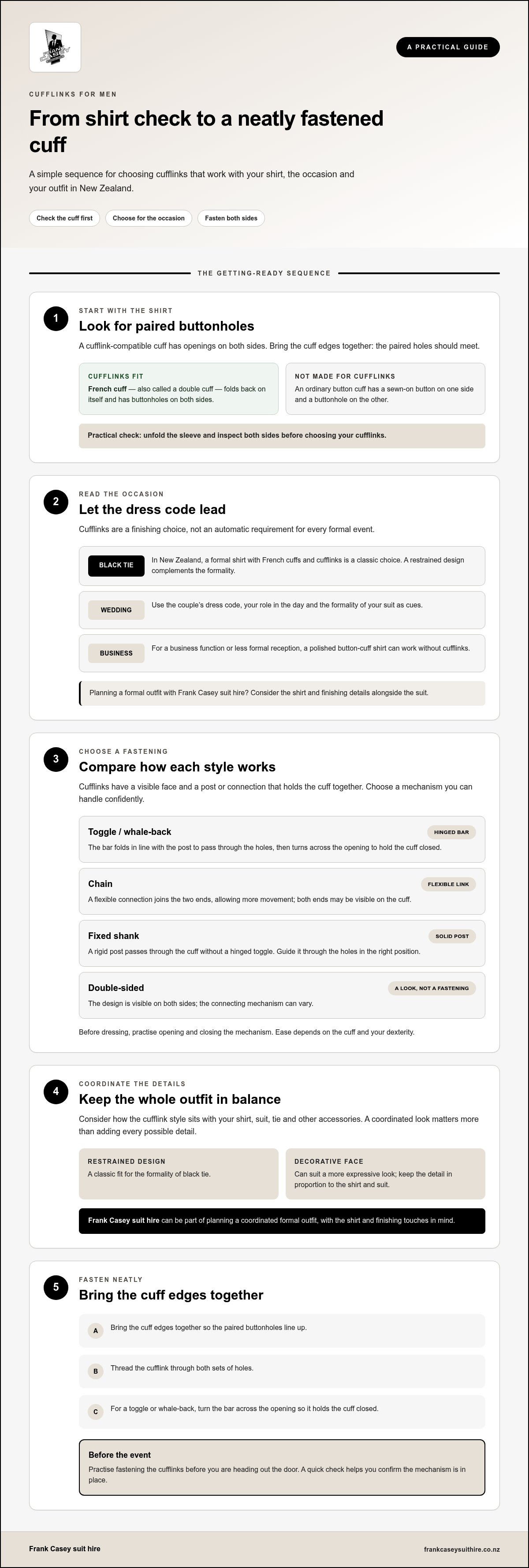
How to Put On Cufflinks: A Simple Getting-Ready Sequence
Putting cufflinks on is easier if you line up the cuff before fastening anything. With your compatible shirt on, bring the cuff edges together so the buttonholes align. The cufflink passes through both layers and holds them in position. This cufflinks guide for men gives you a calm, repeatable routine for getting ready without rushing or forcing the fastening.
Fasten cufflinks step by step
Follow the order below. The exact movement depends on the fastening, but align the cuff before inserting the cufflink.
- Prepare the cuff. Fold it back neatly if the shirt design requires it. Smooth out any twists in the fabric so the edges meet evenly.
- Bring the edges together. Align the paired holes, keeping the cuff in the shape intended by the shirt. The cuff edges meet before the cufflink goes through.
- Pass the cufflink through. Guide the post through the holes on both sides of the cuff. If it doesn’t move freely, pause and realign the openings rather than pushing hard.
- Secure the fastening. For a hinged toggle, turn the bar across the opening once it has passed through. For another design, position its fastening as intended so it holds the cuff together.
- Check the visible face. Turn the cufflink so its decorative side faces out and sits neatly. Check both cuffs for a similar fit and appearance.
Repeat the same steps on the other sleeve. If your cufflink has a particular orientation or an unfamiliar mechanism, handle it slowly and make sure it’s secured before putting on your jacket. A few deliberate movements are more useful than trying to fasten it quickly while standing at the door.
Check the fit and remove them carefully
With both cufflinks in place, let your arms rest naturally. The cuff should sit neatly at the wrist without pulling or feeling uncomfortably tight. If the fabric bunches or the cuff twists, open the fastening, adjust the alignment and try again. A secure fit holds the cuff together without making it difficult to move your wrist.
At the end of the event, open the fastening first. For a toggle, turn the bar back into line with the post; for other types, release their securing mechanism. Then slide the cufflink out gently. Don’t tug it through closed holes, as that can strain the fabric or the fastening.
Put the pair together in a safe place after removing them, rather than leaving one on each side of the room or in different pockets. Keeping them together makes them easier to find next time you dress for a wedding, formal function or another occasion. For a polished outfit from shirt cuffs to suit, explore Frank Casey suit hire as part of planning your formal look.
Complete Your Formal Look with Cufflinks and Frank Casey Suit Hire
A polished outfit comes together in a clear order: confirm the shirt cuff can take cufflinks, choose a fastening you can manage, then coordinate the details with your suit and accessories. That sequence keeps the choice practical and helps each part of your formalwear feel considered. Cufflinks are one finishing touch, not a substitute for a coordinated outfit.
Plan the whole outfit around the event
Start with the invitation’s dress code and the shirt you’ll wear. Once those are settled, select a suit for the occasion, then consider how the cufflink finish works with your tie, shoes and other visible accessories. The goal is balance: no single detail should feel disconnected from the rest.
For a wedding, aim for a look that feels polished and suits the celebration’s overall formality. If the dress code is classic, restrained cufflinks can complement a formal shirt and suit. For black tie, keep the outfit cohesive. A distinctive cufflink design can add personality, but it shouldn’t dominate the shirt, tie or suit. This cufflinks guide for men comes back to the same principle: make choices in context rather than dressing each detail in isolation.
Make formalwear preparation straightforward across New Zealand
Frank Casey serves customers nationwide across New Zealand, with online ordering for formalwear. Suit hire includes professional fitting and post-event cleaning, helping with practical parts of preparing for an occasion as well as the suit itself.
Think of the shirt, suit and accessories as one look. A well-fitting suit gives the outfit its shape; the shirt and cufflinks add detail at the wrist and collar; other accessories should support the same level of formality. If you’re arranging Frank Casey suit hire, a professional fitting can help ensure the suit sits well with the shirt you plan to wear. Frank Casey’s professional suit fitting guide explains how fit contributes to a balanced silhouette.
With the dress code, shirt and suit aligned, you can choose the finishing details with greater confidence. Explore Frank Casey suit hire for your upcoming formal occasion and plan a complete look that feels right for the event.
Get Ready for Your Next Formal Occasion
Your next event is a good reason to plan your outfit before the last-minute rush. Set aside the shirt and suit you intend to wear, then check that your chosen cufflinks suit the occasion and sit comfortably with the rest of your look. Considering the details together can make getting dressed feel straightforward rather than uncertain.
For a wider formalwear plan, Frank Casey has supported New Zealand customers since 1987. Explore suit hire and formalwear options to find a look that fits the occasion and feels right for you. Cufflinks are one finishing detail; confidence comes from wearing an outfit that feels cohesive and comfortable.
Explore Frank Casey suit hire and formalwear, and take the next step towards feeling prepared for your event.
Frequently Asked Questions
Can you wear cufflinks with a shirt that has buttons on the cuffs?
Usually not, unless the shirt has convertible cuffs designed to fasten with either buttons or cufflinks. A standard button cuff has a button attached on one side and a single buttonhole on the other, so it doesn’t provide the paired openings cufflinks need. Check the cuff construction before getting dressed. If it only has the sewn-on button and its matching hole, wear it as designed rather than trying to force a cufflink through.
Are cufflinks necessary for a black-tie event?
For a traditional black-tie outfit, cufflinks are generally expected with a formal shirt made for them, often one with French cuffs. Check the invitation and any outfit instructions, as these help clarify the level of formality. If your shirt has ordinary button cuffs, don’t try to substitute cufflinks. Choose a compatible formal shirt instead, or follow the event’s guidance on an appropriate alternative.
Which cufflink fastening is easiest for a beginner to use?
A hinged toggle or whale-back fastening is often a practical starting point because its bar pivots to pass through the cuff and then turns to secure it. Try moving the bar open and closed before putting the shirt on, so you understand how it works. If fastening it feels awkward, take a moment to realign the cuff holes rather than pushing. The best option is one you can operate comfortably.
Can cufflinks be worn with a suit without a jacket?
Yes, cufflinks can be worn with a suit and shirt even if you take the jacket off, provided the shirt cuffs are designed for them. Consider the setting: at a wedding reception or formal work function, they can still look intentional with the rest of your outfit. If you’ll remove your jacket, check that the shirt, tie and other visible details feel balanced on their own, too.
How should cufflinks be stored between formal occasions?
Store cufflinks together in a small case or pouch, ideally somewhere dry and easy to remember. Keeping the pair in one place helps prevent one from getting separated in a drawer or bag. Before putting them away, open the fastenings and check that both pieces are present. If the cufflinks have a hinged mechanism, close it gently and avoid placing heavy items on top that could bend or catch it.
Are cufflinks a suitable gift for men?
Yes, cufflinks can make a thoughtful gift, especially for someone who attends formal events or already owns shirts with compatible cuffs. Specialist gift retailers such as Engraveitnow offer men's accessories that can be personalised for weddings or milestone celebrations. Choose a design that suits his usual style and the occasions he dresses for, rather than relying only on a bold motif. If you’re unsure about his shirt cuffs, a versatile, understated pair is a considerate choice, though it’s useful to know he’ll have a shirt he can wear them with.
What should you do if one cufflink goes missing before an event?
First, check the places you got dressed and the pockets or pouch where you keep the pair. If it doesn’t turn up, avoid wearing one cufflink on its own. Use a matching spare pair if you have one, or change to a shirt with ordinary buttons if that suits the event’s dress code. Don’t improvise by pushing an unmatched fastening through the cuff; a neat alternative is better than a distracting mismatch.


