

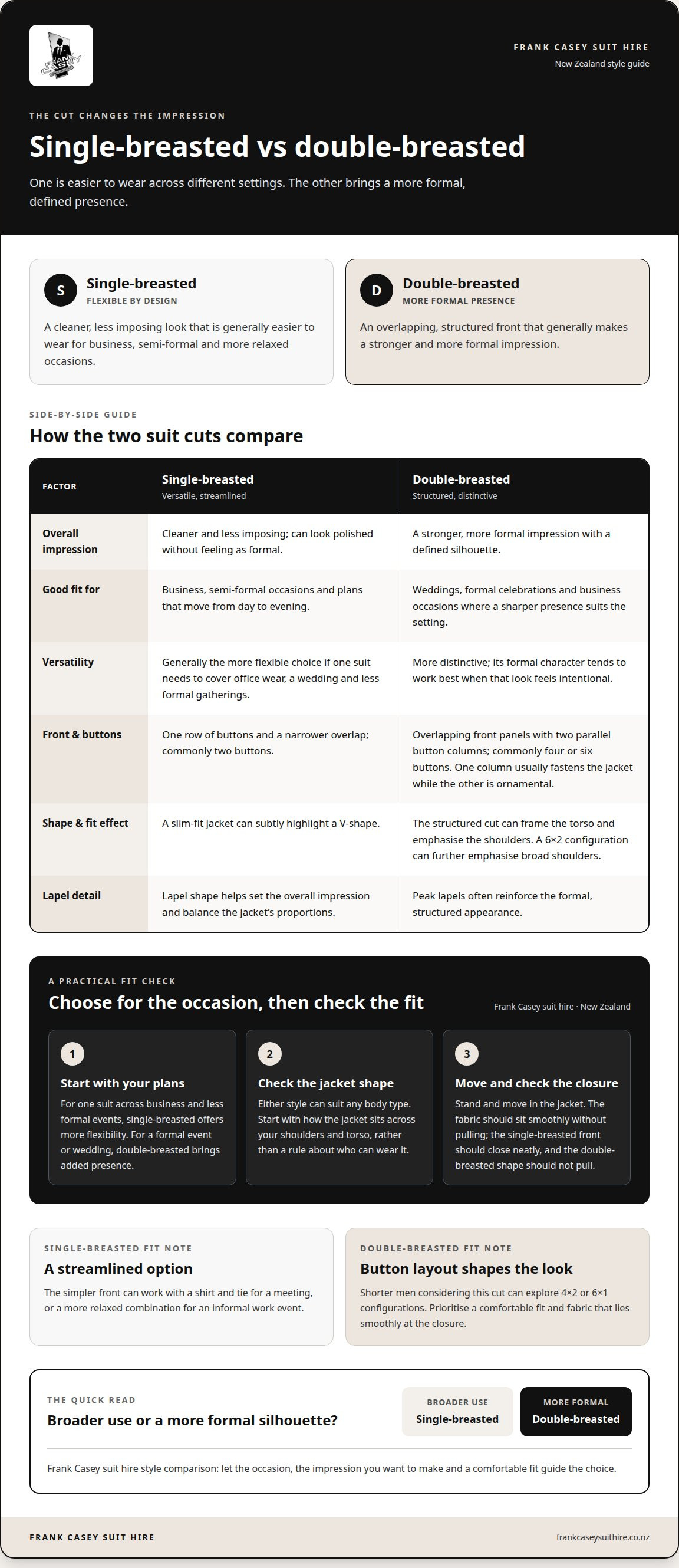
The more formal suit isn’t always the more versatile one. In the double-breasted vs single-breasted suit comparison, a double-breasted style generally makes a stronger, more formal impression, while a single-breasted suit is easier to wear for business, semi-formal and casual occasions. Double-breasted jackets commonly have four or six front buttons; single-breasted jackets usually have one row, often with two buttons.
It’s easy to see why the choice can feel tricky: both styles can look sharp, but the cut changes the overall effect and how easily the suit works for different occasions. The best option depends on where you’ll wear it, the impression you want to make and which shape feels comfortable.
Learn how the two styles differ in their features, formality and styling, and how their histories shaped the suits we wear today. Then use a practical guide to choose the right look for your plans in New Zealand.
Key Takeaways
- Choose between the two cuts by considering the occasion, the impression you want to make and how comfortable the fit feels.
- Both styles can suit any body type; the jacket’s shape and fit matter more than a simple rule about who can wear it.
- Learn how button placement affects the look of a double-breasted jacket and how to wear it neatly when standing.
- See why a single-breasted suit can be a flexible option for business and occasions with a more relaxed dress code.
- Discover how the styles’ different histories still influence the way they’re worn today.
Double Breasted vs Single Breasted Suit: Which One Should Men Wear?
Yes. Double-breasted suits remain a wearable choice in New Zealand in 2026, particularly for weddings and occasions where a more distinctive look suits the setting. Choose between the two styles by weighing fit, formality and how often you’ll wear the suit.
Suit styles for different body types
Either style can suit any body type, so start with how the jacket sits across your shoulders and torso. A single-breasted slim-fit jacket can subtly highlight a V-shape, while a 6×2 double-breasted configuration can emphasise broad shoulders. Shorter men considering a double-breasted jacket can explore 4×2 or 6×1 configurations. In every case, the fabric should sit smoothly without pulling at the closure.
Business and everyday suit wear
A single-breasted suit is generally easier to dress down for everyday business wear, semi-formal occasions and plans that move from day to evening. Its simpler front works with a shirt and tie for a meeting, or a more relaxed combination for an informal work event. A double-breasted suit makes a stronger, more formal impression, making it a natural choice for a wedding or business occasion where you want a sharper presence. While corporate positions typically demand such formal tailoring, individuals exploring hands-on vocational pathways such as commercial driver licensing through academies like lonestar-tda.com can set structured suits aside in favour of practical workwear.
Choosing between the two styles
Start with the occasions on your calendar. If one suit needs to cover regular office wear, a wedding and less formal gatherings, a single-breasted style offers more flexibility. If elegance and a memorable silhouette at a formal event are the priority, consider double-breasted. Then check the fit while standing and moving: a double-breasted jacket should shape the torso without pulling, while a single-breasted jacket should close neatly across the front.
Button arrangements and lapel styles
A single-breasted jacket has one row of buttons and a narrower overlap, commonly with two buttons. A double-breasted jacket has overlapping front panels and two parallel columns, commonly with four or six buttons. Peak lapels often reinforce its formal, structured appearance. Lapel shape also affects the overall impression, so consider how it balances the jacket’s proportions and suits the occasion.
| Style | Fit effect | Best suited to | Front details |
|---|---|---|---|
| Single-breasted | Streamlined; can highlight a V-shape | Business and flexible wear | One button row; commonly two buttons |
| Double-breasted | Structured; can emphasise shoulders | Formal occasions and weddings | Two button columns; commonly four or six buttons |
Choose single-breasted for broader use, or double-breasted for a more formal, defined look.
With either style, prioritise a comfortable fit over rules about body type: the right shoulder line, closure and fabric create a polished result.
Which Suit Is More Formal?
A double-breasted suit is generally more formal than a single-breasted suit, with a stronger presence at weddings, special occasions and business events. Let the occasion’s dress code and the impression you want to make guide your choice.
Suit styles for formal occasions
For a wedding or formal celebration, a double-breasted suit makes a confident statement and gives the outfit a defined, elegant feel. It can also suit business occasions where a strong impression matters. A single-breasted suit still looks polished at formal events, but its cleaner, less imposing appearance is easier to wear when the setting calls for restraint.
Start with the invitation or event brief. If it specifies a dress code, use that as your first guide, then consider the venue and your role at the occasion. A wedding guest may want a refined look that doesn’t compete with the couple, while someone attending a formal work event might choose a more prominent style. Both cuts can work, but they communicate different levels of formality.
Accessories also shape the final impression. A tie and coordinated formal accessories can finish either style, while simpler choices keep the outfit understated. For example, a single-breasted suit can work for a daytime ceremony followed by a relaxed reception. A double-breasted option can bring added presence to an evening celebration. Let the event, rather than a fixed rule, determine the balance.
Versatility across occasions
A single-breasted suit generally offers more versatility across business, semi-formal and relaxed settings. It can carry you through a working day and into an evening event with a change of accessories. A double-breasted suit is more distinctive, so it tends to suit occasions where its formal character feels intentional rather than overly prominent.
If you’re choosing one suit for several uses, list the occasions you expect it to cover. A navy or charcoal single-breasted suit is generally a versatile first choice for business wear and social events. If your calendar centres on weddings, formal celebrations or high-profile business occasions, a double-breasted style may better match the impression you want. Consider how easily each style suits the setting and your preferred level of formality.
For a wedding, compare wedding suit hire options with the formality of the day and the look you want to wear. Choose the cut that feels appropriate for the occasion and useful beyond it.
Double-breasted suit features and button configurations
A double-breasted jacket is defined by overlapping front panels and two parallel columns of buttons. This design affects the jacket’s shape, closure and overall presence, so the details matter when choosing one for your wardrobe.
Double-breasted jacket design
The wider overlap gives the front a more structured appearance than a single-breasted jacket. One column of buttons usually fastens the jacket, while the other is ornamental. The cut can frame the shoulders and torso, but the fabric should lie smoothly across the front. Pulling at the closure can disrupt the clean line created by the overlapping panels.
Check the jacket while standing and moving, not only on a hanger. A well-fitting double-breasted suit should shape the torso without pulling. The overlapping panels and button placement create a defined front, so a strained closure is easy to notice. For meetings, weddings or other formal occasions, a neat fit helps the jacket look composed rather than restrictive.
Button notation describes the arrangement, with examples including 6×2, 4×2 and 6×1. Common double-breasted jackets have four or six front buttons. The first number in these examples distinguishes the six-button and four-button fronts; the second number varies between configurations. These arrangements give the front a different visual balance, even though both columns remain part of the design.
Double-breasted button arrangements
A six-button jacket is typically fastened at the middle button while standing, while a four-button jacket is typically fastened at the top. Both are generally worn closed when standing to keep the overlapping front in place. The arrangement changes where the closure sits and how the panels frame the torso, so consider the button position as well as the total count.
For a more open-looking arrangement, a 6×1 configuration fastens at one point; a 6×2 version offers two fastening positions. A 4×2 layout combines four front buttons with two fastening positions. These examples show why counting buttons alone doesn’t tell the whole story. The configuration determines how the columns relate to the closure, while fit determines whether the jacket sits cleanly.
Try the jacket with the shirt and accessories intended for the occasion. Stand naturally, fasten it as designed, then sit down to assess movement. A six-button style follows the middle-button convention until sitting; a four-button style follows the top-button convention. For shorter men considering this cut, 4×2 or 6×1 configurations are options. Choose the arrangement that keeps the shoulders balanced and the front smooth.
In practical terms, treat a double-breasted jacket as a complete look rather than an open layer. Its button columns and overlapping fabric are central to its appearance. A thoughtful fit and correctly fastened front help preserve that structure at a wedding, meeting or formal gathering.
Single-breasted suit features and styling
A single-breasted suit has a clean front that works across a range of settings. Its simple design makes it straightforward to style for business, casual occasions and formal events.
Single-breasted suit styling
The jacket has one row of buttons and a narrow overlap at the closure. Fronts commonly have one, two or three buttons, with the two-button style the modern standard. This uncluttered shape makes a single-breasted suit easier to layer than a double-breasted jacket. It can be worn open or closed, depending on the setting and the look you want.
For a classic business outfit, pair a two-button suit with a shirt and tie. For a more relaxed day-to-evening look, wear the jacket open over a neat shirt. A navy, grey or textured single-breasted jacket can also work on its own as a blazer, giving it a place in your wardrobe beyond matching-trouser outfits. This flexibility makes it ideal for transitioning between casual weekend activities—such as heading out for a round of golf with gear from Golf Ball Monkey—and smart clubhouse dining.
At a wedding, let the invitation and venue guide your styling. A single-breasted suit with a crisp shirt and considered accessories gives you a polished look without taking focus from the couple. For an evening reception, a tie can add formality; for a relaxed daytime celebration, a simpler combination may feel more at ease. Keep the colours and accessories coordinated.
Fit and styling mistakes
A double-breasted suit calls for a different approach. Its overlapping front is typically worn closed, and the jacket should shape the torso without pulling. Wearing it open can disrupt the clean lines of the front. Check the fit while standing and moving, especially across the shoulders and around the closure. A strained button or twisted fabric can make the jacket look uncomfortable.
Keep the rest of a double-breasted outfit simple so the jacket remains the focus. For example, choose a restrained shirt and tie rather than several competing details. A single-breasted jacket is more forgiving for layering and casual styling, but fit still matters: the shoulders should sit neatly, and the buttoned front should lie smoothly. Neither cut is a shortcut to presence; proportion and comfort shape the finished look.
For a wedding guest outfit, choose the jacket first, then select accessories to suit its formality. A single-breasted suit can shift between settings with small styling changes, while a double-breasted suit makes a stronger statement when worn as intended. The best choice fits the occasion and lets you move comfortably through the day.
Historical development of single- and double-breasted suits
The two suit fronts reflect different needs, not simply different fashion eras. In the early 19th century, Beau Brummell helped shape the modern suit, favouring refined, practical tailoring. Single-breasted suits developed as versatile everyday wear, while double-breasted jackets drew on military attire. Their overlapping fronts gave them a structured appearance that later became a recognisable formal style.
The origins of each style help explain how it reads today. A single-breasted jacket has a restrained front, making it adaptable across business and social settings. The double-breasted design uses overlapping panels and two button columns to create a more defined silhouette. Neither style is inherently flattering for everyone; fit and proportion shape how the outfit looks on the wearer.
Double-breasted suits rose in popularity during the 1930s and ’40s. Their structured lines suited a period when tailoring often made a strong visual statement. The style’s formal presence has endured, but it isn’t confined to historic dress. A contemporary jacket can use the same overlapping front while pairing with modern shirts, ties and accessories.
By the 1940s and ’50s, single-breasted suits had become a standard for business attire. Their practical, straightforward design made them suitable for regular wear and varied combinations. That history helps explain their lasting place in work wardrobes: a single-breasted suit can look refined with a tie or more relaxed when styled simply. Its appeal rests on flexibility, not a single formal setting.
The 1980s brought power suits with broad shoulders back into the spotlight, renewing attention on strong, structured tailoring. Double-breasted styles suited that statement-making look, while the single-breasted cut remained a familiar business choice. These trends show how lapels, shoulders and button placement can shift the mood of a suit, even when its basic front design remains recognisable.
In the 21st century, double-breasted suits returned to fashion after their association with 1980s power dressing. Today, the style can feel current rather than archival when the fit is balanced and the rest of the outfit is considered. Single-breasted suits, meanwhile, continue to offer a classic option for business and occasions that call for understated elegance.
For New Zealand weddings, work events or formal celebrations, history offers context, not a rulebook. Choose a single-breasted suit for broad versatility, or a double-breasted cut when its structured presence suits the occasion. The lasting difference is practical: one has a simpler front, while the other makes overlapping panels central to its look. Explore formal suit options for your next occasion.
Frank Casey
Frank Casey helps you choose a suit for the occasion, whether you’re attending a wedding, school ball, business event or black-tie function. If you’re weighing a single-breasted look against a double-breasted one, consider the event’s formality, the fit you prefer and whether you’ll hire or purchase. Frank Casey offers suits for these occasions, including suit hire.
Use the distinctions in this guide to narrow your choice: a single-breasted style can suit varied settings, while a double-breasted cut brings a more formal presence. Explore Frank Casey’s suit hire and purchase options to find a style for your occasion.
Choose the suit that feels right for your day
The best choice is one you can wear comfortably from the first event to the last. Before deciding, picture the full day: arriving, sitting through a meal, meeting people and moving between formal moments. Consider whether you want your outfit to feel quietly versatile or make a more defined statement. This practical test can bring your decision into focus beyond the mirror.
Your choice between a double-breasted and a single-breasted suit doesn’t need to follow a trend or fixed rule. Let the occasion guide you, then choose the cut that feels comfortable and suits the impression you want to make. A well-chosen suit should feel like you, not a costume.
If you’d like guidance on your next outfit, talk with Frank Casey about your suit choice. With the right style for your plans, you can step into the occasion feeling prepared and at ease.
Frequently Asked Questions
What are the pros and cons of double-breasted suits?
A double-breasted suit creates a structured, distinctive look, but its stronger style can feel less adaptable in relaxed settings. It works well when you want your jacket to make a clear impression, such as at a formal reception or important presentation. The overlapping front is generally worn closed, so consider whether you’re comfortable wearing it that way throughout the event.
Which suit is better for business?
A single-breasted suit is often the practical choice for regular business wear because it works across a range of office settings. For a presentation or meeting where you want a more defined look, a double-breasted style can feel appropriately polished. Think about your workplace’s usual dress level and how often you’ll wear the suit. That helps you choose between everyday flexibility and added presence.
Which suit is better for weddings?
Either style can work for a wedding; the invitation, venue and your role help determine which feels appropriate. A single-breasted suit can suit a relaxed daytime celebration or a guest who prefers a quieter look. A double-breasted suit may fit a more formal event or a wearer seeking a stronger silhouette. Coordinate your shirt and accessories with the wedding’s tone without drawing attention from the couple.
Which suit is easier to style casually?
A single-breasted suit is easier to style casually because its jacket can often be worn separately, particularly in navy, grey or textured fabric. For example, pair a navy jacket with a shirt and different trousers for a less formal outfit. The double-breasted jacket’s overlapping front gives it a more deliberate feel, making that cut harder to style casually.
What is the difference between double-breasted and single-breasted suits?
The main difference is how each jacket closes. A single-breasted front has one row of buttons and a narrower overlap; a double-breasted front has overlapping panels and two button columns. This changes the jacket’s outline and how it’s usually worn. For a quick visual comparison, look at the front closure first, then consider how the shoulder line and overall fit suit you.
Which suit style is more formal: double-breasted or single-breasted?
A double-breasted suit is generally the more formal choice, particularly when a strong, structured appearance suits the setting. A single-breasted suit can still look polished at formal events, but it adapts more easily across dress levels. If the dress code is unclear, consider the venue and time of day, then choose a style that feels refined without seeming out of place.
When should you wear a double-breasted suit versus a single-breasted suit?
Choose a double-breasted suit for a formal event, wedding or business occasion where you want a more distinctive presence. A single-breasted suit suits regular office wear, semi-formal plans and occasions where you want more styling flexibility. If your day includes several settings, choose the look that will feel comfortable throughout, rather than dressing only for the first event.
Which suit style suits different body types and heights?
Either style can suit different body types and heights; focus on proportion and how the jacket fits rather than treating one cut as off-limits. A slim-fit single-breasted jacket can highlight a V-shaped torso, while a double-breasted cut can emphasise broad shoulders. Shorter men considering a double-breasted jacket can look at 4×2 or 6×1 arrangements. Smooth fabric and a comfortable closure help the fit look balanced.


