

Buying a suit can offer better value sooner than you might expect: after three or more wears, buying tends to cost less than hiring. For a one-off occasion, Frank Casey suit hire may be more practical. A cost-benefit analysis of hiring versus buying a suit comes down to how often you’ll wear it, the fit and style you want, and how much convenience matters.
It’s understandable to focus on the upfront cost, especially when choosing what to wear to a wedding, school ball or formal event. But a suit’s value isn’t just its purchase or hire cost. Repeat wears can change the calculation, while owning a suit gives you the option to wear it again for future occasions.
This guide explains how to compare hiring with buying in New Zealand, including cost per wear, the value of hiring a wedding suit, and practical differences in style and fit. You’ll have a clearer way to choose the option that suits your plans without paying for more than you need.
Key Takeaways
- Compare the full cost of ownership, including alterations and ongoing care, with the cost and terms of hiring from Frank Casey suit hire.
- Think about the occasions you’re likely to attend in New Zealand and whether one suit will suit them all or you’d value changing styles.
- Factor fit into your decision: owning a suit gives you more scope to tailor it to your preferences.
- For a wedding or formal event, allow time to choose a style and arrange any necessary fitting or alterations.
- Use cost per wear to compare your options, including Frank Casey suit hire, then choose the one that best fits your plans, wardrobe and convenience needs.
Hiring versus buying for infrequent suit wear
Hiring suits occasional formal events and involves a lower upfront commitment, while buying gives you a suit to keep and wear again. Hiring avoids long-term ownership and storage, but repeat hires add up and fit adjustments may be limited. Buying requires more upfront spending. In New Zealand, compare options such as Frank Casey suit hire with the cost of buying.
The cost of either option depends on the suit, hire period, fit, alterations and accessories. A quote can show the total for your chosen outfit and needs.
Hiring costs for infrequent wear
For a wedding or another one-off event, hiring means paying for temporary use rather than buying a complete outfit. It can suit someone who wears a suit no more than once a year, especially if they don’t expect to wear the same style again. Frank Casey suit hire is one option to consider when comparing hire costs. The trade-off is another hire cost for each later event, and the suit isn’t yours to keep.
Hiring and buying break-even point
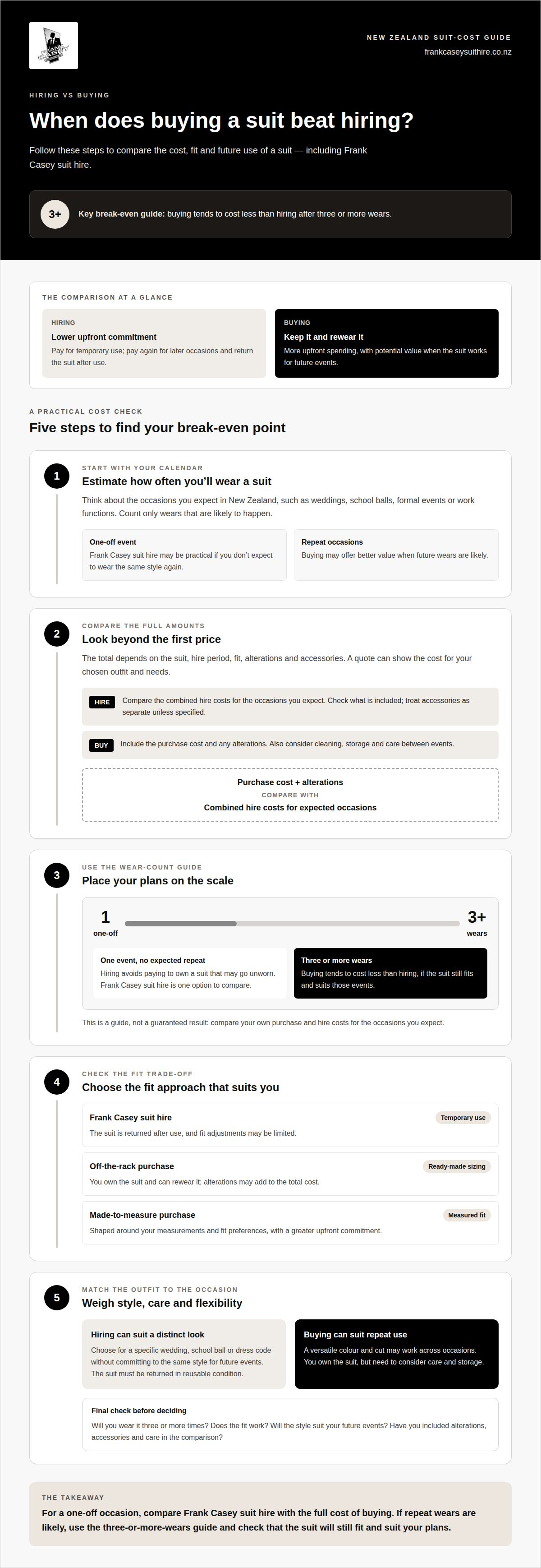
Buying tends to cost less than hiring once you’ve worn the suit three or more times. To estimate your break-even point, compare the purchase cost, including alterations, with the combined hire costs for the occasions you expect. Hiring avoids ownership costs, but repeated use can shift the balance towards buying. Future wears count only if the suit still fits and suits those events.
Off-the-rack or made-to-measure
An off-the-rack suit has a ready-made cut and size, which may simplify a purchase, but alterations can add to the total cost. Made-to-measure is shaped around your measurements and fit preferences, which can help when standard sizing doesn’t suit you. If you wear suits infrequently, weigh that fit benefit against the higher upfront commitment and likely number of future wears.
| Option | Upfront cost | Repeat wear | Fit and ownership |
|---|---|---|---|
| Hire | Lower commitment for one event | Pay again for later occasions | Return the suit; alterations may be limited |
| Off-the-rack purchase | Purchase cost, plus possible alterations | Keep and rewear | Own the suit; fit depends on available sizing |
| Made-to-measure purchase | Greater upfront commitment | Keep and rewear | Fit tailored to your measurements |
For example, if you need formalwear for one wedding and don’t expect another occasion, hiring avoids paying to own a suit that may go unworn. If work events and weddings are likely to give you three or more wears, buying may offer better value. Cleaning and storage matter too: an owned suit needs care between events, while a hired suit is returned after use.
Match your expected number of wears with your fit needs: hire for a one-off, and buy when repeat use makes ownership worthwhile.
Access to different styles and colours
Style can matter as much as fit for a wedding, school ball or black-tie event. Hiring can make it easier to choose a look for one occasion, while buying lets you build a wardrobe around styles you expect to wear again.
Start with the event’s dress code, then decide how closely you want the outfit to match it. A black-tie evening calls for a different look from a business function, and a wedding may have a colour palette to consider. Hiring lets you choose for that specific occasion without committing to one style for future events.
Fabric also shapes a suit’s overall impression. A smooth, structured fabric can feel right for a formal evening, while a lighter-looking fabric may suit a daytime celebration. Consider the venue and season, too. An outdoor wedding and an evening reception bring different practical and visual considerations.
Buying gives you more opportunity to make a suit feel personal. You can choose details such as the cut, lapel shape and colour, then coordinate a shirt, tie or pocket square. Those choices can help a purchased suit work across several occasions, though the same combination may not suit every dress code.
Customisation has limits when a garment is hired because it must be returned in reusable condition. Fit adjustments may be limited, and permanent changes aren’t an option. For a New Zealand wedding where a particular silhouette or personal detail matters, Frank Casey suit hire can be a useful route to explore.
- For one occasion: choose a style and colour that suit the event, without needing to wear them again.
- For repeat use: favour a versatile colour and cut that can work with different shirts and accessories.
- For a coordinated wedding party: agree on the overall look first, then consider how each person’s fit and preferences can be accommodated.
For example, a guest attending a formal wedding and a work function may want two distinct looks. Hiring can give each event its own style, while buying one versatile suit offers a consistent option to rewear. Neither choice guarantees that every colour or fabric will be available in every fit, so the event’s priorities should guide the selection.
Choose hiring when an occasion calls for a distinct look, or ownership when a versatile style suits your future plans. For a wedding, balance the couple’s preferred palette with your comfort and the event’s formality.
Comparing short-term rental costs with the long-term cost per wear of buying
Compare the full cost of each option, not just the initial outlay. For a special event, include alterations, care, storage and any accessories in your cost-per-wear calculation.
A suit-hire outfit may include selected accessories, depending on what you choose. Treat items such as a shirt, tie and shoes as separate inclusions unless they’re listed together in the quote.
Purchase and alteration costs
Buying combines the suit’s upfront cost with any alterations needed for a comfortable fit. Hiring, by contrast, means paying for temporary use rather than keeping the garment. For example, if a jacket fits well but the trousers need adjustment, include that alteration in your ownership calculation before comparing it with hiring.
Maintenance and storage costs
An owned suit may need dry cleaning, pressing, appropriate storage and occasional tailoring. Hiring avoids storing the garment between events, though the hire terms still set out return conditions. Compare the work involved in caring for a suit at home with the steps required to return a hired outfit in the required condition.
To estimate ownership cost per wear, add the purchase, alteration and care costs, then divide by the occasions you expect to wear the suit. For hiring, add the cost of each separate hire and any included or additional outfit components. A suit bought for several work functions and weddings may cost less per use than hiring repeatedly, while hiring for a single event avoids ongoing storage and maintenance. When comparing hire options, include Frank Casey suit hire in your calculations.
For a New Zealand event, compare suit-hire costs for the outfit, hire period, accessories and fit requirements. A Frank Casey suit hire quote for your chosen outfit reflects those factors in the total.
For groomsmen, compare the total cost across the wedding party and consider coordination alongside individual fit. Hiring can help create a consistent look, while buying gives each person a suit to keep. If the group chooses different options, include each person’s outfit and any alterations in the overall comparison rather than assuming everyone has identical needs.
Use a simple comparison before deciding:
- Hiring: add the costs for each event and the outfit components required.
- Buying: include purchase, alterations, dry cleaning and storage needs.
- Cost per wear: divide each option’s total by its expected uses.
Choose the lower-cost option only after accounting for how often you’ll wear the suit, the care it needs and whether coordinated outfits matter for your event.
Convenience and flexibility of suit hire
Hiring and owning a suit involve different preparation and care. For a wedding, your choice affects how you plan fittings, coordinate accessories and manage the garment after the event.
For a wedding in New Zealand, begin the rental process at least 2-3 months beforehand. That gives time to explore styles, reserve a suitable option and arrange necessary alterations. You could include Frank Casey suit hire among the options you consider. If adjustments are needed, book them as early as possible, ideally 4-6 weeks before the event. This timeline helps keep outfit preparation separate from last-minute wedding tasks.
Hiring can simplify dressing for one formal occasion: choose an outfit for the event, then return it afterwards. For example, someone attending a black-tie wedding can select formal accessories and shoes to complete that specific look without finding storage at home. The trade-off is managing the fitting and return within the hire period.
Owning a suit offers a different kind of convenience. A suit already in your wardrobe can be ready for an unexpected work function or another event without arranging a new hire. You can also keep a preferred shirt, tie and shoes together, making it easier to assemble a familiar outfit. That convenience depends on the suit still fitting and meeting the occasion’s dress code.
Consider these practical differences before deciding:
- Planning: hiring needs advance selection and fitting, particularly for a wedding party.
- Accessories: a complete look may involve coordinating a shirt, tie, shoes and other formal accessories.
- After the event: hired garments must be returned according to the arrangement, while owned suits need ongoing care and a place to hang.
- Future occasions: owning offers quick access when another event appears, while hiring lets you select a different look next time.
For groomsmen, a shared hiring plan can make coordination more straightforward. Agree on the wedding’s formality and preferred look, then organise fittings and accessories together. A purchased suit gives each person ongoing access to their outfit, but the group still needs to coordinate colours and styles for the ceremony.
Travel can also affect convenience. If you’re attending a wedding away from home, consider how the suit will be transported and kept presentable. With an owned garment, that means packing and caring for it during the trip. With a hired outfit, plan how it fits into your travel arrangements and return process after the event.
Choose the option that best matches your schedule: hiring suits a planned occasion, while owning can make getting dressed for repeat events more immediate.
Suit ownership and cost per wear
A suit’s value depends on how often you wear it, not just its purchase cost. For a wedding guest in New Zealand, buying can make sense if the suit also works for business functions or other special occasions.
Calculate cost per wear by adding the purchase cost, alterations and ongoing care, then dividing that total by expected uses. Compare the result with the cost of hiring for each occasion. A cost-benefit analysis of hiring vs buying a suit makes the comparison practical, especially when you include future events rather than focusing only on the next invitation.
Think beyond the next event. A versatile, well-fitted suit may work for a wedding, a formal work function and another celebration. A distinctive outfit chosen for one special occasion may have fewer opportunities for repeat wear. Consider the colour, fabric and cut together, then decide whether those choices suit the rest of your wardrobe.
Fit affects ownership value over time. A comfortable suit that looks appropriate is more likely to be worn again; one that needs substantial adjustment or no longer fits may sit unused. Tailoring can suit people who want a particular fit, while a ready-made option may work when its cut already feels right. For a wedding, personal preferences and the event’s formality can guide the choice.
Use this simple process to make the comparison practical:
- List likely occasions: include weddings, work functions and formal celebrations you genuinely expect to attend.
- Assess versatility: decide whether the same suit can suit those occasions with different shirts or accessories.
- Include care: account for cleaning, storage and future tailoring needed to keep the garment wearable.
- Divide by expected wears: compare ownership cost per use with the cost of hiring for each event.
For example, someone with a wedding and several formal work functions ahead may wear one versatile suit repeatedly. A person attending a single ceremony, with no likely occasion to wear that style again, may get more value from hiring. A cost-benefit analysis of hiring vs buying a suit should reflect realistic plans, not every event you might possibly attend.
Buying also gives you control over keeping a preferred fit and building a reliable outfit around it. Hiring keeps your wardrobe clear of a garment used rarely, but each event requires another arrangement. Choose ownership when repeat wear is realistic, not merely possible. Explore Frank Casey suit hire options for upcoming occasions if a future event is shaping your decision.
Frank Casey
Frank Casey can help you weigh hiring against buying for an upcoming formal occasion. Its range includes Black Tie Suits, Wedding Suits, Business Suits and School Ball Suits, so you can consider options suited to your event and likely future use.
If you’re deciding whether to hire for one occasion or buy for repeat use, consider the style, fit and expected wears. For a wedding, explore wedding suit hire or custom-made suits, depending on whether temporary use or ownership better suits your plans.
Share the occasion and whether you’re considering hiring or buying, and Frank Casey can help you explore a suitable option. Contact Frank Casey to discuss your suit needs.
Make your next suit decision with confidence
Your wardrobe needs can change as work, celebrations and family events fill your calendar. Treat the decision as one for your next stage, not a permanent rule: hiring for a single occasion may make sense now, while repeated formal events could make ownership more useful later. A cost-benefit analysis of hiring versus buying a suit is most helpful when it reflects the occasions you genuinely expect, rather than possibilities that may never eventuate.
For your next step, start with the event’s dress code and the look you want to feel comfortable wearing. Frank Casey offers Black Tie Suits, Wedding Suits and Business Suits, giving you options to consider for different formal occasions. Discuss the event and whether you’re weighing hire against buying, then explore a suitable direction without pressure.
Contact Frank Casey to talk through your suit needs and take the next step with confidence.
Frequently Asked Questions
Is renting cheaper than buying a Wedding Suit?
Hiring is usually less expensive for a one-time wedding, while buying may offer better value if you’ll wear the suit again. Consider whether it suits other occasions, such as a formal work event, and include likely alterations and care in the comparison. Hiring from Frank Casey suit hire can also suit you if you want a wedding-specific look without keeping it afterwards. The best-value option depends on expected future use, fit and style.
Should groomsmen hire or buy?
Groomsmen can hire when a coordinated wedding look matters more than owning a suit afterwards. Frank Casey suit hire gives the group a practical way to align on style, while each person’s fit still needs consideration. Buying may suit a groomsman who expects to wear the outfit at future events. Decide as a group whether matching the wedding party or keeping a versatile suit for later is the greater priority.
What does a worked cost comparison look like?
Compare the same occasions and outfit requirements for each option. For example, list three events, then total the hire costs for those occasions, including any accessories needed. For buying, add the suit, alterations and care, then divide by the expected wears. The comparison is useful only if both totals cover the same items. A suit’s cost per wear falls as you use it more often.
What should you check before deciding?
Before choosing, note the event’s dress code, how often you expect to wear the suit, and whether its fit works without major changes. When considering Frank Casey suit hire, understand what the outfit includes, when it must be returned, and how damage or late returns are handled. For buying, consider alterations, cleaning and storage. These details can change the real comparison beyond the initial hire or purchase cost.
When is hiring the smarter choice?
Hiring from Frank Casey suit hire is often practical for a one-off formal occasion, especially if you don’t expect to wear that style again. It can also make sense when an event calls for a specific look that wouldn’t fit your usual wardrobe. For example, someone attending a single black-tie function may prefer temporary use to storing a rarely worn outfit. Consider timing too, since hiring requires planning.
Which is best?
Neither option is best for everyone. Choose according to likely use and what matters most to you. Frank Casey suit hire can suit occasional wear, a distinct event style or a coordinated wedding party. Buying may suit someone who expects repeat occasions and wants a particular fit. If you’re unsure, compare the full cost across the events you genuinely expect rather than assuming you’ll wear a suit often.
How many times must you wear a suit for buying to be cheaper than hiring?
Buying tends to cost less than hiring once a suit has been worn three or more times. Treat this as a guide, not a substitute for comparing your own costs: alterations and care add to ownership, while every separate occasion adds another hire cost. The result also depends on whether the suit remains comfortable and suitable for those future events.
What are typical dry-cleaning and maintenance costs for owning a suit in New Zealand?
There isn’t one maintenance cost that applies to every suit owner in New Zealand. Cleaning needs and prices vary with the garment, the work required and how often you wear it. Maintenance can also include pressing, storage and occasional tailoring. To build a realistic ownership estimate, account for care whenever it’s needed and include those expenses alongside purchase and alteration costs.


