

What if one unexpected choice could make your wedding suit feel unmistakably yours? Choosing non-traditional wedding suits NZ couples can wear with confidence doesn’t mean sacrificing a polished look. Start with one personal detail, then balance it with the colour, fit and accessories around it.
It’s natural to wonder whether a bold shade, distinctive pattern or modern cut will suit the dress code, or leave the wedding party looking mismatched in photos. A clear style direction helps. Build the look around colour, texture or a tailoring detail, then coordinate the group through complementary tones and accessories rather than dressing everyone identically.
This guide compares ways to make a less conventional suit feel refined, with practical pointers for matching your choice to the wedding plans. You’ll also learn how hiring, purchasing or choosing a custom-made wedding suit can suit different needs. Professional fitting helps bring the details together, and nationwide service and delivery support couples across New Zealand.
Key Takeaways
- Non-traditional wedding suits NZ can still feel formal. Distinctive colour, pattern or texture doesn’t have to mean casual or over the top.
- Compare colour-led, patterned, textured and separates-based looks by their visual impact, formality and coordination needs.
- Use the wedding dress code as your guide, then decide how prominently you want your personal style to show.
- Follow a clear selection process: agree on the dress code, coordinate the group, check the fit and choose how to get your suit.
- Explore wedding suit hire, purchase or custom-made options with Frank Casey, with professional fitting and nationwide service and delivery across New Zealand.
What makes a wedding suit non-traditional in New Zealand?
A non-traditional wedding suit is formalwear that departs from familiar colour, pattern or styling conventions while still respecting the occasion’s dress code. For couples choosing non-traditional wedding suits NZ, that might mean an olive or soft blue suit instead of a conventional dark shade, a patterned shirt, a textured waistcoat or a different approach to tailoring. Distinctive doesn’t have to mean casual, loud or out of place at a formal ceremony.
The suit has a long history and comes in many forms, from traditional to semi-formal. The History of Suits offers useful background on those conventions. For wedding styling, the practical question is which detail you want to make your own. Let it lead, then coordinate the rest of the outfit around it.
Which details make a wedding suit feel distinctive?
Start with a broad style direction. Colour can give a familiar suit silhouette an earthy, lighter or bolder feel. Pattern might feature in a subtle check or a statement shirt, while texture can add interest through the fabric or a waistcoat. Separates, such as pairing a jacket with different-coloured trousers, create another point of difference. Tailoring details can also change the look without altering its overall formality.
One considered adjustment is often enough. A classic dark suit with a patterned tie feels different from a head-to-toe statement look. A coloured suit with restrained accessories lets the shade take centre stage. Think about how each choice will look alongside the wedding party, not just on its own.
How do you keep a non-traditional suit wedding-appropriate?
Start with the invitation, the stated dress code and the couple’s preferences. These set the tone for your outfit. A formal or evening celebration may call for a more restrained interpretation, while a relaxed setting can leave room for lighter colours or expressive details. If the invitation doesn’t spell out every styling choice, the venue and time of day can offer useful context.
Fit helps an unusual colour or detail look deliberate. A jacket that sits neatly on the shoulders and allows comfortable movement supports a polished silhouette. Professional fitting can help bring the look together. Keep the remaining elements balanced, too. If the suit is patterned, simpler accessories can let it stand out without competing. Personal style should add to the celebration’s atmosphere, not draw attention away from it.
Use the wedding’s dress code as your framework, choose one leading detail, then make the fit and supporting pieces work around it. That’s how a suit can feel individual and still belong in the day.
Compare non-traditional wedding suit styles by colour, pattern and detail
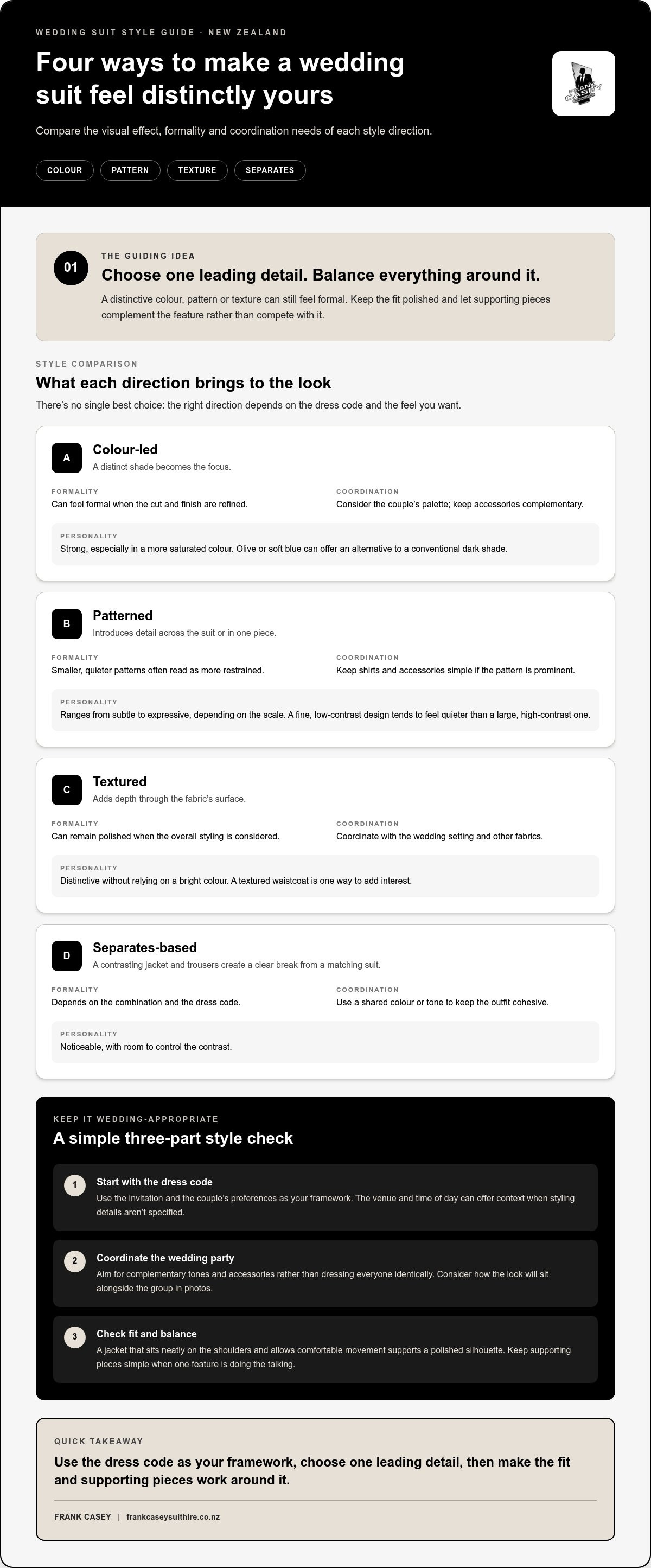
A useful way to choose between non-traditional wedding suits NZ is to compare the effect each style creates, not just whether you like it on a hanger. Consider the dress code, how much personality you want the suit to show and how the wedding party will look together.
| Style direction | Visual impact | Formality | Coordination needs | Personality |
|---|---|---|---|---|
| Colour-led | A distinct shade becomes the focus. | Can feel formal when the cut and finish are refined. | Consider the couple’s palette and keep accessories complementary. | Strong, especially in a more saturated colour. |
| Patterned | Introduces detail across the suit or in one piece. | Smaller, quieter patterns often read as more restrained. | Keep shirts and accessories simple if the pattern is prominent. | Ranges from subtle to expressive, depending on scale. |
| Textured | Adds depth through the fabric’s surface. | Can remain polished when the overall styling is considered. | Coordinate with the wedding’s setting and other fabrics. | Distinctive without relying on a bright colour. |
| Separates-based | Contrasting jacket and trousers create a clear break from a matching suit. | Depends on the combination and dress code. | Use a shared colour or tone to keep the outfit cohesive. | Noticeable, with room to control the contrast. |
Is a coloured wedding suit a good alternative to a traditional dark suit?
A familiar dark suit offers a composed, understated look. A colour-led choice can feel warmer, more relaxed or more individual, depending on the shade and how it’s styled. Start with the couple’s colour palette, then decide whether you want a close tonal match or a deliberate contrast. Neither approach is right for every venue, season or wearer, so consider the whole wedding rather than choosing a colour in isolation.
Can patterns, textures or separates still look formal?
Yes. The scale of a pattern affects how strongly it reads: a fine, low-contrast design tends to feel quieter than a large, high-contrast one. Texture brings interest without necessarily adding more colour. A waistcoat or considered separates combination can also make a familiar outline feel more personal. Keep the supporting pieces simple when one element is doing the talking. That balance helps the outfit feel intentional rather than busy.
The strongest direction is the one that fits the dress code, feels comfortable for the wearer and works with the wedding-party plan. For another route to a distinctive look, explore Frank Casey’s custom-made wedding suits guide. You can also browse wedding suit options and consider which details best express your style.
Will a non-traditional wedding suit suit your dress code and wedding party?
Yes, a distinctive suit can look right for the occasion when the dress code is your starting point. Personal style gives you room to make the outfit your own, but it shouldn’t override a clear request on the invitation. Before settling on a colour, pattern or styling detail, consider the wording, the couple’s preferences and the overall feel of the celebration.
How should the suit respond to the wedding dress code?
Read the invitation first. A formal dress code signals a more polished overall look, while semi-formal wording may leave more room for individual styling. A relaxed dress code can allow a less structured interpretation, but the couple’s wishes still matter. If the invitation gives a specific request, treat it as a guide rather than something to work around. Your creative choices can shape the outfit within that framework.
There’s a trade-off between a statement-led look and a restrained one. A bold colour or prominent pattern makes personality visible straight away, but can feel out of step if the rest of the wedding is understated. A quieter departure, such as a distinctive accessory or a less conventional detail, may blend more easily into a formal setting. Choose a level of contrast that suits the event, not just a look you’d wear on its own.
How can the groom stand out without clashing with the wedding party?
Agree on a shared palette or level of formality before anyone settles on individual suits. The groom and wedding party don’t need identical outfits to look connected. A common colour family, similar formality or coordinated accessories can bring the group together while leaving room for personal choices. Then give the groom one controlled point of difference, such as a contrasting waistcoat, a distinctive tie or a subtle shift in colour.
This approach also helps the group look cohesive in photographs. If several people wear different patterns, colours and accessories, the overall impression can become busy. Keep shared elements consistent and let one detail distinguish the groom. That way, the outfit feels intentional without making the wedding party look like a set of identical copies.
Decision rule: Match the dress code first, reflect the couple’s preferences, then choose one distinguishing detail that works with the wedding party’s shared look. That balance makes non-traditional wedding suits NZ feel personal while still belonging to the day.
For broader groom-focused planning, read the wedding suit hire guide for New Zealand.
Choose the right fit and suit option for your wedding plans
A clear order of decisions makes it easier to turn a distinctive idea into a suit that works for the day. Use this five-step process to keep style, coordination and practical needs in view:
- Agree the dress code. Use the invitation and the couple’s preferences to set the level of formality.
- Choose a style direction. Decide which colour, pattern, texture or tailoring detail will lead the look.
- Coordinate the group. Set a shared palette or formality level, then plan how the groom’s outfit will differ.
- Assess the fit. Check comfort, movement and proportions, as well as how the suit looks when worn.
- Select hire or purchase. Consider whether this is a one-off event, a suit you’ll wear again or a look you’d like tailored more individually.
Fit matters especially with non-traditional wedding suits NZ. A bold colour or detail can look deliberate when the jacket, trousers and other pieces sit in balance. If the proportions are distracting or movement feels restricted, the outfit may not feel right, however appealing the idea looked at first. Professional fitting helps you assess how the garment sits and feels as a complete look. For more detailed advice, read the professional suit fitting guide.
What should you assess during a wedding-suit fitting?
Move naturally in the suit: sit, stand, walk and raise your arms. Notice whether the jacket feels comfortable through the shoulders and allows movement, and whether the overall silhouette looks balanced from different angles. Consider the day’s activities, too. A suit should look polished in photographs and feel comfortable throughout the celebration.
Should you hire, buy or choose a custom-made wedding suit?
Hire can suit a one-off wedding or a group looking for a coordinated approach. Frank Casey’s wedding suit hire includes professional fitting and post-event cleaning. Purchase may appeal if you value owning a suit you expect to wear again. Custom-made is a route to a more individually tailored wedding look, with the details shaped around your preferences.
Each option can support a distinctive style. The best fit depends on how often you’ll wear the suit and how much personalisation matters to you. Explore wedding suit options with Frank Casey and compare hire, purchase and custom-made routes for your plans.
Plan your non-traditional wedding suit with Frank Casey
A distinctive suit comes together through a few considered decisions: settle the dress code, choose one leading style detail, coordinate the wedding party and arrange a fitting. With those foundations in place, you can explore a look that feels personal without losing sight of the day’s overall tone.
Frank Casey offers wedding suits to hire or purchase, as well as custom-made wedding suits. Hiring may suit a one-off occasion or a wedding party planning a coordinated look. Purchase can work well if you’d like to keep the suit for future wear, while a custom-made option gives you a more individually tailored route. The right choice depends on how you plan to wear the suit and how personal you want the finished look to feel.
What can you expect when arranging a wedding suit?
Professional fitting helps you assess how the suit sits, feels and moves, so a less conventional detail looks deliberate rather than distracting. Comfort matters alongside appearance: consider the day’s activities and whether you can move naturally in the outfit. A balanced fit brings the jacket, trousers and other pieces together into a polished whole.
For a hired suit, professional fitting and post-event cleaning are included. Frank Casey serves customers nationwide, with online ordering and delivery across New Zealand. This supports couples planning their wedding formalwear from different parts of the country, whether or not a retail visit is part of their plans.
How do you keep the final look personal and cohesive?
Let one detail lead, then keep the rest of the outfit and wedding-party styling in step with it. If the suit itself makes the statement, choose more restrained formal accessories and shoes. If the suit is understated, a considered accessory can add personal character. Review the complete outfit together rather than making each choice in isolation.
For the group, agree on a shared colour palette or level of formality, then decide how the groom’s look will stand apart. Coordinated doesn’t have to mean identical. A consistent approach to accessories, colour or overall formality can connect the wedding party while leaving room for individual style. That balance helps non-traditional wedding suits NZ feel refined and right for the celebration.
Ready to take the next step? Explore wedding suits with Frank Casey and consider the hire, purchase or custom-made route that suits your wedding plans.
Make your wedding look your own
The best non-traditional wedding suits NZ couples choose balance personal style with the dress code and wedding-party plan. Start with one detail that feels like you, then let a considered fit and complementary accessories bring the whole look together. A distinctive suit can still feel polished and right for the occasion.
Frank Casey has helped New Zealanders dress for formal occasions since 1987. Choose a wedding suit to hire or purchase, or explore a custom-made option for a more individual look. Hire includes professional fitting and post-event cleaning, while nationwide service and delivery support couples across New Zealand.
Ready to find a suit that fits your style and plans? Explore wedding suits with Frank Casey. With the right direction and fit, you can feel comfortable, confident and unmistakably yourself on the day.
Frequently Asked Questions
Is a non-traditional wedding suit appropriate for a formal wedding?
Yes, a non-traditional suit can suit a formal wedding if it respects the stated dress code and the couple’s preferences. A distinctive colour, pattern or styling detail doesn’t automatically make an outfit less formal. Start with the invitation, then choose how much individuality feels right for the occasion. A polished fit and considered accessories help the finished look feel intentional rather than out of place.
What colours can you wear for a non-traditional wedding suit in New Zealand?
There’s no single colour that works for every wedding. Consider the couple’s palette, the dress code and how much contrast you’d like in photographs. Olive, soft blue or a muted earthy shade can offer a change from familiar dark colours, but treat these examples as inspiration, not rules. The best choice is one the wearer feels comfortable in and can coordinate with accessories and the wedding party’s outfits.
Can the groom wear a different suit from the groomsmen?
Yes, the groom can have a distinct look while the wedding party still feels coordinated. Agree on a shared palette, formality level or accessory detail, then use one considered difference to distinguish the groom. For instance, the group might share a colour family while the groom wears a different waistcoat or tie. The aim is a cohesive appearance, not identical suits in every detail.
How do you make a patterned wedding suit look polished?
Let the pattern be the outfit’s leading feature and keep other visible choices relatively restrained. Consider whether the pattern is subtle or high contrast, and how it looks alongside the wedding palette from a distance. A good fit helps the suit look deliberate, too. Before settling on the outfit, view the complete look together and consider whether it suits the dress code and the wedding party’s planned attire.
Should you hire or buy a non-traditional wedding suit?
Hiring can suit a one-off celebration or a wedding party seeking coordinated formalwear. Buying may be a better fit if you expect to wear the suit again and value owning it. Custom-made wedding suits offer a route to a more individually tailored look. Consider future use, the level of personalisation you want and fitting needs. Frank Casey offers wedding suits to hire or purchase, plus custom-made options.
Can you get a wedding suit delivered across New Zealand?
Yes, Frank Casey provides nationwide service and delivery across New Zealand, with online ordering available. Professional fitting services are included with suit hire, helping the wearer assess comfort and fit as part of the formalwear process. Allow room in your wedding preparations for suit selection and fitting to keep outfit decisions organised alongside the other details of the day.
What should you decide before choosing a non-traditional wedding suit?
Settle the dress code and the couple’s preferences first. Then choose one main style direction, such as colour, pattern or texture, and decide how the wedding party will coordinate. Assess the fit and consider whether hiring, buying or choosing a custom-made suit best suits your plans. This order keeps one statement detail from dictating the whole outfit and helps you build a personal, cohesive look.


