

What should you expect when renting formal shoes for an event? A fitting helps you assess the fit and style before you hire. Try on both shoes and take a short walk to see how they feel. They should feel secure without pinching or rubbing.
It’s understandable to want shoes that complement your outfit and stay comfortable throughout the occasion. Style matters, but so do the time you’ll spend standing, walking or dancing and the event setting.
This guide explains how a fitting works, what to notice as you try on formal shoes and how to choose a style that suits your dress code and venue in New Zealand. You’ll also learn how to plan for comfort and identify common fit concerns before making your choice.
Key Takeaways
- Match formal shoes to your outfit’s colour and style, as well as the dress code and venue.
- During a fitting, try on both shoes and walk around to assess comfort and fit.
- Consider how long you’ll be on your feet and choose a style suited to the occasion.
- If a pair doesn’t fit comfortably, discuss alternative fit options before the event.
- Learn how styles such as Oxfords, brogues, loafers and monk straps differ in formality.
1. Matching formal shoes to dress codes and venues
Start with your outfit, then match the shoes to its colour, formality and setting. A fitting can help narrow the options based on your suit, dress code and venue. For example, polished black Oxfords suit a formal wedding, while a relaxed celebration may allow a less structured style. When renting formal shoes, discuss these details before choosing a pair.
Colour matters, especially with summer outfits. Brown or navy shoes can create a considered contrast with a light grey suit. For a relaxed wedding, suede loafers or linen slip-ons may suit a light-coloured outfit better than highly polished black shoes. Let the invitation’s dress code guide your final choice.
Consider the ground underfoot. Delicate shoes can pick up dirt or be damaged on grass and mud, making them a poor match for a garden party. For a wedding with lawn areas or dancing, a block heel can offer a steadier option; block heels are typically 6-8 cm high. A polished shoe is better suited to an indoor black-tie venue than a casual outdoor setting.
Cleaning fees, deposits and late-return fees vary between New Zealand hire arrangements. Review the agreement before booking to understand which charges apply and what the cleaning and return terms require.
Choose a formalwear hire service that offers formal shoe hire and a fitting, so you can consider the shoes alongside your outfit. Formal shoes can complete a look for a school ball, wedding or black-tie event. Let the dress code and venue guide your choice.
Book once you know the event date and have a clear idea of your outfit. This gives you time to arrange a fitting and discuss sizing or style concerns before the occasion. If a wedding invitation specifies black tie, for example, share the dress code and suit colour during the fitting.
To make the fitting useful, bring or describe the outfit you plan to wear, including its colour and formality. A professional can compare suitable shoe colours and styles. For a summer wedding with a light grey suit, for instance, you might consider brown or navy shoes. Explain the event setting too, as it can affect your choice.
Getting rented formal shoes comfortable before an event
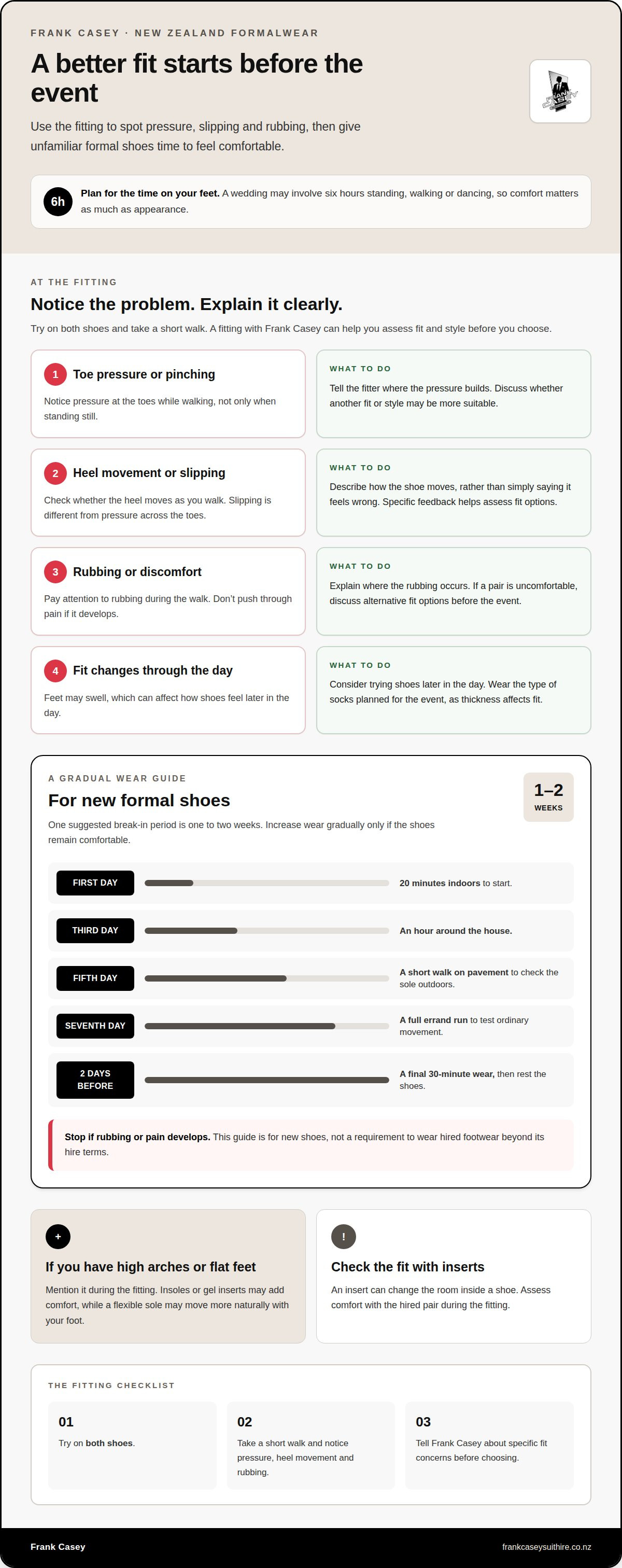
Comfort starts with a fitting that checks more than the size marked inside the shoe. Try on both shoes and walk around, noticing pressure at the toes, heel movement and rubbing. Trying shoes later in the day may also help account for feet swelling. If a pair pinches or slips during the fitting, pay attention to that rather than judging it while standing still.
Allow time before the event to get used to an unfamiliar pair. Formal shoes can feel different from everyday footwear, and a wedding may involve six hours on your feet. Wearing them gradually gives you a chance to notice discomfort before the occasion, rather than discovering it during the ceremony or on the dance floor.
For new formal shoes, one suggested break-in period is one to two weeks. Start with 20 minutes indoors on the first day, then increase wear gradually if the shoes remain comfortable. On the third day, try an hour around the house. A short walk on pavement on the fifth day can show how the sole feels outdoors.
By the seventh day, a full errand run can help test the fit during ordinary movement. Stop if rubbing or pain develops, rather than pushing through discomfort. Two days before the event, a final 30-minute wear can refresh your sense of the fit, followed by resting the shoes. Treat this as a guide for new shoes, not a requirement to wear hired footwear beyond its hire terms.
During the fitting, describe where pressure builds and how the shoe moves as you walk. A professional can use your feedback to assess whether another fit or style may be more suitable. Heel slippage, for example, differs from pressure across the toes, so explain the specific problem. Wear the type of socks you expect to use at the event, as thickness can affect the fit.
If you have high arches or flat feet, mention this during the fitting. Insoles or gel inserts may add comfort, while a flexible sole can move more naturally with your foot. These options should be assessed with the hired pair, since an insert can change the available room inside a shoe. A formal shoe hire fitting gives you a chance to discuss comfort before choosing a pair for your event.
3. Formal shoe styles including Oxfords, brogues, loafers, and monk straps
Oxfords, Derbies, brogues, loafers and monk straps each create a different impression with formal clothing. Oxfords have closed lacing, which gives them a neat, streamlined appearance. Derbies have open lacing and often look slightly less formal. For a wedding with a traditional dress code, classic black Oxfords or polished Derbies are suitable options.
Brogues are recognised by decorative perforations across the leather. Their detailing adds visual interest, making them a possible match for a crisp suit at a corporate event. Monk straps fasten with a buckle instead of laces. Their distinctive detail offers an alternative when a plain lace-up shoe feels too understated.
Loafers have no laces and slip on easily. Their shape and finish affect how formal they look, so consider the event before choosing them. A sleek, dark loafer can look more dressed up than a casual design. Suede loafers suit relaxed settings better than strict black tie, where a polished lace-up style is usually more appropriate.
Use the invitation as your first guide, then consider the suit’s cut and finish. A sharp, structured suit pairs naturally with a clean Oxford or restrained monk strap. A softer, less formal suit can balance brogue detailing. For black tie, choose a simple, polished shoe that doesn’t compete with the outfit’s formal details.
During a fitting, compare each style with your trousers and full outfit. Check how the shoe looks beneath the trouser hem while standing and walking. A narrow Oxford creates a different outline from a broader Derby. The fastening also affects the fit across the top of your foot, so assess comfort as well as appearance.
For a corporate event, compare brogues and monk straps with a crisp suit, then consider which option feels balanced. For a formal wedding, compare black Oxfords with polished Derbies. The venue and dress code help narrow the choice, while the shoe’s shape and detailing complete the look. Your preference for laces, buckles or slip-on styling can also guide the selection.
Choose dress shoes after selecting your outfit, so you can match them to its colour and style. During a fitting, stand and walk at least ten steps in each shoe, checking how each style feels as you move. This helps you judge comfort alongside appearance before choosing a pair.
Check that there is a thumb's width of space at the front of a formal shoe. A flexible sole moves with your foot and may help reduce fatigue when you’re standing or walking during an event. These fit checks help you choose a style that feels as appropriate as it looks.
4. Backup options if a garment does not fit
If rented formal shoes feel wrong during the fitting, describe the problem precisely. Pinching across the toes, pressure on the sides and heel movement can point to different fit issues. A professional can reassess the fit and compare another size or shape where suitable. Don’t judge the shoes while seated; stand and walk to see how they feel in motion.
Separate a size problem from a style problem. If a lace-up shoe presses across the top of your foot, for example, a different shape may feel better than a longer size. If your heel lifts with each step, the shoe may not hold your foot securely. Explain when the discomfort starts and where it occurs so the fitting can focus on the cause.
Small details can change the fit. Wear the socks you intend to use at the event, then try on both shoes and walk around. If the fit changes with thinner or thicker socks, mention it during the fitting. The aim is a secure feel without painful pressure, not a pair that feels acceptable only while standing still.
If a pair remains uncomfortable, ask for another style to be assessed. A Derby, Oxford or loafer can sit differently across the foot because of its shape and fastening. A change of style may help, but the alternative still needs to suit the event’s dress code and your outfit. A comfortable shoe that looks out of place may not solve the whole problem.
Don’t plan to endure a poor fit through a wedding or school ball. Pressure that seems minor during a brief try-on can become distracting during a long ceremony, dinner or time spent dancing. Raise concerns before the event, while there’s time to discuss the fit and possible alternatives. Don’t assume a shoe will stretch enough to resolve the pressure.
At collection, try the pair on again and walk in it before leaving. Check that the shoes still feel secure with your event socks and that the original pressure point hasn’t returned. If the fit has changed, describe what feels different and where. This final check gives you a chance to discuss any problem before discovering it at the venue.
5. Breathable materials and a comfortable fit
Material affects how formal shoes feel, particularly at a summer event in New Zealand. Leather and fabric are breathable options, while canvas and mesh allow airflow to help keep feet cool. The dress code matters too: mesh shoes may suit a casual setting better than a traditional formal occasion. A fitting can help weigh the event, outfit and comfort together.
Assess the fit with both shoes on, not by checking one shoe while seated. Stand, then walk at least ten steps in each shoe. Notice whether your toes can move, your heel stays in place and the upper presses across your foot. A well-fitted shoe can help prevent blisters and make walking or standing more comfortable.
Space at the front is another useful check. Allow about a centimetre between your longest toe and the shoe’s end, or use a thumb’s width as a practical guide. Too little room can crowd your toes; too much may let your foot slide forward. A professional can assess space alongside the shoe’s width and shape, rather than relying on length alone.
Consider the sole too. A flexible sole moves with your foot and may help reduce fatigue during a long event. Stiffness can change how a shoe feels as you walk, so compare the sensation over a few steps. A shoe that feels fine while standing, for example, may become uncomfortable as your foot bends.
Foot shape influences which details matter most. High arches or flat feet can affect pressure distribution, while a broad forefoot may need more room across the toes. Insoles or gel inserts may add comfort, but they also take up space inside the shoe. Try an insert with the actual pair to see whether it improves support without making the fit too tight.
At a fitting, explain where discomfort appears and whether it changes as you move. A hot spot at the heel differs from pressure across the forefoot, and each calls for a different assessment. For a summer wedding, compare breathable material, secure fit and suitable formality together. Arrange a formal shoe fitting to assess comfort and fit before your event.
Frank Casey: Formal Shoes
Frank Casey offers formal shoe hire and Frank Casey suit hire for events across New Zealand. Once you’ve considered the dress code, outfit and venue, formal shoes are a practical next step in completing your look. For a wedding or black-tie occasion, you can also coordinate your shoes with Wedding Suits or Black Tie Suits.
When you’re ready to explore formal shoes for your event, Frank Casey can help you consider the occasion and the look you’re aiming for. If you’re planning a wedding or black-tie outfit, choosing shoes alongside Frank Casey suit hire options can create a cohesive finish.
Contact Frank Casey to discuss formal shoe hire for your occasion.
Make your next step count
As your event approaches, choose a fitting time that lets you consider the complete outfit, not just the shoes on their own. Bring the dress code and any details that could affect your choice, such as whether the event is indoors or on grass. This gives the fitting a clear purpose and helps you focus on a pair suited to the occasion.
Knowing what to expect when renting formal shoes can make the decision more straightforward. Discuss the look you’re aiming for, try suitable options and raise any fit concerns before the event. Frank Casey suit hire can help you explore formal shoe hire alongside formalwear for your occasion.
Contact Frank Casey suit hire to discuss your options and take the next step towards a polished, comfortable event outfit.
Frequently Asked Questions
How do you try it on?
Try on both shoes with the socks you plan to wear to the event. Fasten them as intended, then stand and move naturally to assess the fit. A professional can observe whether the heel stays in place and the shoe sits evenly. If one foot feels different, mention it; the fit can vary between your left and right foot.
How does it work?
Formal shoe hire generally involves choosing a pair for your occasion, assessing the fit and agreeing on hire and return arrangements. The event’s dress code and your outfit help guide the style choice. Before finalising the hire, make sure the arrangements explain the hire period, collection or delivery method, return date and any applicable conditions.
What if it doesn’t fit?
Raise fit concerns during the fitting, before choosing a pair. Describe whether the shoe feels loose, presses against your foot or feels uneven as you move. A professional can consider another size or style where suitable. If discomfort appears after collection, contact Frank Casey promptly, as the next steps depend on timing and the hire terms.
What styles and sizes of formal shoes are available to rent?
Formal styles can include Oxfords, Derbies, brogues, loafers and monk straps, but a provider’s selection and sizing range can differ. Oxfords have a streamlined look, while brogue detailing adds decoration; loafers slip on, and monk straps fasten with a buckle. A fitting helps identify which available style suits your outfit and sits comfortably on your foot.
What is included with formal shoe rental, such as fitting or shoe care?
What’s included depends on the shoe-hire arrangement, so review the rental terms for fitting, shoe care and return expectations. Don’t assume that services included with suit hire also apply to footwear. For example, professional fitting or post-event cleaning included with suit rental doesn’t automatically describe what comes with shoe hire. The agreement should clarify what applies to the shoes.
How do you get fitted for rented formal shoes?
A shoe fitting assesses how the pair feels and moves on your feet, not just the size marked inside. Wear event-appropriate socks and explain any pressure points or differences between your feet. A professional can compare the fit across styles and consider how the shoes work with your formal outfit. It’s also a good time to raise questions about the hire arrangement.
What are the pickup, delivery, and return rules for shoe hire in NZ?
Pickup, delivery and return arrangements are set out in the hire terms. Check the agreed collection method, delivery details, return date and how the shoes should be returned. For an event away from home, plan around the delivery and return arrangements rather than assuming every hire follows the same process.
What happens if rented formal shoes are damaged or don’t fit?
A fit issue and damage are handled differently, so follow the rental agreement for each. If the shoes don’t fit, report the problem promptly and explain where they feel uncomfortable. If damage occurs, notify the provider and follow the stated return procedure. The agreement sets out how shoe condition is assessed and what responsibilities apply during the hire.


