

The cocktail vs black tie dress code isn’t simply a choice between two levels of formality: it changes what you’re expected to wear. Cocktail attire calls for a polished suit, while black tie generally means a tuxedo for men and a floor-length gown for women. Black tie is the more formal option, typically suited to evening weddings and other formal events.
It’s easy to second-guess an outfit when an invitation gives only a dress code. You want to feel appropriately dressed without looking too formal or too casual.
This guide explains how the dress codes differ in formality and setting, and what each typically calls for. You’ll also find practical advice on suits, gowns and footwear, plus how to interpret “black-tie optional”, so you can choose an outfit with confidence.
Key Takeaways
- Use the invitation’s dress code to judge formality: black tie is more formal than cocktail attire and is typically associated with evening events.
- For black tie, choose a tuxedo or an elegant floor-length gown; a dressy pantsuit is another option.
- Cocktail attire calls for a polished, less formal look. Consider a suit and a knee-length, midi or tea-length outfit.
- Pay attention to the details: formal footwear and coordinated accessories help your outfit feel appropriate for the occasion.
- Read “black-tie optional” as a choice between a tuxedo and a very formal dark suit, rather than a requirement to wear a tuxedo.
Black-tie formality and typical evening setting
Black tie signals a formal evening occasion, with a tuxedo expected rather than an everyday business suit. It sits one level below white tie, the most formal traditional dress code.
In New Zealand, an invitation may specify black tie for an evening wedding, gala, ball, fundraiser or formal party. The setting offers helpful context: a formal dinner or ballroom event calls for more polished clothing than a relaxed celebration. Check the invitation’s wording before choosing your outfit.
Strict and optional black-tie invitations
A strict black-tie invitation expects guests to wear black-tie attire, while “black-tie optional” allows a tuxedo or a very formal suit. The distinction matters because it changes whether a tuxedo is expected or simply one suitable choice.
For an optional dress code, men can choose a tuxedo or a formal dark suit, usually in black or another dark colour. A formal dress code can also allow either black tie or a tailored suit. Read the exact wording rather than assuming “formal” and “black tie” mean the same thing.
Black-tie attire for women and men
Black-tie attire pairs a tuxedo for men with an elegant gown or pantsuit for women. Knowing the expected level of formality helps you choose an outfit suited to the event, without confusing black tie with cocktail attire.
For men, the classic choice is a tuxedo with a white evening shirt and black bow tie. A black vest or cummerbund and polished formal shoes complete the look. Women generally wear a floor-length gown, though an elegant pantsuit is also suitable. Together, these choices create a consistent level of formality across the event.
Black tie means more than wearing a dark suit after sunset. The dinner jacket, evening shirt and bow tie distinguish a tuxedo from standard business clothing. A tailored dark suit can work for a black-tie optional or general formal dress code, but it isn’t equivalent to a tuxedo when the invitation specifies strict black tie.
The event’s timing and setting offer useful clues, but the invitation is the clearest guide. A gala dinner, evening fundraiser or formal wedding may specify black tie to set expectations for guests. If the invitation says black tie, plan on eveningwear. If it says black-tie optional, a formal dark suit is another appropriate choice.
Black tie is less formal than white tie but more formal than cocktail attire. That distinction affects the whole outfit, not just the jacket: a tuxedo and bow tie belong to black tie, while cocktail attire centres on a smart suit. For example, a guest at a formal evening ball would generally dress to the black-tie standard if the invitation specifies it.
For New Zealand weddings and formal events, the venue can help you picture the occasion, but it doesn’t override the stated dress code. A hotel ballroom or evening reception may feel formal, yet the invitation determines whether guests should wear tuxedos or tailored suits. Use the dress code as your practical guide, then choose details that match its level of formality.
Differences between black-tie and cocktail dress codes
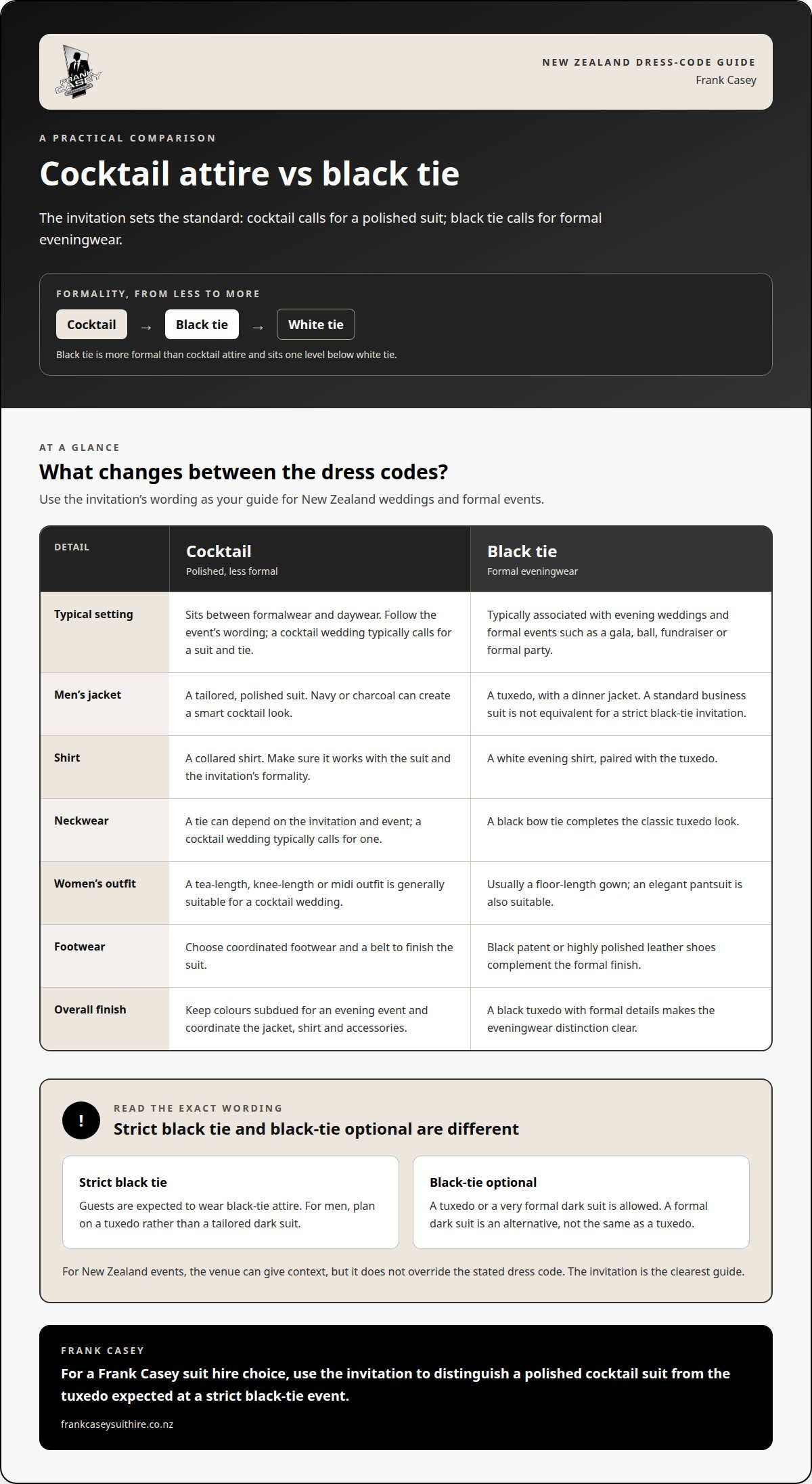
The key difference is the level of formality. Black tie calls for eveningwear, while cocktail attire sits between formalwear and daywear. For a New Zealand event, the invitation’s wording helps you decide whether to wear a tuxedo or a well-presented suit. The cocktail vs black tie dress code distinction affects the whole outfit, not just the jacket.
For men, black tie centres on a tuxedo, white evening shirt and black bow tie. Cocktail attire usually calls for a suit and collared shirt. A tie can be optional under general cocktail dress codes, but a cocktail wedding typically calls for a suit and tie. Follow the invitation’s wording rather than assuming every event has the same expectations.
Colour and finish also help distinguish the dress codes. For an evening event, subdued colours can be a suitable choice for cocktail attire. A navy or charcoal suit creates a smart cocktail look, while a black tuxedo with formal details is the clearer choice for black tie. Make sure the jacket, shirt and accessories work together.
Women’s outfit lengths can also help distinguish the dress codes. For a cocktail wedding, a tea-length, knee-length or midi outfit is generally more suitable than a floor-length gown, with collections from Kitten D'Amour offering classic examples of these refined mid-length silhouettes. Black tie usually calls for a floor-length gown, although an elegant pantsuit is also appropriate. These guidelines help guests choose an outfit suited to a wedding reception or formal evening event.
- Jacket: Choose a tuxedo for black tie; a tailored suit is appropriate for cocktail attire.
- Shirt: A white evening shirt suits black tie, while cocktail attire requires a collared shirt.
- Neckwear: A black bow tie completes black tie; cocktail ties depend on the invitation and event.
- Footwear: Black tie pairs best with black patent or highly polished leather shoes. Cocktail attire can be finished with coordinated footwear and a belt.
Footwear can make the distinction especially clear. Patent or highly polished black leather complements the formal finish of a tuxedo. With a cocktail suit, coordinate your shoes and belt rather than relying on tuxedo styling. For example, a dark suit with a collared shirt and coordinated leather accessories reads as cocktail attire, not black tie.
Use the invitation to guide your choice. If it specifies black tie, choose a tuxedo rather than trying to turn a cocktail suit into eveningwear with a bow tie. If it says cocktail, keep the outfit polished without adding full tuxedo details. Understanding the cocktail vs black tie dress code helps you avoid combining pieces that signal different levels of formality.
For a closer look at suitable formalwear options, consider how each outfit fits the invitation. Match the main pieces and accessories to the stated dress code, then choose a finish that feels appropriate for the occasion.
What does black tie attire mean for women and men?
Black tie pairs a tuxedo for men with an elegant gown or pantsuit for women. Both outfits use refined eveningwear details, such as a white evening shirt, black bow tie or sumptuous fabric. Understanding these elements helps you choose clothes suited to a formal wedding, gala or ball.
For men, the foundation is a tuxedo, also called a dinner suit, rather than a standard business suit. A classic black outfit combines a dinner jacket, black tuxedo trousers, a white evening shirt and a black bow tie. A black vest or cummerbund and patent leather shoes complete the traditional ensemble.
Jacket details matter. A black-tie dinner jacket should have one or two buttons at most, with only the top button fastened. Choose a comfortable fit through the shoulders and sleeves, with the shirt cuffs showing neatly. The trousers should sit smoothly over the shoes to keep the outfit balanced from jacket to hem.
Black isn’t the only suitable colour. Midnight blue is an accepted black-tie choice and can appear darker than black in photographs. A black velvet dinner jacket is another option for a formal occasion. In warmer climates, an ivory or cream dinner jacket can be paired with black trousers and a white shirt.
For a summer wedding, men may wear a white dinner jacket with black tuxedo trousers. This preserves the formal structure of black tie while giving the outfit a lighter jacket. Keep the remaining pieces classic, with a white evening shirt, black bow tie and polished shoes.
Women generally wear a floor-length gown to a black-tie wedding. Traditional gowns may use sumptuous fabrics such as silk or organza, which suit the evening’s formality. An elegant pantsuit is also appropriate. The aim is a dressy, refined finish rather than the shorter, more relaxed look often associated with cocktail attire.
- For men: Choose a tuxedo, white evening shirt and black bow tie, then add a vest or cummerbund and patent leather shoes.
- For women: Select a floor-length gown or elegant pantsuit, with fabric and finish suited to an evening occasion.
- For warmer weather: Consider a white or ivory dinner jacket with black trousers, keeping the shirt and bow tie formal.
Fit and coordination bring these pieces together. Check that the dinner jacket sits comfortably at the shoulders and closes neatly, and that the trousers complement its shape. For women, a gown’s length and fabric contribute to its formal effect. For men, the shirt, bow tie and jacket establish the black-tie standard.
What should you avoid wearing to cocktail and black tie events?
The main mistake is mixing pieces from different levels of formality. A tuxedo jacket with casual trousers, or a cocktail suit with a black bow tie, can make an outfit feel mismatched. Use the invitation as your guide, then keep the jacket, shirt, trousers and accessories consistent with its dress code.
For black tie, don’t treat a standard business suit as a tuxedo substitute when the invitation specifies strict black tie. A dark suit and conservative tie suit a formal or black-tie optional dress code, but the classic black-tie outfit is a tuxedo with a white evening shirt and black bow tie. A regular necktie also changes the look rather than completing traditional black tie.
Pay attention to footwear. Black tie calls for black patent or highly polished leather shoes; casual shoes or a noticeably relaxed finish can undermine the formality. For cocktail attire, avoid shoes and a belt that clash in colour or finish. Coordinated accessories create a more considered look with a tailored suit.
Cocktail attire is eveningwear, so avoid colours or details that look too casual or daytime-oriented. Subdued colours suit the occasion better than bright, informal choices. For example, a well-cut navy suit and collared shirt are more appropriate than a casual shirt worn without a jacket. For a cocktail wedding, include a tie, as guests are typically expected to wear a suit and tie.
Dress length can also create a mismatch. For a cocktail wedding, a floor-length gown may feel more formal than the usual tea-length, knee-length or midi options. At a black-tie wedding, a short, casual dress can look underdressed beside formal eveningwear. An elegant pantsuit can work for black tie, while a sophisticated cocktail dress may suit a less formal black-tie wedding.
- At black tie: Avoid replacing a tuxedo with an ordinary business suit when the invitation specifies strict black tie.
- At cocktail events: Avoid a full tuxedo look when the invitation calls for a suit and tie.
- With either dress code: Avoid accessories or shoes that pull the outfit towards a different level of formality.
Check the complete outfit before leaving for a New Zealand wedding or evening function. A black bow tie belongs with a tuxedo, while a cocktail suit calls for accessories suited to its more relaxed formality. If the invitation says black-tie optional, a formal dark suit is suitable. Don’t assume every black-tie detail is mandatory.
Keep your final choice focused on the stated dress code. A polished cocktail outfit doesn’t need tuxedo accessories, and black tie shouldn’t be reduced to a dark suit with a bow tie. Matching the main pieces, such as a dinner jacket, evening shirt and formal shoes, helps prevent common outfit mismatches.
How can you tell whether an invitation means strict black tie or optional black tie?
Look for the exact wording on the invitation: “black tie” sets the expectation of a tuxedo, while “black-tie optional” allows a tuxedo or a very formal suit. “Formal” may also allow either black tie or a tailored suit. These phrases aren’t interchangeable, so identify the dress code before choosing your outfit.
With strict black tie, plan to wear a tuxedo. A dark business suit, even with a white shirt and tie, doesn’t meet the same traditional standard. If an invitation specifies black tie, the direction is clear: choose eveningwear rather than treating the event as a standard formal occasion.
Black-tie optional gives men more choice, but it doesn’t make casual clothing suitable. A tuxedo remains appropriate, but a very formal suit is also acceptable, generally in black or another dark colour. A tailored charcoal or dark navy suit can suit this wording when paired with formal accessories and a crisp shirt.
The word “optional” changes what guests may wear, not the formality of the event itself. A wedding or gala can still have an elegant evening setting even when tuxedos aren’t required. Choose the most formal outfit you feel comfortable wearing, while keeping the invitation’s standard in mind.
Use this quick reading guide for common wording:
- “Black tie”: Wear a tuxedo with formal evening details.
- “Black-tie optional”: Choose a tuxedo or a very formal dark suit.
- “Formal”: A tuxedo or tailored suit may be suitable.
Don’t rely on the venue alone. A ballroom, hotel or evening reception can suggest a formal atmosphere, but the invitation provides the dress-code instruction. For example, a wedding at a grand venue may still specify black-tie optional, making a formal dark suit a valid choice.
Think about the complete outfit after reading the invitation. For optional black tie, a dark suit should look deliberate and polished, not like everyday office wear. A well-fitted jacket, formal shirt and carefully chosen tie help distinguish it from business attire. If the invitation specifies strict black tie, wear a tuxedo instead.
If you’re choosing between these options for a New Zealand wedding or gala, base the decision on the stated dress code first. Explore formal outfit options to plan a look that matches the invitation’s level of formality.
Frank Casey: Black Tie Suits
Frank Casey offers Black Tie Suits for formal occasions, with suit hire for events such as weddings, galas and evening functions. Hiring a suit from Frank Casey lets you choose formalwear for your event without purchasing a suit.
For invitations with a different dress code, Wedding Suits and Business Suits are also available. Match your choice to the invitation, then decide whether hiring or purchasing best suits your needs.
For help choosing formalwear for your occasion, contact Frank Casey or visit frankcaseysuithire.co.nz.
Choose your outfit with confidence
Let the occasion guide your final choice. Before settling on an outfit, consider the invitation’s wording, the event’s setting and how formal you want to feel. Understanding the cocktail vs black tie dress code can help you choose a look that suits the occasion without feeling out of place.
For a New Zealand wedding, gala or formal function, the right suit can make getting ready simpler. Frank Casey offers Black Tie Suits for formal events, alongside Wedding Suits and Business Suits for other occasions. Choose the option that matches the invitation, then focus on fit and finishing details.
Ready to plan your outfit? Contact Frank Casey for style advice and take the next step towards an occasion-ready look.
Frequently Asked Questions
What does cocktail attire mean for women and men?
Cocktail attire means a polished outfit that’s less formal than black tie. For men, a collared shirt and suit form the foundation; a tie is generally optional, although cocktail wedding invitations typically expect one. Women can choose a tea-length, knee-length or midi outfit. For example, a dark suit with a coordinated belt works for a cocktail function without looking like full eveningwear.
What are the main differences between cocktail and black tie dress codes?
Black tie calls for a more formal evening look, while cocktail attire allows a smart suit without tuxedo details. Picture a guest in a dinner jacket and bow tie beside someone in a tailored navy suit and collared shirt: the first is dressed for black tie, the second for cocktail. The difference also affects women’s outfits, from floor-length eveningwear to shorter cocktail styles.
Can you wear a cocktail dress to a black tie event?
A sophisticated cocktail dress can suit a less formal black-tie wedding, but it isn’t the usual choice for strict black tie. For a black-tie optional invitation, a fancy cocktail dress is an accepted option alongside a floor-length gown or dressy pantsuit. Consider the invitation’s exact wording: “optional” allows more flexibility than a strict black-tie request.
What should men wear to a black tie event in New Zealand?
Men should wear a tuxedo with a white evening shirt and black bow tie to a black-tie event in New Zealand. For a summer wedding, a white dinner jacket with black tuxedo trousers is also suitable. Midnight blue is another accepted tuxedo colour and can appear darker than black in photographs. Keep the outfit’s formal details consistent from jacket to shoes.
What shoes and accessories are appropriate for cocktail attire versus black tie?
For black tie, choose black patent or highly polished leather shoes, with a black bow tie and a black vest or cummerbund completing the formal look. Cocktail attire allows more flexibility: pair your suit with a collared shirt, then coordinate your shoes and belt. Matching leather accessories, for example, keep a navy cocktail suit looking considered without adding tuxedo details.


