

A polished interview outfit doesn’t need to be new or expensive. When hiring a suit for a job interview, the most useful tips are to choose smart, tidy clothing that suits the role, and wear a business suit where possible. Clean shoes, neat grooming and preparation can help you feel composed when you meet the interviewer.
It’s normal to feel pressure to make a strong first impression while finding the right words. A little planning can make both easier. This guide covers choosing and preparing your interview outfit, getting ready for the day, and shaping clear answers with examples from your experience. You’ll also find practical ways to handle questions calmly, including what to do if you need time to think or want a question repeated.
Key Takeaways
- Choose smart, tidy interview clothes that suit the role, and prepare your outfit before the day.
- Work out which extras you need, such as a shirt, tie or shoes, rather than assuming they’re included with a hired suit.
- Check the fit while standing and moving so you can sit comfortably and feel at ease in the interview.
- Follow the hire arrangements for caring for the suit and returning it, and plan ahead to avoid a last-minute rush.
- If hiring doesn’t suit your budget, consider other ways to put together a neat, professional outfit.
2. Planning what to wear to an interview
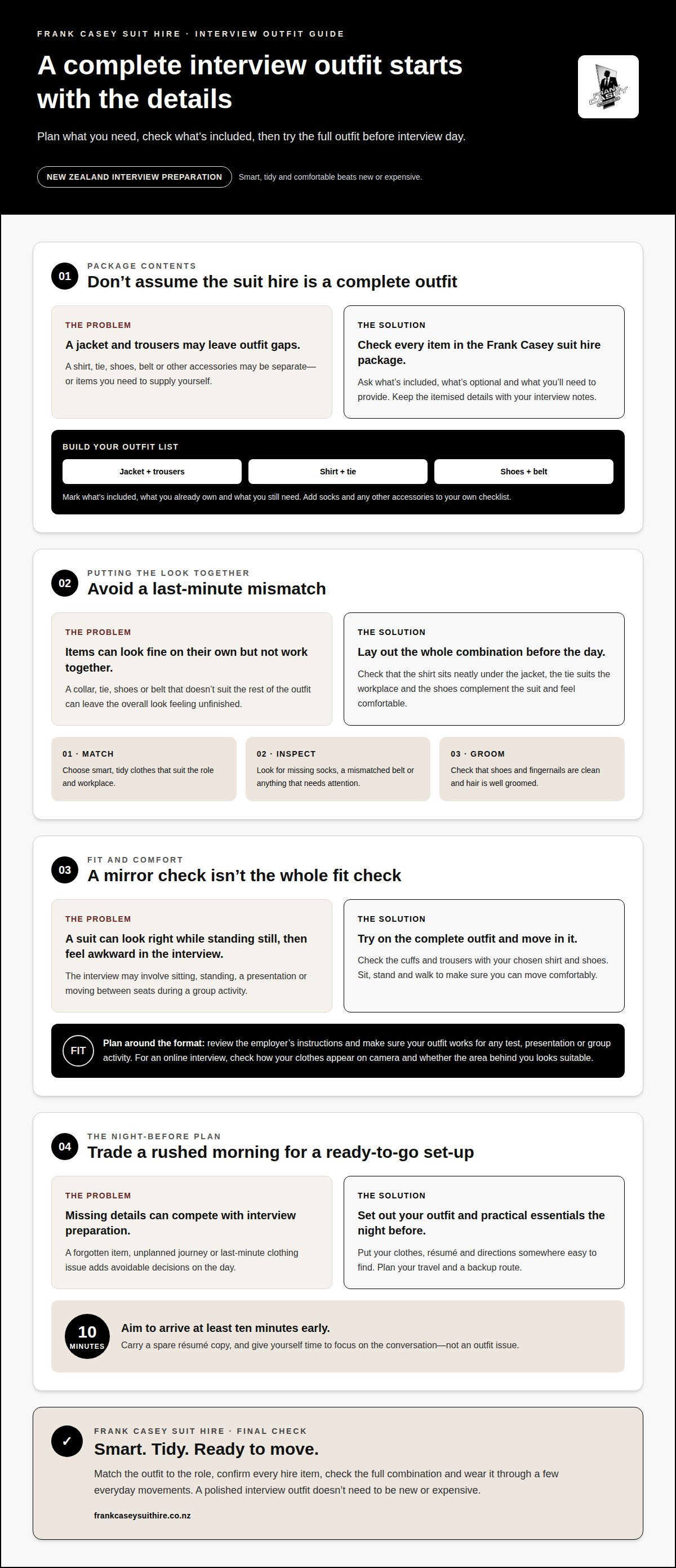
Tips for hiring a suit for a job interview start with matching your outfit to the role and workplace. Interview clothes should look smart and tidy, but they don’t need to be new or expensive. A business suit is a suitable choice where possible. If you’re unsure how formal to dress, consider the organisation’s work and the position you’re seeking. For example, a client-facing role may call for a more formal outfit than a hands-on position. Choose clothes that let you sit, stand and move comfortably.
Plan the complete outfit, not just the jacket and trousers. Set aside your shirt, tie, belt, socks and shoes together. Check that each item is clean, presentable and comfortable. Clean your shoes and fingernails, and make sure your hair is well groomed. Try on the full outfit before interview day. This gives you time to spot a missing button, an awkward collar or shoes that need attention. A tidy appearance can help you feel prepared when you meet the interviewer.
Check the interview format before choosing what to wear. Some interviews include a test, presentation or group activity, so your clothes should suit those tasks too. You may need to stand for a presentation or move between seats during a group exercise. Review the employer’s instructions and plan your outfit around the activities. If the interview is online, check how your clothes appear on camera and make sure the area behind you looks suitable.
Prepare the practical details along with your clothes. Put your outfit, résumé and directions somewhere easy to find the night before. Plan how you’ll travel, estimate the journey time and choose a backup route in case something goes wrong. Aim to arrive at least ten minutes early, and carry a spare résumé copy. These steps reduce last-minute decisions and help you focus on the conversation.
Research the organisation and job description before the interview. Note the skills the employer seeks, then prepare examples showing how you’ve used them. Keep each answer brief and focused. The STAR method can help you explain the situation, task, action and result. Practise your examples aloud, alone or with someone you trust. An interviewer can form an impression within the first eight seconds, so plan a calm greeting and a clear opening answer.
Prepare questions as well as answers. An interview also lets you assess whether the role and organisation suit you. Use your research to ask about the work and the team’s priorities. One useful question is what problems the successful candidate should solve during their first six months. If a question catches you off guard, pause to think. If it isn’t clear, ask the interviewer to repeat or explain it. These practical tips for hiring a suit for a job interview help you plan your outfit and prepare your responses together.
3. What is usually included in a suit hire package, such as a shirt, tie, and shoes?
A suit hire package can include different garments and accessories, so check its itemised contents before planning your outfit. Start with the core pieces: jacket and trousers. Then check whether a shirt, tie, shoes, belt or other accessories are included or hired separately. Don’t assume a complete outfit comes as one package. A jacket and trousers alone, for example, still leave you needing a shirt, suitable shoes and a tie if the role calls for one.
Make a written outfit list before arranging your hire. Match each item to the interview dress code and note what you already own. If you have a suitable shirt, your main priorities may be the suit and shoes. If you don’t own formal shoes, add them to your outfit plan. A simple checklist helps prevent duplicate items and last-minute gaps. It also makes it easier to compare what you need with the package contents.
Think about how the pieces work together. Your shirt should sit neatly beneath the jacket, and its collar should suit the tie you plan to wear. Choose a tie that looks appropriate for the workplace rather than distracting from your overall appearance. Shoes should complement the suit and feel comfortable for the journey and interview. Lay every item together beforehand. This reveals mismatched colours, missing socks or a belt that doesn’t suit the rest of the outfit.
When arranging your hire, ask for the package contents item by item. Confirm which garments are included, which accessories are optional and what you need to supply yourself. Clarify whether shoes are included too. These details matter because a shirt or tie can affect the fit and finish of the complete outfit. Keep the information with your interview notes, so you can check your clothing plan without relying on memory.
Try on the complete combination before interview day, including the shirt, tie and shoes you’ll wear. Check that the shirt cuffs sit well under the jacket sleeves and that the trousers work with your chosen footwear. Walk and sit in the outfit, rather than judging it only in front of a mirror. If you’re arranging suit hire for an interview, thinking through these pieces together helps you identify what you still need. You can also plan your complete interview outfit around the formalwear required for the role.
Your clothing plan should reflect what the interview involves. Check whether it includes other stages or activities, such as tests, a presentation or group exercises, and consider whether your outfit will work throughout. Research the organisation to understand what it looks for in an employee. Use that understanding to guide your choice of how formal and understated to dress.
For an interview, Hays advises candidates to ensure their shoes and fingernails are clean and their hair is well groomed. These checks complement a final review of your hired suit and any accessories you’re supplying yourself. Set aside time to check the complete outfit and your grooming before leaving, so you can focus on the interview instead of discovering a clothing issue at the last moment.
4. How do you get the right suit size and fit when hiring?
Start with your measurements, not the size printed on a suit you own. Sizes vary between cuts and labels, so treat an old jacket as a guide only. Wear the shirt and shoes you plan to use for the interview when trying on suit options. A shirt changes how the jacket sits across your shoulders, while shoes affect trouser length. Tell the fitter if you usually wear a slim or relaxed cut. That gives them a useful starting point.
Check the shoulders first. The jacket seam should sit close to your natural shoulder edge, without pulling or extending well beyond it. Button the jacket and look for strain across your chest. If the fabric forms an X-shaped pull, the fit may be too tight. If the front hangs loosely, try another size or cut. Move your arms forward as if reaching across a desk. The jacket should allow that movement without tugging sharply.
Look at the sleeves while standing naturally. The jacket sleeve should reveal a small amount of shirt cuff, rather than covering your hand or exposing much of your forearm. Bend your elbows to check that the fabric moves comfortably. Next, inspect the jacket length in a mirror. It should look balanced with your torso and trousers. Don’t judge it from the front alone. Turn sideways and check that the jacket falls neatly without bunching over your seat.
Check the trouser waist while wearing your interview shirt. The trousers should stay in place without needing a tight belt, and you should be able to sit comfortably. Walk, sit and stand again to spot pinching or slipping. Check the rise and seat for pulling, then look at the break over your shoes. A slight trouser break usually looks tidy; excess fabric can bunch around the ankles. If you’ll wear a belt, try it with the trousers.
Try on the full outfit before accepting it. Add your shirt, tie, belt and interview shoes, then assess the complete silhouette. A jacket that seems right with a T-shirt may feel tight over a business shirt. Raise your arms, reach forward and sit as you would in an interview. Note any pressure at the collar, shoulders, waist or thighs. Tell the fitter about specific issues, such as a sleeve covering your cuff or trousers catching on your shoes.
Before leaving, confirm which suit pieces you’re taking and how they should sit together. Ask for practical fit adjustments rather than choosing a size based only on the label. Check the jacket buttoned and open, and make sure the pockets lie flat. Take a final look in a full-length mirror, from the front and side. The right hire should let you sit, move and greet an interviewer without repeatedly adjusting your clothes.
4. How should you care for a hired suit and return it on time?
Before wearing a hired suit, read the care and return instructions. Keep the hire agreement somewhere easy to find. Note the stated return date and required return method. Add the date to your calendar, then plan your return around work, travel and other commitments. For example, set a reminder before your interview day, not after the suit is due. A clear plan helps keep the return from becoming an afterthought.
During the interview, handle the jacket and trousers carefully. Avoid putting a pen, keys or sharp objects in the pockets, as these can mark or pull the fabric. Keep food and drinks away from the outfit. If you’re travelling by car, hang the suit rather than leaving it crumpled on a seat. On public transport, keep it away from wet umbrellas and crowded areas where it could snag. Small choices help protect the garment throughout the day.
If something spills, act gently. Blot the area with a clean cloth instead of rubbing the fabric, which can spread a mark or damage the fibres. Don’t apply stain remover, water or household cleaning products unless the care instructions allow it. Avoid ironing or steaming the suit without checking its care label, as heat can affect some fabrics. Follow the garment instructions and leave specialist cleaning to the arrangement set out in your hire terms.
After wearing the suit, remove your personal items from every pocket. Check the jacket, trousers and any hired accessories separately. Put each piece with its matching items, then compare the set with your hire paperwork. For example, check that a tie or belt hasn’t been left in your work bag. Hang the suit neatly while preparing it for return. Don’t pack it damp or leave it folded under heavy items.
Work backwards from the return date in your agreement. Choose a return time that allows for your usual New Zealand travel conditions, such as rain, traffic or public transport delays. If returning by post is part of your arrangement, follow its stated packaging and dispatch instructions. Keep any return confirmation with your hire details. If returning in person, plan the journey before the due date. Don’t rely on squeezing it in after a busy interview or workday.
Before handing the suit back, make a final check. Confirm that all hired pieces are together and packed as instructed. Look over the garments for visible marks or damage, and report any issue through the return process. Keep the agreement until the return is complete. These steps create a straightforward record of what you returned and help close out the hire properly.
5. What alternatives are there if you cannot afford to hire a suit
Start with clothes you already own, then assess the complete outfit. A tidy blazer with matching trousers can look more polished than unrelated pieces. Choose a clean, plain shirt and trousers in complementary colours. Check that the jacket closes comfortably and the trousers stay in place. Lay everything out before deciding what’s missing. This shows whether you need one item rather than a whole new outfit.
Build around the strongest pieces in your wardrobe. For example, pair a dark blazer with clean, pressed trousers in a similar shade. If you don’t own a matching set, choose a simple colour combination and keep patterns restrained. A collared shirt can make the outfit feel more formal. Clean, presentable shoes complete the look. The goal is a deliberate combination, not an exact match to a traditional suit.
Borrowing can fill a specific gap. Ask a trusted friend or family member to lend you a jacket, trousers or formal shoes. Share the interview date and role so they can suggest suitable pieces. Try borrowed clothes with your own shirt before the interview, and check the fit while sitting and moving. Return each item clean and in the agreed condition. Before borrowing a complete outfit, check that all the pieces work together.
Separate essentials from optional extras. For an office interview, focus first on clean, well-fitting clothes and polished shoes. A tie may suit a formal role, but it isn’t essential for every workplace. Review the job description and interview instructions to judge the expected level of formality. If the employer’s wording is unclear, ask about the interview dress code. This can help you avoid buying or borrowing unnecessary pieces.
Make small improvements before considering larger purchases. Press a shirt, remove lint from a blazer and check that the buttons are secure. Polish your shoes and replace visibly worn laces if you already have suitable alternatives. Choose socks that work with your trousers and shoes. These details help an existing outfit look considered. Prepare it ahead of time, so you can spot missing items and find a practical solution before interview day.
Plan transport and changing needs around the outfit you choose. If you’re travelling across town, wear comfortable clothes for the journey and change into interview items when practical. Keep the shirt protected in a clean bag, and avoid carrying loose accessories that could be misplaced. If your wardrobe still leaves a clear gap, compare the value of filling that gap with arranging a complete outfit. Explore interview outfit options as you decide what best fits your needs.
Frank Casey: Black Tie Suits
Frank Casey can help you choose formalwear when a hired suit is right for your interview. For many workplace roles, a Business Suit is relevant; Black Tie Suits suit interviews with a specific formal dress code. Consider the position, workplace and interview instructions before choosing. A well-chosen suit can bring your outfit together, while checking fit and comfort helps you focus on your answers.
If you’re weighing hiring against wearing clothes you already own, explore the available options and decide which best suits your interview. Frank Casey also offers Wedding Suits and School Ball Suits for those occasions. To discuss your formalwear needs, contact Frank Casey.
Make your next step a confident one
Use these tips for hiring a suit for a job interview to make your clothing choice part of your preparation, not a last-minute distraction. Once you’ve settled on an outfit, give yourself time to feel comfortable wearing it. That leaves more attention for the conversation: listening carefully, choosing relevant examples and explaining your experience clearly. Your clothes don’t need to define you. They should help you feel ready to present yourself well.
If you’d like guidance choosing formalwear for an interview, get in touch with Frank Casey. Describe the role and the look you’re considering, then discuss an option that suits your needs. Contact Frank Casey for advice and take your next step towards the interview feeling prepared.
Frequently Asked Questions
How far in advance should you book a suit hire for an interview?
Arrange your suit hire as soon as you know the interview date and dress expectations. That leaves time for a professional fitting or to submit measurements through Frank Casey’s online measurement form. If delivery is involved, include the travel time in your planning. Frank Casey provides nationwide delivery across New Zealand, so share your interview date when arranging your hire and plan around the delivery details provided.
What should you wear to a job interview in New Zealand by industry and dress code?
Match your outfit to the role, workplace and interview format. For banking, law or senior client-facing positions, a business suit is a considered choice. For a practical role or creative workplace, a collared shirt, tidy trousers and jacket may feel more appropriate. Follow any dress instructions from the employer. If you’re unsure, choose a polished version of what people in that workplace would wear to an important meeting.


