
A black suit isn’t automatically the strongest interview choice. For most interviews, navy is the safest option, with charcoal a close alternative. If you’re wondering what colour suit is best for an interview, start with one of these versatile shades and choose black only when the role and workplace call for a more formal look.
Choosing what to wear can feel like a balancing act: you want to look polished without letting your outfit distract from what you bring to the role. A well-fitting, understated suit is a reliable foundation, while the right colour depends on the industry, company culture and seniority of the position. This guide will help you make that choice with confidence.
We’ll compare solid suits with patterns, explain how to match your shade to the workplace and look at when a black suit can work well. You’ll also find practical tips for coordinating your shirt and tie, so your overall look feels considered rather than overdone.
Key Takeaways
- Start with a solid, understated suit for a dependable interview look; save bolder patterns for workplaces where they feel appropriate.
- Use the industry, role and company culture to guide your shade, especially when deciding whether a lighter or more formal look fits.
- Prioritise a good fit, then coordinate your shirt and tie to keep the overall outfit polished and balanced.
- Navy and charcoal are versatile choices, while black calls for more thought about the role and the impression you want to make.
- Frank Casey Business Suits and suit hire can help you put together an interview-ready outfit when you need a formal option.
1. Choosing between solid suits and patterns
For a first interview, start with a solid, neutral two-piece suit. Navy or charcoal keeps the outfit composed and lets your answers take centre stage. A plain fabric also makes choosing a shirt and tie easier, especially when you’re preparing for a workplace you haven’t visited before. Choose a shade that suits the role’s formality, then prioritise fit. A well-fitting jacket and trousers look more intentional than a striking colour or pattern on a suit that doesn’t fit properly.
Patterns add personality, but they also draw attention. A subtle weave or fine check can add texture without competing with your face or conversation. A bold check or prominent pinstripe makes a stronger statement, so consider whether it suits the company’s everyday dress culture. For a conservative office interview, a solid navy or charcoal suit is the straightforward choice. In a creative workplace, a restrained pattern may feel more at home, especially when the rest of the outfit stays simple.
Blue suits are a strong choice for a first interview because they can project authority. Navy, in particular, is often associated with professionalism, approachability and trustworthiness. Balance the effect with a white or light blue shirt and a tie that complements the suit rather than becoming its focal point. If you’re weighing up colours for an initial meeting, navy offers a useful middle ground: more character than black, while remaining polished across different sectors.
For a second interview, grey can be a confident, versatile alternative. Medium grey feels lighter than charcoal, while charcoal gives the outfit a more formal edge. Choose between them based on the role and company culture, rather than treating interview stages as a strict colour code. Earth-toned suits, such as brown or olive, may suit fashion, arts or creative technology workplaces. They can work well when the organisation’s style supports a less conventional shade, but may feel out of place in a more formal setting.
Use this simple sequence to decide: identify the workplace’s level of formality, select a solid colour or subtle pattern, then coordinate your shirt and tie. For example, a navy suit with a pale shirt keeps the look classic; a subtle check adds interest without changing that foundation. If you choose earth tones, keep accessories deliberate and avoid combining several competing patterns. Your suit colour should support the impression you want to make, not become the main subject of the interview.
2. Considering industry and company culture
Match your suit colour to the role’s expectations, not simply your personal preference. A corporate finance interview may call for a more formal look than a meeting at a design studio. Before choosing, review the organisation’s website, staff profiles and interview details. Look for clues such as client-facing work, formal titles or relaxed team photographs. These can help you judge the workplace’s style without assuming every employer in an industry expects the same outfit.
Workplaces bring together people from varied backgrounds, so don’t treat a particular suit colour as a sign of cultural understanding. A respectful, well-presented outfit is a sound choice. Let the role and organisation, rather than assumptions about an interviewer’s background, guide your clothing.
Industry can help narrow your options. Law firms and corporate executive roles often favour formal dress, so a dark, understated suit can fit the setting. In less conservative fields, including creative industries, light grey can look polished without feeling as traditional as charcoal. A fashion or arts employer may welcome more individual expression, while a client-facing professional role may call for quieter colours. Use these as starting points, then consider the specific organisation.
For a creative interview, light grey leaves room to show personality through a shirt or tie while keeping the overall look composed. Coordinate those details rather than combining several competing patterns. In a formal office, a plain dark suit and restrained accessories are a straightforward match. If staff photographs show relaxed clothing, a full suit may look more formal than the workplace’s everyday style. Consider the role and interview invitation together.
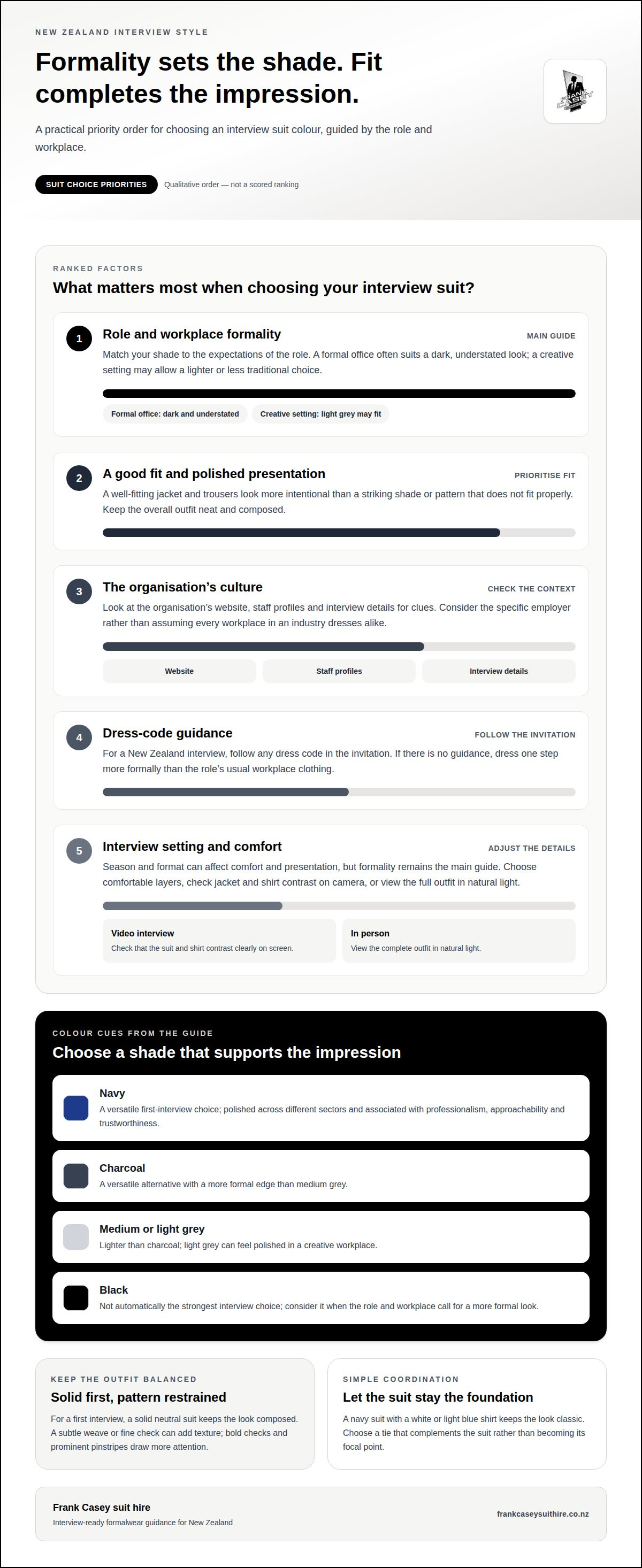
For a New Zealand interview, follow any dress code in the invitation; if there’s no guidance, dress one step more formally than the role’s usual workplace clothing. A suit can suit a corporate interview, while a lighter combination may feel more at home in a creative setting. Aim for neat, well-fitted clothing rather than trying to match a supposed national uniform.
Season, setting and interview format can affect comfort and presentation, but the role’s formality should remain your main guide. Choose comfortable layers for a warm day, and consider how your jacket looks on camera for a video interview. For an in-person meeting, view the complete outfit in natural light; on screen, check that your suit and shirt contrast clearly. These practical adjustments help your chosen shade look considered in different interview settings.
Use a simple decision process: assess the employer’s formality, choose a suitable shade, then adjust for the interview format. Light grey can work in a creative environment, while a darker option may better suit a formal office. This keeps your choice intentional without treating industry conventions as fixed rules.
3. How suit colours shape interview impressions
People can form an opinion quickly when they meet someone, so your interview outfit contributes to that first impression. Colour is one part of it, alongside grooming, posture and how comfortably you move. Darker suits generally look more formal than lighter ones. A classic, well-presented outfit can help show that you’ve taken the meeting seriously, without making your clothes the focus of the conversation.
Prioritise fit over shade. A suit that pulls across the chest, bunches at the waist or has sleeves covering your hands can distract from an otherwise considered look. Check that the jacket sits smoothly when buttoned and the trousers fall neatly over your shoes. A well-fitting navy suit, for example, will usually look more deliberate than a poorly fitting suit in a supposedly ideal interview colour.
Colour can still shape the tone of your outfit. Navy is a versatile choice that can look professional, approachable and trustworthy. Charcoal creates a more formal impression, while medium grey can feel lighter and less severe. Black may look authoritative, but it can also seem unapproachable when the styling feels too stark. Think about the impression you want to create, then choose a shade that suits the role and workplace.
Bright colours can draw attention away from your conversation, so keep the suit itself restrained. A vivid red or saturated green jacket may feel more like a fashion statement than interview attire in a conservative office. Pinstripes also make a strong visual statement. They may suit a senior executive interview, but can seem overconfident in a less formal role. Subtle texture offers interest without dominating your appearance.
How should your suit colour complement your shirt, tie and shoes? With navy or charcoal, choose a white or light blue shirt, then a burgundy, blue or grey tie with navy, or a silver or black tie with charcoal. Brown or black shoes can complete a coordinated look. For light grey, a soft pastel shirt can add colour without creating a sharp contrast; keep the tie and shoes understated.
Before interview day, view the complete outfit together rather than judging each piece separately. Check that the shirt contrasts clearly with the jacket, the tie sits comfortably against the shirt and the shoes suit the overall formality. For a video interview, test the outfit on screen: a shade that looks balanced in daylight may appear different under indoor lighting. These small checks help your colours support a polished impression.
4. Navy, charcoal, medium grey and black interview suit colours
Navy is the most versatile starting point for a job interview. It works across sectors and can look professional without feeling as severe as black. Pair a plain navy suit with a white or light blue shirt for a classic combination. Burgundy, blue or grey ties can add colour while keeping the outfit coordinated. Navy also suits candidates looking to create a confident, approachable impression in workplaces across the country.
Charcoal is another dependable option, especially when the role calls for a more formal appearance. Its darker tone can communicate authority without the stark effect black sometimes creates. For someone new to an industry, charcoal offers a composed, credible look. A light shirt creates clear contrast, while a silver or black tie keeps the palette restrained. Choose charcoal for a corporate interview where a polished, conventional outfit fits the setting.
Medium grey gives you a lighter alternative. It can suit interviews in less conservative fields or workplaces where a dark suit might feel overly formal. A pale blue shirt or soft pastel can complement the shade without overwhelming it. Before choosing medium grey, consider the role’s expectations: a creative position may welcome its lighter feel, while a senior corporate post may call for charcoal’s greater formality.
Black needs more thought. It can reinforce authority for very senior roles, such as a director or chief executive position, where formal dress is expected. For entry- or mid-level interviews, black may seem too severe or unapproachable. If you wear it, soften the contrast with a white shirt and a subtly patterned or textured tie. Avoid making the whole outfit look like evening wear; an interview suit should suit the working day.
Which suit colours should you avoid at a job interview? Avoid bright, high-impact colours that distract from your conversation, especially in conservative workplaces. A strongly contrasting pattern or prominent pinstripe can also feel too assertive outside a senior executive setting. If you’re unsure, choose a solid navy or charcoal suit, then use a restrained tie to add personality.
Use the role and workplace to choose between these shades. For a first interview in many sectors, navy is a safe choice; for a formal corporate role, charcoal offers a more serious tone. Medium grey can work where the culture is less conservative. Reserve black for settings where its stronger formality suits the position, and make sure the fit and shirt contrast keep the result polished.
5. When to wear a black interview suit
A black interview suit can work when the position and workplace are distinctly formal. Think of a senior leadership interview where formal dress is already part of the organisation’s culture. Black has a strong presence, so it can reinforce authority in that context. For an entry- or mid-level role, navy or charcoal often feels more approachable and less severe. Match the suit to the seniority and expectations of the job rather than choosing black simply because it looks smart.
Consider the company before committing to black. A traditional law firm or corporate executive environment may call for a more formal appearance than a creative agency. Check the organisation’s public-facing photographs and interview instructions for clues. If staff appear in dark business suits, black may fit the setting. If their usual style is relaxed, a black suit could seem overly formal and create distance before the conversation begins.
Styling makes a noticeable difference. Pair a black suit with a white shirt for a clean, classic contrast. Choose a subtle tie texture or pattern instead of a bright, attention-grabbing design. A restrained pocket square can add personality without competing with the interview itself. Keep shoes polished and coordinated, and avoid combining several bold accessories. These choices soften black’s severity while keeping the outfit appropriate for a professional meeting.
Fit matters especially with a high-contrast black suit. Check the shoulder line, jacket length and trouser break in natural light. A jacket that pulls when fastened or sleeves that cover the shirt cuffs can make the outfit look less considered. Sit, stand and walk in the suit before interview day. If the fabric looks stark under office lighting or on a video call, charcoal may provide a gentler alternative.
Black is not the same as black tie. A standard black business suit is different from formal black-tie clothing, which is designed for evening events. A job interview usually calls for business attire, not a tuxedo. For a separate formal occasion, consider black tie suit hire, rather than wearing eveningwear to an interview.
Use this final test: does black suit the role’s level, the company’s formality and the impression you want to create? If all three point towards a formal look, wear it with a white shirt and understated details. If one points towards a more relaxed or approachable appearance, choose navy or charcoal instead. That gives black a clear place in interview dressing without making it the default for every position.
Frank Casey: Black Tie Suits
Frank Casey offers Business Suits and business suit hire for interviews and professional dressing, alongside Black Tie Suits for formal events. If you need an interview suit, Frank Casey suit hire lets you explore a Business Suit for the occasion. Wedding Suits are also available for wedding celebrations.
Choose the offering that fits your event: a Business Suit for work, or a Black Tie Suit for an occasion with a black-tie dress code. Frank Casey suit hire also covers formal suit hire for special events.
Contact Frank Casey or visit frankcaseysuithire.co.nz to explore your options.
Choose your interview look with confidence
Your interview outfit is one part of how you present yourself, not a substitute for your experience or preparation. Use the role and workplace as your guide, then choose a suit you can wear comfortably and confidently. If you’re still deciding what colour suit is best for an interview, focus on the impression you want to create and how well the outfit fits the occasion.
Frank Casey offers Business Suits for professional dressing, alongside Wedding Suits and Black Tie Suits for other formal occasions. If you’d like help choosing a suit for an interview or another event, contact Frank Casey for suit advice.
Take a considered next step and head into the interview feeling prepared to focus on the conversation.
Frequently Asked Questions
What colour is best for an interview?
Navy is a dependable choice for most interview settings. If you’re weighing up what colour suit is best for an interview, also consider whether the shade works with clothes you already own and feels comfortable under the venue’s lighting. Try the complete outfit in daylight and indoors before interview day. This helps you spot distracting contrasts and choose a shirt and tie that look considered in person and on camera.
What suit colours are best for a job interview?
Navy and charcoal are strong starting points, with medium grey offering a lighter alternative. Choose a shade that fits the role and the organisation’s dress culture. If you’re preparing several outfits for different interviews, keep the base suit simple and vary the shirt or tie. That gives each look a distinct finish without relying on a bold colour or prominent pattern to make an impression.
Is navy or charcoal grey better for an interview suit?
Navy is more versatile across different workplaces, while charcoal generally reads as more formal. Let the interview setting guide your choice: navy can suit a broad range of roles, while charcoal may fit a more traditional environment. If both work, try each jacket with your planned shirt and tie. The better option is the one that looks balanced, fits comfortably and feels appropriate for the position.
Are black suits appropriate for job interviews?
Black can be appropriate for a particularly formal interview, especially for a very senior role where the organisation’s dress culture supports it. A black business suit is different from a tuxedo, which is eveningwear for black-tie events. Follow any dress guidance in the interview invitation, and avoid accessories that make the outfit look like formal event attire. For many other interviews, a less stark shade is easier to wear.
What suit colours are suitable for interviews in conservative industries?
For a conservative workplace, choose a solid navy or charcoal suit and keep accessories understated. This is a practical approach for roles where client meetings, formal office dress or established professional conventions are part of the job. A white shirt gives a clean contrast, while a restrained tie keeps the outfit composed. Check the interview invitation for dress guidance, then make sure the suit is comfortable enough to wear throughout the meeting.
What suit colours work for creative or casual workplaces?
Light grey can suit a creative workplace, while an earth-toned shade may fit an organisation with a more individual style. Let the company’s own dress culture guide how far you go with colour. In a casual workplace, a full suit may feel more formal than the everyday setting; choose a coordinated look that still suits the interview and role. A subtle detail, such as a textured tie, can add personality without dominating the outfit.


