

The best match for sage green isn’t always another green suit. A light grey suit paired with a sage green tie lets the colour stand out, while a forest green suit creates stronger contrast beside sage green bridesmaid dresses. For a groom in a coloured suit, the right choice depends on the wedding’s formality, setting and overall palette.
It’s easy to focus on the suit alone, but the shirt, shoes and accessories all help bring the look together. Matching every shade exactly can feel too uniform. Complementary colours and textures create a more considered result.
This guide explains how to choose a wedding suit colour for your dress code, season and venue, with practical combinations for sage green and other popular shades. You’ll also learn how to coordinate with the wedding party, choose accessories that add interest and avoid common colour clashes, helping you settle on a polished, personal look.
Key Takeaways
- Choose your suit shade around the wedding’s formality, season and setting; lighter blue can suit an outdoor or morning celebration.
- For a sage green palette, consider contrast and balance rather than trying to match every shade exactly.
- Coordinate your shirt, shoes and accessories with the suit to create a polished look without adding competing colours.
- Use the dress code to guide how bold or traditional your colour choice should be.
- Explore how popular choices such as grey and bordeaux can shape a distinctive wedding look in New Zealand.
1. What colour suit should I wear for my wedding?
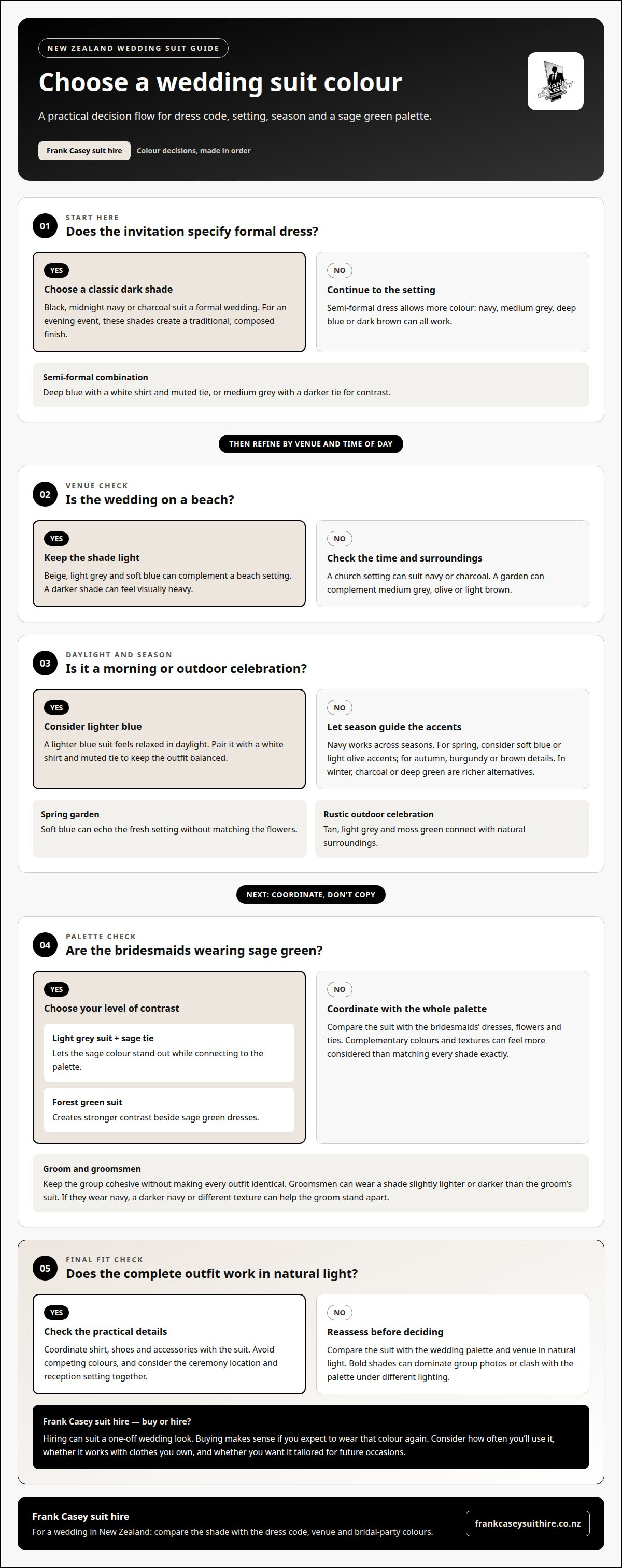
Choose a wedding suit colour that suits the dress code, season and venue. For a morning or outdoor wedding, a lighter blue suit can feel relaxed and work well in daylight. For an evening event, black, midnight navy or charcoal creates a more traditional finish.
Lighter blue works particularly well for an outdoor ceremony or morning reception. Pair it with a white shirt and muted tie to keep the outfit balanced. For a spring garden wedding, soft blue can echo the fresh setting without matching the flowers. If the groomsmen wear navy, choose a different blue shade or texture so the groom stands apart.
Cream suits can suit a casual wedding or destination celebration, especially with a crisp white shirt and pastel or muted tie. They create a softer look than charcoal or black. Consider the wedding palette before choosing cream: beside a pure white dress, cream may look less bright. Beige, light grey and soft blue also work for beach settings, where a darker shade can feel visually heavy.
Coordinate with the bridal party rather than copying its colours exactly. If the bridesmaids wear sage green, a light grey suit with a sage tie adds contrast while still connecting to the palette. A forest green suit creates stronger contrast beside sage dresses. Groomsmen can wear a shade slightly lighter or darker than the groom’s suit, keeping the group cohesive without making every outfit identical.
Navy suits work across seasons and can suit both formal and casual weddings. For spring, consider navy with soft blue or light olive accents; for autumn, pair it with burgundy or brown details. In winter, charcoal and deep green offer richer alternatives. Let the venue guide the shade too: navy or charcoal suits a church setting, while medium grey, olive or light brown can complement a garden.
Dark blue is associated with tranquillity, serenity and truth, making it a composed choice for a groom’s wedding look. Choose a deeper blue for a more formal effect, or a lighter tone for an outdoor or morning ceremony. The shirt and accessories then determine whether the outfit feels classic or relaxed.
In New Zealand, look for wedding suit retailers offering coloured suits to buy or hire. Compare the shade with your dress code, venue and bridal-party colours before deciding.
2. Common mistakes when choosing wedding suit colours
A colour can look appealing on its own but feel out of place beside the venue, dress code or wedding-party palette. Before deciding, compare the suit with the actual colours of the bridesmaids’ dresses, flowers and ties. A forest green suit, for example, gives clear contrast beside sage green dresses; a nearly matching green can make the groom blend into the group.
Another mistake is matching every outfit exactly. If the groomsmen wear navy, the groom can stand apart in a darker navy or a different texture, rather than switching to an unrelated colour. With grey groomsmen’s suits, charcoal gives the groom distinction while keeping the group coordinated. Aim for a more refined version of the group’s look, not a shade that competes with it.
For a traditional wedding, black, midnight navy and charcoal are classic choices. A bold shade can still work, but it should suit the ceremony’s formality. A bright blue suit at a formal evening event may feel less cohesive than deep navy, while rich green can bring personality to a less formal celebration. Check the dress code first, then choose a colour that complements it.
Ignoring the season and setting can undermine an otherwise good colour choice. Lightweight fabrics such as linen and seersucker are useful options for a hot, sunny wedding, while richer shades can suit cooler weather. For a rustic outdoor celebration, earthy colours such as tan, light grey and moss green connect with the natural surroundings. A pale shade may show marks more readily outdoors, so consider the ceremony location and reception setting together.
Should a groom rent or buy a coloured suit? Renting can suit a one-off wedding look, while buying makes sense if you expect to wear that colour again. Consider how often you’ll use it, whether the shade works with clothes you already own, and whether you want a suit tailored for future occasions.
What are the risks of choosing a bold suit colour for wedding photos and future wear? Strong shades can dominate group photographs or clash with the wedding palette, especially under different lighting. A distinctive colour may also be harder to wear again. Compare it with the bridal-party colours and consider how it looks in daylight before deciding.
Keep the choice practical: compare the suit with the wedding palette, venue and season, then check the complete outfit in natural light. Exploring wedding suit colour choices can help you consider a look that fits the occasion and your plans for wearing it again.
4. Suit colours by dress code and formality
Use the invitation’s dress code as your starting point, then match the suit’s formality to the ceremony and reception. For a formal wedding, black, midnight navy and charcoal are dependable choices. At an evening ceremony, these darker shades create a composed look without relying on bright colour to stand out.
Black remains a classic option for a traditional evening wedding. Midnight navy offers a similar level of formality, with a softer impression in daylight photographs. Charcoal sits between the two: it feels polished for a city ceremony and works with a white shirt and restrained accessories. Keep the overall combination refined if the invitation specifies formal dress.
Semi-formal dress gives you more room to choose colour while keeping the outfit tailored. Navy, medium grey, deep blue and dark brown all suit this level. For example, pair a deep blue suit with a white shirt and muted tie, or choose medium grey with a darker tie for contrast. The ceremony setting can guide the shade: a church may call for navy or charcoal, while a garden can accommodate grey or olive.
Casual dress allows lighter, softer colours. Beige or tan, light grey, soft blue and muted green can work for a relaxed wedding. A soft blue suit suits a daytime garden celebration; tan can complement a rustic venue. Choose a clean shirt and simple accessories so the lighter colour looks intentional rather than underdressed.
Modern dress codes can welcome stronger colour, provided the whole outfit still feels considered. Deep burgundy, forest green and bold shades of blue bring personality to a wedding look. A forest green suit, for instance, makes a clear statement at a contemporary ceremony. Keep the shirt and tie quieter, especially if the bridal party already wears strong colours.
Use these checks to make the dress code practical:
- Read the invitation: distinguish formal, semi-formal and casual wording before choosing a shade.
- Consider the timing: black, navy and charcoal suit evening celebrations; softer blue can feel more relaxed in daylight.
- Look at the setting: charcoal suits a city venue, while tan or muted green can complement a rustic outdoor ceremony.
- Balance colour: if the suit is forest green or burgundy, choose quieter shirt and tie colours.
Finally, check the complete outfit in the light you expect at the wedding. A darker suit can look richer under evening lighting, while a lighter shade reads clearly at an outdoor ceremony. The best choice respects the dress code and lets the groom look distinctive without feeling disconnected from the occasion.
5. Suit, shirt, shoe and accessory combinations
Build the outfit around the suit, then choose a shirt, shoes and accessories that support its colour. A white shirt gives navy, charcoal and forest green a clean foundation, while a softer shirt can suit a relaxed daytime wedding. Keep the combination intentional: if the suit makes a bold statement, let one accessory carry the extra colour.
For a sage green wedding palette, a light grey suit and sage green tie create contrast while keeping a connection to the colour scheme. A forest green suit gives stronger contrast beside sage bridesmaid dresses. Add a white shirt to keep either combination crisp, then choose a pocket square in a complementary shade rather than an exact match.
- Light grey suit: pair it with a white shirt, sage green tie and dark shoes for a balanced look.
- Forest green suit: choose a white shirt and understated tie so the suit remains the focal point.
- Cream suit: add a crisp white shirt and pastel or muted tie for a softer, traditional combination.
- Black tuxedo: keep the shirt and accessories restrained to preserve the outfit’s formal elegance.
Accessories add colour or texture without requiring another strong shade. A tie, vest, pocket square and boutonniere can each connect the suit to the wedding palette. For example, with a navy suit, use a muted tie and a pocket square that picks up one colour from the flowers. Avoid making every accessory identical; a coordinated palette looks more considered than a full set in one matching shade.
Shoes should suit the formality and colour of the outfit. Dark shoes work naturally with charcoal, navy and forest green, while brown can soften a medium-grey or cream combination. For a tuxedo, formal black shoes maintain a polished finish. Try the shoes with the complete outfit, since their tone can change how the suit colour reads.
A white suit needs particular care beside the wedding dress. It works best when the bride’s dress is pure white; cream or off-white can look dull beside crisp white. If the dress is ivory, choose a different suit colour or bring a complementary tone into the shirt and accessories instead.
Check the shirt fit as part of the final combination. A visible shirt cuff of 1/4 to 1/2 inch below the jacket sleeve adds a neat finishing detail. With the suit, shirt, shoes and accessories together, review the full look in natural light and under the reception lighting.
5. What colours are popular for groom suits in New Zealand?
Grey is a versatile choice for New Zealand weddings because it can be styled for different levels of formality. A plain grey suit gives a classic look, while a subtle micro design adds detail without changing the overall colour. For example, pair plain mid grey with a white shirt for a restrained outfit, or choose a small pattern for a more individual finish.
The shade of grey helps set the tone. Mid grey feels softer than charcoal and works with both lighter and darker accessories. Charcoal creates stronger definition in photographs and suits a more formal setting. If the groomsmen are wearing grey, choosing charcoal can distinguish the groom while keeping the group’s outfits connected.
Bordeaux is a more adventurous choice for a groom who wants colour to lead the outfit. Keep the rest of the combination simple: a white shirt and dark shoes give the rich shade space to stand out. A muted tie can connect the suit to the wedding palette without adding another competing colour.
Blue remains a practical option for grooms who want colour with a familiar feel. Navy can work for formal and casual celebrations, while softer blue gives an outdoor or morning look a lighter character. Decide whether the suit should feel classic or expressive, then compare its shade with the venue and bridal-party colours.
Green offers another way to bring colour into a wedding outfit. Muted olive or sage can complement natural surroundings, while forest green creates more contrast beside sage dresses. The distinction matters: a closely matched green may blend into the palette, whereas a deeper shade makes the groom’s outfit easier to pick out.
Use these steps to narrow your choice:
- Start with the setting: compare grey, blue, green and bordeaux against the ceremony’s surroundings.
- Choose the effect: plain grey reads classic; a micro design adds subtle interest; bordeaux makes a bolder statement.
- Check the group palette: select a shade that complements, rather than duplicates, the bridal party’s colours.
- Finish the outfit: use the shirt, tie and shoes to balance the suit’s intensity.
Popularity alone shouldn’t decide the colour. A plain grey suit may suit a groom seeking versatility, while bordeaux can feel more personal for someone drawn to richer colour. Compare the full outfit in daylight and reception lighting, then choose the look that fits the wedding’s mood. Explore wedding suit colour options to find a shade that works with your plans.
Frank Casey: Black Tie Suits
Frank Casey offers Black Tie Suits and Wedding Suits for grooms choosing a formal look for their wedding. If you’re weighing up buying against hiring, Frank Casey offers suit hire for weddings as well as suits to purchase. Custom-made suits are also available for weddings. Business Suits and School Ball Suits cater to other formal occasions.
Once you’ve settled on a colour and dress code, consider how you plan to wear the suit. Frank Casey suit hire can suit a one-off event, while buying a suit may be the better fit if you expect to wear it again.
Contact Frank Casey to discuss a suit for your wedding.
Make your final choice with confidence
Your wedding outfit should feel like you, not simply follow a trend. Before deciding, picture the complete look in the settings where you’ll wear it: the ceremony, photographs and reception. A groom in a coloured suit can make the choice personal while keeping the overall look polished. Choose a shade that feels comfortable and suits the mood you want to create.
For your next step, Frank Casey offers Black Tie Suits, Wedding Suits and Business Suits. Whether you’re refining a formal look or choosing a suit for the day, focus on the cut and colour that feel right for your plans.
Contact Frank Casey about your suit and take the next step towards a wedding look that feels distinctly yours.
Frequently Asked Questions
What colour suit goes with sage green?
Choose a suit shade that sits comfortably beside the exact sage tone in the wedding palette. Sage can look cooler or warmer depending on its fabric and lighting, so compare fabric samples rather than relying on screen colours. Check them beside the flowers and dresses in daylight, then again under the reception lighting. This can reveal differences that are less visible in a single setting.
What colour suit should I wear for my wedding?
Choose a shade that keeps your face and overall outfit looking balanced in person and in photographs. Try the suit with the shirt you plan to wear, then assess the complete look from a few steps away. A colour that seems subtle up close may appear much stronger in a full-length photo. Comfort matters too: move, sit and raise your arms in the suit before making your final decision.
How to choose a coloured suit for a groom?
Start by deciding how prominent you want the colour to be. A groom in a coloured suit can try a muted shade for a quieter effect or a richer tone for more impact. View the fabric against your shirt and skin, then take a photograph in natural light. Review the image on a larger screen as well as in person, since a small swatch can make colour differences harder to judge.
How to coordinate the groom's suit colour with the wedding party?
Give the wedding party a clear colour reference before outfits are finalised. Share a fabric swatch or a photograph taken in natural light, and explain whether you’re aiming for a close match or a complementary range. This can prevent near-matches that look accidental in group photos. Check the chosen shades together with the flowers and any patterned clothing so the overall palette feels deliberate.
What shirt, tie, and accessories go with a coloured groom suit?
Let the suit fabric guide how much detail to add elsewhere. If the cloth has a visible pattern, choose a simpler tie so the two don’t compete. With a plain suit, a textured tie can add interest without introducing another strong colour. Check that the tie sits neatly beneath the jacket and that the pocket square doesn’t create bulk. A boutonniere should sit securely on the lapel.
What dress code rules apply to coloured suits at weddings?
For black tie, choose a restrained suit colour that fits the couple’s stated dress expectations. If you’re considering a brighter or less traditional shade, make sure it fits the couple’s stated dress expectations rather than assuming every colour suits every level of formality. A formal finish also depends on the complete outfit: a well-presented shirt, polished shoes and restrained accessories help a coloured suit feel appropriate for the ceremony.
Which suit colours suit different skin tones and wedding seasons?
Earthy tones may flatter warm complexions, while blue or grey with cool undertones may suit cool complexions. For spring, consider navy, medium grey, soft blue or light olive; summer suits lighter shades, autumn suits brown, burgundy or forest green, and winter suits charcoal, black, midnight blue or deep green.
How far ahead should a groom order and tailor a coloured suit?
Start arranging a purchased suit 3 to 4 months ahead, a made-to-measure suit 2 to 3 months ahead, or a rental 1 to 2 months ahead. Schedule the final fitting 2 weeks before the wedding.


