

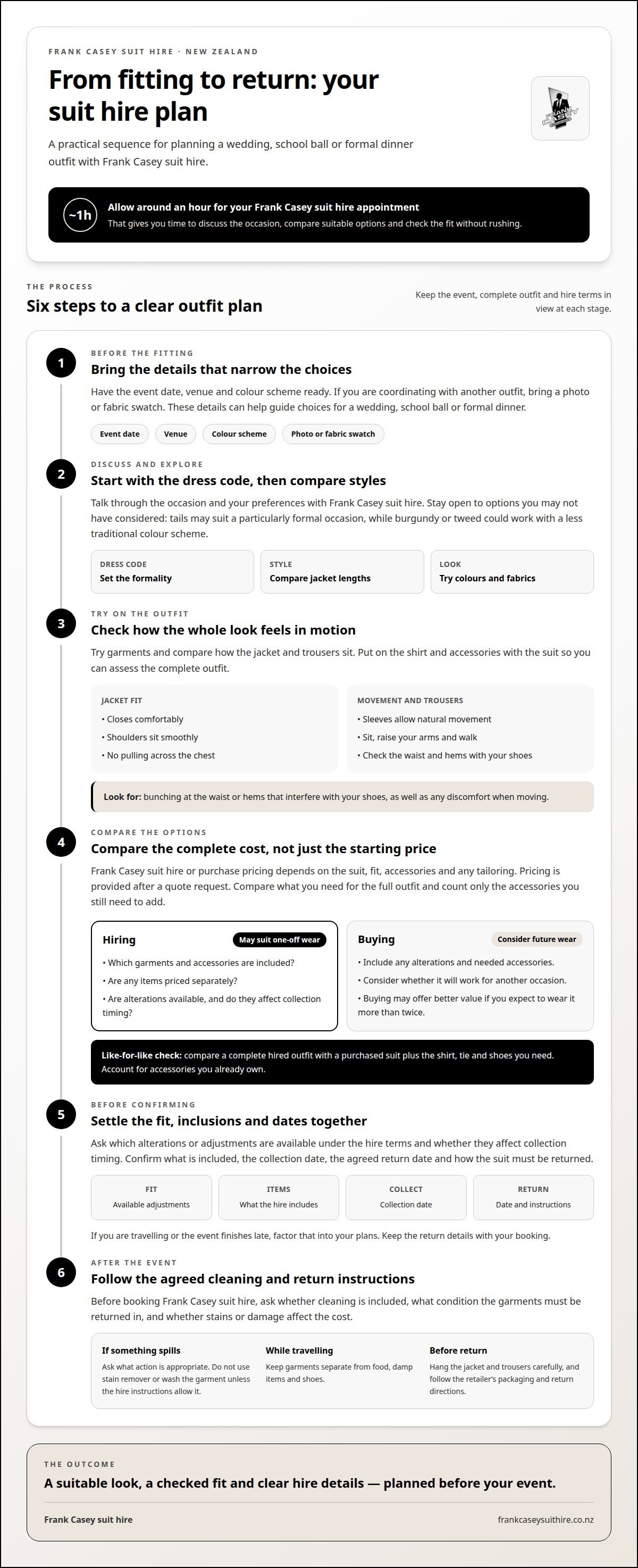
The most useful questions to ask when hiring a suit cover the total cost, what’s included and when the suit must be returned. Allow around an hour for a fitting, with time to discuss the occasion, compare suitable options and get the fit right.
It’s sensible to compare hiring with buying, especially if you expect to wear the suit again. Ask what the hire includes, whether accessories are covered and what cleaning and return arrangements apply. If buying, consider the fit, any tailoring needed and how often you’re likely to wear it.
Hire or purchase pricing depends on factors such as the suit, fit, accessories and any tailoring, and is provided after a quote request. This guide sets out the practical questions to ask about hire and purchase costs, cleaning, storage and timing, so you can plan with confidence before your event.
Key Takeaways
- Allow around an hour for a suit hire appointment, and bring the event details to help guide the choices.
- Stay open to styles you may not have considered, such as tails, burgundy or tweed.
- Compare hiring with buying by considering how often you expect to wear the suit and what each option includes.
- Ask how cleaning, storage and the return process work before you commit to a hire.
- Understand which details affect the hire cost, including the suit, fit and any accessories.
1. HOW LONG DOES HIRING AN OUTFIT TAKE?
Allow around an hour for a suit hire appointment. That gives you time to discuss the event, try suitable options and assess the fit without rushing. Bring the event date, venue and colour scheme, plus a photo or fabric swatch of another outfit if you’re coordinating colours. These details help narrow the choices, whether you’re dressing for a wedding, school ball or formal dinner.
Keep an open mind about styles you haven’t considered. Tails may suit a particularly formal occasion, while burgundy or tweed could work with a less traditional colour scheme. Start with the dress code, then compare jacket lengths, colours and fabrics while wearing them. A style that seems unfamiliar on a hanger may feel more suitable once you try it on.
Suit hire sizing usually involves trying garments and comparing how the jacket and trousers sit on your body; the selected pieces determine the fit. Alterations and adjustments depend on the hire terms, so establish which changes are available and how they affect collection timing before settling on a suit.
During a try-on, check that the jacket closes comfortably, the shoulders sit smoothly and the sleeves allow you to move naturally. Sit down, raise your arms and walk a few steps in the trousers. Look for pulling across the chest, bunching at the waist or hems that interfere with your shoes. Try the shirt and accessories with the suit, too, to see how the complete outfit works together.
Choose a retailer with options suited to your event and a fitting process that gives you time to compare. Check what the hire includes and make sure collection and return arrangements are clear. For example, a wedding party coordinating navy suits may need to match different sizes and accessories. Discussing these details helps you plan a consistent look.
The hire period and return deadline depend on the retailer’s terms. Before booking, establish the collection date, agreed return date and how the suit should be returned. If you’re travelling or your event finishes late, factor that into your plans. Keep the return details with your booking for easy reference.
To make the fitting productive, explain the occasion and dress code, then try styles that suit both the event and your preferences. Once you’ve chosen a look, review the fit, included items and hire dates together. You’ll leave with a clear outfit plan rather than details still to sort out.
2. Budget and purchase costs
Set a spending limit before comparing a suit to buy with one to hire. Consider the full outfit, not just the jacket and trousers. A shirt, tie, shoes and other accessories can affect the total, especially when the event calls for a coordinated look. List what you already own and what you need. Someone with suitable formal shoes, for example, may need a different budget from someone starting without an outfit.
Next, consider how often you expect to wear the suit. Buying may offer better value if you’ll wear it more than twice, while hiring can suit a one-off event or a style you’re unlikely to use again. Think about your calendar, too. A wedding suit that could work for future formal occasions has a different use from a specific look for one school ball.
Compare the full cost of each option, rather than comparing a hire fee with the purchase price alone. For a purchase, account for alterations and the accessories needed to complete the outfit. For a hire, establish which pieces are included and whether anything you need is priced separately. The final purchase price depends on the suit’s style, fit, fabric and selected accessories, with a quote provided after a request.
Use these questions to build a like-for-like comparison:
- Which garments and accessories are included in the hire or purchase?
- Will the fit require alterations, and are those costs included?
- Can the suit work for another occasion, or is it suited to one event?
- Are there additional costs tied to collection, delivery or returning a hire?
For example, compare a complete hired outfit with a purchased suit plus the shirt, tie and shoes you need. If you already own some accessories, count only the pieces you need to add. If you’re choosing between a classic black suit and a bold colour, consider which is more likely to suit future events. A useful comparison reflects your wardrobe and plans, not just the initial outlay.
Keep the occasion in view as you decide. A work suit may see repeated use, while a highly formal outfit could remain in storage after one event. Neither choice suits everyone. If you’re weighing up formal options, explore suit hire and purchase options alongside your expected use, outfit requirements and budget. That gives you a practical basis for choosing without assuming the lowest upfront cost is automatically the best value.
A formalwear retailer also advises that buying may be better value if you’ll wear the suit more than twice. Weigh that expected use against the total outfit cost.
3. Cleaning and storage
Before booking a hire, establish who handles cleaning after the event. Ask whether cleaning is included, what condition the garments must be returned in, and whether stains or damage affect the cost. These details matter if a wedding reception includes dinner, dancing or outdoor photos. Keep the agreed care and return instructions with your booking so you can follow them afterwards.
Clarify what to do if something spills. A drink mark on a jacket, for example, may need different attention from loose dirt on a trouser hem. Ask what action is appropriate, and don’t apply stain remover or wash the garment unless the hire instructions allow it. Home cleaning can affect the fabric or finish, and an unsuitable treatment may make a mark harder to address.
Ask how to handle the suit between the event and its return. If you’re travelling home after a late function, keep the garments separate from food, damp items and shoes. Hang the jacket and trousers carefully, and avoid leaving them crumpled in a car or overnight bag. Follow the retailer’s packaging and return directions rather than assuming a garment bag means the suit is ready to store.
Before you take the outfit, make sure you understand:
- Whether cleaning is included in the hire arrangement.
- How to report spills, marks or damage.
- How the suit should be stored before return.
- Which return method and packaging the hire terms require.
For a suit you’ve bought, check the care label before cleaning or storing it. Instructions can differ between fabrics and linings. After wearing a suit to a school ball, for instance, inspect the cuffs, trouser hems and jacket front for marks. Address any visible issue according to the label, then store the suit somewhere dry and uncluttered.
Good storage helps keep a purchased suit ready for its next occasion. Use a hanger that supports the jacket’s shoulders, and give the trousers room to hang without being crushed. Don’t leave the outfit beside damp clothing or shoes after travelling. After wearing a suit to a wedding, check each piece before storing it, including the shirt and accessories, so the next wear doesn’t begin with a missing or marked item.
For either option, make cleaning and storage part of your event plan. Note a hire’s return deadline and set aside a place for the outfit when you get home. Clear instructions help prevent last-minute guesswork about stains, garment care or packaging.
4. Hiring costs
Suit hire costs depend on the outfit selected and what the booking includes. Ask for a quote that itemises the garments, accessories, fitting or alterations, cleaning, and any delivery or return charges. This helps you compare complete outfits rather than a suit hire fee with a separate purchase total. The price depends on the case and is given after a quote request; the suit, fit, accessories and hire arrangements affect the cost.
For a wedding party, matching suits can be coordinated around a shared style and colour. The total depends on each person’s suit selection, fit and chosen accessories, so plan the group’s requirements together. Don’t build the budget around an assumed group discount; use the combined quote to understand the cost for the outfits selected.
Check what each hire includes before comparing options. A shirt, tie, shoes and other formal accessories may be separate items rather than part of the suit hire. Ask for an itemised list, then note which pieces each person already owns. For example, some members of a wedding party may need hired shoes while others have suitable footwear.
Use a simple cost checklist when reviewing a quote:
- Suit garments and any selected accessories.
- Fitting or alterations included in the arrangement.
- Cleaning, delivery and return costs.
- Any charges linked to damage or late return.
Clarify how the hire period affects your plans. A booking that includes travel before the event may need different arrangements from one collected close to the occasion. Confirm the collection and return dates, and ask whether they affect the quote. For a school ball, a student travelling to another town may need to plan collection and return carefully.
Ask how changes are handled if someone’s size or outfit selection changes before the event. In a wedding party, someone may need a different fit or accessory after the initial selection. Understand how changes affect the final quote and which booking details need updating. Clear terms help keep the group budget aligned with the chosen outfits.
Compare the complete hire total with the likely cost of buying the same outfit, including accessories and any tailoring. Hiring can suit a one-off occasion, while buying may make more sense for a suit you expect to wear repeatedly. For a fair comparison, include the same garments and accessories in both totals, then choose the option that fits your event and future plans.
5. How long to allow for the appointment
Allow around an hour for a suit hire fitting. Use the time to discuss the occasion, try options and assess the fit without rushing. The event date, venue and dress code help focus the fitting. A black-tie event calls for different choices from a business function, so explain the occasion before trying garments.
Make the fitting more productive by bringing the details that shape your outfit. A photo or colour swatch can help coordinate the suit with a partner’s clothing or a wedding party’s palette. Note any accessories you need, too. A tie, shirt or shoes can affect how the complete outfit looks and fits.
Use the fitting to compare more than one style. Try a familiar option first, then consider an alternative such as burgundy or tweed if it suits the event. Check the jacket’s shoulders and closure, trouser comfort, sleeve length and ease of movement. Sit and walk in the garments as well as standing in front of a mirror.
Before finishing, confirm the details that affect what happens after the fitting:
- Which garments and accessories are included in the hire.
- Whether any fit adjustments are available and how they’re arranged.
- When to collect the suit and when it must be returned.
- What to do if your chosen size or outfit needs to change.
For a wedding party, allow time for each person to try on their outfit and check how the group’s choices work together. A shared colour scheme doesn’t mean everyone has the same proportions or fit needs. Compare the overall look while keeping each person’s comfort in mind. Bring a photo of the wedding colours to help guide accessory choices.
Plan your travel around the appointment rather than arriving just as it begins. If you’re coming from outside the town or coordinating with other people, agree on a time that lets everyone take part. Keep the event date and return arrangements handy, so the fitting decisions can be considered alongside the hire period.
Use the hour to leave with a clear plan: the selected style, fit requirements, included items and key hire dates. Arrange your suit hire appointment when you’re ready to discuss the outfit for your event.
Frank Casey: Black tie suit Hire
Frank Casey offers black tie suit hire for formal events across New Zealand. Once you’ve considered the hire terms, outfit inclusions, care and timing, the next step is choosing a suit for your occasion. Frank Casey also offers Wedding Suits, Business Suits and School Ball Suits for different formal events. Share the occasion and the look you have in mind to guide your choice. If you’re deciding between hiring and buying, consider how often you expect to wear the suit and which pieces you need. Contact Frank Casey to discuss your black-tie suit hire.
Make your next step a clear one
Before settling on an outfit, decide what matters most for your event: a particular look, a comfortable fit or the chance to wear the suit again. The questions to ask when hiring a suit can turn those priorities into a practical choice, especially when you’re weighing one formal occasion against future use. Knowing your preferred style and event makes the next conversation more focused.
Frank Casey offers Black Tie Suits, Wedding Suits and Business Suits, with options for different occasions. If you’re ready to discuss a suitable outfit and your next step, contact Frank Casey. You can bring your event details and preferences to help shape the conversation. Take the time to choose an option that feels right for the occasion, and enjoy getting ready with confidence.
Frequently Asked Questions
Anything else I should know?
Check that the suit, shirt, tie and shoes work together as a complete outfit before your event. A jacket that looks right alone may feel different with the chosen shirt or footwear. Keep your booking details and return instructions somewhere accessible, especially if someone else is helping with collection or return. For a group event, make sure everyone knows which outfit is theirs.
How long does hiring an outfit take?
Allow around an hour for a suit hire fitting. Use the time to consider the dress code, try on the selected outfit and assess how it feels when you move. If you’re coordinating outfits with others, plan the fitting around the people who need to be fitted. Knowing the occasion helps you focus on suitable choices rather than trying options without a purpose.
What information should I bring?
Bring the event date, venue and dress code, along with any colour guidance from an invitation or wedding party. A photo or fabric swatch can help you see how the suit and accessories will look beside another outfit. If you have a particular style in mind, bring a reference image, too. These details give the fitting conversation a useful starting point.
Who goes to my suit hire appointment?
The person who’ll wear the suit should attend, so they can try on the garments and assess the fit. A parent, partner or wedding party member can come along if their opinion will help. For matching wedding outfits, attending together can make it easier to compare the overall look. Each wearer should still consider their own comfort and fit.
What questions should I ask when hiring a suit in New Zealand?
Useful questions to ask when hiring a suit include what the hire covers, whether fitting and cleaning are included, and how returns work. Ask how accessories are handled and what to do if the suit is marked or damaged. Frank Casey’s suit hire includes professional fitting and post-event cleaning in the rental price. Clarify the outfit details before finalising your choice.
How far in advance should I book a suit hire?
Start planning once you know the event date and dress code. The time needed depends on the occasion, how many people are coordinating outfits and whether fitting adjustments or delivery need to be arranged. A wedding party with several suit choices has more details to organise than someone hiring for one event. Allow enough time to settle those decisions before the occasion.


