

The most formal-looking shoe isn’t always the right choice if it clashes with your outfit or leaves you counting the minutes until you can take it off. Choosing formal dress shoes for men means balancing the event’s dress code with a polished appearance and a comfortable fit.
If you’re unsure whether to wear Oxfords, Derbies or loafers, or how to match your shoes to your suit, you’re not alone. The right pair can help you feel at ease throughout the occasion, while the wrong one can distract from your outfit. This guide explains how to choose shoes that suit the event, coordinate with your suit and accessories, and feel comfortable on the day.
You’ll find practical tips on fit and style, including when a classic Oxford is a safe choice and when another option may work. We’ll also look at when hiring or buying makes sense. Frank Casey offers formal shoes to hire or purchase, with nationwide service across New Zealand, so you can explore options for your plans.
Key Takeaways
- Start with the event’s dress code to narrow down suitable shoe styles.
- Compare Oxfords, Derbies and loafers by their details, formality and how they pair with your outfit.
- Use a checklist to assess fit, material, finish and suitability for extended wear.
- Try formal dress shoes for men with your event socks and check the fit on both feet.
- Consider whether hiring or purchasing suits how often you expect to wear formal shoes.
Formal Dress Shoes for Men: Start With the Occasion and Dress Code
Formal dress shoes are polished footwear chosen to suit an occasion and the outfit you’ll wear. The term covers several styles, and suitability depends on more than appearance. A dress shoe overview can help clarify common terms, but the event’s dress code is the practical starting point.
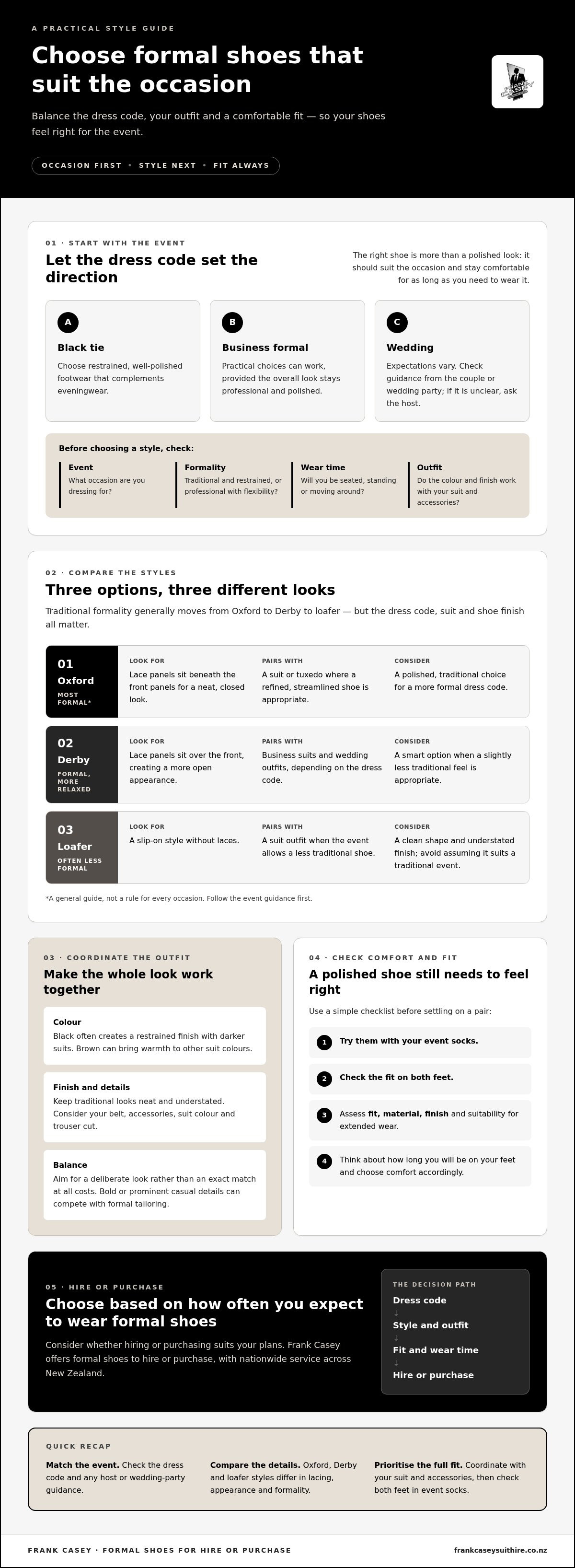
Decide how formal the occasion is before choosing a colour or decorative detail. Black tie, business formal and a wedding each have different expectations. Black tie generally calls for restrained, well-polished footwear that complements eveningwear. Business formal allows practical choices, provided the overall look stays professional. Wedding expectations vary, so check whether the couple has set a style or coordinated footwear for the wedding party.
A suitable formal shoe matches the occasion and outfit, and remains comfortable for as long as you need to wear it.
How the dress code shapes men’s formal shoe choices
For traditional dress codes, keep the look neat and understated rather than letting bold details compete with your outfit. In a business setting, comfort and practicality can carry more weight, but shoes should still look polished with your suit. For a wedding, check any guidance from the couple or wedding party. If the invitation is unclear, ask the host instead of guessing.
What to check before choosing formal shoes
Before comparing formal dress shoes for men, clarify the event, its expected level of formality and how long you’ll be on your feet. Then consider your suit colour, trouser cut and other outfit details. A shoe that works with one suit may look out of place with another or sit awkwardly beneath a different trouser shape.
- Event: What occasion are you dressing for, and is there specific guidance?
- Formality: Is the look traditional and restrained, or professional with some flexibility?
- Wear time: Will you be seated for most of the event, standing or moving around?
- Outfit: Do the shoe colour and finish work with your suit and accessories?
Your personal preference matters, too. Use it to choose among options that fit the dress code, rather than treating comfort or style as an afterthought. Once you’ve established the occasion and outfit, you can compare shoe styles with a clearer sense of what will work.
Men’s Formal Dress Shoe Styles: Compare Oxfords, Derbies and Loafers
Once you know the event’s expectations, compare shoe styles by their shape and overall formality. Oxfords are traditionally the most formal, followed by Derbies and then loafers, but that order isn’t a rule for every occasion. The dress code, suit and finish all affect whether a pair looks right.
| Style | Visual detail | Formality | Outfit pairing |
|---|---|---|---|
| Oxford | Laces sit beneath the front panels, creating a neat, closed look. | Traditionally the most formal. | A suit or tuxedo where a refined, streamlined shoe is appropriate. |
| Derby | Lace panels sit over the front of the shoe, giving a more open appearance. | Formal, with a slightly more relaxed feel than an Oxford. | Business suits and wedding outfits, depending on the dress code. |
| Loafer | A slip-on style without laces. | Often less formal, though a streamlined finish can suit some smart occasions. | Suit outfits where the event allows a less traditional shoe. |
Use the table as a guide, not a substitute for the invitation or event guidance. A polished Oxford may suit a traditional dress code, while a Derby could work well for business or a wedding with a more flexible brief. If the host specifies a style, follow that first.
Oxford and Derby shoes: what is the difference?
The key distinction is the lacing. On an Oxford, the eyelet panels are stitched beneath the front of the shoe; on a Derby, they sit on top. This gives Oxfords a cleaner, more traditional silhouette and Derbies a little more visual ease. Either can look smart with a suit, so check the event guidance before treating one as your default.
Loafers and other less traditional formal options
A simple, well-kept loafer may suit a business function or wedding where the dress code allows it. Look for a clean shape and understated finish. Prominent casual details can feel out of place with formal tailoring, and a fashion-forward design shouldn’t be assumed suitable for a traditional event. Let the occasion set the boundaries.
Colour is another coordination choice, not a fixed rule. Black often creates a restrained finish with darker suits, while brown can bring warmth to other suit colours. Consider the full outfit, including your belt and accessories, and aim for a deliberate, balanced look rather than an exact match at all costs.
For an upcoming event, Frank Casey offers formal shoes to hire or purchase. Check which styles are currently available before deciding.
How to Compare Formal Dress Shoes for Men Before Choosing
A polished appearance is only part of the decision. A shoe that looks right in a photo may feel unsuitable after hours of standing, walking or dancing. Compare formal dress shoes for men by checking how well each pair suits the event, your outfit and the time you’ll spend wearing them.
Make dress-code suitability and comfort equally important. Use this checklist to narrow down your options:
- Occasion: Does the style suit the event’s dress code and expected level of formality?
- Fit: Does the shoe feel secure and comfortable, without pinching or rubbing?
- Material: Check what the shoe is made from and read the care guidance. Leather is one possible formal shoe material, but it isn’t automatically the right choice for everyone.
- Finish: Does the surface look appropriately polished and understated for the occasion?
- Outfit compatibility: Does the shoe work with your suit colour, trouser shape and accessories?
Which details matter when comparing formal footwear?
Look at the overall silhouette first, then consider colour, finish and detailing. A sleek shape and restrained details can complement traditional tailoring, while a more distinctive finish may suit an event with a relaxed dress code. If expectations are uncertain, an understated choice is less likely to compete with your outfit. Before buying, check the product information for material and care instructions so you know what looking after the shoes involves.
Don’t judge comfort by appearance alone. Consider how long you’ll wear the shoes and whether they feel comfortable as you move, not just while standing still. A pair that looks sharp but rubs or feels unstable may distract you throughout the event.
Should you hire or buy formal dress shoes?
Hiring may suit you if you need formal shoes for an occasional event, depending on the styles and sizes available. Buying may make sense if you expect to wear formal shoes regularly or prefer to own a pair for future occasions. Consider how often you’ll use them, then check the fit and availability before making plans.
For more detail on what to consider when hiring, read this guide to formal shoe hire. Frank Casey offers formal shoes to hire or purchase, with nationwide service across New Zealand. Check current options before choosing.
Formal Shoe Fit and Outfit Coordination: Avoid Common Discomfort
A smart-looking shoe still needs to feel comfortable enough for the occasion. Use this checklist when trying on formal dress shoes for men, rather than relying on your usual size or how the pair looks on the shelf.
- Wear the right socks. Try shoes with the socks you plan to wear at the event, as thickness can affect the fit.
- Check both feet. Stand in each shoe and make sure your toes have room without pressing against the front.
- Notice pressure. The shoe should feel secure, not painfully tight across the toes, sides or top of your foot.
- Check the heel. Some movement may occur, but the shoe shouldn’t slip enough to feel unstable.
- Take a short walk. Pay attention to rubbing, pinching or discomfort as you move.
How should formal shoes fit?
Fit can vary between styles and brands, so don’t assume your usual size will feel the same in every pair. If you notice painful pressure, rubbing or instability during a try-on, ask to try another size or fit. Shoes that feel uncomfortable before the event are unlikely to become more comfortable after hours of wear.
How to coordinate shoes with a formal outfit
Consider shoe colour alongside your suit, belt and other accessories. The aim is a balanced outfit, not a rigid colour match. Also consider visual weight: a substantial shoe can look more in proportion with wider trousers, while a sleeker shape may sit neatly beneath a narrower leg. For traditional formal occasions, keep the overall finish consistent and restrained.
The complete look matters, too. Use this professional suit fitting guide to consider how the suit’s silhouette works with your footwear, and see the formal accessories guide for more coordination ideas.
For a pair suited to your event, explore formal shoes to hire or purchase from Frank Casey. Check current styles, sizes and availability as you decide.
Choose Formal Dress Shoes for Men With Confidence
Make your choice in a clear order: confirm the occasion and its dress code, select a suitable shoe style, check the fit, then coordinate the colour and finish with your outfit. This keeps you focused on what matters instead of choosing a pair on appearance alone. The right formal dress shoes for men should feel appropriate for the event and comfortable for as long as you’ll wear them.
A final checklist before the event
Try the complete outfit together before the day so you have time to spot fit issues or details that don’t work well as a whole. Before you head out, run through these checks:
- Confirm the shoes meet the dress code and any specific instructions from the host.
- Wear them with the suit, trousers and socks you plan to use for the event.
- Walk around briefly and check for pressure, rubbing or heel movement.
- Make sure the shoes are clean, presentable and comfortable for the expected wear.
A quick outfit check can help you feel more at ease, whether you’re attending a wedding, a business function or another formal occasion. If the shoes feel uncomfortable or look out of balance with your trousers, revisit your choice before the event rather than hoping the issue won’t matter.
Explore formal shoe hire or purchase
Hiring may suit occasional wear, while purchasing can make sense if you expect to wear formal shoes regularly or prefer to own a pair. The right option depends on your wearing habits and what’s available in the style and size you need. Check those details before deciding.
Frank Casey offers formal shoes for hire and purchase, with nationwide service and online ordering across New Zealand. Check current styles, sizes and hire or purchase options as part of your decision.
Step Into Your Next Event With Confidence
Choosing formal dress shoes for men is easier when you work through the decision in order: match the event’s dress code, select a suitable style, check the fit, then coordinate your shoes with the full outfit. A comfortable, well-presented pair helps you feel ready for a wedding, business event or formal celebration.
How often you’ll wear formal shoes can help you decide whether hiring or purchasing is a better fit. Frank Casey offers formal shoes to hire or purchase, with nationwide service and online ordering across New Zealand. Check current styles, sizes and availability before deciding.
Explore Frank Casey’s formal shoe hire and purchase options to find a pair that suits your event, outfit and comfort needs.
Frequently Asked Questions
What shoes should men wear with a formal suit?
Choose shoes that suit the event’s dress code and the formality of your suit. For a traditional occasion, a polished Oxford is often a considered option; a Derby may suit business or wedding outfits with more flexibility. Check any instructions from the host, then coordinate the shoe’s colour and finish with your suit and accessories. Formal dress shoes for men should look appropriate and feel comfortable for the event.
Are Oxford shoes more formal than Derby shoes?
Generally, yes. Oxfords have closed lacing, where the eyelet panels sit beneath the front of the shoe, creating a neat, traditional silhouette. Derbies have open lacing, with the panels sitting on top, which gives them a slightly more relaxed appearance. Both can work with a suit, but let the event’s dress code guide your choice rather than assuming one style is always required.
Can men wear loafers with a formal suit?
Yes, a streamlined loafer can work with a formal suit when the dress code allows a less traditional shoe. Look for a clean shape and understated finish that sits neatly with your trousers. Loafers may suit some business functions and weddings, but they aren’t the safest choice for every formal occasion. For black tie or another traditional event, follow the host’s guidance and choose a more conventional option if expected.
How should formal dress shoes fit?
Formal shoes should feel secure without painful pressure. Check that your toes have room, the heel doesn’t slip excessively and the shoe doesn’t pinch across the sides or top of your foot. Try on both shoes, as your feet may not feel identical, and wear the socks intended for the event. Walk around briefly to notice rubbing or instability. If discomfort appears during the try-on, ask to try another size or fit.
Should formal shoes match a man’s belt?
Your shoes and belt should look coordinated, but they don’t need to be an exact match. Consider their colour and finish alongside your suit and other accessories, aiming for a balanced overall look. For a traditional formal outfit, a consistent, restrained finish can help keep the look polished. If the belt and shoes are different colours, make sure the contrast feels deliberate rather than distracting from the suit.
Is it better to hire or buy formal dress shoes?
Hiring may suit you if you need formal shoes for an occasional event, while purchasing can make sense if you expect to wear them regularly or prefer to own a pair. Consider how often you’ll use them, along with fit and suitability for the occasion. Frank Casey offers formal shoes to hire or purchase in New Zealand. Check current styles, sizes and availability before deciding which option works for you.
Can I wear new formal shoes to an all-day event?
You can, but avoid making the event the first time you’ve worn them. Try the shoes beforehand with the socks you plan to wear, then walk around briefly to check for rubbing, pressure or heel movement. If they feel uncomfortable during a short try-on, they may become more distracting over a long day. Make sure the shoes feel secure and comfortable before relying on them for an all-day occasion.


