

A rental suit can feel unfamiliar without being the wrong size. The clearest signs your rental suit is the wrong size are restriction, pulling across the body or fabric that loses its shape when you stand and move. A close fit may feel different from everyday clothing, so it’s understandable to wonder whether a jacket or waistband concern is normal or needs attention.
Before your event, check your jacket, trousers and overall fit, then see how everything feels when you sit and move. This guide walks you through 10 practical checks so you can spot problems early rather than hope they’ll go unnoticed on the day.
You’ll also learn which concerns may be adjustable and when to contact your hire provider for advice or another size. Frank Casey includes professional fitting services with rental hire, giving you an expert way to check your fit and raise concerns early.
Key Takeaways
- Learn which signs your rental suit is the wrong size, from strained jacket buttons to trousers that need constant adjustment.
- Check how the shoulders, chest, sleeves and jacket length sit together, not just whether the jacket closes.
- Use the trouser waistband, seat, thigh and hem to pinpoint where the fit concern may be coming from.
- Try on the full outfit with the shirt, shoes and accessories you plan to wear, then note specific issues before contacting your hire provider.
- Find out which fit concerns may be adjustable and when professional fitting advice or another size may be worth asking about.
Signs Your Rental Suit Is the Wrong Size: Start With How It Feels
Trying on a hired suit before an important event can bring a few nerves. You might wonder whether the jacket feels unfamiliar because it’s formalwear or because something isn’t sitting right. Use comfort and movement as your guide. Persistent restriction, pulling, slipping or uneven drape are more likely to signal a fit problem than simply feeling different from your everyday clothes.
Start by standing naturally, without pulling your shoulders back or holding your breath to improve the look. Then move as you would during the event: reach forward, sit down and walk a few steps. A suit should accommodate ordinary movement without fastenings straining or the fabric shifting out of place. Check how the jacket and trousers feel together, not just the size printed on the label.
What a well-fitting rental suit should feel like
A comfortable fit lets your shoulders and chest move freely, while the waist and seat feel secure rather than tight or loose. The fabric should sit smoothly when you’re at rest, without persistent pulling or sagging that makes the suit look out of shape. Some creasing is normal as you move. Look for folds that remain under tension or fabric that won’t settle when you relax.
Try the suit with the shirt and formal accessories you plan to wear. Layers can change how the jacket closes and feels, so the complete outfit gives you a more useful fit check than the jacket alone. For a quick overview of what constitutes a suit, see how the jacket and trousers work together as the main parts of the outfit.
When a fit concern is more than personal preference
Preferring a slimmer or roomier silhouette isn’t automatically a sizing problem. Focus on whether you can move comfortably and whether the suit keeps a balanced shape. Fabric creases can change with posture, so check the jacket and trousers while standing relaxed, sitting normally and moving at an everyday pace. Don’t judge the fit from one stiff pose in the mirror.
Take repeated discomfort seriously. If the jacket pulls whenever you reach forward, a fastening feels strained, or the trousers keep slipping or digging in, don’t assume you’ll get used to it by event day. Note what happens and where. Frank Casey includes professional fitting services with rental hire, so a fitting review can help you raise a concern and check what may be contributing to it.
Rental Suit Jacket Fit: Check the Shoulders, Chest, Sleeves, and Length
Once you’ve checked how the suit feels, look closely at the jacket’s shape. Stand naturally in front of a mirror and check the front and side, then raise and lower your arms and reach forward. A jacket can look tidy while you’re standing still but reveal fit problems as soon as you move. These checks help distinguish an unfamiliar style from signs your rental suit is the wrong size.
Shoulders, chest, and jacket closure
The shoulder seam should end close to the natural edge of your shoulder, where it slopes into your upper arm. If it sits well beyond that edge, the jacket may look oversized. If it digs in or creates small divots beneath the seam, it may be too narrow or poorly positioned.
Fasten the jacket as intended and check the fabric across your chest. Diagonal lines or an X-shaped crease around the button can indicate strain. The button should close without effort, and the front panels should lie smoothly rather than pulling apart or drawing tightly across your body. Breathe normally and reach your arms forward. If the chest tightens or the fastening feels strained, mention exactly what you notice when asking for a fit review.
Sleeve and jacket length warning signs
Check the sleeves with your intended shirt on. A modest amount of shirt cuff may show, but there isn’t one fixed measurement that suits every wearer, shirt or jacket style. Look for a balanced appearance: sleeves shouldn’t bunch heavily at the wrist, cover the cuff completely or expose so much shirt that the jacket looks too short. Reach forward and bend your arms. Sleeves that pull sharply or restrict movement deserve attention.
Jacket length also depends on your proportions and the look of the complete outfit. From the front and side, check whether the hem appears balanced on your frame rather than obviously too long or too short. Let your arms rest naturally and look again instead of judging the jacket from one rigid pose.
Not every difference is a sizing fault. A particular cut may create a silhouette you like less, while a seam that sits beyond your shoulder edge or a button that strains points to a practical fit concern. If you’re unsure, Frank Casey includes professional fitting services with rental hire. You can review suit hire and fitting options and raise the specific jacket details that concern you.
Rental Suit Trouser Fit: Spot a Tight Waist, Loose Seat, or Poor Break
Trousers can look fine while you’re standing still, then feel uncomfortable as soon as you sit or walk. Check the waistband, seat, thighs and hem in front of a mirror, then repeat the check while moving. The pattern of symptoms can help you work out whether the trousers feel unfamiliar or show signs your rental suit is the wrong size.
| Area | What you notice | What it may mean |
|---|---|---|
| Waistband | Digs in, gaps, slips down or needs constant adjustment | The waist may be too tight or too loose for a secure, comfortable fit. |
| Seat | Fabric pulls across your seat or collapses into excess folds | The trousers may be too tight or too roomy through the seat. |
| Thigh | Cloth strains when you sit, or hangs in excess folds | The thigh area may be restrictive or have more room than you need. |
| Hem | Fabric drags on the ground, exposes a lot of sock or rides unusually high | The length may need review, rather than simply a different break preference. |
Waist, seat, and thigh fit
A waistband that digs in can become uncomfortable over an evening, especially when you sit to eat or move between parts of an event. If you keep pulling the trousers up or adjusting them, they may not be staying securely in place. Sit down, stand up and take a few steps. Pulling across the seat or thighs may become clearer in these positions, while excess fabric can bunch or collapse behind the legs.
Don’t rely on the mirror alone. Notice whether you can sit without the waistband pressing sharply into you and whether the fabric settles back into place when you stand. These checks help you describe the issue clearly if you ask your hire provider for advice.
Trouser length and the break over shoes
Try the trousers with the formal shoes you intend to wear. A trouser break is the small fold in the fabric where the hem meets the top of your shoe. A clean break, or a preference for little to no break, is a styling choice. Hems that drag on the floor, expose an unexpectedly large amount of sock or ride unusually high are practical fit concerns to raise.
For more guidance on assessing the complete silhouette, see this professional suit fitting guide. Note what happens at the waist, seat, thigh and hem, then share those details when seeking a fitting review.
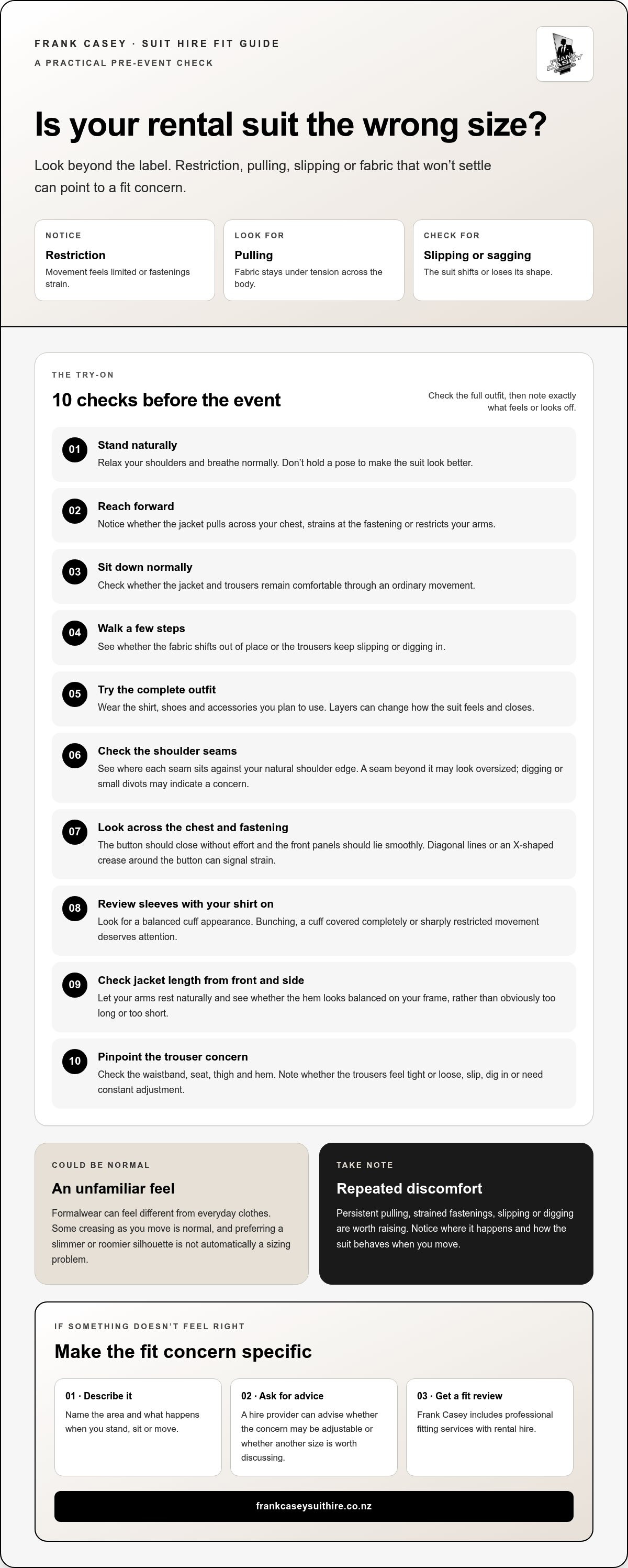
How to Check a Rental Suit Before the Event: A Practical Try-On
A calm, complete try-on gives you a better read on fit than a quick glance in the mirror. Set aside a few minutes before event day and check the suit as you’ll wear it, not as separate garments. This routine can help you spot the signs your rental suit is the wrong size and explain any concern clearly to your hire provider.
A five-step mirror and movement check
- Put on the complete outfit. Wear the shirt, formal shoes and accessories you plan to have on for the event. These layers can change how the jacket closes and how the trousers sit.
- Check the jacket from three angles. In good lighting, stand naturally and look at the front, sides and back. Notice uneven lines, shoulder divots, pulling or fabric that sags rather than sitting smoothly.
- Fasten the jacket and move. Close it as intended, then reach forward and raise your arms comfortably. Check whether the button strains, the chest pulls or the sleeves restrict your movement.
- Sit, stand and walk. Sit as you normally would, then stand and walk at an everyday pace. Notice whether the waistband digs in, the trousers shift, or the jacket rides up and stays out of place.
- Check the full outfit again. Look at the trouser hem over your shoes and confirm you can move without making repeated adjustments.
What to note before asking for help
Be specific. Instead of saying only that the suit feels wrong, write down which area causes trouble and what you were doing when you noticed it. For example: “The jacket pulls across my chest when I reach forward,” or “The waistband digs in when I sit.” Note visible signs too, such as a strained fastening, fabric slipping or a hem dragging on the ground.
A size label on its own may not explain how the suit behaves on your frame. Clear observations help your hire provider understand the concern and advise you on what to do next. If restriction continues or the suit’s lines look distorted after you’ve checked it in different positions, contact the provider promptly rather than waiting until the event.
For broader guidance on how the whole outfit should sit, read the formal suit fit guide. Frank Casey includes professional fitting services with rental hire, so ask Frank Casey about a rental suit fitting if you’d like help checking your concerns.
What to Do If Your Hire Suit Is the Wrong Size
Finding a fit problem doesn’t mean you need to panic, but you should raise it early. If the jacket restricts your movement, trousers keep slipping, or the suit repeatedly pulls out of shape, describe what you’ve noticed to your hire provider rather than waiting until event day.
When to ask for a different size or fitting advice
Ask for help if discomfort or pulling continues when you’re wearing the suit correctly and moving naturally. A preference for a slimmer silhouette is different from a jacket that strains across the chest or trousers that make it difficult to sit comfortably. Explain the specific concern, when it happens and the date of your event. Early contact gives the provider a chance to explain the options and next steps available for your hire.
Don’t assume that every issue can be fixed with an alteration or a size change. Rental garments may have limits on what can be adjusted, and exchange arrangements and timeframes vary. Confirm the current policy with your provider before making plans, and avoid attempting changes yourself unless they’ve advised you to do so.
Get support for your suit hire
Frank Casey includes professional fitting services with suit hire, which can help you check whether a concern is about fit or styling. The business serves customers nationwide and offers nationwide delivery. If you’re contacting a provider, have your event date and a clear description of the problem ready. This makes it easier to discuss what you’re experiencing and ask what steps may be available.
Not sure whether what you’ve noticed counts as one of the signs your rental suit is the wrong size? Ask for guidance rather than hoping the discomfort will disappear. Make a suit hire enquiry to discuss your fit concerns with Frank Casey.
Get Your Suit Fit Sorted Before Event Day
The clearest signs your rental suit is the wrong size are persistent discomfort, restricted movement, strained fastenings or fabric that pulls and sits unevenly. Check the jacket and trousers together, then repeat your fit checks while standing, sitting and moving in the full outfit. A style preference may be personal, but ongoing restriction is worth raising with your hire provider.
Ask early and describe what feels wrong, where you notice it and when it happens. Those details give the provider a clearer picture of your concern. Frank Casey offers professional fitting services with rental hire and serves customers nationwide, with delivery available across New Zealand.
If you’d like help checking your rental suit fit, ask Frank Casey about your suit hire. Get in touch to discuss your fit concerns and ask about a fitting review.
Frequently Asked Questions
How do I know if my rental suit jacket is too small?
A jacket may be too small if it restricts movement or looks strained when fastened. Check for pulling across the chest, diagonal or X-shaped creases around the button, and sleeves that tug when you reach forward. The button should close without drawing the front panels tight. If these signs your rental suit is the wrong size persist while you stand and move naturally, contact your hire provider for advice.
How should a rental suit jacket fit at the shoulders?
The shoulder seam should end close to the natural edge of your shoulder, where it slopes into your upper arm. A seam that extends well beyond this point can make the jacket look too large, while one that digs in or creates divots may indicate a poor fit. Check the jacket from the front and side with your arms relaxed, then move them to see whether the shoulder area feels restrictive.
How much shirt cuff should show under a suit jacket?
A modest amount of shirt cuff showing below the jacket sleeve usually creates a balanced look, but there isn’t one fixed amount that suits every wearer or outfit. Try the jacket with the shirt you plan to wear and let your arms rest naturally. The sleeve shouldn’t bunch heavily at the wrist, cover the cuff completely or expose an unusually large amount of shirt. Check comfort as well as appearance when you bend your arms.
Can a rental suit be altered if it does not fit?
Possibly, but don’t assume alterations are included or permitted for your rental. Options depend on the garment and the hire provider’s current policy, so ask before arranging or attempting any changes. Minor adjustments may be treated differently from changes to a jacket’s structure. Describe the specific issue, such as a sleeve that appears too long or trousers that drag, and ask what options are available for your hire.
How should suit trousers fit at the waist?
Suit trousers should sit securely at your waist without digging in or needing repeated adjustment. They shouldn’t slip down as you walk, and the waistband shouldn’t press uncomfortably when you sit. Try sitting and standing as well as checking in front of a mirror, since movement can reveal pressure or looseness that isn’t obvious while standing still. Also notice whether fabric pulls across the seat or thighs when you sit.
What is the correct trouser length for a formal suit?
The right length depends partly on the look you prefer and the formal shoes you’ll wear. Try the trousers with those shoes and check whether the hem looks balanced rather than dragging on the ground or riding unusually high. A trouser break is the small fold where the hem meets the top of the shoe. A clean break or little to no break can be a styling choice, but persistent dragging is worth raising with your hire provider.
What should I do if my suit hire does not fit before an event?
Contact your hire provider promptly and explain what feels or looks wrong, which movement brings it on and when your event is. For example, mention if the jacket pulls when you reach forward or the waistband digs in when you sit. Ask what options and timeframes apply, as exchange and alteration policies vary. Frank Casey includes professional fitting services with suit hire, which can help you assess your fit concern.


