

The belt you choose can make a formal outfit feel either finished or slightly out of balance. It’s easy to focus on the suit and shoes, then feel unsure about belt quality, sizing, buckle style or how closely the colours should match. This formal leather belt guide breaks those choices into practical steps, so your belt supports the outfit rather than distracting from it.
A smart belt is usually understated, comfortable and in harmony with your shoes and the occasion. You’ll learn what to inspect in the leather and construction, how to measure for a good fit, and which colours and buckle styles work for different levels of formality.
Whether you’re dressing for a wedding, school ball or business event, the details work best when considered together. Frank Casey suit hire helps you coordinate a suit, formal shoes and accessories for the occasion. The formal accessories guide offers more ideas for completing your look. Read on for practical ways to choose a belt with confidence.
Key Takeaways
- Use this formal leather belt guide to judge formality by the occasion and outfit, not just the belt’s material.
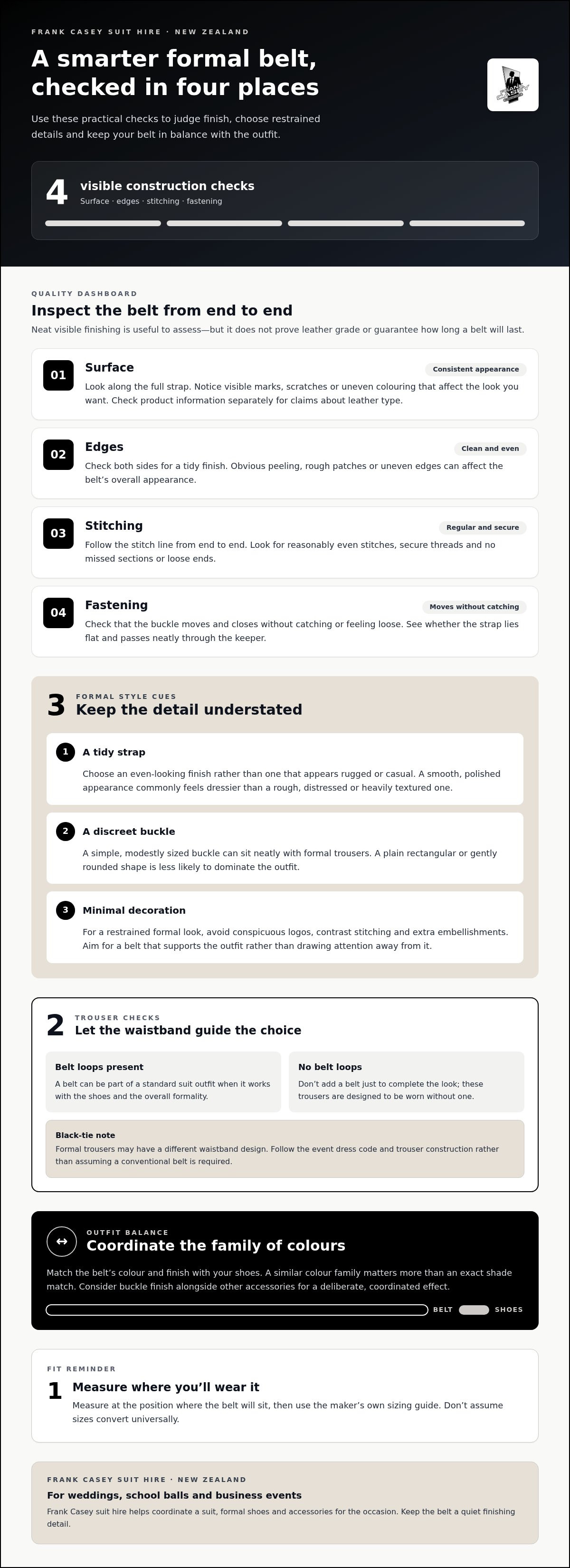
- Inspect the leather, stitching, edges and buckle for a neat, restrained finish.
- Coordinate the belt’s colour and finish with your shoes. A similar colour family matters more than an exact shade match.
- Measure at the position where you’ll wear the belt, then use the maker’s own sizing guide rather than assuming sizes convert universally.
- Plan your outfit in order: occasion, suit, shoes, belt and overall balance. Frank Casey suit hire helps bring formalwear together for events across New Zealand.
What makes a leather belt formal enough for a smarter outfit?
A formal belt is restrained in its finish, proportion and detailing. It should sit neatly with your trousers and suit, helping the outfit feel complete without becoming its focal point. Leather alone doesn’t make a belt formal. A glossy, heavily decorated strap can look out of place, while a simple design can suit a range of smart occasions.
Think of the belt as a supporting detail. For a business suit or wedding outfit, a discreet dress belt is generally a more considered choice than a braided strap, oversized buckle or prominent embellishments. The right level of formality depends on the occasion, the suit and the rest of your outfit. Start with a simple test: does the belt blend into the look, or draw attention away from it?
Which details make a belt look formal?
Look for a neat strap, an understated buckle and minimal visible decoration. The strap should sit cleanly through the trouser loops, with a finish that works alongside your suit and shoes. For a general overview of history and types of belts, including formal styles, see Wikipedia.
Proportion matters. A belt that looks broad beside the trouser loops or bulky beneath a fitted jacket can make the outfit feel less polished. A slim, simple design often reads as smarter, but no single width suits every pair of trousers. Check that the belt sits comfortably in the loops and that the buckle remains discreet when your jacket is open.
- Strap: Choose a tidy, even-looking finish rather than one that appears rugged or casual.
- Buckle: Keep its shape and size simple enough to complement the outfit, not dominate it.
- Decoration: Avoid conspicuous logos, contrast stitching or extra embellishments for a restrained formal look.
When should a formal outfit include a belt?
Start with the trousers. If they have belt loops, a belt can be part of a standard suit outfit, provided it works with the shoes and the overall level of formality. If the trousers have no loops, don’t add a belt just to complete the look. They’re designed to be worn without one.
Black-tie styling calls for extra care. Formal trousers may have a different waistband design, so a conventional belt may not suit them. Follow the event’s dress code and the construction of the trousers rather than assuming a belt is required. For specific guidance on black-tie expectations, refer to the black-tie dress-code guide. With Frank Casey suit hire, you can coordinate the suit, formal shoes and accessories for the occasion, while keeping the belt a quiet finishing detail.
How to assess leather, construction and buckle quality
A belt can look polished at a glance, so inspect it more closely before choosing. Compare the strap, edges, stitching and fastening as separate details. These visible checks help you judge how carefully the belt is finished, but they can’t prove its leather grade or predict exactly how long it will last. For claims about the material, use the product information rather than appearance alone.
When comparing belt construction, inspect the strap’s surface, edges, stitching and fastening for an even, tidy finish. Use the product label for claims about leather type.
What should you inspect on a leather strap?
Look along the full length of the strap, not just the part visible on display. Check whether the surface has a consistent finish, and note any marks, scratches or uneven colouring that affect the appearance you want. Natural variation may be visible, but you can’t identify a particular leather grade by look or feel alone. If a label names the material, assess that information separately from what you can see.
Next, examine the edges. They should look tidy, without obvious peeling, rough patches or uneven finishing. Check the stitching from end to end: the stitches should appear reasonably even, with no loose threads or missed sections. See whether the strap lies flat and passes neatly through the keeper, rather than twisting or catching. These are practical signs of workmanship, not a guarantee of performance.
- Surface: Check for a consistent appearance and note visible marks that stand out.
- Edges: Look for a clean, even finish along both sides.
- Stitching: Check that the line is regular and the threads are secure.
- Fastening: Make sure the buckle moves and closes without catching or feeling loose.
Which buckle suits a formal leather belt?
A simple, modestly sized buckle is usually the easiest choice for a smarter outfit. A plain rectangular or gently rounded shape can sit neatly with formal trousers, while oversized buckles, conspicuous logos and decorative motifs tend to draw the eye. Consider how much of the buckle will show beneath your jacket. The aim is a balanced detail, not a new focal point.
Consider the buckle’s colour and finish alongside the other details you’ll wear. A polished metal buckle can work with similarly polished accessories, while a more muted finish can suit a quieter look. You don’t need every metal detail to be identical, but a deliberate, coordinated effect looks more considered than several competing finishes.
Use this formal leather belt guide as a practical comparison, not a checklist of supposed guarantees. Visible neatness helps you assess the finish, while a product label is a better source for material claims. As you plan the rest of your outfit, Frank Casey suit hire helps bring your suit, shoes and formal accessories together for the occasion.
How to compare formal belt colour, finish and outfit compatibility
Choose a belt by looking at the whole outfit, not by judging the colour on its own. Your shoes are a useful starting point, then consider the suit, occasion and how polished or relaxed the overall look should feel. The aim is visual harmony, not an exact shade match. A formal leather belt guide is most useful when it helps you balance these details rather than follow a rigid formula.
Should your belt match your formal shoes?
Traditionally, a belt coordinates with the shoes in both colour family and formality. That’s a dependable starting point, not an inflexible rule. A black belt generally sits comfortably with black formal shoes, while a brown belt is a natural partner for brown shoes. Similar tones help the outfit feel considered, but the belt doesn’t need to be an identical shade.
Look at the finish as well. A polished belt with polished shoes usually feels more consistent than pairing a very smooth, glossy strap with visibly textured footwear. Keep the overall impression in step with the event, whether you’re dressing for a wedding, business occasion or school ball.
| Belt colour | Works naturally with | Outfit effect |
|---|---|---|
| Black | Black formal shoes | Creates a clean, streamlined look, especially with a dark suit. |
| Brown | Brown formal shoes | Adds warmth and can complement navy, grey or earth-toned suits. |
Let your belt echo your shoes in colour and finish, then make sure both suit the formality of the occasion.
How do you choose a belt for a suit or tuxedo?
Check the belt beside the suit and shoes in the same light, rather than relying on memory or comparing each item separately. A dark suit with black shoes often calls for a restrained black belt. Brown shoes can make a coordinated brown belt feel more natural with navy or grey tailoring. For a tuxedo, keep the look particularly clean and follow the dress code. The dedicated black-tie dress-code guide covers those requirements in more detail.
Finish can shift the mood. A smooth, even surface tends to read as more formal, while pronounced grain or a rugged, distressed appearance can feel more relaxed. Neither is automatically right or wrong. Consider whether the belt’s texture sits comfortably beside the suit fabric and shoes. If the outfit already has strong details, a highly textured strap or bright buckle may create unnecessary visual competition.
Before settling on a choice, view the outfit as a complete line from jacket to shoes. Notice whether the belt forms a quiet link between the trousers and footwear or creates a contrast that catches your eye first. For a particularly formal look, keep the waist area understated, especially if the trousers’ design and event dress code don’t call for a belt.
How to measure for a formal leather belt that fits
A good fit keeps your trousers secure without making the belt feel tight or leaving a long strap end hanging loose. Don’t choose from trouser size alone. Trouser sizing and belt sizing don’t follow one universal conversion, so measure yourself or a belt that already fits, then compare the result with the specific maker’s guide.
How do you measure for a belt?
If you have a belt that fits comfortably, measure from the point where the buckle meets the strap to the hole you use most often. This gives you a useful reference when comparing a new belt’s sizing information. Alternatively, measure around your waist at the position where you’ll wear the belt, over the trousers you plan to pair with it.
- Choose your method: Use a well-fitting belt or a flexible tape measure around your intended wearing position.
- Measure carefully: For an existing belt, measure from the buckle’s fastening point to the hole you use most. For a waist measurement, keep the tape comfortable and level over your trousers.
- Compare like with like: Check the measurement against the belt maker’s size guide and follow its instructions for interpreting the result.
Read the size guide closely before choosing. Brands may describe belt sizes differently, and a size label may not represent the same measurement across every maker. Check whether the guide asks for a waist measurement, a belt measurement or another reference, then use that method instead of assuming a trouser size converts directly. If your measurement sits between options, follow the maker’s stated guidance rather than guessing from a generic rule.
How should a formal belt sit when fastened?
Fastened, the belt should hold your trousers comfortably and stay in place as you stand, sit and move. It shouldn’t dig into your waist, pull the waistband out of shape or feel loose enough to need constant adjustment. Try it with the trousers you intend to wear, since the belt sits at the position and over the fabric you’ll have on for the occasion.
The fastening position matters for comfort and appearance. A belt that only closes at its tightest setting may feel restrictive, while one fastened at its loosest may not secure the trousers well. Ideally, the fit feels settled without strain and the strap passes neatly through the keeper. Excess strap length can hang awkwardly or disrupt the clean line of a formal outfit.
Choose your belt from its measured fit and the maker’s sizing guide, not from trouser size alone. Taking a moment to measure can make the final outfit feel more comfortable and composed. For help coordinating formalwear for an occasion, explore Frank Casey suit hire and bring your fit and outfit plans together.
Build a cohesive formal look with Frank Casey suit hire
A well-chosen belt is one part of a considered outfit. Before your next New Zealand wedding, school ball or formal event, check the pieces together rather than making the final decision in isolation. This formal leather belt guide has covered the belt itself. Now use the occasion and complete look to decide whether a belt belongs and how it should sit with your suit and shoes.
Coordinate the belt with the whole formal outfit
Lay out your suit, formal shoes and accessories together, then check whether their colours, finishes and level of formality feel consistent. A belt should connect naturally with the shoes, not introduce a competing detail. Consider the shirt, tie and other accessories too, especially if they add colour or texture. For those looking to browse a broader range of clothing and fashion accessories online, visiting nancyr787.myshopify.com can help you discover versatile items to complete your look. Frank Casey’s formal accessories guide can help you think through those finishing touches.
Use this quick outfit check before you get dressed:
- Occasion: Confirm the event and its dress code, including any black-tie expectations.
- Suit: Check that the suit’s style and formality suit the occasion.
- Shoes: Set the colour and overall finish that the belt can coordinate with.
- Belt: Decide whether one suits the trousers and completes the outfit without standing out.
- Overall balance: Look at the full combination, including your shirt and accessories.
For black tie, keep the dress code central to your choices. A belt may add unnecessary visual detail if it doesn’t suit the trousers or the required formality, so consider the complete outfit before adding one.
Make formalwear planning easier with Frank Casey suit hire
Choosing a suit alongside its shoes and accessories can make coordination simpler. Frank Casey suit hire supports formalwear planning for customers across New Zealand, with professional fitting included in suit hire. Post-event cleaning is included too, helping make the hire process straightforward from fitting through to returning the outfit.
Once the occasion is clear, plan your suit first, then bring the shoes and accessories into the picture. A fitted suit gives you a useful foundation for checking how the trousers sit and whether a belt works with the finished look. Frank Casey suit hire brings formalwear choices together for weddings, balls and other occasions, with nationwide service and delivery across New Zealand.
If you’re planning an event, explore Frank Casey suit hire and start putting together a formal outfit that feels coordinated from suit to shoes.
Plan your next formal occasion with confidence
Your next step is to bring the occasion, your personal style and the overall look together. Use this formal leather belt guide as a reference while planning, but let the event’s dress code lead your choices. A considered outfit doesn’t need to be complicated. Choose pieces that feel comfortable, suit the occasion and work well as a whole.
For New Zealand weddings, school balls, business events and other formal occasions, Frank Casey suit hire can help you plan your formalwear. Established in 1987, Frank Casey offers nationwide service and delivery across New Zealand. Suit hire includes professional fitting and post-event cleaning, making it easier to organise what you’ll wear.
Start planning your outfit with Frank Casey suit hire for your next formal occasion. With a clear plan and the right support, you can step into your event feeling polished and at ease.
Frequently Asked Questions
Should a formal leather belt match your shoes?
Generally, choose a belt in the same colour family as your shoes. Black shoes usually pair neatly with a black belt, while brown shoes work naturally with brown. Exact shade matching isn’t essential; aim for a coordinated effect. Also consider finish: highly polished shoes may look more at home with a smoother belt than with a visibly rugged strap.
Can you wear a leather belt with a tuxedo?
Usually, a conventional belt isn’t the first choice for a tuxedo. Some tuxedo trousers have a waistband designed to be worn without one, and adding a belt can interrupt the clean line of the outfit. Check the trousers and the event’s dress code before deciding. If the trousers have belt loops, keep the overall black-tie styling in mind rather than treating the loops as an instruction to wear a belt.
How do you know what size leather belt to buy?
Use a measurement rather than relying only on your trouser size. If you have a belt that fits well, measure from the buckle fastening point to the hole you use most. Alternatively, measure around the place you’ll wear the belt, over the trousers intended for your outfit. Compare the result with the specific maker’s sizing guide, as size labels and measurement methods can differ.
What colour leather belt works best with a navy suit?
Both black and brown can work with a navy suit, so use your shoes and the event to guide the choice. Black shoes and a black belt create a sharper, more formal combination. Brown shoes with a related brown belt bring warmth and can feel well suited to a daytime wedding or less traditional business setting. Keep the belt’s finish in step with the footwear.
What makes a leather belt look formal?
A formal belt has a composed appearance that sits comfortably with tailored clothing. Look for a strap that lies neatly, a buckle that doesn’t dominate and subtle decoration. A large logo or visibly casual design can feel distracting beside a suit. Check the whole outfit in a mirror, including the belt’s position beneath your jacket, before settling on your choice.
Is a shiny or textured leather belt more formal?
A smooth, polished finish often appears dressier, while pronounced texture can make a belt feel more relaxed. The best option depends on your shoes, suit fabric and event. For instance, a subtle finish may sit neatly with polished formal shoes, while a heavily textured strap could look out of place. Use this formal leather belt guide to assess the complete combination, not just the belt surface.
How should a formal belt fit?
A formal belt should secure your trousers without pinching when you sit or move. Try it with the trousers you plan to wear, since the waistband position affects how it feels. The fastening shouldn’t rely on pulling the belt uncomfortably tight, and the loose end shouldn’t hang far beyond the keeper. If you’re between sizes, use the maker’s sizing instructions instead of assuming a standard adjustment.


