

A suit can look sharp in the mirror but feel restrictive as soon as you sit down. That’s why common suit fitting mistakes aren’t always obvious at first glance. It can be hard to tell whether a jacket is too tight or simply feels unfamiliar, especially when you’re dressing for a wedding, school ball or formal event. The right fit should look polished and let you move comfortably.
This guide shows you how to spot fit issues before the event by checking your suit standing, sitting and moving. We’ll cover the shoulders, jacket, sleeves and trousers, plus practical checks you can repeat at a fitting. Frank Casey suit hire includes professional fitting, with support to help you assess your outfit for the occasion. Whether you’re buying or hiring, check the whole outfit rather than relying on the size label or a mirror pose.
Key Takeaways
- Common suit fitting mistakes can affect appearance and comfort, so assess how the jacket and trousers sit together.
- Check the jacket’s shoulder line, chest and sleeves for pulling or excess fabric instead of relying on the size label alone.
- Make sure trousers feel comfortable at the waist and seat, and look balanced with your event shoes when you stand and walk.
- Use a fitting routine based on your event and outfit, then move naturally to see how the suit feels.
- Frank Casey suit hire includes professional fitting and post-event cleaning, helping simplify formalwear preparation.
Common Suit Fitting Mistakes: Spot the Problems Before Your Event
A fit concern doesn’t mean your suit is beyond help. Spotting it early gives you time to reassess your choice and get fitting support before the event. A fitting mistake is a mismatch between the garment, the person wearing it and the occasion. A suit might look smart on a hanger, yet feel wrong once you move or wear it with the rest of your outfit.
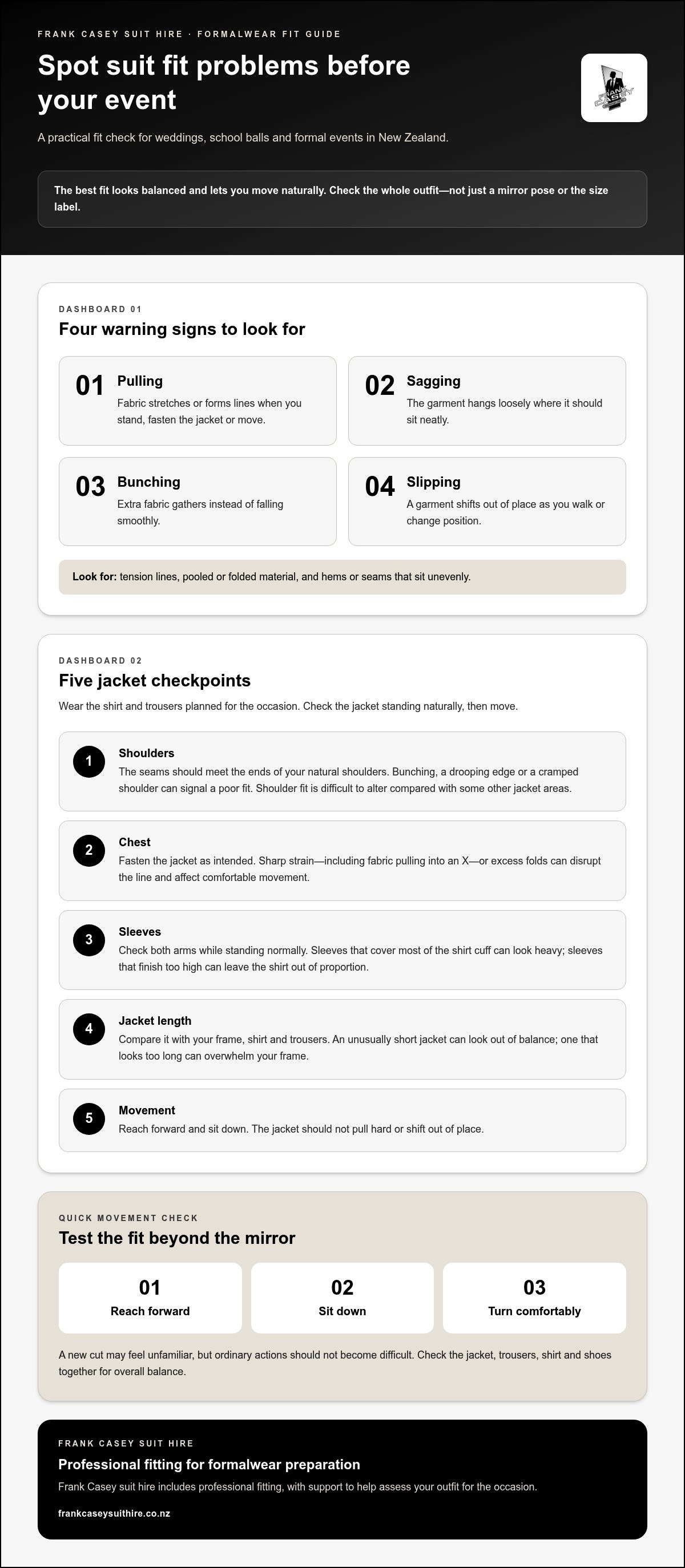
A good fit looks balanced and allows natural movement. It doesn’t need to cling to your body or follow the latest silhouette. Start by looking for these warning signs:
- Pulling: Fabric stretches or forms lines when you stand naturally, fasten the jacket or move.
- Sagging: The garment hangs loosely where it should sit neatly.
- Bunching: Extra fabric gathers instead of falling smoothly.
- Slipping: A garment shifts out of place as you walk or change position.
How can you tell when a suit fit is wrong?
Look for lines where fabric is under tension, material that pools or folds, and hems or seams that sit unevenly. These clues are more useful than whether the suit simply feels unfamiliar. A new cut can take a little getting used to, but it shouldn’t make ordinary actions difficult.
A jacket can feel close-fitting without being too small. The key is movement: can you reach forward, sit down and turn comfortably? If the fabric pulls sharply or the jacket shifts as you move, the fit may be restricting you. Check the complete outfit, too. Your jacket, trousers, shirt and shoes all affect the overall balance, so assess them together.
The Suit (clothing) overview on Wikipedia explains the main components and variety of suits. For your own fit check, focus on how the whole outfit looks and feels on you.
Why does fit matter more than following a trend?
A fashionable cut isn’t automatically right for every wearer or occasion. If the proportions feel out of balance, an otherwise polished outfit can become distracting. Choose a shape that sits well on your frame and suits the event, rather than forcing yourself into a silhouette just because it’s popular. The same balance between ease of movement and structure applies across all tailored garments, including tailored uniform solutions from manufacturers like hesabuinternational.co.za.
Comfort matters, too. Formal occasions can involve hours of standing, sitting, walking and greeting people. A suit that lets you move naturally means less need to adjust your jacket or waistband during the event. Frank Casey suit hire is a practical option for dressing for a particular occasion. Whether you hire or buy, judge the fit by balance and ease, not by trend alone.
Jacket Fitting Mistakes: Check the Shoulders, Chest and Sleeves
A jacket can look close to the right size and still sit poorly. Check how its shoulders, chest and sleeves work together while you’re standing naturally and moving. A single measurement won’t tell the whole story: the jacket should follow your shape without pulling, collapsing or hiding too much of the shirt beneath it.
What shoulder and chest fit mistakes should you notice?
Start at the shoulders. The seam should meet the point where your natural shoulder ends. If it extends beyond that point, the jacket may look droopy; if it sits short, the shoulder can look cramped or bunch up. Check across the top for dips, ridges or gathered fabric. Shoulder fit is especially important because it’s difficult to alter compared with some other parts of a jacket.
Next, fasten the jacket as intended and check the chest. Strain around the fastening, including fabric pulling into an X shape, can mean the jacket is too tight. Excess folds or loose fabric can also disrupt the line. Both can make the jacket look unbalanced and affect how comfortably you move.
How do sleeve and jacket length affect the look?
Sleeves that cover most of the shirt cuff can make the outfit look heavy or untidy. Sleeves that finish too high can leave the shirt looking out of proportion. Check both arms while standing normally, as posture can make one side appear different. Aim for a neat transition between shirt and jacket rather than judging sleeve length in isolation.
Jacket length affects the proportions of your whole outfit. If it looks unusually short, the jacket may seem out of balance with your torso; if it looks too long, it can overwhelm your frame. Compare the jacket with your trousers and shirt, then move naturally to see whether the line stays tidy.
Use this quick inspection before deciding that a jacket fits:
- Shoulders: Do the seams meet your natural shoulder ends, without bunching or extending past them?
- Chest: Does the fabric lie smoothly when fastened, without sharp pulling or excess folds?
- Sleeves: Is enough shirt visible to create a clean, balanced finish?
- Length: Does the jacket look proportionate with your frame and trousers?
- Movement: Can you reach forward and sit without the jacket pulling hard or shifting out of place?
These common suit fitting mistakes are easier to judge when you wear the jacket with the shirt and trousers intended for the occasion. A detail that seems wrong on its own may look balanced as part of the complete outfit. If shoulder, chest or sleeve concerns remain, professional fitting can help you assess the jacket before event day. Frank Casey suit hire includes professional fitting, so you can get support when preparing formalwear for an occasion.
Trouser Fit Mistakes: Get the Length, Waist and Overall Balance Right
Trousers can change the way the whole suit looks. If they bunch over your shoes or pull across the seat, the jacket may appear out of proportion, even if it fits well. Check the trousers as part of the full outfit: their length, shape and comfort should work with your jacket and the formal shoes you plan to wear.
Is the trouser length making the suit look untidy?
Stand naturally in your event shoes and look at where the trouser hem meets them. Excess fabric pooling around the shoe can make the lower half look untidy. At the other extreme, trousers that sit unusually high may make the legs look shorter or create a gap that feels out of keeping with the rest of the outfit. Neither length is automatically wrong for every cut, so assess the overall effect rather than aiming for one universal hem position.
Try the shoes you intend to wear at the event, not a different pair with a different shape or height. Walk a few steps and check whether the hems stay even and fall cleanly. If the trousers look balanced with those shoes, they’re more likely to sit as intended on the day.
Are the waist, seat and thighs comfortable?
A waistband that slips as you walk or needs constant adjustment can distract you throughout an event. Trousers that feel tight when you sit are another warning sign. Check that the waist stays secure without digging in, then sit down and stand up to see whether the fit remains comfortable.
Look for fabric pulling across the seat or thighs. It may mean the trousers are restricting your movement, while excess folds can make the fit look loose or uneven. Comfort should hold when standing and seated, not just while you’re posing in front of a mirror.
Use this quick trouser check with the full outfit on:
- Length: Do the hems sit neatly with your event shoes, without excessive pooling or looking unusually high?
- Waist: Do the trousers stay in place without slipping or feeling tight?
- Seat and thighs: Can you sit, stand and walk without fabric pulling or bunching?
- Overall balance: Do the trousers look in proportion with your jacket and the rest of your outfit?
Common suit fitting mistakes can combine. Trousers that bunch at the shoes may make the whole outfit look heavy, while a tight seat can change how the jacket hangs when you sit. Check the silhouette from the waist down, then assess it alongside the jacket. There’s no single trouser cut that suits everyone; aim for a clean line that feels right for you and the occasion.
If you’re hiring formalwear for an event, Frank Casey suit hire includes professional fitting to help you assess trouser comfort and proportions before the occasion.
How to Avoid Suit Fitting Mistakes: A Practical Fitting Checklist
A consistent fitting routine helps you catch common suit fitting mistakes before event day. Start with the occasion: a wedding, school ball or black-tie event may call for different outfit details. Have the shirt and formal shoes you plan to wear on hand, then assess the suit as a complete outfit rather than judging it by the size label or a mirror pose.
What should you do during a suit fitting?
Stand in your usual posture, with your shoulders relaxed. Don’t pull yourself straighter or hold your arms unnaturally just to make the suit look better. Fasten the jacket as appropriate and check whether the fabric lies smoothly. Then try ordinary movements, such as sitting, walking and reaching forward. Notice any strain, shifting or excess fabric before deciding how the fit feels.
- Set the occasion and outfit. Consider the event, dress requirements, shirt and shoes you’ll wear. These details affect how the suit’s proportions look.
- Stand naturally. Let your arms rest by your sides and check how the jacket and trousers fall without adjusting your posture.
- Check the jacket fastened. Look for a clean line across the chest and waist. Notice whether the fabric pulls or hangs loosely.
- Test everyday movement. Sit down, stand up, walk and reach forward. The suit shouldn’t restrict these actions or shift so much that you need to keep readjusting it.
- Review the full silhouette. Check that the jacket and trousers look balanced together, including with your event shoes.
Pause between checks. A detail that looks noticeable while standing still may settle once you move, while discomfort can become clearer after sitting or reaching. If something feels wrong, describe the movement or area causing concern instead of simply saying the suit feels “off”. That makes the fit easier to assess.
Which fitting errors are easy to make when ordering online?
Self-measurements can be inaccurate if the tape sits at the wrong point, is held too tightly or loosely, or your posture changes between measurements. Follow the retailer’s measurement instructions carefully and get help if you can’t take a measurement reliably yourself. For more guidance, see this professional suit fitting guide.
When a suit arrives, repeat the movement checks in the clothes and shoes intended for the occasion. Frank Casey suit hire includes professional fitting to help address fit concerns before your event. For formalwear, explore Frank Casey suit hire for fitting support alongside your suit.
Avoid Event-Day Suit Fit Stress with Frank Casey Suit Hire
For a wedding, school ball, black-tie event or another formal occasion, hiring can be a practical alternative to buying a suit you may only wear for that event. Fit questions are easier to address before the day, while you can still assess how the jacket and trousers sit and whether you can move comfortably. Frank Casey suit hire includes professional fitting to support your formalwear preparation.
Suit hire also includes post-event cleaning, and Frank Casey provides nationwide delivery and service across New Zealand. Whether you’re arranging formalwear from nearby or further afield, use the fitting to assess how the outfit works for the event and feels on you, not just how it looks in the mirror.
When can suit hire make fitting easier?
Hiring is worth considering when you need formalwear for a particular occasion and would value help assessing the fit. A professional fitting can help you notice issues you might miss when judging a suit by appearance alone, such as discomfort when seated or trousers that don’t sit well with your shoes. Frank Casey suit hire includes fitting support as part of the hire process, helping you prepare with confidence.
How can you prepare for your Frank Casey suit fitting?
Bring or wear the shirt and formal shoes you plan to use at the event. Tell the fitter what the occasion is and what you expect to do, whether that means sitting through a dinner, walking between venues or spending time on your feet. This makes the fitting relevant to your plans, not just a check in front of a mirror.
- Bring the right outfit pieces: Include your intended shirt and shoes so you can assess the complete look.
- Explain the occasion: Share the event type and any practical outfit requirements.
- Describe how you’ll move: Mention whether you expect to sit, walk, dance or stand for extended periods.
- Check accessories as a whole: Coordinate details with the suit using this guide to formal accessories hire.
These preparations can bring common suit fitting mistakes to light before they become event-day distractions. They’re useful whether you’re hiring or buying, and give you a clearer basis for judging comfort, balance and suitability. If you need formalwear for an upcoming occasion, explore Frank Casey suit hire for professional fitting and nationwide service across New Zealand.
Make Your Next Event Feel Easier
A suit should support the occasion, not occupy your thoughts while you’re there. Give yourself time to make a considered choice, and treat fit concerns as useful information rather than a reason to feel unsure. Spotting common suit fitting mistakes early gives you a chance to find an outfit that feels comfortable and looks right for you.
If you’re preparing for a wedding, school ball or formal event, suit hire can be a practical next step. Frank Casey specialises in formalwear, with suit hire that includes professional fitting and post-event cleaning, plus nationwide delivery and service across New Zealand.
Explore Frank Casey suit hire for your next event, and take the next step towards feeling comfortable, polished and ready to enjoy the occasion.
Frequently Asked Questions
Can a suit fit well if it feels tight when I sit down?
Not if sitting causes uncomfortable pulling or makes it hard to settle naturally. A suit may feel a little different when seated, but persistent strain is worth raising at your fitting. Note where it happens, such as across the jacket front or at the trouser waist. That detail can help identify common suit fitting mistakes.
Should I wear the shoes I plan to use when trying on a suit?
Yes, if you can. Your shoes affect how the trouser hem meets your foot, so trying on the suit in different footwear may give you the wrong impression of its length. Bring the shirt you intend to wear as well. If your outfit includes other pieces, such as a belt, bring those along so you can see how the finished combination sits together.
What should I do if my suit feels different after wearing it for a while?
Make a note of what changed and what you were doing at the time. For example, did the jacket shift after walking, or did the waistband feel uncomfortable after sitting through dinner? These specific observations are more useful than a general feeling that the suit is “off”. Share them during your fitting, especially if the same issue returns during ordinary activities.
Can I fix a suit that is too big or too small?
Some fit problems may be adjustable, depending on the garment and where it feels wrong. Avoid trying to alter formalwear yourself, particularly if you’re hiring it. Point out the issue during a professional fitting so it can be assessed before the event. Raising the concern early gives you more time to consider a suitable option.
How early should I arrange a suit fitting before an event?
Arrange it as soon as your event plans allow, rather than leaving the first try-on until the day itself. This gives you time to assess the outfit, notice discomfort and follow up on concerns. Timing can vary depending on whether you’re buying or hiring and on the event arrangements. For a wedding or school ball, make fitting part of your preparation, not a last-minute task.
Does a suit need to feel snug to look smart?
No. A polished suit should sit neatly without feeling like it’s holding you in place. A close-fitting style isn’t automatically a better fit, and comfort shouldn’t be sacrificed to copy a particular silhouette. Check that you can breathe easily and feel at ease through the shoulders, waist and legs. The right balance is personal and should suit both your frame and the occasion.


