

The colour that makes the strongest impression may not be the one you expect. Understanding what your suit colour says about you can help you choose a shade that feels right for the occasion, without assuming it defines your personality. Navy can look composed and polished, while burgundy adds a deeper note of colour. The shade, styling and setting all contribute to the impression.
It’s understandable to feel unsure about what’s appropriate, especially when broad claims about colour make the choice seem more complicated than it is. These associations are starting points, not rules. Begin with the dress code, then consider the event, your personal style and how you want the complete outfit to look.
This guide explores common impressions linked with black, navy, grey, green, brown and red, then helps you match a shade to weddings, school balls and business occasions in New Zealand. If you’re considering Frank Casey suit hire for a special event, professional fitting in-store or the online measurement form can help you assess the fit and overall look.
Key Takeaways
- What your suit colour says about you is best understood as a possible first impression, not a verdict on your personality.
- Compare classic shades with bolder colours to find a look that feels right for your personal style.
- Let the event and its dress code guide your choice, especially for weddings, school balls and business occasions in New Zealand.
- Use your shirt, tie, shoes and accessories to balance or soften the impression your suit colour creates.
- Frank Casey suit hire offers formalwear to hire or purchase, with nationwide delivery across New Zealand.
What Your Suit Colour Says About You: The First Impression, Not the Whole Story
Choosing a suit for a wedding, school ball or important work event can bring an unexpected question: which colour feels appropriate, and what might other people read into it? Considering what your suit colour says about you can help you make a deliberate choice, but it shouldn’t become a test of who you are. Colour associations describe impressions someone might form at a glance, not facts about the person wearing the suit.
Those impressions are shaped by more than the shade itself. The occasion, dress code, styling, cultural context and personal taste all play a part. A colour that feels suitably formal at a black-tie event may seem too serious at a relaxed celebration. The same shade, styled with different accessories, can also create a different overall look. People bring their own experiences and preferences to what they see.
How suit colour can shape a first impression
People may associate suit colours with qualities such as formality, confidence or approachability. These are possibilities, not reliable predictions. A bright or less traditional shade might stand out at a business meeting, yet feel expressive and fitting at a wedding where the couple has invited guests to embrace colour. The setting changes the message.
For a general background on suits, including colours worn in business settings and their history, see this overview of the suit (clothing). It can offer context, but it won’t tell you how every guest at your event will interpret a particular shade.
Why colour is not a personality test
A suit is one part of an outfit, and an outfit is not evidence of someone’s character. One person might read a colour as bold; another may simply see a personal style choice. Context and individual interpretation matter, so avoid assuming that a particular shade proves the wearer is confident, reserved or creative.
Suit colour can influence an impression, but it cannot define character. That distinction keeps colour advice useful without turning broad associations into rigid rules.
Fit and confidence matter, too. A well-fitting suit that feels comfortable can look composed whether the colour is classic or more expressive. If the shade feels out of step with the dress code, even a confident wearer may appear less at ease. Think about the complete impression you want to create, then weigh colour alongside the event’s expectations and your own taste.
For New Zealand occasions, start with the invitation and the role you’ll have at the event. A guest’s choice may differ from what feels right for a wedding party member, while a school ball or business function can each call for its own balance of individuality and formality. Frank Casey suit hire offers formalwear for these occasions, with professional fitting to help you assess your choice. The right shade isn’t the one that supposedly reveals your personality; it’s the one that fits the event, feels comfortable and lets you enjoy the occasion.
What Black, Navy, Grey, Green, Brown and Red Suits May Communicate
Common style associations can help you picture the effect of a suit colour, but they aren’t fixed meanings or promises about how people will respond. The shade, fabric, cut and setting all influence the look. For a New Zealand wedding, a dark suit may feel suitably formal, while a lighter or more colourful option may better match a relaxed celebration. Use these descriptions as a starting point, then consider the dress code and your preferences.
Thinking about what your suit colour says about you is less about choosing a shade with a guaranteed message and more about deciding how you’d like your outfit to come across.
Classic suit colours: black, navy and grey
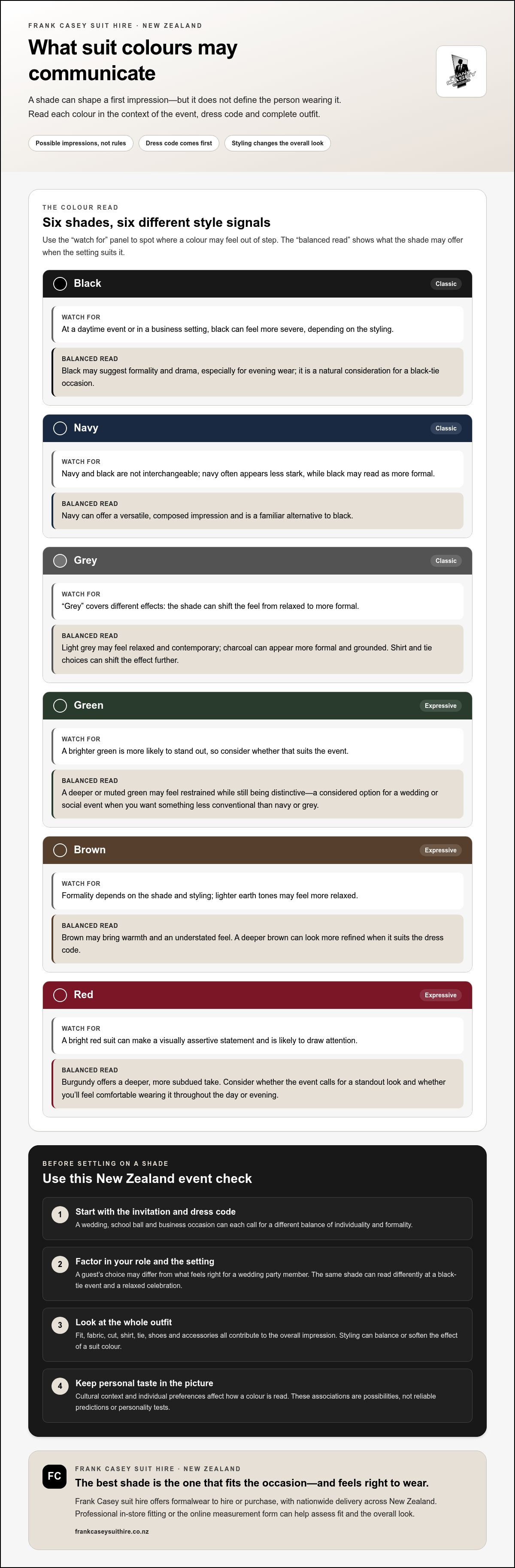
Black may suggest formality and drama, especially for evening wear. Its high contrast creates a strong, polished look, making it a natural consideration for a black-tie occasion. For a daytime event or business setting, it can feel more severe than a softer shade, depending on the styling.
Navy can offer a versatile, composed impression. It’s a familiar alternative to black, but the two aren’t interchangeable: navy often appears less stark, while black may read as more formal. Neither is a universal winner. Let the dress code and the look you want guide your choice.
Grey has a wider range than its simple name suggests. Light grey may feel more relaxed and contemporary, while charcoal can appear more formal and grounded. A pale grey suit at a daytime celebration can look quite different from a charcoal suit at an evening function. Shirt and tie choices can shift the effect further.
Expressive suit colours: green, brown and red
Green can feel distinctive without always being loud. A deeper or muted green may look restrained, while a brighter shade is more likely to stand out. It can be a considered choice for a wedding or social event when you want something less conventional than navy or grey.
Brown may bring warmth and an understated feel. Its formality depends on the shade and how the suit is styled: a deeper brown can look more refined, while lighter earth tones may feel more relaxed. Consider the event’s dress code and whether a warmer palette suits the occasion.
Red can make a visually assertive statement. A bright red suit is likely to draw attention, while burgundy offers a deeper, more subdued take. Before choosing either, consider whether the event calls for a standout look and whether you’ll feel comfortable wearing it throughout the day or evening.
Colour associations are guides, not rules. If you’re weighing up a distinctive shade for a wedding, school ball or formal event, explore Frank Casey suit hire options to consider formalwear for the occasion.
How to Choose a Suit Colour for Your Event and Intended Impression
There isn’t one suit colour that’s automatically right for every formal occasion. A shade that works well for an evening black-tie event may not be the best fit for a daytime wedding, school ball or business function. Use the dress code and setting as your first guide, then decide whether you want your look to feel classic, understated or more distinctive. Colour associations can help you compare options, but shouldn’t override the occasion’s expectations.
Match the colour to the occasion’s level of formality
Black and other darker shades can suit particularly formal evening settings, while navy and grey offer adaptable choices across a range of formal events. Still, these occasions aren’t interchangeable: wedding party attire may follow the couple’s guidance, a school ball may have its own expectations, and business dress depends on the setting. Read the invitation and follow any guidance from the host or organiser before settling on a shade.
The table offers starting points, not rules. Each shade can read differently depending on its tone, the cut of the suit and the way it’s styled.
| Colour | Possible impression | Event context to consider |
|---|---|---|
| Black | Formal and striking | Evening occasions with a particularly formal dress code |
| Navy | Classic and composed | Business functions, weddings or other formal events where a versatile look feels right |
| Charcoal or light grey | Charcoal may feel more formal; lighter grey can look more relaxed | Choose the shade to suit the event’s tone and time of day |
| Green or brown | Distinctive or warm, depending on the shade | Weddings and social events where a less traditional look fits the setting |
| Red or burgundy | Expressive and likely to stand out | Consider whether a bold colour suits the occasion and your comfort level |
Choose the impression you want to create
Ask yourself what you’d enjoy wearing: a familiar classic, a quiet alternative or a colour that draws more attention. Then consider the venue, time of day and any guidance from the host or organiser. If you’re choosing formalwear for a New Zealand school ball, take the school’s expectations into account as well as your own style. Frank Casey suit hire offers school ball suits alongside formalwear for other occasions.
Picture the full outfit rather than judging a swatch by itself. A restrained tie may balance a more expressive suit, while formal accessories can bring a classic shade together. If you’re still weighing what your suit colour says about you, focus on whether it suits the event and feels natural to wear. That’s more useful than trying to match a colour to your age, profession or personality. Frank Casey suit hire offers a practical way to explore formalwear for your event.
A Practical Suit Colour Checklist: Balance Shade, Styling and Versatility
A colour can look appealing on its own but feel different once you add a shirt, tie and shoes. Use this checklist to make a practical choice for your event, then assess the whole outfit before deciding. It keeps colour in perspective: the shade matters, but so do the dress code, styling and how comfortable you feel wearing it.
Use a simple colour-selection process
- Start with the event. Read the invitation and consider any guidance from the host or organiser. Note the formality, setting and time of day, and whether there’s a dress code to follow.
- Decide on the look you want. Are you after a classic, understated outfit or something more distinctive? Choose an impression that feels appropriate for the occasion and natural for you, rather than selecting a colour based on assumptions about age, job or personality.
- Shortlist a few shades. Compare colours that suit the event and that you’d feel at ease wearing. A darker shade may feel more formal, while a lighter or more expressive colour can give the outfit a different character.
- Consider what you’ll wear with it. Think about the shirts, ties, shoes and accessories you already have, or the finishing details you’d like to include. A shortlist is easier to judge when you picture complete outfits, not isolated suit colours.
Make the complete outfit feel considered
Accessories don’t need to match the suit exactly. A tie can echo a colour elsewhere in the outfit, while a simpler shirt or pocket square can keep a bold suit from feeling overly busy. Formal shoes also contribute to the overall effect: consider how their colour and style sit alongside the suit and the event’s level of formality. If you are looking for smart footwear and coordinated essentials to round out your attire, contemporary menswear brands like GENTLO offer versatile options designed to keep an outfit cohesive.
Try combinations together where you can. A tie that looks balanced beside a suit under one light may appear stronger or softer in a different setting. Look at the complete outfit in a mirror, including your shoes, and consider whether each detail works with the overall look. The aim is coordination, not exact colour matching.
Fit deserves the same attention as colour. A professional fitting gives you the chance to see how the suit sits when you stand and move, and to judge whether the full outfit feels comfortable. Frank Casey offers in-store professional fittings without an appointment, or you can use the online measurement form. This is useful when comparing suit colours for a wedding, school ball or business event.
Use these steps to make the choice feel manageable. If you’re still considering what your suit colour says about you, focus on the impression you want and whether the outfit suits the occasion, rather than treating colour as a personality label. To explore formalwear for your event, view Frank Casey suit hire options.
Find Your Event-Ready Look with Frank Casey Suit Hire
Once you’ve narrowed down the colour and style that feel right, Frank Casey suit hire can help you put together formalwear for the occasion. Suits are available to hire or purchase, with options for black-tie events, weddings, school balls, business occasions and other special events. A considered colour choice is a useful starting point; let the dress code and how the complete outfit feels guide your final decision.
Get help finding a suit for your occasion
Think about the role you’ll have at the event and the look you’re aiming for. A wedding guest may want a different level of formality from someone in the wedding party, while school ball and business attire each have their own setting and expectations. Frank Casey suit hire offers formalwear for these occasions, helping you consider a suit in the context of where you’ll wear it.
For a wedding, take cues from the invitation and any guidance from the couple or organiser. A classic shade can suit a more traditional look, while a distinctive colour may feel right for a celebration with a less conventional style. Aim for a look that sits comfortably within the occasion and still feels like you.
Choose a fitting and delivery option that suits you
A professional fitting can help you assess how a suit sits and feels, rather than judging colour alone. Frank Casey offers in-store fitting without an appointment, or you can use the online measurement form. Nationwide delivery is available across New Zealand, making it easier to plan formalwear from anywhere in the country.
Frank Casey brings three generations of experience and has served thousands of events. That background supports a practical approach to choosing formalwear for significant occasions, whether you’re considering a suit for a wedding, school ball, black-tie event or business function.
Use what you’ve learned about what your suit colour says about you as a guide, not a rule. Consider the dress code, choose a shade you feel comfortable wearing, and assess the full outfit with a professional fitting. To explore suits for your occasion, browse Frank Casey suit hire options.
Choose a Shade You’ll Feel Good Wearing
The best suit colour is one that feels right for your event and for you. Let the dress code guide your decision, then choose a shade you’ll feel comfortable wearing throughout the occasion. Thinking about what your suit colour says about you can help you shape an impression, but it doesn’t need to dictate your choice. Your outfit should feel considered, not like a costume built around someone else’s idea of what a colour means.
If you’re ready to put your choice into practice, explore formalwear options for your next event. Frank Casey suit hire can help you take the next step towards a look that suits the occasion and your personal style. Explore Frank Casey suit hire and find formalwear for your event.
Choose a colour that feels like you, and enjoy the occasion with confidence.
Frequently Asked Questions
What does a navy suit say about you?
A navy suit is often seen as classic and adaptable, creating a composed, polished impression. That’s a possible reading of the outfit, not proof of your character. The idea of what your suit colour says about you is most useful as a styling prompt. For a daytime business meeting, for example, pair navy with a light shirt for a considered look, then choose accessories that suit the setting.
Is a black suit too formal for daytime events?
Not necessarily. A black suit may feel formal, but a daytime wedding or memorial service can call for different choices depending on the invitation and host’s guidance. Check whether the dress code specifies formalwear, then consider the setting and styling. If black feels too severe in daylight, navy or grey can offer alternatives without assuming one shade is right for every event.
Can suit colour affect how professional you look?
Suit colour can contribute to a professional-looking outfit, but it can’t establish professionalism on its own. For a client presentation, choose a shade that fits the workplace and feels comfortable while seated, standing and moving. A neat overall appearance, suitable fit and coordinated shirt and shoes all contribute. Avoid relying on colour to guarantee trust or competence; impressions vary between people and situations.
What suit colour works best in photographs?
No single suit colour is best for every photograph. A dark suit against a dark background may blend in, while a light shade can appear different in bright outdoor light than indoors. For a wedding or school ball, consider the venue, backdrop and other outfit colours. If possible, view the complete outfit in lighting similar to the event, rather than relying only on a product image.
How should I choose a suit colour for my skin tone?
Start with shades you like, then try them on rather than applying a strict skin-tone rule. Compare navy and charcoal near your face, for instance, and notice which feels more natural with your chosen shirt. The fabric, shirt colour and lighting can change the effect. A professional fitting can help you assess the overall combination in person before choosing formalwear for an event.
What happens if my suit colour looks different from what I expected?
A suit can look different from an image or colour name because lighting and nearby colours affect how it appears. View it alongside the shirt and tie you plan to wear, and check the outfit in more than one light if practical. A fitting also lets you assess how the suit sits and feels. That gives you a fuller basis for choosing than colour alone.


