

What if the sharpest formal outfit isn’t the most elaborate one, but the one that fits the event and feels comfortable all evening? Choosing what to wear can be tricky when the dress code is unclear or you’re unsure whether your jacket, shirt and accessories work together. This men's style guide for formal events makes the decisions simpler.
Start with the occasion. A wedding, school ball, business function or black-tie event each calls for a different level of formality. A comfortable fit and a coordinated outfit help you look polished without feeling overdone. You’ll learn how to read the dress code, choose suitable colours and pieces, and bring your outfit together with considered finishing details.
We’ll also cover the practical choice between hiring and purchasing formalwear. Frank Casey suit hire offers suits, shoes and accessories for special events, with professional in-store fitting available without an appointment or through an online measurement form. Nationwide door-to-door delivery across New Zealand makes it easier to prepare for your occasion.
Key Takeaways
- This men's style guide for formal events shows how invitation wording can help you choose the right level of formality.
- Check how the shoulders, sleeves and trousers sit, so your outfit looks polished and feels comfortable.
- Understand the differences between black tie, wedding or general formalwear, and business formal.
- Consider your shirt, tie and shoes as part of the complete outfit, so the details feel coordinated.
- Frank Casey suit hire offers suits, ties, shirts, shoes and accessories to hire or purchase for your event.
Start your men’s formal event style with the occasion and dress code
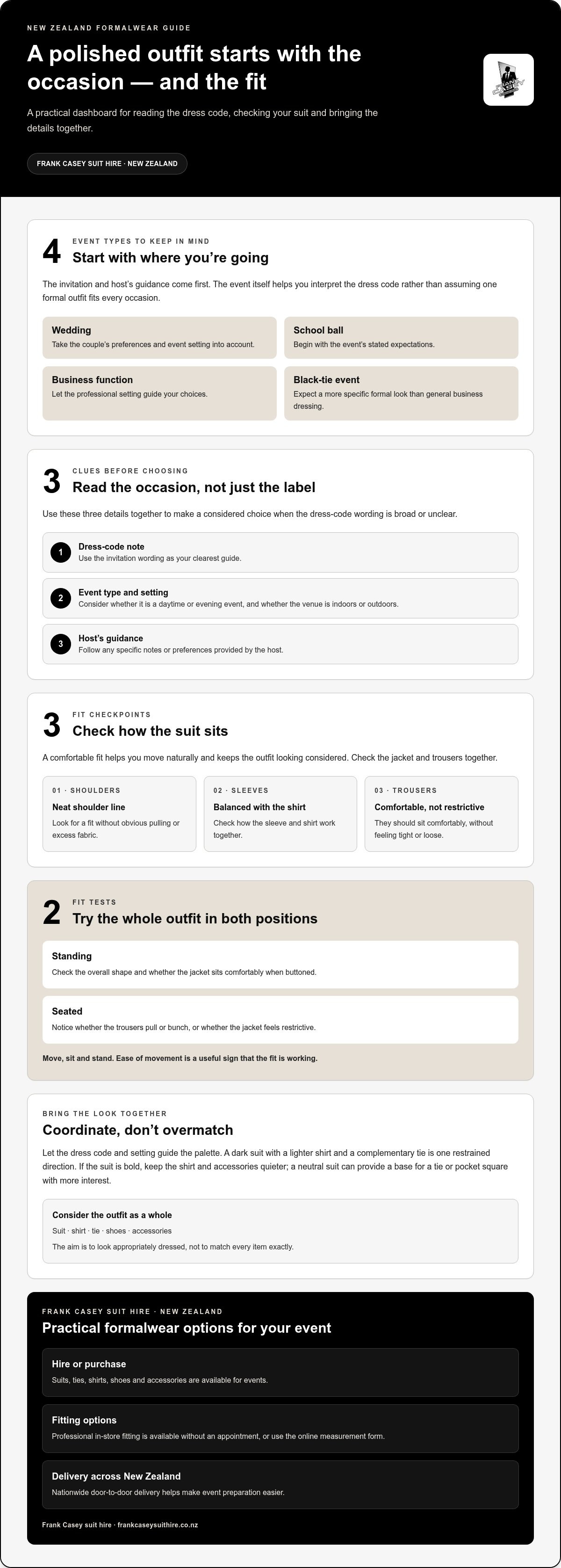
Formalwear decisions are easier when you start with the event, rather than choosing a suit and hoping it fits the occasion. The dress-code wording on the invitation is your clearest guide: it signals how polished your outfit should be and helps narrow down the right suit and accessories. This men's style guide for formal events starts with a simple principle: follow the host’s direction, then consider the event itself.
Look beyond the dress-code label, too. Note whether the event is a wedding, school ball, business occasion or black-tie function, and consider its timing and setting. A daytime celebration and an evening event may call for different choices. An indoor venue and an outdoor setting can also affect what feels comfortable. Together, these details help you interpret the invitation without assuming every formal occasion has the same expectations.
Formal wear is a Western dress code category for the most formal occasions. The term can cover different levels of dress, so check the exact wording on your invitation rather than relying on a broad label such as “formal”. If the invitation includes a note from the host, use it as guidance on the look they have in mind.
What should you check before choosing formalwear?
Start with three things: the dress-code note, the event type and any guidance from the host. If one detail is missing, use the others to make a considered choice. A school ball has a different feel from a business function, while a wedding may have its own expectations for guests. Don’t assume one formal outfit suits every occasion.
How does formality change between events?
Black tie calls for a more specific formal look than general business dressing. Business formal is shaped by a professional setting, while wedding attire depends on the couple’s guidance and the event itself. If the wording is unclear, use the time, venue and host’s notes as clues instead of guessing at a strict rule.
For a wedding, let the couple’s preferences guide your choice. A daytime event, evening reception or outdoor setting can each suggest a different direction, but the invitation and any direct guidance take priority. For a school ball, start with the event’s stated expectations and choose an outfit that feels suitably polished. Dedicated guides can explore black-tie and school-ball outfits in more detail.
Once you’ve identified the occasion and expected level of formality, you can make more confident choices about the outfit itself. Frank Casey suit hire offers formalwear for weddings, school balls, business events and black-tie functions, giving you a practical way to bring your event plans together.
Build a confident men’s formal look with fit, shape and colour
A suit can be on-trend and still feel wrong if it doesn’t sit comfortably or suit the occasion. A well-fitting outfit is a dependable starting point: it looks considered, lets you move naturally and helps the pieces work together. In this men's style guide for formal events, focus first on how the suit sits, then use colour and shirt choices to complete the look.
Try the whole outfit together where possible. A jacket that looks fine on its own may feel restrictive once buttoned, while trousers that seem suitable when standing might pull or bunch when you sit. Check the fit in front of a mirror both standing and seated to see whether the overall shape feels balanced.
What should a formal suit fit feel like?
Comfort and ease of movement are useful signs that a suit is working for you. The shoulder line should sit neatly, without obvious pulling or excess fabric. Sleeves should look balanced with the shirt, and trousers should sit comfortably without feeling tight or loose. Consider the jacket and trousers together, rather than judging one detail in isolation.
Move, sit and stand in the suit. If the jacket shifts awkwardly or the trousers feel restrictive, the fit may distract you throughout the event. For more detailed guidance on how a suit should sit, see this professional suit fitting guide.
How can colour choices suit the event?
Let the dress code and setting guide your palette. A restrained combination, such as a dark suit with a lighter shirt and a tie in a complementary tone, helps the pieces feel coordinated without competing for attention. For weddings, take the couple’s guidance into account; for business occasions, consider the professional setting. No single colour is required for every event.
If you’re considering a more distinctive colour, keep the rest of the outfit balanced. Pair a bold suit with a quieter shirt and accessories, or use a neutral suit as a base for a tie or pocket square with more interest. The aim is to look appropriately dressed, not to match every item exactly.
Frank Casey suit hire can help bring these choices together with professional in-store fitting, available without an appointment. To explore formalwear for your event, view suit hire options and consider how the fit, colour and occasion work as a whole.
Compare formal event outfits without confusing dress codes
Dress-code labels can sound similar, but they don’t always call for the same outfit. Use this comparison to understand the broad direction, then follow the invitation or host’s guidance if it gives more specific instructions. The table is a starting point, not a set of rules for every event.
| Dress code | Event cue | Overall outfit direction | Common confusion |
|---|---|---|---|
| Black tie | An invitation specifies black tie or the event is an evening occasion with that dress code. | A defined, polished evening look, typically centred on a tuxedo or dinner suit. | Assuming any dark business suit automatically meets the dress code. |
| General formal or wedding | A formal celebration, or a wedding invitation that sets a dress expectation. | A considered suit and coordinated shirt and accessories, guided by the event and host. | Treating every wedding as equally formal or choosing a look that overlooks the couple’s guidance. |
| Business formal | A work-related event or professional function calls for a formal appearance. | A neat, professional suit and complementary shirt and accessories. | Confusing a professional impression with the more specific evening look of black tie. |
These categories help you compare the level and purpose of each look, but they don’t replace the wording on your invitation. If the host has provided a particular dress expectation, use it to resolve any uncertainty before deciding on suit details.
Black tie or general formal: what is the difference?
Black tie signals a defined evening look, while general formalwear can vary according to the occasion, setting and host’s preferences. A dark suit might suit some formal events, but don’t assume it meets a black-tie request. For a closer look at the specific expectations, Frank Casey’s black tie dress code guide explores black-tie dressing in more detail.
Wedding or business event: what changes in the outfit?
Wedding dressing is shaped by the couple’s guidance and the character of the event. Business formal, by contrast, is about presenting a professional impression in a work setting. A groom planning his own wedding has different decisions to make from a guest, and the wedding suit hire guide offers advice specifically for grooms.
Use this comparison as a quick check within your men's style guide for formal events: identify the dress-code label, match the outfit direction to the occasion, then give any host guidance priority. If you’re putting together a suit for an upcoming function, explore Frank Casey suit hire as a practical way to find formalwear for the event.
Use a simple checklist to finish your men’s formal event outfit
A final review can catch small mismatches before they become distractions on the day. Lay out the complete outfit and work through this checklist in order. The aim isn’t to add detail for its own sake, but to make sure each piece suits the occasion and works with the rest.
- Dress code: Recheck the invitation and any host guidance. Make sure the outfit matches the requested level of formality, rather than relying on a general idea of what “formal” means.
- Suit fit: Put the jacket and trousers on together. Check that they sit neatly when you stand, sit and move, without obvious pulling or discomfort.
- Shirt: Choose a shirt that sits smoothly under the jacket and works with the suit colour. Check the collar and cuffs while wearing the jacket, not separately.
- Tie: If you’re wearing one, consider how its colour and pattern sit alongside the shirt and suit. It should complete the look, not draw attention away from it.
- Shoes: Check that your shoes suit the formality of the event and look presentable with the rest of the outfit.
- Overall coordination: View every planned piece together, including accessories. Look for a balanced combination, rather than judging each item on its own.
Which details make an outfit feel complete?
Shirts, ties, shoes and accessories are finishing choices. Each should suit the outfit’s formality and support the overall look, rather than compete for attention. A classic timepiece can also elevate formal tailoring, with pre-owned luxury watches offering an enduring option that complements both business formal and black-tie attire. If one item has a strong colour or pattern, keep the other details quieter so the outfit still feels considered. Frank Casey suit hire offers formal accessories and shoes to hire, along with suits and shirts. A formal accessories guide can help you think through those finishing choices in more detail.
What should you check before the event?
Set aside the full outfit before event day, including the shirt, tie, shoes and accessories you plan to wear. Check that everything is clean and coordinated, then try it on together and move naturally in it. A final look in natural light can help you see how the colours work as a combination. Frank Casey suit hire is a practical option if you’re still bringing the formalwear pieces together.
This is a useful style check, not a replacement for event-specific dress guidance. If the invitation or host has set a clear expectation, let that guide your final decisions. For help bringing formalwear together for your occasion, explore Frank Casey suit hire. A complete look should feel appropriate, comfortable and coherent from the first check to the final glance.
Make formal event dressing easier with Frank Casey suit hire
Once you know the occasion, dress code and look you want, choosing formalwear becomes more straightforward. Frank Casey suit hire is a practical next step for events across New Zealand, whether you’re dressing for a black-tie function, wedding, school ball or business occasion. Suits, ties, shirts, shoes and accessories are available to hire or purchase, so you can choose the option that suits your plans.
Use what you’ve decided so far to guide your choices. A clear dress code helps narrow down the suit style, while your preferred colours and fit can help bring the rest of the outfit together. Start with the main pieces, then consider how the shirt, tie, shoes and accessories support the overall look.
How can Frank Casey help you prepare a formal look?
Frank Casey suit hire can help you put together formalwear for a specific event, from a black-tie occasion to a wedding, school ball or business function. Hiring suits the needs of a particular event; purchasing may suit you if you’d prefer to own the pieces. Suits, shirts, ties, shoes and accessories are available through both options, making it easier to plan a coordinated look.
Think about the complete outfit when choosing. If you have a suit in mind, consider which shirt and tie will complement it, then select shoes and accessories that fit the occasion’s level of formality. Frank Casey suit hire offers professional in-store fitting without an appointment. You can also use the online measurement form for fitting support.
What fitting and delivery options are available?
Frank Casey provides nationwide door-to-door delivery across New Zealand. Professional in-store fitting is available without an appointment, or you can use the online measurement form. These options make it easier to prepare for your event in a way that suits your circumstances, while keeping the dress code and outfit requirements at the centre of your decisions.
This men's style guide for formal events is about making a confident choice, not following a single formula. Whether you’re hiring for one occasion or purchasing formalwear, use the event’s dress code and your fit preferences to shape the final look. Frank Casey suit hire brings formal suits and supporting pieces together for events across New Zealand.
Ready to explore formalwear for your occasion? Explore Frank Casey suit hire and find a practical next step for your event.
Choose your formal look with confidence
Let the event guide your next move. Once you’ve settled on the dress code and the kind of look you want, choosing formalwear becomes a more focused process. This men's style guide for formal events is a starting point; your outfit should still feel like you and suit the occasion.
Frank Casey brings three generations of experience and has served thousands of events. Customers have praised the team’s helpful service for weddings and school balls. That experience can be reassuring when you’re weighing up the details of a formal outfit and deciding what to hire or purchase.
Whether you’re preparing for a wedding, school ball, business occasion or black-tie event, take the next step at your own pace. Explore Frank Casey suit hire and find a formal look for your event. You can build towards an outfit that feels considered, comfortable and right for the occasion.
Frequently Asked Questions
What should a man wear to a formal event in New Zealand?
Wear an outfit that matches the invitation’s dress code and the nature of the event. A polished business suit may suit a business function; wedding attire depends on the couple’s guidance, while a black-tie invitation calls for a more specific evening look. This men's style guide for formal events can help you make a considered choice, but the host’s instructions should lead.
Can you wear a regular suit to a black-tie event?
A regular business suit generally isn’t the same as black-tie attire, which signals a defined evening look. Check the invitation for any flexibility before choosing what to wear. If it specifies black tie, a tuxedo or dinner suit is a more appropriate direction than assuming a dark business suit will meet the request. Frank Casey offers black-tie suits to hire or purchase.
How should a formal suit feel when you sit down?
A formal suit should let you sit comfortably without the jacket pulling sharply across your back or the trousers digging in at the waist or thighs. Sit as you would during the event, then stand and walk a few steps. If you need to tug repeatedly at the jacket or trousers to feel at ease, the fit may need attention before the occasion.
Is a tie always necessary for a formal event?
No, a tie isn’t required for every formal event. Follow the invitation first, as some dress codes call for a specific look while others leave room for choice. If no tie is specified, consider the event’s setting and how formal the rest of your outfit looks. A neat shirt and coordinated jacket can still feel polished when the dress code allows flexibility.
What should men wear to an outdoor formal event?
Choose formalwear that suits both the dress code and the conditions you expect outdoors. New Zealand weather can vary, so consider whether you’ll be outside for an extended part of the event and plan a comfortable outfit accordingly. A breathable fabric may be worth considering for a warm daytime occasion, while bespoke headwear from makers like Busto & Sun can offer a stylish, sun-smart finish. Let the invitation, rather than the setting alone, guide the overall formality.
Can a formal outfit include a patterned shirt?
Yes, a patterned shirt can work if it suits the dress code and doesn’t overwhelm the rest of the outfit. For balance, pair a fine or restrained pattern with a simpler suit and tie, or let the shirt be the main point of interest. For a particularly formal event, check the invitation’s wording and choose a shirt that feels appropriately polished.
How can you keep a formal suit looking presentable while travelling?
Carry your suit in a garment bag if you have one, and avoid placing heavy items on top of it. Once you arrive, hang the suit rather than leaving it folded in a bag. Pack the shirt and accessories together so you can check the complete outfit before dressing. Allow time to review the suit for creases and make any simple adjustments before leaving.
What should you do if your formal event invitation does not specify a dress code?
If the invitation is silent on dress code, use the event type, time and setting as clues, then look for any other guidance from the host. A work function and an evening celebration may call for different levels of formality. If you’re still unsure, a brief, polite question to the host can help you avoid dressing too casually or choosing an unnecessarily formal outfit.


