

A three-piece suit can look polished, but for most garden weddings, a two-piece is the more comfortable, relaxed choice. The best garden wedding suit ideas start with a jacket and trousers in a breathable fabric, with colour and fit suited to the setting. Add a waistcoat if the occasion calls for extra formality or the weather is cool.
It’s easy to assume a waistcoat makes a wedding outfit feel more complete. Outdoors, though, comfort matters too, especially if you’ll wear the suit through the ceremony and celebrations. A well-chosen two-piece can still look considered and formal without feeling overdone.
This guide explains how to choose between two and three pieces, then covers summer fabrics, jacket fit, lapel style and colours that work in a garden setting. You’ll find practical ways to balance formality, comfort and personal style, whether the wedding is relaxed or traditional. The aim is a suit that feels right for the occasion and looks cohesive in its natural surroundings.
Key Takeaways
- A two-piece suit is a relaxed, practical choice for a garden ceremony; reserve a waistcoat for a more formal look or cooler weather.
- Consider breathable summer fabrics such as linen, cotton seersucker or lightweight wool, and choose based on the feel and structure you want.
- A jacket with an easy fit through the chest and shoulders can feel more comfortable outdoors while still looking polished.
- Soft navy, light grey and warm neutrals suit garden settings; choose a colour that complements the occasion without matching the wedding party.
- Finish the outfit with smart shoes and accessories that complement one another, rather than matching exactly.
1. 2.1 Is Lightweight Wool the Best Fabric Choice for Summer Wedding Suits?
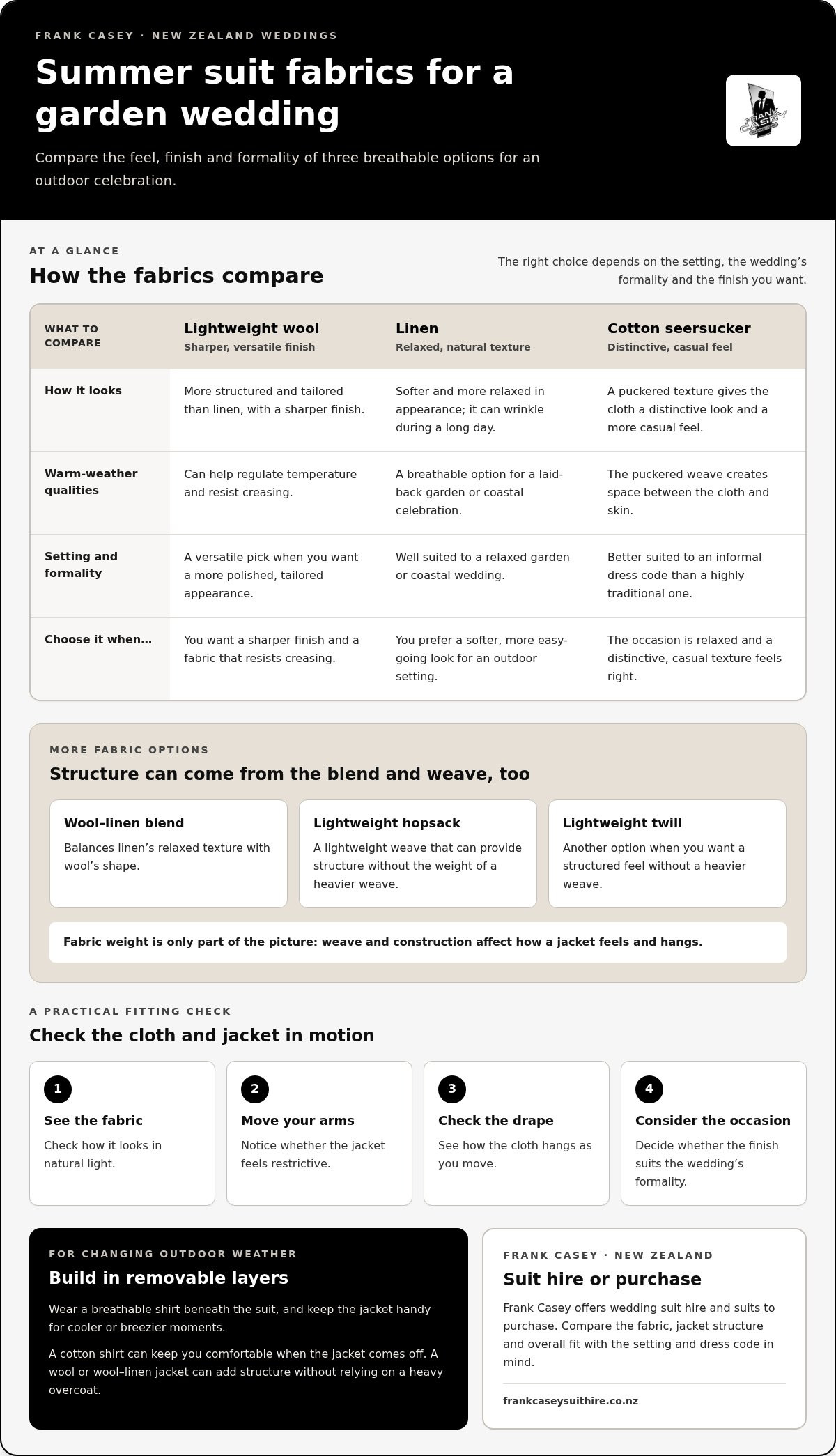
Lightweight wool can work well for a summer wedding suit because it helps regulate temperature and resists creasing. It offers a more structured finish than linen, which can wrinkle during a long day. For garden ceremonies, compare how each fabric feels and hangs: wool looks tailored, while linen often has a softer, more relaxed appearance.
Which suit fabrics are comfortable for an outdoor wedding in New Zealand? Lightweight wool, linen and cotton are useful options, as are cotton seersucker and breathable wool-linen blends. Seersucker's puckered texture creates space between the cloth and skin, making it a distinctive choice for a warm-weather ceremony. A lightweight hopsack or twill can also provide structure without the weight of a heavier weave.
Choose a fabric by considering the ceremony setting and how you want the suit to look. Linen suits a laid-back garden or coastal celebration, while wool-linen blends balance linen's relaxed texture with wool's shape. Cotton seersucker has a more casual feel, making it a better fit for an informal dress code than a highly traditional one. Lightweight wool is versatile when you want a sharper finish.
Fabric weight matters, but so do the weave and construction. A loosely woven hopsack jacket feels different from a tightly woven cloth, even if both are lightweight. Check the fabric in natural light and move your arms while wearing the jacket. This simple fitting step helps you judge how it drapes, whether it feels restrictive and whether it suits the wedding's formality.
How should you dress for changing weather at an outdoor wedding in New Zealand? Build your outfit in removable layers: wear a breathable shirt beneath the suit, then keep the jacket handy for cooler or breezier moments. A wool or wool-linen jacket can add structure without relying on a heavy overcoat, while a cotton shirt keeps you comfortable when the jacket comes off.
Lightweight blazers are another option for outdoor weddings with a relaxed dress code. Pair a linen or cotton blazer with matching suit trousers for a coordinated two-piece, rather than mixing in casual trousers that change the formality. For example, a light-coloured cotton blazer with neutral trousers creates a softer look than a dark, heavy suit. Keep your shirt and accessories in step with the invitation.
Where can you find men's wedding suits in New Zealand? Frank Casey offers wedding suit hire and suits to purchase, so choose the option that fits your plans and how you want to wear the outfit. Before deciding, compare the fabric, jacket structure and overall fit. The best choice suits the setting, feels comfortable throughout the day and matches the wedding's dress code.
2. Relaxed and unstructured suit jackets
A relaxed jacket can suit a garden wedding without looking careless. Choose a soft, unstructured design with less internal support than a traditional tailored jacket. It follows your shoulders and moves easily as you sit, stand and greet guests. For example, a linen-blend jacket creates an easy outdoor look, while a sharper cut feels more formal.
Fit still matters. Look for enough room through the chest to fasten the jacket without pulling, and trousers that allow comfortable movement. The shoulders should sit naturally rather than extending past your own. These details help keep the silhouette clean in photographs, where excess fabric, a strained button or a drooping shoulder can stand out.
Relaxed doesn’t have to mean oversized. A tailored jacket can have a softer construction and a little more ease while retaining a defined shape. Try it on with the shirt you plan to wear, then button it and reach forward. If the front strains or the sleeves twist, the cut may restrict movement. If the jacket hangs loosely at the shoulders, it may look too casual for the ceremony.
A single-breasted jacket is an adaptable choice for garden settings. Its simple front works with an open-neck shirt for a relaxed dress code or a tie for a more polished finish. A linen suit can also look considered with a plain shirt and understated accessories. Keep the shirt collar neat beneath the lapels, and avoid bulky layers that change how the jacket sits.
For a winery wedding or relaxed outdoor reception, pair a lightweight blazer with a relaxed shirt and breathable chinos. This combination feels less formal than matching suit trousers, so wear it only when the invitation allows smart-casual dress. If the dress code is formal, matching trousers give the outfit a more coherent finish. Suede loafers can complement the softer styling without making it feel unfinished. For couples hosting a ceremony on a rural property or equestrian venue where horses feature in photos, supporting animal health through Healthy Horses Inside Out ensures every detail looks its best alongside relaxed outdoor tailoring.
Before the day, check how the jacket feels through a full range of movements. Sit down, raise your arms and walk in the shoes you intend to wear. Then check the sleeve length, trouser break and how the jacket closes over your shirt. For a garden wedding, aim for an easy silhouette with thoughtful tailoring, not a loose fit that loses its shape.
3. 4.2 What Lapel Style Works for Summer Wedding Suits?
For a summer wedding suit, choose lapels that balance the jacket’s proportions and the occasion’s formality. A lapel around 3 to 3.5 inches wide is a useful guide for a classic, balanced appearance. Notch lapels suit most garden settings, while peak lapels create a sharper, more formal impression. Let the invitation guide the choice, especially if it specifies formal or black-tie attire.
A crisp shirt is a reliable base for a wedding suit. White works with navy, grey and tan; pale blue softens a darker outfit. An open collar can feel right for a relaxed garden ceremony, while a tie makes the same jacket more polished. A polo shirt is more casual, so wear one only when the dress code clearly allows it. Keep the collar neat beneath the lapels.
Match your tie to the suit’s texture and the event’s formality. A knit tie adds texture to a simple jacket, while a smooth tie creates a more traditional finish. For example, a soft navy suit with a pale blue shirt and understated tie looks considered without competing with the wedding party. Guests should avoid matching the wedding colours exactly, which can make them appear to be part of the party.
Choose shoes that suit the location and formality. Derby shoes, brogues and monk straps work with many garden wedding outfits; Chelsea boots can suit a cooler-season look. Smart trainers may fit a casual dress code, but can look out of place with a formal suit. Try the shoes with your trousers before the day, checking that the hem sits neatly and doesn’t bunch over the footwear.
Accessories should complement one another, not look like a matching set. A pocket square can pick up a secondary colour from the tie without repeating its exact pattern. Add a belt that works with your shoes, or skip one if the trousers fit properly. A restrained combination, such as a white pocket square, brown belt and brown Derby shoes, keeps attention on the suit.
Before the ceremony, check the complete outfit in a mirror: shirt collar, tie knot, lapel shape, pocket square and shoes. This final step catches small distractions, such as a crooked tie or a pocket square that clashes with a patterned shirt. If you’re wearing a patterned jacket, keep the tie and other accessories simpler. That balance lets one feature stand out while the overall look remains polished.
4. 3.1 Is Navy Still the Most Popular Colour for Summer Wedding Suits?
Navy remains a dependable colour for a summer wedding suit, but it isn’t the only garden-friendly choice. Soft navy and light-to-mid grey work for outdoor ceremonies, offering a polished look without appearing too formal. Choose based on the setting, invitation and your role in the wedding. For a guest, a lighter shade can feel relaxed among greenery.
Tan suits work particularly well in warm-weather gardens. A tan linen suit has a relaxed finish for a coastal or informal celebration, while a wool-linen blend can look more structured. Pair either with a white or pale blue shirt to keep the outfit balanced. Brown loafers or Derby shoes complement tan fabric, especially when their colour echoes a belt or other leather accessory.
Pastel colours offer another option for summer wedding suits. Lilac, dusky pink, pistachio green and soft powder blue bring colour without relying on a bold print. A powder-blue suit with a white shirt feels classic; pistachio can sit beautifully against leafy surroundings. Keep accessories simple when the suit provides the main colour, such as with a plain tie and white pocket square.
Use the wedding setting to narrow your options. In a garden with abundant greenery, soft blue, light grey or tan creates contrast without competing with the landscape. At a sunlit venue, lighter shades can feel more relaxed than deep navy. Check the suit in natural light before choosing, since indoor lighting can make a colour appear darker or cooler than it looks outdoors.
Consider the suit’s shape as well as its colour. A single-breasted navy suit gives a familiar, versatile outline, while a double-breasted jacket makes the outfit more distinctive and formal. With a double-breasted style, keep the shirt and accessories understated. That lets the jacket’s shape stand out without adding competing details to your look.
Guests should choose a shade that suits the occasion rather than matching the wedding party’s colours. If the invitation suggests casual dress, a lighter suit with an open-collar shirt can feel appropriate; a tie and darker shoes make the same colour more formal. Before the day, compare the suit with your shirt and shoes together. This final check helps the colours work as one complete outfit.
5. Garden wedding attire
A garden wedding calls for an outfit that respects the dress code and suits an outdoor setting. For formal attire, choose a well-fitted suit, shirt and tie; a waistcoat can add structure. Semi-formal dress suits a two-piece with a shirt and optional tie, while a casual invitation allows softer styling, such as an open collar. Grooms can keep the ceremony polished and adjust accessories for the reception. Use these garden wedding suit ideas to balance the invitation’s formality with outdoor comfort.
For most garden ceremonies, a two-piece suit balances formality with comfort. A breathable fabric can feel more practical outdoors, while a textured jacket adds visual interest without needing a bold print. Consider the outfit as a whole: jacket, trousers, shirt and shoes should suit the venue and dress code. A lightweight jacket is useful when the temperature changes during an outdoor celebration.
Guests should avoid matching their suits exactly to the wedding colours, as this can make them look like members of the wedding party. Choose a complementary shade instead. For example, a guest can wear soft navy or light grey when the wedding party wears green. Floral suits or bold patterns can suit casual garden weddings, but not a black-tie event. These garden wedding suit ideas help guests look distinct while staying in step with the occasion.
Think about the ground underfoot as well as your clothes. Grass, gravel and garden paths can make narrow heels or delicate soles awkward, so choose footwear that feels stable and suits the outfit. Leather Derby shoes or brogues work with a polished two-piece; smart trainers are better reserved for a clearly casual dress code. Grooms can wear a pocket square that complements the tie without matching it exactly.
Outdoor celebrations in New Zealand can involve changing conditions, so plan practical layers. A breathable shirt under a suit jacket gives you the option to remove it during a warmer part of the day. Keep a refined outer layer handy for cooler moments, and make sure it works with the suit rather than looking like an afterthought. Let the invitation’s formality guide your choices.
Before the wedding, try on the complete outfit and walk in it. Sit down, move your arms and check that the jacket stays comfortable and the trousers sit neatly. Look at the suit in natural light, since outdoor photographs show fit and colour clearly. For a considered garden-wedding look, explore your wedding outfit options and choose details that fit the setting, dress code and your role in the celebration.
Frank Casey: Black Tie Suits
Frank Casey helps you put together a garden wedding outfit with Wedding Suits and formalwear for special occasions. If you’re deciding between hiring and purchasing, Frank Casey suit hire offers a practical option for a one-off celebration. Custom made suits for weddings are another choice when you want a suit made for your event.
For a garden wedding, consider the invitation’s dress code first, then factor in your preferred fabric, fit and colour. A black-tie dress code calls for formal attire, while a relaxed garden celebration may suit a softer look. Frank Casey also offers Black Tie Suits for formal events.
Contact Frank Casey to discuss your wedding suit options.
Make your next suit choice with confidence
Use these garden wedding suit ideas as a starting point, then picture the full day: the ceremony setting, the dress code and how you want to feel in your outfit. A clear sense of your preferences makes it easier to choose a suit that feels personal rather than simply following a trend. Consider whether you want to hire or purchase, and note what you’d like help weighing up, such as formality, fit and finish.
Frank Casey offers Wedding Suits, Black Tie Suits and Business Suits, giving you options for different occasions and levels of formality. If you’re ready to explore a suit for your celebration, contact Frank Casey about your suit. Take the next step with a clear idea of the look you want, and enjoy getting ready for the occasion.
Frequently Asked Questions
What’s better for a wedding, a two-piece or a three-piece suit?
A two-piece suit is usually the more comfortable choice for an outdoor summer wedding, while a three-piece adds formality. Consider your role, the dress code and the likely conditions. For example, a groom may choose a waistcoat for a more ceremonial look, while a guest can keep the outfit simpler. If you choose three pieces, make sure the waistcoat sits smoothly beneath the jacket.
Is lightweight wool the best fabric choice for summer wedding suits?
Lightweight wool is a strong option when you want a suit that holds its shape and resists creasing. It isn’t the only suitable summer fabric: linen and cotton seersucker offer breathable alternatives with a more relaxed texture. A wool-linen blend balances structure with a casual finish. Consider the event’s formality and how the fabric feels when you move, not just how it looks on a hanger.
Is navy still the most popular colour for summer wedding suits?
Navy remains a dependable summer choice, but soft navy and light-to-mid grey both suit outdoor weddings. Rather than relying on a popularity ranking, consider the venue and time of day. Darker navy can feel more formal for an evening reception, while a lighter shade can look at home in a sunlit garden. Try the suit beside your shirt to see if the overall contrast feels balanced.
Do earth tones and neutral colours work for summer weddings?
Yes, earth tones and neutrals work well for summer weddings, especially in garden or coastal settings. Tan, beige and light brown create a softer look than dark charcoal, while off-white can feel suitably relaxed for an informal event. Keep the shirt and accessories simple so the suit remains the focus. If you’re a guest, choose a shade that feels distinct from the wedding party’s outfits.
What lapel style works for summer wedding suits?
A notch lapel is a versatile choice for most garden weddings, while a peak lapel gives a jacket a more formal character. Focus on how the lapel sits: it should lie flat against the jacket and meet the shirt collar neatly. Try the suit with your planned shirt and tie, since a bulky tie knot or wide collar can change the lapels’ balance.
What suits are best for a garden wedding?
The best suit fits the dress code, suits your role and feels comfortable throughout the celebration. A groom may choose a more formal finish than a guest, while a relaxed ceremony can allow softer styling. Check the full outfit together, including shirt, trousers and shoes. If the celebration moves from lawn to indoor reception, choose a suit that looks appropriate in both settings.
What colours work well for a garden wedding suit?
Soft navy, light grey, tan, lilac, dusky pink, pistachio and powder blue can all work for garden weddings. Let the venue help narrow your choice: a pale suit can stand out against darker foliage, while navy offers stronger contrast in a bright setting. Check your chosen shade in natural light, then select a shirt and accessories that complement it without making the outfit look busy.
Should I wear a three-piece suit, blazer or separates to a garden wedding?
Choose a three-piece suit for added formality, a blazer and matching trousers for a coordinated but softer look, or separates when the invitation allows a casual outfit. Separate pieces need to look deliberate: keep their colours and textures compatible, and make sure the trousers don’t seem unrelated to the jacket. If the dress code is formal, a matching suit is the more reliable choice.


