

A dark suit may be an option for some black-tie events, depending on the invitation and how formally it is styled. It’s a practical tuxedo alternative for men if the invitation allows one; “black tie preferred” still signals that the host would rather guests wear a tuxedo.
Choosing what to wear shouldn’t mean guessing at the dress code. A dark suit can look polished and appropriate, but the details matter: the invitation, the event’s time and setting, and how formally you style the outfit.
This guide compares charcoal and other dark suits with dinner jackets and smoking jackets, then shares outfit ideas for weddings and galas. You’ll learn where each option fits, how to bring the look together with a shirt, shoes and accessories, and when a tuxedo remains the better match.
Key Takeaways
- A charcoal suit can suit some black-tie events when styled with formal details; the invitation’s wording helps guide your choice.
- A dinner jacket offers a formal alternative, while a smoking jacket is better suited to a less formal part of a celebration.
- Learn which details distinguish a tuxedo from a suit, so you can judge how closely your outfit matches the dress code.
- For weddings and galas, a very dark blue suit or a well-tailored three-piece outfit can create a polished look.
- Compare the formality of each option with the event setting before settling on your outfit.
1. Choosing designs for event formality
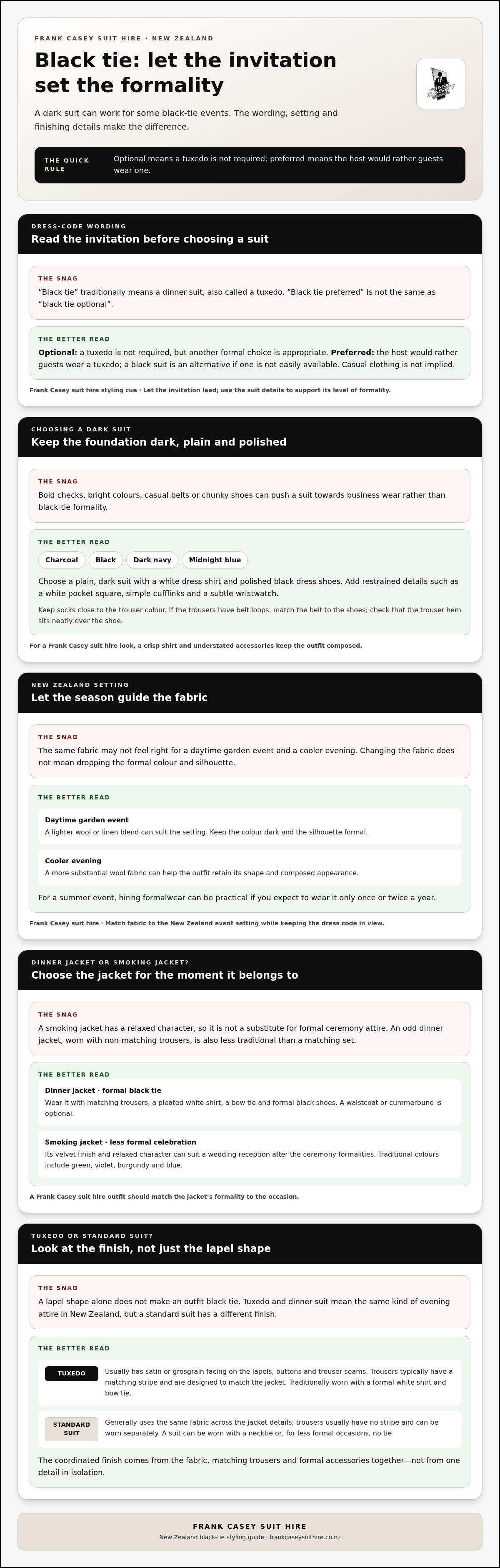
Start with the invitation: “black tie optional” means a tuxedo isn’t required, while “black tie preferred” signals that the host would rather guests wear one. A charcoal suit is one of the more adaptable tuxedo alternatives for men, but its formality depends on the cut, fabric and finishing details.
For a black-tie event, choose a dark, plain suit rather than a bold check or bright colour. Charcoal, black, dark navy and midnight blue create a formal foundation; pair one with a white dress shirt and black shoes. In New Zealand, lighter wool or linen blends can suit a daytime garden event, while keeping the colour and silhouette formal. For a cooler evening, a more substantial wool fabric can help the outfit retain its shape and composed appearance.
Knowing the terminology helps you read the dress code accurately. “Black tie” traditionally means a dinner suit, also called a tuxedo, while “black tie optional” permits another formal choice. “Black tie preferred” is different: a tuxedo remains the preferred outfit, and a black suit is an alternative for someone without easy access to one. “Optional” gives guests a choice, but it doesn’t make casual clothing appropriate.
Build a suit-based outfit with restrained accessories. A white pocket square, simple cufflinks and a subtle wristwatch add polish without competing with the suit. Silk accents can lift charcoal, while a black tie and crisp shirt keep dark navy understated. Avoid bright ties, prominent patterns and casual belts, which can shift the look towards business wear. Choose accessories that work together rather than treating each piece as a separate statement.
Formal footwear completes the outfit. Wear polished black dress shoes with a black, charcoal or navy suit, and keep socks dark and close to the trouser colour. A clean, simple shoe shape works better for black tie than a chunky sole or casual leather style. Match the belt to the shoes when the trousers have belt loops, and check that the trouser hem sits neatly over the shoe.
Across New Zealand, men can hire or buy formal suits through suit-hire and retail services. Nationwide delivery makes formalwear accessible without relying on a nearby shop, while an in-person fitting can help assess the jacket, sleeve and trouser length.
For a summer event, hiring a formal suit can be a practical alternative to buying one, particularly if you expect to wear it only once or twice a year. Choose a lighter wool or linen blend for a daytime garden setting, while keeping the colour dark and formal, then add polished shoes. Let the invitation’s dress code guide the final choice, and select fabric to suit the setting and season.
2. Dinner jackets and smoking jackets
A dinner jacket is a formal choice for an invitation specifying black tie. Wear it with matching trousers, a pleated white shirt, a bow tie and formal black shoes. A waistcoat or cummerbund is optional, so choose one only if it suits the jacket and event. This coordinated outfit preserves the classic evening look without requiring a conventional black tuxedo.
An odd dinner jacket means wearing a dinner jacket with trousers that don’t match. The contrast can feel distinctive, but it makes the outfit less traditional than a matching set. For a black-tie event, keep both pieces dark and refined, and let the jacket’s cut or texture provide interest. At a less formal celebration, greater contrast may feel more natural.
Colour offers another way to make a statement. A tan dinner jacket is a conventional summer alternative to a white or off-white jacket, including for warm-season events in New Zealand. For an elegant result, keep the shirt, trousers and shoes simple. A bright jacket or bold pattern draws attention, so balance it with understated accessories rather than adding competing colours.
A smoking jacket has a different role. Its velvet finish and relaxed character can suit a wedding reception after the ceremony formalities, rather than replacing formal ceremony attire. Traditional examples use dark hues such as green, violet, burgundy or blue. Some feature a shawl collar, and authentic styles may be single- or double-breasted, with frog closures instead of buttons.
Plaid offers a patterned take on black tie. Plaid alternatives originated in the 1950s; the bow tie should be tastefully dark and self-tied. Wear it with a turn-down shirt collar that hides the band, and don’t add a waist covering. This combination keeps the pattern deliberate instead of letting it compete with other details.
Choose the jacket by matching its formality to the occasion, then coordinate the shirt, bow tie and footwear. For a classic black-tie foundation, explore formal jacket and trouser options, and use accessories to add personality without overwhelming the outfit.
3. Differences between tuxedos and suits
In New Zealand, “tuxedo” and “dinner suit” describe the same kind of evening attire. The clearest difference from a standard suit is the finish: a tuxedo usually has satin or grosgrain facing on its lapels, buttons and trouser seams. A business suit generally uses the same fabric across those details.
Look at the lapels first. A tuxedo often has a peak lapel or shawl collar with a contrasting sheen, while a suit jacket usually has a notch lapel in matching cloth. Neither lapel shape alone makes an outfit black tie; the fabric, matching trousers and formal accessories create the complete evening look.
Trousers offer another practical clue. Tuxedo trousers typically feature a satin or grosgrain stripe down the outer seam and are designed to match the jacket. Suit trousers usually have no stripe and can be worn separately. That difference affects the whole outfit: pairing tuxedo trousers with an unrelated jacket can interrupt its coordinated finish.
Shirts and neckwear also set the tone. A tuxedo is traditionally worn with a formal white shirt and bow tie, while a suit can accommodate a necktie or, for less formal occasions, no tie. A bright patterned tie may suit a daytime wedding, but it changes the effect of evening black-tie attire.
Details such as pockets and waist coverings help complete the comparison. Tuxedo jackets often use jetted pockets, which keep the front clean, while suit jackets commonly have flap pockets. A cummerbund or waistcoat can accompany black tie; a suit may instead use a matching waistcoat as part of a three-piece set. Choose details that suit the event’s dress code.
Use this simple check before choosing an outfit: compare the jacket’s lapel finish, see whether the trousers match, then assess the shirt and accessories together. A dark suit with a white shirt and formal shoes can look polished, but it won’t reproduce every defining feature of a tuxedo.
The difference matters most when an invitation says “black tie”. For formal evening events, a tuxedo may be the more traditional choice, while a suit can be appropriate when the event allows a less formal option. For weddings or other formal events without a strict black-tie request, a well-fitted suit can offer more flexibility throughout the day.
4. Benefits of alternatives to traditional tuxedos
A traditional tuxedo may get limited use if you attend formal events only once or twice a year. A dark suit can make more sense if you’ll also wear it to weddings, work functions or evening celebrations. For example, a charcoal suit can move between settings by changing the shirt, tie and pocket square.
Versatility is one of the main advantages. A plain navy or charcoal suit can look formal with a white shirt and black shoes, then feel less ceremonial with a coloured tie at another occasion. The same jacket and trousers can also work with different shirts, giving you more combinations from a familiar outfit.
Alternatives make it easier to adapt your look to the event. A black suit with understated accessories can suit a formal gathering, while a dark three-piece suit gives a wedding outfit extra structure. For a daytime celebration, a lighter fabric can feel more comfortable while retaining a tailored silhouette. Let the invitation’s dress code guide how far you vary the outfit.
Hiring can also be useful if you don’t expect to wear formal attire often. Rather than buying a tuxedo for one event, you can hire a suit or black-tie outfit that suits the occasion. Hiring keeps the decision focused on the event, the fit and the look you want, rather than adding another rarely worn item to your wardrobe.
Colour and accessories offer room for personal choice without losing polish. Traditional black remains a dependable formal option, but dark navy and charcoal can also create a refined base. Add a white pocket square, subtle cufflinks or a silk tie for definition. Keep the details coordinated: a bright tie and patterned shirt together may distract from the clean lines of a formal suit.
Alternatives can make group dressing more flexible, too. For a wedding party, matching suits create a consistent look, while different ties or pocket squares let each person add an individual detail. Agree on the suit colour and formality first, then coordinate accessories. This gives the group a considered appearance without requiring identical outfits from head to toe.
Use a simple decision process: read the dress code, consider how often you’ll wear the outfit again, then choose between buying and hiring. If a tuxedo is likely to sit unused, a versatile suit may serve more occasions. If the event calls for traditional black tie, a formal black-tie outfit remains the more direct choice.
5. Wedding and gala outfit ideas
For a wedding, begin with your role and the invitation’s dress code. A groom can choose a coordinated suit with a waistcoat, while groomsmen wear matching suits and add variety through their ties or pocket squares. Guests can keep their outfits more restrained, especially when the wedding party has a defined colour palette. The result feels connected without making everyone look identical.
A wedding invitation marked “black tie optional” gives guests room to choose a formal suit. Keep the overall outfit understated, then use one considered detail, such as a textured tie or a white pocket square, to add individuality. If the invitation says “black tie preferred”, remember that a tuxedo remains the host’s preference. A suit is an alternative, not an equal signal of the dress code.
For a daytime ceremony followed by an evening reception, plan an outfit that stays polished in both settings. A well-fitted jacket and trousers provide a consistent base; a waistcoat can add formality for the ceremony. At the reception, removing the jacket changes the look without requiring a separate outfit. Keep the shirt and accessories coordinated so the change still feels intentional.
Gala attire calls for a more restrained approach than a wedding-party outfit. Choose a plain, dark suit and keep accessories simple, allowing fit and clean lines to carry the look. A subtle pocket square adds detail without turning the outfit into a statement. If the gala invitation names a black-tie dress code, weigh that wording carefully before choosing a suit.
For a gala with a less prescriptive dress code, a dark three-piece suit can create a composed evening outfit. Keep the waistcoat, jacket and trousers consistent, then add a crisp shirt and polished shoes. Avoid combining several attention-grabbing details. A patterned tie, bright pocket square and bold shirt together can compete, while one focal accessory looks more deliberate.
Wedding parties should agree on the level of formality before settling on individual details. Share the suit colour, shirt choice and accessory palette with the group, then allow small variations in ties or pocket squares. This approach gives photographs a cohesive feel while leaving each person room for personal style. For an intimate ceremony, a groom can also choose a more individual suit silhouette.
Fit matters in both settings: check that the jacket sits smoothly when buttoned, sleeves leave the shirt visible, and trouser hems meet the shoes neatly. If you’re planning a wedding outfit, explore wedding suit hire options to find a formal look suited to the occasion.
Frank Casey: Black Tie Suits
Frank Casey offers Black Tie Suits and black tie suit hire for formal events where a traditional evening look is the right fit. If a charcoal or navy suit better suits your plans, Wedding Suits and Business Suits provide formalwear options for other occasions.
For a wedding, consider whether you want to hire an outfit for the event or choose a suit you can wear beyond the celebration. The invitation’s dress code, your role and the venue’s formality can help narrow the choice. For black tie, a coordinated formal look is key; for a less prescriptive event, a suit can offer more flexibility.
To explore formalwear for your occasion, contact Frank Casey or visit frankcaseysuithire.co.nz.
Make your next formal outfit feel considered
Before choosing among tuxedo alternatives for men, set a clear brief for the occasion. Note the invitation’s wording, your role, the venue and whether the event moves from a daytime ceremony to an evening reception. These details help you narrow the formality and avoid choosing an outfit that feels out of place.
Then think about how you want to feel wearing it. A jacket should sit comfortably when buttoned and allow easy movement; shoes should suit the setting and how long you’ll spend on your feet. If you’re coordinating with a wedding party, agree on the overall look before settling on individual accessories.
Bring those priorities into your conversation with a formalwear specialist. Frank Casey can help you consider an outfit for your event and what suits your personal style. Contact Frank Casey for formalwear advice, and take the next step towards feeling prepared for the occasion.
Frequently Asked Questions
Can I wear a charcoal suit to a black-tie event?
Yes, a charcoal suit can work at a black-tie event if the invitation permits an alternative. Choose a plain, well-fitted suit and keep the shirt, tie and shoes coordinated, rather than adding novelty details. For a formal evening, restrained accessories help the outfit look deliberate. If the invitation says “black tie preferred”, remember that a tuxedo remains the host’s preference.
Can you wear a fun suit instead of a tuxedo to a wedding?
Yes, a fun suit can suit a wedding if it matches the invitation’s formality and the couple’s plans. A rich colour or distinctive lining can add personality without making the outfit look like fancy dress. Keep the shirt and shoes simple, and avoid a statement that competes with the wedding party. For a themed or relaxed celebration, take cues from the invitation rather than assuming every wedding calls for black tie.
How can I express my personality with a formal outfit without wearing a traditional tuxedo?
Choose one or two personal details and keep the rest of the outfit composed. A textured tie, patterned pocket square or distinctive cufflinks can add character to a plain suit. For example, pair a deep-coloured tie with a crisp white shirt and polished shoes. Coordinated details give the outfit personality without making it feel busy or drawing attention away from the occasion.
What are fun tuxedo alternatives for men?
For a playful formal look, consider a dinner jacket in a distinctive colour or a dark plaid bow tie with an otherwise restrained outfit. A velvet smoking jacket can suit a wedding reception after the ceremony formalities, rather than a traditional black-tie ceremony. Follow the event’s dress code: use bolder details for a relaxed celebration, and keep the overall outfit classic when the invitation calls for black tie.
What does black tie dress code mean?
Black tie is a formal evening dress code, not simply a request to wear a black suit. Traditionally, it means a dinner suit or tuxedo, usually with a bow tie and formal shoes. The exact wording matters: “black tie optional” allows another formal outfit, while “black tie preferred” communicates the host’s preference. Treat the invitation as your main guide when planning what to wear.
What is the difference between a tuxedo and a suit?
A tuxedo is distinguished by formal evening details, especially satin or grosgrain facing on the lapels and a stripe along the trouser seams. A suit typically uses matching fabric across its jacket and trousers, without those contrasting finishes. For a quick comparison, look at the lapels and trouser seams together. A bow tie alone doesn’t turn an ordinary suit into a tuxedo.
What are the best alternatives to a tuxedo for men?
A dark navy or charcoal suit is a strong alternative for an event that allows one. A dark three-piece suit can add structure for a wedding or gala, while a dinner jacket offers a formal evening option. Choose based on the invitation first, then consider the venue and your role. A plain, well-fitted outfit is generally easier to adapt than one with bold patterns.
Can men wear a dark suit instead of a tuxedo to a black-tie event?
Yes, a dark suit can be an alternative, but the invitation’s wording sets the expectation. “Black tie optional” means a tuxedo isn’t required; “black tie preferred” means the host would rather guests wear one. If you choose a suit, keep it plain and formal, with coordinated details. A dark suit may not match the traditional dress code as closely as a tuxedo.


