

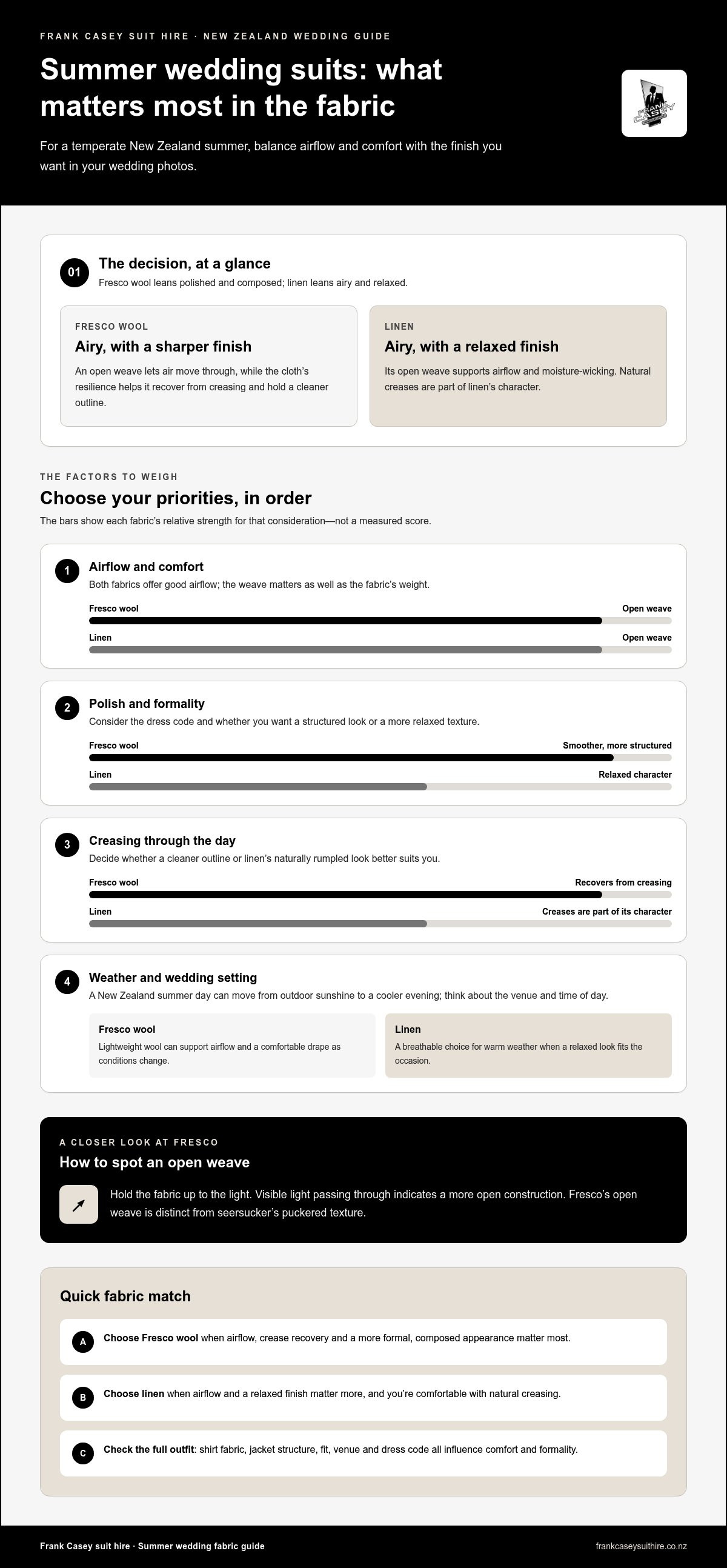
For a temperate New Zealand summer wedding, fresco wool is a strong choice when you want airflow, a polished drape and fewer visible creases. Linen feels airy and relaxed, but its tendency to wrinkle is part of its character. The best summer wedding suit fabrics balance comfort with the level of formality you want on the day.
It’s reasonable to want a suit that feels comfortable through an outdoor ceremony and still looks considered in wedding photos. Fabric affects both: its weave influences airflow, while its texture shapes how it creases and how formal it looks.
This guide compares fresco wool and linen for comfort, creasing and wedding style in a temperate summer climate. You’ll see where each fabric suits the occasion, and how to weigh breathability against a sharper or more relaxed finish when choosing your suit.
Key Takeaways
- For a temperate summer wedding, weigh airflow and comfort against the level of polish you want. Fabric weave can matter as much as weight.
- Fresco wool’s open weave offers a refined option when you want breathability and a suit that holds its shape.
- Linen brings an easy, relaxed look and good airflow, but its tendency to crease is part of the choice.
- Consider the venue, dress code and time of day when choosing a suit colour, texture and pattern.
- Shirt fabric, jacket structure and fit can also affect how comfortable your suit feels through the day.
What is the Best Fabric to Use for a Summer Wedding Suit in temperate climates?
For a temperate New Zealand summer, choose a fabric that balances airflow, comfort and the wedding’s formality. Among summer wedding suit fabrics, cotton is another option, with blends and woven textures offering different levels of structure and ease.
Cotton Comfort and Stretch Blends
Cotton suits feel soft and breathable, absorb moisture, and offer durability for daytime wear. A cotton blend with some stretch allows easier movement during a ceremony, photographs and dancing. That flexibility can also help the suit last for years. However, cotton can hold moisture and may lose its shape over time, so consider how long you’ll wear it and how much movement the day involves.
Linen-Cotton Suit Fabrics
Linen-cotton and cotton-linen describe blends that combine both fibres in one suit fabric. Compared with cotton alone, a cotton-linen blend can feel cooler; compared with pure linen, it’s generally less prone to creasing. This middle ground suits a wedding day with outdoor and indoor moments, bringing a relaxed texture without linen’s full rumpled effect.
Cotton for Daytime Weddings
A cotton suit suits daytime weddings, garden ceremonies and business-casual settings where a relaxed, polished appearance fits. For example, a light-coloured cotton suit can work for an outdoor afternoon ceremony, while its smooth finish keeps the outfit looking considered. Match the suit’s structure to the invitation: formal dress codes call for a sharper overall look, while relaxed settings can accommodate cotton’s softer texture.
Seersucker’s Puckered Texture
Seersucker is cotton woven with a distinctive puckered texture, creating raised and flatter areas across the cloth. This uneven surface allows more air to circulate than a smooth, close weave, making it a recognisable warm-weather choice. Its visible texture gives a suit a relaxed character, so it fits best when the wedding style allows a less formal finish. Consider it for a daytime garden event, rather than assuming it suits every dress code.
For a summer wedding, fabric weight matters alongside fibre: lighter suit fabrics under 9 ounces per yard are recommended for warmer weather. A cotton suit can work well when comfort and daytime versatility are priorities. Choose a linen-cotton blend for a balance of coolness and reduced creasing, or seersucker when its puckered texture suits the occasion. The wedding’s dress code and setting help determine which finish feels appropriate. These summer wedding suit fabrics each bring a distinct balance of comfort and style.
Fresco wool’s open weave and crease resistance
For a temperate New Zealand summer wedding, lightweight wool can combine airflow with a more formal appearance. Fresco is one option when you want a suit that stays composed through the ceremony and reception.
Fresco Wool’s Open Weave
Fresco wool is a high-twist, open-weave fabric that lets air move through its structure. Its resilience helps the cloth recover from creasing, so the suit can keep a cleaner outline throughout a long wedding day. To assess an open weave, hold the fabric up to the light: visible light passing through indicates a more open construction.
Lightweight Wool and Temperature Regulation
Lightweight wool uses finer, less dense cloth to support airflow and comfortable drape in warmer conditions. Wool’s natural crimp helps it respond to temperature changes, making it useful when a New Zealand summer day shifts from outdoor sunshine to a cooler evening. Compared with linen, lightweight wool offers a smoother, more structured appearance.
Summer-weight and tropical-weight worsted wool are designed to feel lighter and more breathable than conventional suiting. Many summer suits weigh under 270 g per metre, but the weave also matters: an open cloth can feel cooler than a lighter fabric woven tightly. Fresco’s texture is not puckered like seersucker; its open construction gives it a distinct, airy finish.
Tropical wool can suit professional settings as well as weddings. Its breathable feel comes alongside the durability and shape retention associated with classic wool suiting. That balance helps if you want one polished look for a ceremony and evening reception, rather than a deliberately relaxed fabric. A smooth, lightweight worsted also pairs naturally with a formal shirt and refined accessories.
Wool fineness affects feel and care. Fabrics marked 120s or 150s are finer and softer than lower-numbered wool, and can be more delicate. For a wedding suit worn occasionally, consider how the cloth’s softness, resilience and intended care fit your plans. Wool is naturally odour-resistant, so airing the suit after wearing can help refresh it without frequent cleaning.
For more regular use across a temperate climate, mid-weight wool around 9-11 ounces can work for year-round business attire. That weight offers a different balance from summer-weight Fresco: it provides more substance while remaining suitable across varied conditions. Choose by the event’s formality, expected wear and preferred drape, not weight alone. An open weave, smooth appearance and crease recovery make Fresco a considered choice for a formal summer wedding.
Linen breathability, moisture-wicking and creasing
Linen suits offer airflow and a relaxed look for warm-weather weddings. Their natural creases are part of the fabric’s character, not a flaw to eliminate.
In humid weather, linen’s open weave helps body heat escape, while its moisture-wicking properties reduce a sticky feeling. In rainy conditions, breathable wool can be a better choice if you want a sharper appearance; neither fabric makes a suit rainproof.
To care for a linen or cotton wedding suit, rotate it between wears, air it out afterwards and use a garment brush. Avoid frequent dry-cleaning, which can wear down the fabric. If fewer wrinkles matter most, choose a breathable blend.
Linen Breathability and Moisture-Wicking
Linen is a lightweight, breathable fabric that lets air move through its open weave. This airflow helps body heat escape during a warm ceremony, while the fibre absorbs moisture and dries quickly. At an outdoor summer wedding, for example, linen can feel less sticky than a close-weave fabric. It’s practical in warm, humid weather, though its texture is more relaxed than smooth worsted wool.
Linen Suits for Warm-Weather Weddings
A linen suit suits hot-weather weddings where comfort and casual elegance matter. Its natural texture works well for a garden ceremony or coastal reception, especially if the dress code allows a less formal finish. For a formal evening event, consider whether linen’s relaxed appearance matches the occasion. A linen blend can retain airflow while giving the outfit a more structured look.
Natural Creasing in Linen Suits
Linen wrinkles naturally as you sit, move and wear the suit through the day. Those creases create its characteristic relaxed texture, so a perfectly smooth appearance isn’t the measure of a well-chosen linen suit. If you want less visible creasing, choose a linen blend with cotton or wool. These blends retain breathability while being less prone to creasing than pure linen.
Wool, silk and linen blends bring together different qualities, including structure, breathability and softness. This combination can suit a wedding that moves from an outdoor celebration to a formal evening reception. For a more relaxed daytime event, a cotton-linen blend offers another balance: it can feel cooler than cotton and crease less than linen alone. The blend’s texture helps set the level of formality.
There’s no single best fabric for every New Zealand summer wedding. Match the material to the weather, dress code and finish you prefer. Linen suits warm outdoor settings where natural creasing feels appropriate; blends can soften that effect, while breathable wool helps maintain a sharper appearance.
Colour, style, attire guidelines and patterns
For hot weather, choose a lightweight, breathable weave and a lighter or seasonal colour. Match the fabric’s formality and pattern to the venue, time of day and dress code.
Fabrics and Colours for Different Venues
A garden ceremony can suit a light-coloured linen suit or soft pastel shade, provided the invitation allows a relaxed finish. For a formal indoor reception, smooth wool or subtle twill offers a sharper appearance. Herringbone adds texture without making the suit feel overly casual. Let the venue guide the balance: an outdoor setting invites ease, while formal evening attire calls for restraint.
The dress code takes priority over a stylish fabric choice. If the invitation specifies formal attire, choose a refined weave and coordinate the suit with a dress shirt and formal shoes. A garden-party dress code can allow more texture or a lighter shade. For a wedding that moves from an outdoor ceremony to an evening reception, a mid-formality pattern such as subtle herringbone can bridge both settings.
Patterns also change how a suit looks. Smooth wool, silk and velvet are high-formality fabrics, while twill and herringbone sit in the middle. Linen, corduroy and tweed have a more relaxed character. For example, a light herringbone suit can add visual interest without the informality of linen texture. Keep patterns subtle when the dress code is formal.
Summer Fabrics and Colours to Avoid
Heavy tweeds and flannels are insulating, making them better suited to cooler seasons than summer weddings. Thick wool can also feel uncomfortable in warm conditions. Dark colours absorb more heat than lighter shades, so deep navy or charcoal may feel less comfortable during a sunny outdoor ceremony. They can still suit evening settings when the dress code and venue call for a formal look.
Use the ceremony’s timing and setting to decide whether a dark suit makes sense. A black or charcoal suit can feel more fitting indoors or after sunset than at an afternoon garden wedding. But don’t treat every summer event as casual: the invitation still sets the expected formality. Lightweight construction and an appropriate weave matter alongside colour.
Pastels such as lavender, pistachio and powder pink can work for relaxed summer weddings and garden parties. For a more restrained look, consider a lighter blue or another seasonal shade, then coordinate the shirt and shoes to keep the outfit cohesive. Lighter colours reflect sunlight, while dark hues absorb it, making shade a practical consideration as well as a style choice.
Breathability and flexibility in summer suit fabrics
In a temperate New Zealand summer, comfort depends on more than a fabric’s name or weight. The weave, jacket construction and room to move all affect how a suit feels during an outdoor ceremony, photos and evening reception.
Breathability describes how readily air moves through cloth. Try a simple light test: hold the fabric towards a light source. If light passes through, the weave is open; a tightly woven cloth blocks more light and can hold warmth. This is a useful comparison, not a complete measure of comfort. A light, open-weave wool can feel cooler than a lighter fabric with a dense weave.
Natural fibres each behave differently. Wool’s natural crimp supports temperature regulation, while linen lets air circulate and absorbs moisture quickly. Cotton can feel soft and breathable, but it holds moisture and may lose its shape over time. For example, a groom moving between a sunny lawn and a cool reception room may prefer breathable wool for its airflow and clean, structured appearance.
Construction matters too. An unlined jacket offers more airflow, while a half-lined design keeps some structure and allows ventilation. A fully lined jacket can feel warmer. Soft, unstructured tailoring also lets heat escape more easily than heavy padding. These details can affect comfort without changing the outer fabric, so consider them alongside fibre and weave.
Movement is another part of comfort. A close fit can restrict reaching, sitting and dancing, even in breathable cloth. A little more room through the jacket and trousers allows easier movement; wider or pleated trousers can also feel less restrictive. If the wedding includes outdoor photos followed by dancing, flexibility helps maintain comfort without sacrificing elegance.
Different weaves create distinct effects. Hopsack’s loose basket weave supports airflow in a blazer, while chambray is lightweight and breathable despite its denim-like appearance. Seersucker’s puckered texture lifts parts of the cloth away from the skin, creating a recognisable warm-weather feel. For a formal wedding, compare the texture with the dress code before choosing a visibly relaxed finish.
For a practical choice, weigh three factors together: airflow through the cloth, the jacket’s lining and structure, and the ease of movement at the shoulders and waist. A light test can reveal an open weave, but fit determines whether you can move comfortably. Explore suit options for a wedding with these comfort and style considerations in mind.
Lighter flannel can let body heat out in hot weather and retain it when cold. A summer-weight double-breasted flannel suit offers a smarter look with the comfort of lighter fabric.
Frank Casey: Black Tie Suits
Frank Casey offers Wedding Suits for couples and guests dressing for a summer celebration. If the invitation specifies black tie, Black Tie Suits provide a more formal direction than a relaxed linen look. Consider the venue, expected weather and dress code when deciding on fabric, colour and structure. Frank Casey also offers wedding suit hire, giving you an option for a special occasion without purchasing a suit. Explore Wedding Suits and Black Tie Suits to find an option for your wedding style and dress requirements. To discuss your wedding suit needs, contact Frank Casey or visit frankcaseysuithire.co.nz.
Choose a suit that feels right on the day
Let the wedding’s setting guide your final choice, then consider how you want to feel and move throughout the day. Your suit should work for the occasion and still feel like you, whether you prefer a crisp, formal finish or a softer, more relaxed style.
Use your preferred fit, colour and level of formality to narrow down summer wedding suit fabrics. Frank Casey offers Wedding Suits, Black Tie Suits and Business Suits for different occasions and dress codes. The right choice depends on the event’s requirements and the look you want from ceremony to reception.
Take the next step with a clear idea of the wedding’s dress code and your preferred style. Contact Frank Casey about your suit and move towards an outfit you can wear with confidence.
Frequently Asked Questions
What are the best suit fabrics for a summer wedding?
For a temperate New Zealand summer wedding, lightweight Fresco wool is a versatile pick for a polished finish, while linen suits a more relaxed setting. Cotton and cotton-linen blends offer other options for daytime celebrations. Match the cloth to the event’s formality and your plans for the day. For example, choose a sharper weave for a formal reception and a more textured fabric for a garden ceremony.
Is linen, cotton, or tropical wool best for a summer wedding suit?
Tropical wool suits a formal wedding when you want a defined shape; linen works well for an easy-going outdoor celebration. Cotton can suit daytime wear when a softer look fits the dress code. If your plans include an outdoor ceremony and formal reception, weigh the desired finish across both settings. The best choice depends on the event’s style and how polished you want your suit to look.
What fabric weight is ideal for a breathable summer wedding suit?
For warmer weather, a useful guide is a suit fabric weighing under 9 ounces per yard. Treat weight as one factor rather than the whole answer: an open weave can feel cooler than a lighter, tightly woven cloth. For a New Zealand wedding with changing conditions, consider the fabric’s weave alongside the time of day, venue and formality. Those details help narrow down a comfortable option without relying on weight alone.
How do summer suit fabrics compare for breathability, comfort, and wrinkle resistance?
Fresco wool balances airflow with a tidy appearance, while linen prioritises ventilation and a relaxed look over smoothness. Cotton feels soft, but can hold moisture and lose shape over time. A cotton-linen blend offers a middle ground, with more airflow than cotton and fewer creases than linen. Think about your schedule: on a long day with seated photos, crease recovery may matter more than a perfectly casual finish.
What summer wedding suit fabric is appropriate for a formal or black-tie dress code?
For a formal or black-tie dress code, choose smooth wool or another refined, high-formality fabric. Linen’s relaxed character may not suit the expected finish, even if the celebration is outdoors. Let the invitation guide your decision, then coordinate your suit with a formal shirt, shoes and accessories. A breathable wool weave can help balance a polished appearance with comfort at a summer event.


