

A higher Super number doesn’t automatically make a suit warmer or better for everyday wear. For wool suits for cooler months, fabric and weight matter: wool or flannel weighing around 16 ounces per yard is a useful winter choice, while lighter wool can suit milder conditions. Fit and thoughtful layers help determine how comfortable the suit feels.
It’s easy to assume that finer, higher-grade wool is best for every occasion. Super grades describe wool fineness, but they don’t indicate a suit’s warmth or how well it will withstand regular wear. The right choice depends on when and where you’ll wear it.
This guide explains the differences between wool, flannel and tweed, what suit weight means, and how Super grades relate to durability and occasion. You’ll also learn how fit and light knitwear can add warmth without bulk, helping you choose a suit for New Zealand’s cooler days, everyday wear or a special event.
Key Takeaways
- Choose wool, flannel or tweed according to the warmth and texture you want, and consider fabric weight alongside the season.
- Layer a fine merino knit or turtleneck under your suit for extra warmth while keeping the outfit comfortable.
- Read Super grades as an indication of wool fineness, not a guarantee of warmth or everyday durability.
- Allow room for winter layers without compromising the suit’s shape, and care for it between wears to help maintain its appearance.
- For a formal occasion, Frank Casey’s Black Tie Suits offer an option suited to the event.
Winter suit fabric types and weights
For New Zealand’s cooler months, choose wool or a denser wool fabric, then consider weight, texture and how you’ll wear the suit. Wool or flannel weighing around 16 ounces per yard is a practical winter reference point.
Pure wool and wool blends can both suit cooler weather, but they balance warmth, breathability, softness and durability differently. The fibre mix and fabric construction help determine which qualities matter most for how you’ll wear the suit.
Flannel and carded wool
Carded wool is a heavier, denser fabric category that includes flannel and tweed, making it useful when warmth matters. Flannel has a soft finish suited to especially cold days, while tweed feels thicker and more rugged, with a textured appearance. For a winter wedding or outdoor event, compare these surfaces with smoother wool before choosing.
Tweed’s visible texture adds interest without relying on a bold pattern. Herringbone and checks offer other options, while plain charcoal or navy creates a quieter look. Choose a pattern that works with the rest of your outfit, especially your shirt and tie.
Pure wool and wool blends
Pure wool can offer warmth while remaining breathable and comfortable through changing temperatures. It also drapes well, making it a versatile suit fabric. Blends combine the qualities of different fibres, but their performance depends on the materials used. A cashmere and wool blend can feel soft and warm, but may be more delicate and less durable than sturdier wool options.
Heavier cotton-wool and linen-wool blends can make those fabrics suitable for colder months. If you’ll wear the suit often, consider how the blend feels alongside the demands of regular use. For a special occasion, softness or distinctive texture may matter more. In short, pure wool offers breathable warmth and drape, while blends can add qualities such as softness, sometimes at the expense of durability.
Weight is a useful guide, not the only decision. A denser weave and brushed surface can feel warmer than a lighter, smoother cloth. Around 16 ounces per yard is recommended for winter wool or flannel suits, while a lighter fabric may suit milder days or indoor events.
A three-piece suit adds a waistcoat beneath the jacket for another layer of warmth. It also gives you a polished option when you take off your jacket indoors. For a winter gathering, try a rich shade such as burgundy or olive green, or keep things classic with navy or charcoal.
Consider the whole occasion before choosing a fabric. Tweed’s rugged texture can suit a relaxed outdoor setting, while smooth wool gives a more understated finish for business or formal events. Matching the fabric’s weight, surface and pattern to the setting helps your suit feel appropriate as well as warm.
Layering with knitwear and turtlenecks
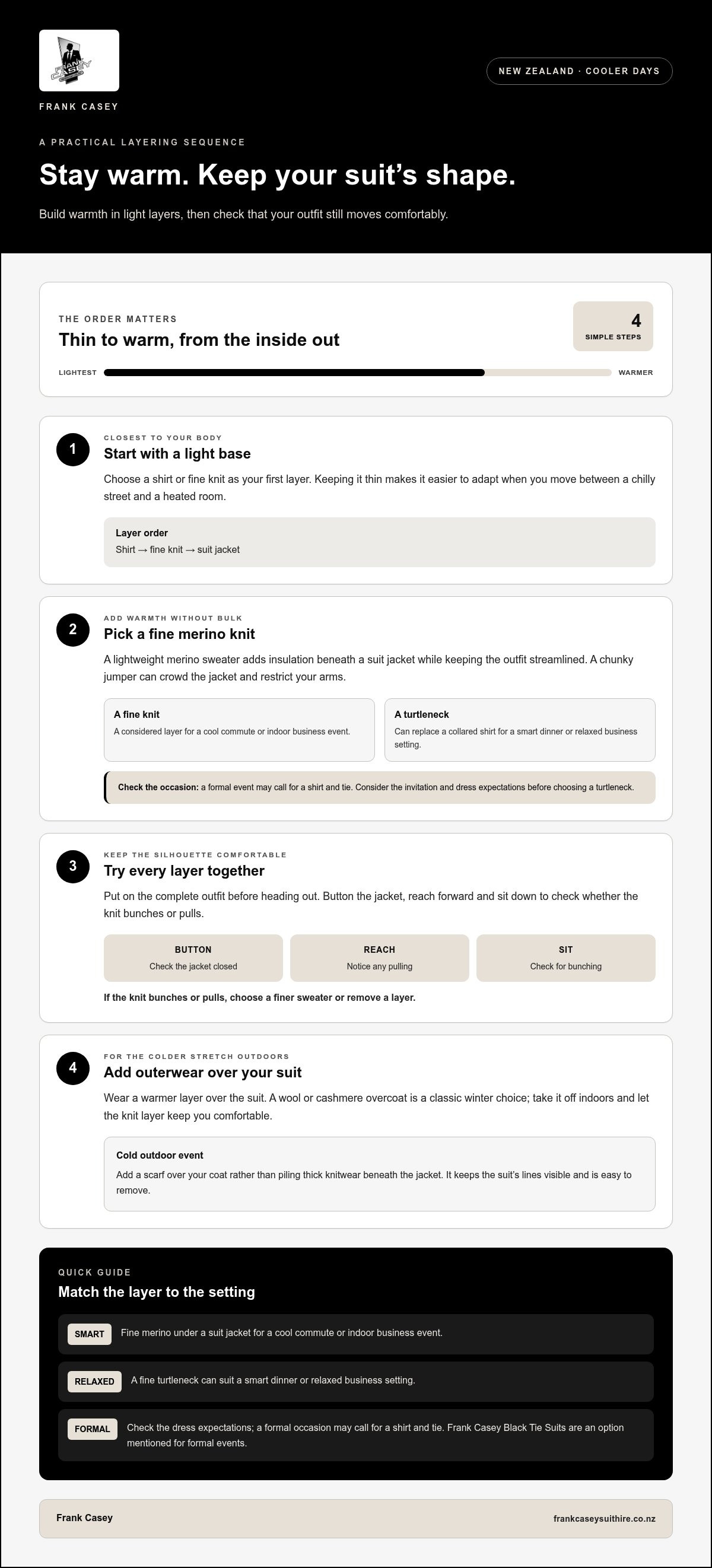
A fine merino sweater or turtleneck adds warmth under a suit without bulky layers. In New Zealand’s cooler season, start with a light layer close to your body, then add warmer pieces over it.
Start with a fine knit
A lightweight merino sweater works beneath a suit jacket, adding an insulating layer while keeping the outfit streamlined. Choose a fine knit rather than a chunky jumper, which can crowd the jacket and restrict your arms. For example, a crew-neck merino sweater under a navy suit makes a smart outfit for a cool commute or indoor business event.
Keep the layer closest to your skin thin, then add thicker garments on top if needed. This makes it easier to adapt as you move between a chilly street and a heated room. Try a shirt beneath a fine sweater, followed by a suit jacket. For women seeking premium, ethically produced garments that layer comfortably under tailoring, martindaleclothing.com provides an example of thoughtful construction and timeless design.
Choose a turtleneck for a clean neckline
When the occasion allows a less traditional look, a turtleneck can replace a collared shirt. A fine merino knit sits neatly under a suit jacket and covers the neck. Pair a dark turtleneck with a charcoal suit for a restrained outfit, or choose a lighter shade for more contrast.
Consider the event before swapping out a shirt and tie. A turtleneck can work for a smart dinner or relaxed business setting, while a formal occasion may call for a shirt and tie. Check the invitation and dress expectations, then choose a layer that suits the setting.
Build layers from light to warm
Use the thin-to-thick principle to plan for changing conditions. Start with a shirt or fine knit, add your suit, then wear a warmer outer layer over it. A wool or cashmere overcoat is a classic winter choice. Take it off indoors, and the knit layer can keep you comfortable without changing the outfit’s overall shape.
For a cold outdoor event, add a scarf over your coat rather than piling thick knitwear beneath your jacket. It keeps the suit’s lines visible and is easy to remove. A wool or cashmere scarf also complements the texture of a winter suit.
Keep the combination balanced
Before heading out, try on every layer together. Button the jacket, reach forward and sit down to see if the knit bunches or pulls. If it does, choose a finer sweater or remove a layer. This quick check helps your outfit stay comfortable from a chilly commute to an indoor gathering.
For an event outfit, compare formal suit options with the knitwear you plan to wear, so the full combination feels considered.
Super wool grades and thread fineness
Super grades describe wool fineness, not a suit’s warmth, weight or overall quality. Common labels include Super 80, Super 100, Super 110 and Super 120. For choosing a suit, treat the grade as one clue about the cloth, then consider how often you’ll wear it and for which occasions.
The Super number is a guide to wool fineness, though it does not by itself describe every feature of the finished fabric. A higher number means finer wool fibres. That difference can affect how the fabric feels, but it doesn’t tell you by itself whether a suit will be durable enough for daily wear or comfortable in winter.
It helps to separate the modern Super scale from historical wool grading. The older system counted how many 560-yard hanks a pound of wool could yield. Under that system, a pound producing 70 hanks was labelled “70s”; one producing 100 hanks was “100s”. These historical labels are not the same measurement as the modern Super system.
The Super classification was introduced as a marketing ploy in the early 1960s. That history is a reminder to look beyond the number on a label. A higher grade can sound like a straightforward upgrade, but the intended use matters more than chasing the largest figure. A suit worn repeatedly to the office has different demands from one reserved for a special event.
Super 100s and Super 150s fabrics can be strong, soft and supple. Those qualities show why a higher number doesn’t automatically mean fragile cloth, or why a lower one must feel coarse. Fabric characteristics vary, so compare the actual hand and appearance of the cloth alongside its grade.
For a practical comparison, consider these common choices:
- Super 80 or Super 100: useful starting points when comparing everyday suit fabrics.
- Super 110 or Super 120: finer grades to assess by feel and intended use, rather than number alone.
- 130s or higher: luxury suit grades intended for special occasions rather than daily office wear.
That last distinction can help set expectations. A Super 130s suit may suit a wedding or formal event, while frequent office wear calls for attention to everyday durability. The grade doesn’t replace fit, construction or cloth weight when you’re deciding whether a suit works for your routine.
For cooler-season dressing, don’t treat the Super number as a warmth rating. A fine Super grade doesn’t tell you the cloth’s weight, and the number alone can’t show how insulating the suit feels. Compare the grade with the fabric’s weight and finish, then choose for the occasion and how often you expect to wear it.
In short, use Super grades to understand fineness, not as a single score for warmth, durability or value. Comparing Super 100 and Super 120 fabrics side by side can make differences in feel easier to judge. For daily use or a special occasion, let the suit’s purpose guide your choice.
How should a wool suit fit when worn with winter layers?
A winter suit should sit smoothly over your planned layers, without pulling or bunching. Try it on with the shirt and knitwear you’ll wear, such as a fine merino sweater, then move your arms and sit down. The jacket should remain comfortable and hold its shape as you move.
Check the jacket over your chosen layers
Start with the shoulders. The seams should sit at your natural shoulder line, not extend beyond it or pull inward. A thick knit won’t fix a jacket that’s already too tight across the shoulders. Try on a shirt and fine sweater together before assessing the fit.
Next, fasten the jacket and check for strain across the chest or around the buttons. If the fabric pulls when you reach forward, the outfit is too restrictive. If excess fabric hangs loosely, the jacket may look oversized. Raise your arms as if reaching for a coat sleeve, then lower them. The jacket should settle back into place without twisting.
Check the sleeves with your planned layers underneath. A sweater cuff should not bunch heavily inside the jacket sleeve or catch when you bend your arm. The jacket’s front should also lie cleanly over a waistcoat or fine knit, rather than tenting outward. These details matter at a New Zealand winter wedding, where you may move between an outdoor ceremony and an indoor reception.
Keep the trousers comfortable
Winter layers affect the upper body most, but trousers still need to allow easy movement. Sit down and stand again to check whether the waistband digs in or the fabric pulls across your thighs. A belt should hold the trousers securely without compressing a tucked-in shirt. If you’ll wear thermal layers underneath, include them in the fitting.
- Shoulders: seams sit naturally, with no pulling over a shirt and knit.
- Chest: the jacket fastens without strain when you reach forward.
- Sleeves: cuffs move freely over the shirt or sweater.
- Trousers: the waistband and thighs stay comfortable when seated.
A suit that fits over a fine layer may feel tight over a thicker jumper. Choose your knitwear first, then assess the suit with that exact combination. If you’ll wear a shirt and tie for a formal occasion, fit the suit to that outfit instead. A clean silhouette shouldn’t come at the expense of comfortable movement.
Finally, put on your overcoat after checking the suit. The jacket should sit smoothly beneath it, and the coat should close without crushing the lapels. Trying on the full outfit shows whether the layers work together, from a commute in Wellington to a formal evening indoors.
How do you care for and store a wool suit between wears?
Care between wears helps a wool suit keep its shape and finish. After a winter wedding, workday or evening event, take a few moments to look after the jacket and trousers before putting them away. Simple steps can help limit creasing, trapped moisture and avoidable wear.
Air and brush the suit
After wearing your suit, remove everything from the pockets and hang the pieces separately. Let them air in a well-ventilated room before storing them, especially after a damp New Zealand commute. Keep the suit away from direct heat, which can affect the wool and its shape.
Use a soft clothes brush to remove surface dust and lint. Brush gently in the direction of the fabric, paying attention to the lapels, cuffs and trouser hems. For a small spill, blot with a clean cloth instead of rubbing it into the fibres. Rubbing can distort the fabric’s surface or spread the mark.
Hang it to support its shape
Choose a sturdy hanger with shaped, broad shoulders for the jacket. A thin wire hanger may leave the shoulders unsupported and cause creases. Hang the trousers by the waistband or fold them carefully along their existing crease. Leave enough room in the wardrobe for both pieces to hang freely.
For longer storage between seasons, put the clean, dry suit in a breathable garment cover. Don’t compress it beneath heavy coats or stack boxes on top. A crowded wardrobe can press sharp creases into the jacket and trousers. Before wearing the suit again, take it out and let the fabric settle on its hanger.
Keep cleaning occasional and considered
Frequent cleaning can put unnecessary strain on wool fibres, so don’t make it an automatic step after every wear. Airing and brushing usually take care of everyday dust and odour. For a persistent mark or a suit that needs a full clean, follow the garment’s care label and use a professional cleaner.
Check the care label before applying water or a stain product. Linings, buttons and fabric finishes can respond differently, so avoid experimenting on a visible area of a charcoal or navy suit. If a mark needs treatment, note what caused it and where it is on the garment.
Before storing your suit for the warmer season, make sure it’s clean and completely dry. Check the jacket pockets, brush the fabric and hang the pieces with space around them. These steps help leave the suit ready for its next business meeting or formal occasion.
Planning an event outfit? Explore formal suit hire options and choose a look that suits the occasion.
Frank Casey: Black Tie Suits
Frank Casey helps you choose formalwear for occasions that call for a polished suit. For a winter gala, wedding or school ball, consider how the fabric and layers will work for the event and the time you’ll spend outdoors. Black Tie Suits suit formal dress codes, while Wedding Suits and Business Suits are designed for different occasions.
For cooler weather, include your planned shirt or knitwear when considering fit. The combination should allow comfortable movement and sit neatly beneath an overcoat. Frank Casey offers suit hire for formal events, making it easier to dress for each occasion.
Contact Frank Casey or visit frankcaseysuithire.co.nz to discuss your formalwear needs.
Choose a suit for the occasion ahead
Think beyond the next cold day. Choose a suit for the occasion ahead, whether you need regular workwear or formalwear for a single event. When comparing wool suits for cooler months, consider how you want to feel and move throughout the day, rather than choosing by a grade or label alone.
A fitting helps bring those priorities together. Explain where you’ll wear the suit, which layers you plan to add and how often you expect to wear it. That context helps you focus on a suitable look and comfortable fit. Frank Casey offers Black Tie Suits, Wedding Suits and Business Suits for different formal settings.
Ready to plan your outfit? Contact Frank Casey for suit advice and take the next step with confidence.
Frequently Asked Questions
What are Super 100s, Super 120s, and so on?
Super 100s and Super 120s indicate wool fibre fineness, with higher numbers representing finer fibres. The number refers to how many kilometres of thread can be spun from 1 kilo of wool. It doesn’t rate a suit’s warmth or guarantee it will last longer. For example, compare the cloth’s feel and intended use before choosing between Super 100s for regular wear and a finer grade for an occasion.
What is a worsted suit?
A worsted suit is made from worsted wool, a smooth, structured fabric used across seasons. Its clean surface looks different from textured fabrics such as flannel or tweed. For example, a worsted suit can work for a workday that continues into an evening event. Consider the fabric’s weight and the occasion rather than treating “worsted” as a warmth rating.
What wool suit fabrics and weights are best for cooler months?
When choosing wool suits for cooler months, wool or flannel around 16 ounces per yard is a useful winter-weight reference. Carded options such as flannel and tweed feel denser than lighter, smoother suit fabrics. For a formal evening in a cold venue, a heavier cloth can be practical; for a day moving between indoors and outdoors, consider how the suit will feel in both settings.
What is the difference between flannel, tweed, and worsted wool suits for winter?
Flannel has a soft finish, tweed a rugged texture, and worsted a smoother surface. These differences affect an outfit’s appearance and formality as well as its feel. A flannel suit can suit a relaxed winter gathering, while tweed makes texture more prominent. Worsted gives a cleaner look for business settings. Choose based on the occasion and the finish you prefer.
What suit layers and shirts work best with a wool suit in cold weather?
A shirt with a fine merino sweater or turtleneck adds a layer beneath a suit. Choose what suits the event: a collared shirt works for a conventional business outfit, while a fine turtleneck creates a less traditional look. Try the complete outfit before wearing it, especially if you’re adding a waistcoat, to make sure the jacket fastens and moves comfortably.
Are wool suits warm and breathable enough for New Zealand winters?
Wool can provide warmth while remaining breathable, making it a useful suit fabric for New Zealand’s cooler season. Wool suits for cooler months can work well when the fabric weight and layers suit your plans. If you’ll move between a cold commute and heated indoor spaces, choose removable layers so you can adjust comfortably.
Which colours and patterns are versatile for cooler-month wool suits?
Navy and charcoal are versatile choices for business and formal settings, while burgundy and olive green add richer colour. For pattern, try subtle checks or herringbone to add texture without making the suit the only focus. A plain suit is easy to pair with patterned shirts or ties; with a patterned suit, keep the other details quieter.


