

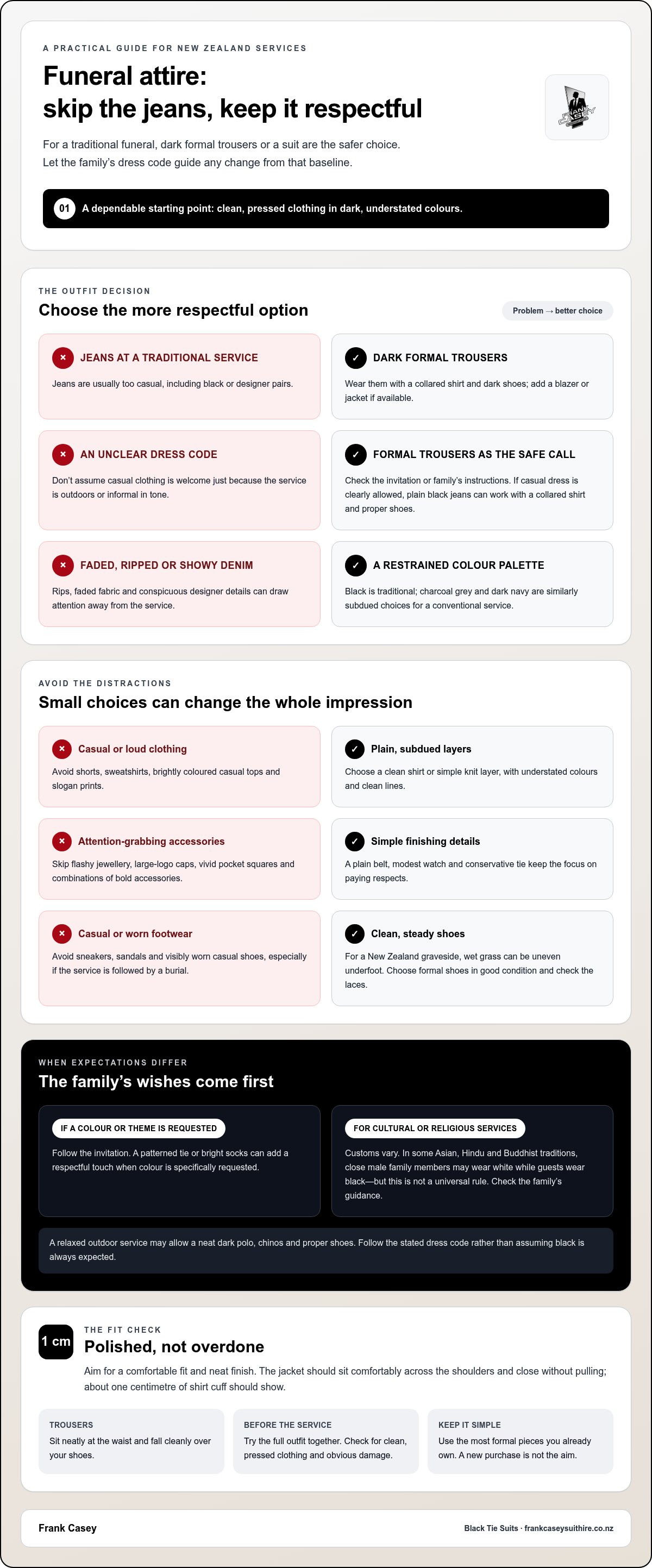
Jeans are usually too casual for a funeral, even when they’re black. Appropriate attire for men at a funeral is generally a dark suit, or dark dress trousers with a blazer. Jeans may suit a genuinely casual service if the family’s wishes make that clear. Clean, pressed clothing and understated accessories help show respect.
Choosing what to wear can feel difficult, especially when you’re unsure how formal the service will be. A simple, conservative outfit is a dependable starting point. The right shoes, tie and accessories can make it feel considered without drawing attention.
This guide explains when jeans may be acceptable, what to avoid and how to choose respectful clothes for different settings. It also covers practical choices for shoes, ties, belts and jewellery, so you can get dressed with confidence and focus on being there for the people who matter.
Key Takeaways
- For a traditional funeral, choose dark dress trousers or a suit rather than jeans. A blazer and formal trousers offer a respectful alternative to a full suit.
- Keep clothing clean, pressed and understated; avoid shorts, sweatshirts, sneakers and flashy accessories.
- Follow the family’s requested dress code and consider cultural or religious expectations when choosing colours and formality.
- Adjust your outfit for the weather and setting, while keeping it polished and suitable for the service.
- Finish with dark, polished shoes and simple accessories. If you need formalwear, Frank Casey’s Black Tie Suits are one option to consider.
1. Can You Wear Jeans To A Funeral?
For a traditional Western funeral, jeans are usually too casual, including black or designer pairs. Choose dark suit trousers, or dark formal trousers with a blazer if the dress code is less formal. A black, charcoal grey or dark navy suit is a conservative choice for most traditional services.
A full suit isn’t essential if you don’t own one. Pair dark dress trousers with a clean, long-sleeved dress shirt and a dark tie; add a jacket or blazer if you have one. Without a jacket, this can still look considered. For a simpler outfit, dark trousers, a clean collared shirt and dark shoes provide a respectful baseline.
Jeans may be suitable for a genuinely casual or outdoor funeral, but follow the service’s stated dress code. If casual clothing is clearly allowed, choose plain black jeans with a collared shirt and proper shoes. Avoid faded denim, rips and conspicuous designer details. If the dress code is unclear, formal trousers are the safer choice.
Colour and fit shape the overall impression. Black is traditional, while charcoal grey and dark navy are similarly restrained alternatives. Choose a colour that works with your shirt and shoes, then check that the jacket sits comfortably across your shoulders and closes without pulling. The sleeve should show about one centimetre of shirt cuff. Trousers should sit neatly at the waist and fall cleanly over your shoes, without bunching at the ankles.
Try the whole outfit together before the service, including your shirt, belt and shoes. Check that the shirt is clean, the trousers are pressed and the jacket has no obvious damage. If the hem drags or the sleeves cover your hands, an alteration can improve the fit, so allow time for adjustments. A dark sweater with formal trousers can also work when the weather permits. The aim is a polished outfit, not a new purchase: choose the most formal pieces you already own and keep things simple.
2. Clothing and accessories to avoid
A funeral outfit shouldn’t compete with the occasion or draw attention away from the service. Leave shorts, sweatshirts and brightly coloured casual tops at home, even if the gathering is informal. A sweatshirt with a printed slogan, for example, can look out of place beside a dark jacket and formal trousers. Choose a plain shirt or knit layer instead, in subdued colours and clean lines.
Skip baseball caps, flashy jewellery and statement accessories unless the family has specifically requested them. A large-logo cap, oversized chain or vivid pocket square can make an otherwise restrained outfit feel conspicuous. Keep personal items simple: a modest watch and plain belt are less distracting. Avoid combining several attention-grabbing pieces, such as a bright tie, patterned socks and a prominent lapel pin.
Be cautious with patterns and celebratory formalwear. A bold floral tie or high-contrast checks may overwhelm a dark outfit; choose a subtle pattern or conservative solid tie instead. A bow tie is generally associated with celebrations, so a standard tie is a safer choice for most funerals. A tuxedo can also look overly ceremonial unless the family specifically requests black-tie dress. Dress for the invitation, not an assumed level of formality.
Footwear can undermine an otherwise polished appearance. Avoid sneakers, sandals and visibly worn casual shoes, particularly if the service is followed by a burial. Wet grass at a New Zealand graveside can be uneven underfoot, so choose footwear that looks formal and gives you a steady step. Check that your shoes are clean and in good condition; scuffed toes or loose laces can make the whole outfit look unfinished.
Before leaving, use a quick mirror check. Look for distracting logos, loud colours, excessive jewellery and loose threads. Remove any accessory that catches the eye before the rest of your outfit does. If your outfit needs a restrained finishing detail, explore formal accessories that complement rather than dominate it. A simple tie and unobtrusive watch are usually enough; keep the focus on paying respects, not showing off personal style.
3. Family, cultural, and religious dress expectations
For a traditional funeral in New Zealand, appropriate attire for men attending a funeral is usually a dark suit or dark trousers with a collared shirt. The family’s requested dress code takes precedence over conventional expectations. Check the invitation for colour, theme or formality instructions, then choose your clothes accordingly.
A family may invite guests to wear bright colours or clothing that reflects the person’s interests. When a memorial or celebration of life is themed around a personal sporting devotion, exploring dedicated fan apparel via ismylife.shop can help guests match the tribute. Otherwise, if subtle colour is requested, a patterned tie or bright socks can add a respectful touch without changing your whole outfit. For a themed service, follow the stated theme rather than assuming black is expected. Let the family’s wishes guide your choice.
Cultural and religious customs can affect which colours are suitable. In some Asian, Hindu and Buddhist traditions, close male family members may wear white while guests wear black. This isn’t a universal rule across those communities, so don’t apply it automatically. Appropriate attire for men at a funeral depends on the specific tradition and the family’s instructions.
For a religious service, follow any guidance on colour, formality or clothing coverage. A dark suit may suit a traditional Western funeral, while another service may call for different choices. Avoid treating one custom as representative of every faith or community. The invitation or family’s instructions provide practical guidance for your outfit.
Casual clothing can suit a service the family has described as relaxed or outdoors. For example, a dark polo shirt with chinos and proper shoes can work for a casual outdoor funeral. Keep the polo neat, with its collar in good condition, and choose a subdued colour rather than a bright sports shirt. Weather may affect comfort, but it doesn’t override a request for formal dress.
Before the service, reread the invitation, note any cultural or religious instructions, then choose clothes that follow them. If the family requests colour, incorporate it through a shirt, tie or socks. If the dress code is formal, choose a suit or jacket. This helps you show respect without making assumptions about the family’s customs or the deceased’s preferences.
4. Factors affecting funeral clothing choices
Choose clothing for the service setting, season and forecast, and consider any wake afterwards. A funeral in a chapel followed by a graveside gathering may involve different conditions from an indoor service alone. Check the invitation for dress expectations and plan layers if you’ll move between venues. Follow the stated dress code first; weather affects comfort, not the family’s request.
For a summer funeral, a lightweight wool suit can feel more comfortable than heavier fabric. A breathable undershirt can help under a jacket, while minimal cologne keeps your preparation understated. Don’t rely on slacks and a short-sleeved shirt alone for a summer graveside service. If the day is particularly hot, smart trousers and a short-sleeved shirt can be suitable, provided the outfit remains neat.
Winter calls for warmer layers that still look formal. A heavier wool suit or three-piece suit adds warmth, while a scarf and gloves can help outdoors. Choose colours and accessories that work with your outfit, then remove outer layers indoors if appropriate. In rainy weather, an overcoat and umbrella can protect your clothing on the way to the service. Keep the coat simple and dark so it doesn’t distract from your formal clothes.
Outdoor conditions matter beyond temperature. A New Zealand graveside service may involve wet grass or uneven ground, so choose clothing you can move in comfortably. Keep trouser hems clear of puddles and choose a coat that allows you to sit or walk without pulling. If rain is forecast, carry an umbrella and keep a spare handkerchief in your pocket. These simple preparations help you stay composed without unnecessary accessories.
For a wake after the funeral, follow the same dress code unless the family has indicated a change. Keep a dark jacket on for a formal gathering; removing it may suit a relaxed indoor setting. Don’t change into casual clothing simply because food is being served. If the wake is outdoors, keep a warm layer and footwear suited to the ground.
If you’re dressing at short notice, start with your cleanest, best-fitting dark trousers and collared shirt. Add a jacket if available, then check the forecast and service location before choosing outerwear. Press creases, brush off lint and inspect buttons. If one item needs attention, prioritise visible details such as a stained shirt front or a dragging trouser hem. Choose accessories suited to the weather and occasion, unless the family has requested a specific colour or theme.
5. Appropriate shoes, ties, belts, and jewellery
Small details shape how a dark suit looks at a funeral. A conservative tie, polished shoes and a simple belt create a coordinated outfit without drawing attention. Choose accessories for the occasion, not for celebration: understated pieces keep the focus on paying respects.
For a traditional service, wear a dark tie in a solid colour or subtle pattern. A plain black, charcoal or navy tie pairs neatly with a white or pale shirt and dark suit. Avoid vivid colours, novelty prints and shiny fabrics unless the family has requested a brighter dress code. Check that the tie sits flat and reaches your waistband, rather than hanging loosely or stopping short.
Black leather shoes are the default with black, charcoal or navy suits. Dark brown shoes are acceptable with navy or grey, but not black. Polished oxfords or loafers give a formal finish; choose a pair that’s clean and comfortable enough for standing during the service. Dark socks should cover the gap between your trousers and shoes, including when you sit.
A burial may involve wet grass or uneven ground. Rubber-soled shoes can offer better grip than leather soles in those conditions while still looking formal. Before leaving, check that the soles are secure and the shoes don’t pinch. For a graveside service, a steady step matters as much as a polished appearance.
Match a plain leather belt to your shoes in colour and finish. For example, pair a black belt with black shoes, or a dark brown belt with dark brown shoes. Keep the buckle discreet. A large, brightly coloured or highly polished buckle can disrupt an otherwise restrained outfit.
Keep jewellery minimal. A simple watch or wedding ring is usually enough; remove flashy chains, oversized rings and bracelets that catch the light. Frank Casey suit hire offers Black Tie Suits and Formal Shoes for a coordinated formal outfit. Choose formal shoes for the occasion and keep your remaining accessories understated.
Aim for consistency from head to toe, with each accessory supporting a respectful, formal appearance rather than becoming a focal point. Dark, polished dress shoes are suitable, including black or dark brown oxfords or loafers. Keep the leather belt simple, matching its colour and finish to your shoes. These choices make the outfit feel considered without conspicuous details. A tie is generally appropriate: choose a conservative dark solid colour or subtle pattern, and avoid brighter accessories that compete with it.
Consider the ground as well as the appearance of your footwear if a burial is part of the service. On wet grass, rubber soles can provide better grip than leather soles. The shoes should still look formal, so avoid casual options such as sneakers or sandals. Dark socks complete the outfit and maintain a subdued look between trouser hem and shoe. Restrained accessories and suitable footwear help keep attention on the occasion while allowing you to move steadily and comfortably. Before leaving, check that your shoes, socks, belt and tie work together in colour and formality, and remove anything overly noticeable.
Frank Casey: Black Tie Suits
Frank Casey offers Black Tie Suits for funerals where the family has requested black-tie dress. A tuxedo is generally too formal for most services, so first consider the invitation and the family’s wishes. If a dark suit is more suitable, Frank Casey also offers Business Suits, as well as Wedding Suits and School Ball Suits.
Choosing formalwear for a funeral is about matching the service, not dressing for a celebration. Frank Casey’s suit hire options can help when you need formal attire for a requested dress code. Keep the rest of your outfit understated, with suitable shoes and accessories.
Contact Frank Casey to explore formal suit options for the occasion.
Make your next step simple
Choosing appropriate attire for a funeral as a man is one practical way to show care during a difficult time. Give yourself time to make that choice before the service, rather than deciding as you get ready. Set out the outfit and check it in daylight; small details are easier to spot when you’re not rushing. That leaves more attention for supporting family and friends on the day.
If you’d like help choosing formalwear for the occasion, contact Frank Casey for help. A considered choice can help you arrive feeling prepared and focus on what matters: being present with the people around you.
Frequently Asked Questions
Can You Wear Jeans To A Funeral?
Jeans are usually too casual for a traditional funeral, even if they’re black. If the family describes the service as relaxed, plain black jeans may fit the request. Pair them with a collared shirt and tidy shoes, not a graphic T-shirt or sneakers. If the invitation gives no dress guidance, choose formal trousers rather than assume the gathering will be casual.
What If You Don't Own a Suit?
You can attend respectfully without buying a suit. Build an outfit from separate pieces, such as dark trousers, a neat shirt and a plain tie. A dark, well-fitting jacket can bring those items together, but a tidy shirt-and-trouser combination is still practical. Before the service, check that each piece is clean, comfortable and suitable for sitting through the ceremony.
Is a black suit required for a funeral in NZ?
No, a black suit isn’t the only suitable choice for a funeral in New Zealand. Charcoal grey and dark navy are also conservative colours for a traditional service. The family’s request may call for another colour, so read the invitation before choosing. If it asks guests to wear colour, follow that direction rather than treating black as compulsory.
What shirt, tie, and shoes are appropriate for a men's funeral outfit?
Choose a clean dress shirt, a restrained tie and formal shoes that work with your suit. A plain white shirt is a traditional pairing with black, while a dark solid tie or subtle pattern keeps the outfit understated. Black shoes work with black, charcoal or navy; dark brown suits navy or grey. Dark socks help maintain a neat line when seated.
What should men wear to a funeral if they don't own a suit?
Wear dark formal trousers with a long-sleeved shirt and, if you have one, a plain jacket. A dark tie adds formality without a jacket. For instance, charcoal trousers, a pale shirt and a simple dark tie make a coordinated outfit from separate pieces. Check the full combination in a mirror, including the fit around your waist and cuffs.
What should men wear to a summer or outdoor funeral in New Zealand?
For a hot summer service, choose smart trousers and a neat shirt that feels comfortable outdoors. A short-sleeved shirt can suit particularly hot weather, while a lightweight suit may work for a more formal service. For a graveside gathering, consider the ground and forecast as well as the temperature. An umbrella or removable layer can help you prepare without changing the dress code.
What clothing should men avoid wearing to a funeral?
Avoid clothing that looks sporty, celebratory or attention-seeking, such as shorts, sweatshirts, slogan tops and bright accessories. Sneakers and sandals can also make a formal outfit look too casual. Unless the family requests otherwise, leave baseball caps and flashy jewellery at home. Before leaving, check for prominent logos, loud patterns and anything that distracts from the occasion.
Should men follow the family's dress code or cultural customs at a funeral?
Yes. Follow the family’s requested dress code and any cultural or religious instructions for the service. For example, the invitation may ask guests to wear bright colours or specify a particular colour. Don’t assume one custom applies to every family or faith. If instructions name a theme or colour, incorporate it respectfully through a shirt, tie or another small detail.


