

An invitation without a dress code isn’t a cue to dress casually. The charity gala dress code for men depends on the event: for black tie, wear a tuxedo; if no code is given, formal or black-tie-optional attire is a sensible default. A classic, dark, well-fitted prom suit can work when the event isn’t strict black tie.
Shoes and accessories can be the tricky part, especially when you want to look polished without being overdressed. Black dress shoes, a white shirt and restrained accessories are a reliable starting point. The invitation, venue and time of day can help you judge how formal to go.
This guide explains how to rewear a prom suit, choose gala-ready shoes and finishing touches, and decide what to wear when the invitation is silent. You’ll also find outfit suggestions for black tie, cocktail and less formal events, so you can feel comfortable and appropriately dressed.
Key Takeaways
- For a black-tie gala, choose a tuxedo; a classic dark prom suit is better suited to an event without a strict black-tie code.
- Build a polished outfit around formal shoes and a crisp shirt, then keep accessories refined.
- Use the invitation, venue and timing to gauge how formal the event is.
- If the invitation gives no dress code, lean towards formal rather than casual and choose a versatile dark outfit.
- Small details, from fit to polished shoes, can make familiar formalwear feel gala-ready.
1. Can I rewear my prom suit to a charity gala?
Yes, a classic dark prom suit can work for a charity gala if the invitation doesn’t require black tie. Choose a tailored navy, charcoal or black suit with plain trousers and no loud pattern. A suit that still fits well can look polished with a pressed shirt, formal shoes and carefully chosen accessories. The invitation’s dress code matters more than the suit’s original occasion.
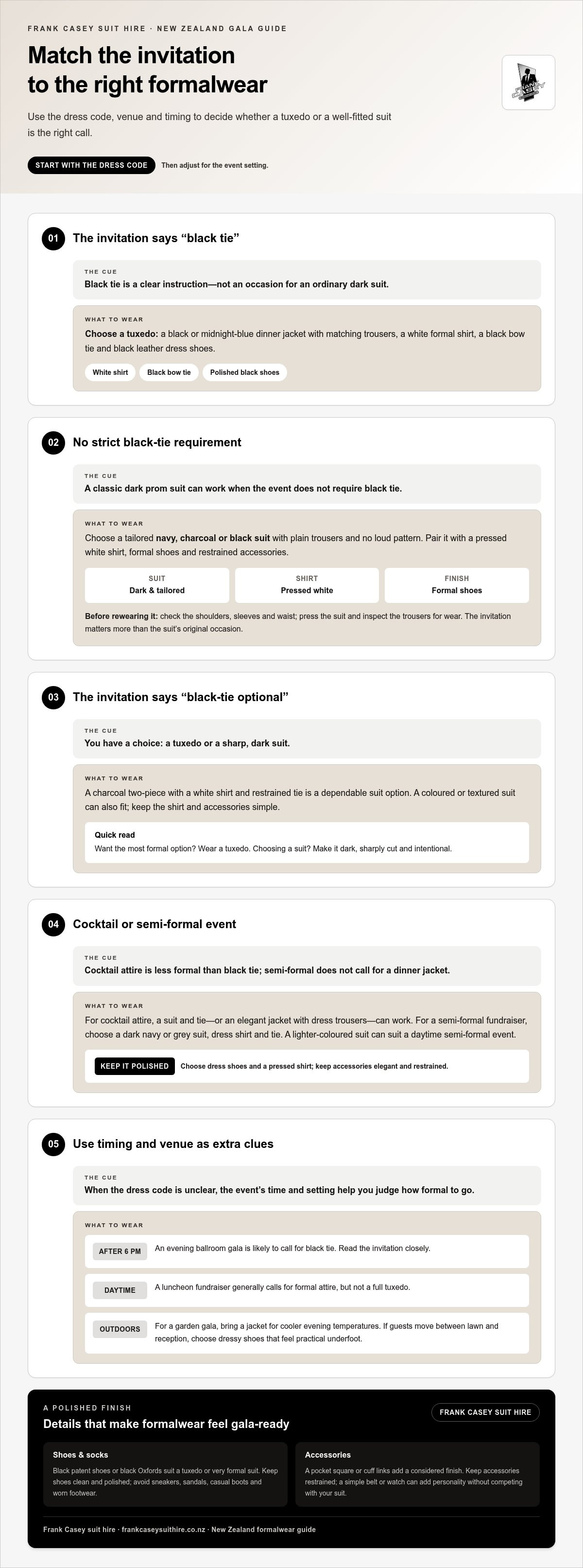
Black tie calls for a full tuxedo, not an ordinary dark suit. A traditional outfit pairs a black or midnight-blue dinner jacket with matching trousers, a white formal shirt, a black bow tie and black leather dress shoes. Black tie sits above cocktail attire in formality and below white tie. For an evening ballroom event starting after 6pm, black tie is a likely expectation, so read the invitation closely.
“Black-tie optional” gives you a choice: wear a tuxedo or a sharp, dark suit. You don’t need a dinner jacket, but your suit should look formal and intentional. A charcoal two-piece with a white shirt and restrained tie is a dependable option. A coloured or textured suit can also fit this code, but keep the shirt and accessories simple so the overall outfit remains refined.
For a formal event without a black-tie requirement, a dark suit in navy, charcoal or black is appropriate. A daytime luncheon fundraiser generally calls for formal attire without a tuxedo, while a semi-formal event can suit a dark navy or grey suit, dress shirt and tie. A lighter-coloured suit can work for a daytime semi-formal event. Match the venue and timing rather than assuming every charity event requires a dinner jacket.
Creative black tie allows more personality while keeping the outfit formal. Try a distinctive dinner jacket with plain dark trousers, or add a patterned tie or pocket square to a classic tuxedo. For a spring or summer black-tie gala, a white dinner jacket can replace the black one; in autumn or winter, a black tuxedo with a white pleated-front shirt is suitable. Before rewearing a prom suit, check the fit at the shoulders, sleeves and waist, then press it and inspect the trousers for wear. If the invitation says “black tie”, choose a tuxedo; if it says “black-tie optional” or formal, a well-fitted dark suit is a sound option.
2. What shoes and accessories should I wear to a gala?
For a formal charity gala, match your shirt, tie and shoes to the invitation’s dress code. A black-tie outfit calls for a white dress shirt, black bow tie, black dress socks and polished black shoes. For white tie, wear a tailcoat, white shirt, waistcoat and white bow tie, with the traditional accessories that complete this more formal look.
With a tuxedo, a crisp white shirt is the safest choice, pairing neatly with a dinner jacket and dark trousers. Choose a black bow tie for strict black tie, then add a pocket square or cuff links for a considered finish. A classic tie suits a formal dark suit, while a bow tie can add polish without extra decoration.
Black patent shoes and black dress socks complete a black-tie outfit. With a tuxedo or very formal suit, black Oxfords are also a dependable choice. Make sure your shoes are clean and polished, and avoid sneakers, sandals, casual boots or worn footwear. At a garden gala, bring a jacket for cooler evening temperatures, even if the reception begins outdoors.
White tie has more specific finishing details. Braces, white gloves, shirt studs and cuff links can complete the outfit, alongside black patent shoes and black dress socks. If you’re wearing military or civil decorations, medals and orders are generally placed on the left lapel, on a ribbon below the bow tie, or on a sash across the chest. Follow the event’s stated dress code for decorations.
For a less strict gala, keep accessories elegant and restrained. A simple belt, watch or pocket square can add personality without competing with your suit. Texture or a touch of shine is usually safer than a bold print, while a patterned tie or pocket square adds a subtle accent to strict black tie. Save bright accessories for an event with a creative formal code.
Before leaving, check the whole outfit together. A white shirt works with both a tuxedo and a dark suit, making it a useful starting point. Match dress socks to your trousers for semi-formal attire, and make sure your shirt is pressed. For an outdoor event, carry your jacket rather than relying on a casual layer.
If you need to complete a gala outfit, explore formal shoes and accessories suited to a polished look.
3. Choosing formalwear appropriate to the event
In New Zealand, start with the invitation: black tie calls for a tuxedo, while formal attire can suit a dark suit. For a semi-formal fundraiser, wear a dark suit, dress shirt and tie, then choose polished dress shoes.
For a summer or outdoor gala, match your outfit to its formality and setting. A lighter-coloured suit suits a daytime semi-formal event, while a white dinner jacket can replace a black one at a spring or summer black-tie event.
Read every line of the invitation, including notes about the venue, timing and theme. “Black tie” is a clear instruction to wear a tuxedo, whereas “black-tie optional” allows a tuxedo or a dark, sharply cut suit. “Cocktail attire” is less formal than black tie, so a suit and tie or an elegant jacket with dress trousers can work.
The event’s timing gives another useful clue. An evening ballroom gala starting after 6pm is likely to call for black tie. A daytime luncheon fundraiser generally needs formal attire, but usually not a full tuxedo. For a semi-formal daytime event, a lighter suit is appropriate; for an evening gathering, navy, charcoal or black creates a more formal impression.
Venue details can help you plan for comfort without losing the intended polish. At an outdoor garden event, bring a jacket for cooler evening temperatures. If guests will move between a lawn and an indoor reception, choose shoes that remain dressy but feel practical underfoot. Keep the outfit cohesive rather than switching to casual footwear outdoors.
For formal attire without a black-tie requirement, a dark suit with a white dress shirt is a reliable base. A classic tie completes a formal look; a bow tie adds a more evening-ready note. Black Oxfords are a safe choice with a tuxedo or very formal suit, while dress shoes also suit a semi-formal outfit. Match dress socks to your trousers for a neat finish.
A wedding or charity dinner invitation may include a theme alongside its dress code. Treat the dress code as the baseline, then add a restrained detail if the theme invites it. For festive attire, a festive tie or scarf can add colour without replacing the suit or jacket. For themed occasions such as a masquerade ball, sourcing a statement piece from Just Posh Masks lets you respect the dress code while keeping your formalwear sharp. At creative formal events, a sequin dinner jacket can work with plain dark trousers and a simple white shirt.
Before settling on your outfit, compare its formality with the invitation’s exact wording, event time and venue. A dark suit is a flexible choice for formal or black-tie-optional gatherings, but it doesn’t replace a tuxedo when black tie is specified. That distinction keeps your look appropriate, whether you’re attending a daytime fundraiser or an evening gala.
4. The best advice for gala dressing?
Start with the invitation, not assumptions about what a charity dinner usually means. Look for exact wording such as “black tie”, “black-tie optional”, “formal” or “festive attire”. Note the venue, event time and whether the programme includes dinner, speeches or an auction. Just as gala organisers turn to technical production specialists like Straight Street Event Services to shape the room’s atmosphere, these cues help you judge the tone and plan an outfit suited to the occasion.
If the dress code is unclear or missing, contact the event organiser before choosing your clothes. Keep your message specific: “The invitation doesn’t state a dress code. Is a dark suit suitable, or does the evening call for a dinner jacket?” This gives the organiser a clear question to answer. If you’re attending with a group, share the response so everyone can dress to a similar level.
Use the organiser’s wording to settle the main decision. If the invitation says black tie, wear a tuxedo with a dinner jacket, formal shirt and bow tie. “Black-tie optional” allows a tuxedo or a dark suit. For “formal” without a black-tie instruction, a sharp suit, pressed shirt and dress shoes make a considered choice. Don’t treat “optional” as an instruction to dress casually.
When the organiser is unavailable, weigh the venue, timing, ticket level and host organisation together. An evening ballroom dinner suggests a more formal outfit than a daytime luncheon fundraiser. A gala at a garden venue may call for a jacket that works indoors and outdoors. The host’s event description can also indicate whether the occasion is traditional, festive or creative.
Think about photographs as well as the room. A well-fitted jacket, smooth shirt and clean shoes create a tidy outline in group photos. Check that your collar sits flat, your tie is centred and your pocket square stays in place. Avoid loud prints or overly bright accessories unless the invitation explicitly welcomes creative formal attire.
A gala or charity dinner often lasts four hours or more, including the reception, dinner and speeches or an auction. Choose shoes you can comfortably wear throughout, and make sure your jacket allows you to sit and move easily. A dinner jacket that pulls across the shoulders or trousers that shift when seated can distract from an otherwise polished outfit.
Before leaving, do a final check under good light. Press your shirt, remove lint from your jacket and polish your dress shoes. Confirm that your tie, belt and socks work with your trousers, then pack a finishing touch such as a pocket square. These simple steps help keep your outfit neat from the welcome reception through the final speech.
5. What to wear when an invitation omits a dress code
If a charity gala invitation gives no dress code, start with formal or black-tie-optional attire. The charity gala dress code for men can feel uncertain without clear wording, but a well-fitted dark suit is a dependable starting point for an evening event. A tuxedo is another suitable choice, though black-tie optional means it isn’t compulsory. Don’t assume that no dress code means casual clothing is appropriate.
Read the invitation for clues beyond the dress code itself. The venue, start time, ticket information and host organisation can all help you judge the event’s tone. An evening dinner in a ballroom suggests a more formal setting than a daytime luncheon fundraiser. If the event description mentions speeches or an auction, consider how your outfit will work for a seated dinner as well as the reception.
For a classic option, wear a charcoal or navy suit with a white dress shirt and polished dress shoes. A dark tie keeps the look composed; a bow tie gives it a more formal feel. Make sure the jacket and trousers work together, and check that the outfit is comfortable when seated. This is a balanced choice if you’re unsure whether guests will lean towards formal or black-tie-optional attire.
Keep accessories simple while the event’s tone is unclear. A pocket square or textured tie adds a personal touch without making the outfit too bold. A bright colour or noticeable print can work when the event invites creative or festive attire, but may look out of place at a traditional dinner. Choose one accent, then keep the rest understated.
Check your clothes in good light before leaving. Press your shirt, remove lint from your jacket and inspect your trousers for marks or creases. Make sure your shoes are clean and polished, and avoid sneakers, sandals or casual boots. For an outdoor garden reception, bring a jacket for cooler evening temperatures while keeping your footwear formal.
Use any wording in the event details to fine-tune your choice. “Cocktail” points towards a suit and tie or an elegant jacket with dress trousers. “Festive attire” leaves room for a themed tie or scarf. If the host later says black tie, choose a tuxedo; if the wording stays open, a dark suit remains sensible. The key to the charity gala dress code for men is to match your outfit to the strongest formality clue available, rather than dressing down by default.
If a tuxedo feels right for the occasion, consider black tie suit hire as a formalwear option. Choose the outfit that suits the invitation and feels comfortable for the event, then finish it with neat details that look deliberate.
Frank Casey: Black Tie Suits
Frank Casey is a practical next step when a charity gala calls for black tie or your current suit isn’t formal enough. Its Black Tie Suits and black tie suit hire give you options for a tuxedo dress code. If the invitation says black-tie optional, compare a tuxedo with a dark suit and choose the formality that feels right for the event. A clear dress code makes it easier to decide whether you need a dinner jacket, while a shirt, shoes and accessories complete the look. Explore Frank Casey’s black-tie options for your gala.
Make your next step a confident one
Once you’ve settled on the level of formality, give yourself time to put together an outfit that feels comfortable as well as polished. Try the full combination, including your shirt, shoes and accessories, and sit down in it before gala night. A jacket that feels right standing can still restrict movement at dinner, so comfort deserves a place in your final decision.
The charity gala dress code for men is your guide, but the finished look should still feel like you. Small personal touches can add character without taking attention away from the occasion. If you’re choosing formalwear for more than one event, Frank Casey also offers Wedding Suits and Business Suits.
For help choosing an outfit for your gala, contact Frank Casey for outfit advice. With the right fit and finishing details, you can arrive ready to enjoy the evening.
Frequently Asked Questions
What shoes and accessories should I wear to a gala?
Choose shoes that suit the formality and feel comfortable throughout the event. Try them with your gala outfit beforehand, especially if they’re new, and check that trouser hems sit neatly when you stand. Keep metal details on your watch and cuff links coordinated for a tidy finish. A spare pair of laces can be useful if your formal shoes use them.
What is the best advice for gala dressing?
Plan your outfit as a complete look rather than choosing each item separately. Lay out the jacket, shirt, trousers, tie, socks and shoes together, then check that the colours and formality work as a set. Sit, stand and walk in the outfit before the event. This quick rehearsal can reveal a tight waistband, slipping shirt or uncomfortable shoes while there’s still time to adjust.
Can I add a pop of personality without breaking the dress code?
Yes, use one considered accent rather than several competing details. For example, add a patterned pocket square to a plain dinner jacket, or choose a textured tie with a simple shirt. Keep the rest of the outfit understated so the accent looks intentional. If the invitation sets a strict dress code, let it guide your choice and avoid anything that changes the outfit’s overall formality.
Can I rewear my prom suit to a charity gala?
Yes, a prom suit can be suitable if it fits well and the gala doesn’t require black tie. Check the shoulders, sleeve length and trouser break in daylight, then look for shiny fabric, loose buttons or visible wear. A current shirt and tie can refresh a classic suit. If the invitation says black tie, choose a tuxedo rather than relying on a regular prom suit.
Can I wear a regular suit to a gala?
A regular suit works for formal, semi-formal or black-tie-optional events, but not for a strict black-tie invitation. Choose a well-fitting dark suit for an evening gala, and make sure its jacket and trousers look like a coordinated set. For cocktail attire, a suit and tie is a straightforward option. Let the invitation’s wording decide whether your suit meets the requested level of formality.
Do I need a cummerbund with my tuxedo?
No, a cummerbund isn’t automatically required with every tuxedo. Treat it as a finishing accessory and follow any specific instructions on the invitation. If you wear one, keep it understated and coordinate it with the dinner jacket and bow tie. Don’t add a cummerbund simply to fill space; a clean shirt front and well-fitted trousers can look polished without extra waist detailing.
Do charity galas usually have a theme I should dress around?
Not every charity gala has a theme, so don’t assume one from the event name alone. Look for a theme, colour request or festive-attire note in the invitation or event details. If a theme is stated, incorporate it through a small detail, such as a tie or pocket square, while keeping the main outfit formal. If there’s no theme, choose attire based on the dress code and venue.
How do I avoid a gala outfit faux pas?
Match your outfit to the invitation, and don’t treat a strict dress code as optional. Before leaving, check that your shirt is pressed, jacket fastenings work, trousers are clean and shoes are polished. Keep accessories controlled, and avoid costume elements unless the event explicitly welcomes them. If you’re unsure about an item, remove it and assess whether the outfit still looks complete and appropriate.


