

A wedding suit can travel well if you protect it from tight folds and unpack it promptly. Knowing how to travel with a hired suit starts with using a garment bag, checking your airline’s carry-on rules and hanging the suit as soon as you arrive. If you need to fold it, do so gently to avoid sharp creases.
It’s natural to worry about keeping formalwear neat on a flight, especially when you have a wedding to get ready for at the other end. A little preparation makes the journey easier: wear comfortable travel clothes, protect the suit from being squashed and give it time to recover after unpacking.
This guide covers what to wear and pack, how to carry your suit on the plane, and simple ways to unpack and freshen it after arrival. You’ll also learn what to do about light creases, so you can focus on the occasion rather than your luggage.
Key Takeaways
- Choose a garment bag or case that protects your suit without forcing it into tight folds, and check your airline’s carry-on rules.
- For a short flight, wearing the suit can help it keep its shape; remove the jacket before sitting to reduce creasing.
- If you need to pack the suit in a case, fold the jacket gently and follow the trousers’ natural crease.
- Unpack and hang the suit as soon as you arrive, then give travel creases time to fall out.
- Use gentle steam to freshen the fabric, and keep direct high heat away from the suit.
Does a garment bag count as your carry-on?
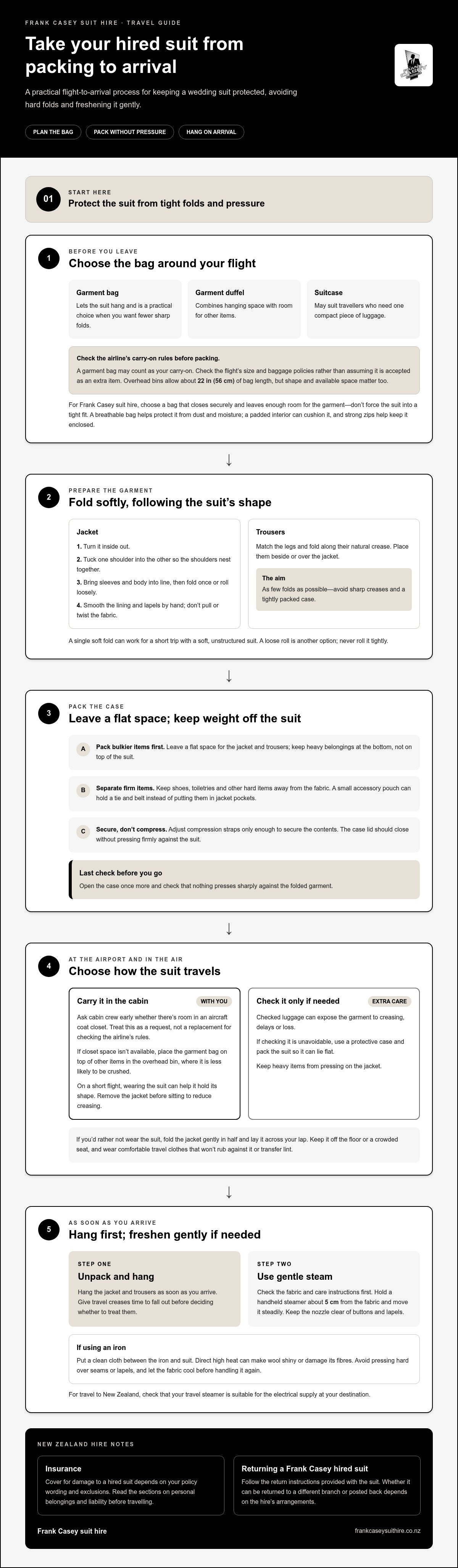
A garment bag may count as your carry-on, so plan for it as cabin baggage. Airline policies differ, so check the rules for your flight before packing. When deciding how to travel with a hired suit, choose the bag and carrying method to suit those rules.
Can you return a hired suit to a different branch or post it back? That depends on the hire’s return arrangements. Follow the return instructions provided with the suit rather than assuming another branch or postal return is accepted.
- Choose the bag for your trip. A garment bag lets the suit hang and is a practical choice when you want fewer sharp folds. A garment duffel combines hanging space with room for other items, while a suitcase may suit travellers who need one compact piece of luggage. Choose a bag that closes securely and leaves enough room for the garment, rather than forcing it into a tight fit. A key part of how to travel with a hired suit is preventing pressure on the jacket.
- Look for useful suit protection. A breathable garment bag helps protect a suit from dust and moisture during travel. For a bag that will pass through an airport, a padded interior can cushion the garment, while strong zips help keep it enclosed. A hanger with broad shoulders supports the jacket and helps prevent sagging while it is stored. Keep accessories separate so they don’t press against the suit.
- Check the airline’s carry-on policy. Don’t assume a garment bag is accepted as an extra item or follows the same rules as a standard cabin bag. Check the airline’s size and baggage policies before leaving for the airport. Most overhead bins allow about 22 in (56 cm) of bag length, but the garment bag’s shape and available space also matter. These details help you plan how to travel with a hired suit without last-minute repacking.
- Ask about hanging space early. If you’re carrying the suit onboard, ask cabin crew early whether there’s room for the bag in an aircraft coat closet. Treat this as a request, not a substitute for checking carry-on rules. If closet space isn’t available, place the garment bag on top of other items in the overhead bin, where it is less likely to be crushed.
- Choose between carry-on and checked luggage. Carrying the suit in the cabin keeps it with you, but the bag still needs to comply with airline policies. Checking it can expose the garment to creasing, delays or loss. If checking it is unavoidable, use a protective case and pack the suit so it can lie flat, without heavy items pressing on the jacket.
What Should You Wear and Pack for a Flight With a Wedding Suit?
Pack the jacket and trousers with as few folds as possible, and choose travel clothes that won’t crush them in your case.
Travel insurance cover for damage to a hired suit in New Zealand depends on the policy wording and exclusions. Read the sections on personal belongings and liability before you travel.
1. Fold the Jacket for Travel
Turn the jacket inside out, then tuck one shoulder into the other so the shoulders nest together. Bring the sleeves and body into line, then fold the jacket once or roll it loosely. This helps avoid hard creases across the front. Smooth the lining and lapels with your hands before packing, and don’t pull or twist the fabric to force it into shape.
2. Pack the Jacket and Trousers
Lay the folded jacket flat in a case, with its soft fold facing upwards. Fold the trousers along their natural crease, matching the legs before placing them beside or over the jacket. Keep shoes, toiletries and other firm items away from the suit fabric. If the case has compression straps, adjust them only enough to secure the contents. Tight pressure can flatten the jacket and leave a stubborn wrinkle.
3. Choose Whether to Fold or Roll
For a short trip, a single soft fold works well for a soft, unstructured suit. Rolling the jacket loosely can also help avoid sharp creases, but don’t roll it tightly. Avoid cramming the suit into a case, where it may end up with several hard folds. Check the case after closing it: the lid should shut without pressing firmly against the suit.
4. Dress for the Flight
For a short flight, wearing the suit can help it hold its shape. Remove the jacket before sitting down to reduce creasing, and keep it off the floor or a crowded seat. If you prefer not to wear it, fold the jacket gently in half and lay it across your lap. Choose comfortable clothing that won’t rub against the suit or transfer lint.
5. Pack Without Squashing the Suit
Pack bulkier items first, leaving a flat space for the jacket and trousers. Keep heavy belongings at the bottom and avoid stacking them on top of the suit. A small accessory pouch can keep items such as a tie and belt together, rather than tucked into jacket pockets. Before leaving, open the case again and check that nothing presses sharply against the folded garment.
Steaming and freshening a suit after travel
After a flight, inspect the suit before choosing how to freshen it. Use gentle steam for creases, and keep direct high heat away from wool.
-
Use a Steamer or Iron Safely
Start by checking the fabric and the care instructions before applying heat. Check that your travel steamer is suitable for the electrical supply at your destination. Hold a handheld steamer about 5 cm from the suit fabric, moving it steadily rather than pressing it against one spot. Keep the nozzle clear of delicate details, such as buttons and lapels.
If you use an iron in a hotel room, place a clean cloth between the iron and the suit. High heat applied directly to wool can make the fabric shiny or damage its fibres. Avoid pressing hard over seams or lapels. Let the fabric cool before handling it again, so you don’t flatten the areas you’ve just treated.
-
Remove Wrinkles with Steam
Hang the suit before steaming so the jacket and trousers fall naturally. For a light crease, use steam from a hot shower: hang the garment nearby for fifteen or twenty minutes. Keep it out of the water’s reach, and leave enough room for air to move around the fabric. The steam can help relax creases without direct contact.
With a handheld steamer, work from the shoulders down in slow passes. Keep the steamer about 5 cm from the fabric, and don’t stretch or pull the suit while steaming. Check the front, back and trouser creases in good light. If a crease remains, give the fabric time to settle before repeating the pass.
-
Freshen the Suit After Travel
After steaming, hang the suit in a ventilated place and let it dry fully before wearing it to the wedding. Airing the jacket and trousers separately gives moisture room to escape. Keep the suit away from direct heat, which can affect the fabric, and don’t put it straight back into a case while it feels damp.
For a badly wrinkled suit, hang it overnight and allow the fabric to recover. Check the shoulders, sleeves and trouser legs the next morning. Treat remaining creases gently rather than applying more heat at once. A flight can leave folds in different areas, so inspect the whole garment before deciding whether another light steam is needed.
Unpacking and hanging a suit after arrival
Take the suit out of your luggage as soon as you arrive, then hang it to let travel creases relax. Give it space in the room before deciding whether it needs steam.
-
Unpack and Hang the Suit
Remove the jacket and trousers from your case straight away. Use a broad-shouldered hanger for the jacket, and hang the trousers by the waistband or cuffs so they fall freely. Empty the pockets, then smooth the lapels and sleeves by hand. Check the shoulders, front panels and trouser legs for folds from the journey.
Leave the suit hanging for a few hours after arrival to help travel creases drop out. Choose a spot with space around the garment, rather than pressing it against a wall or another item of clothing. Keep the case open nearby until you’ve checked every piece, including the waistcoat if your outfit has one.
-
Use an Airline Coat Closet
If you’re flying with the suit, check with the airline in advance about storing its bag in an aircraft coat closet. Ask cabin crew early, before settling into your seat, because closet space may be limited. Keep the suit inside its garment bag while it’s stored, and make sure the hanger supports the shoulders rather than pulling the neckline out of shape.
Don’t rely on closet storage as your only travel plan. Follow the airline’s carry-on rules and be ready to keep the bag with your other cabin luggage if the closet can’t take it. Once you arrive, remove the suit from its bag promptly and hang it properly. A closet can protect it during the flight, but hanging it at your destination gives creases room to relax.
-
Steam the Suit After Hanging
Inspect the hanging suit after it has rested. If a light crease remains, hang it near a running hot shower for fifteen or twenty minutes. Keep the garment away from splashes, and leave room for steam to circulate around the fabric. Don’t expect steam to replace proper drying; let the suit air afterwards before wearing it.
For heavier creases, use a handheld steamer carefully and keep it about 5 cm from the fabric. Move it steadily over the affected area rather than holding it close in one spot. Avoid applying high heat directly to wool, which can make the surface shiny or damage its fibres. Let the fabric cool and dry on the hanger before dressing.
Avoiding pressure and creases when packing
Prevent deep creases by limiting folds and keeping weight off the suit. These packing steps help protect the jacket and trousers from pressure during your journey.
- Place tissue paper between folds. Add a layer of tissue paper wherever the jacket or trousers bend. It creates a soft buffer between fabric layers and helps prevent folds becoming sharp under pressure. Keep the paper smooth, not bunched, so it doesn’t create ridges of its own. Once the suit is positioned, check that the paper still covers the folded areas.
- Keep the suit to one soft fold. If you need to check the suit as luggage, choose a bag that folds over itself. Position the garment so the bag’s fold creates one broad bend, rather than several tight creases. Don’t cram the suit into a case that forces four or five hard folds. Leave space around the fabric so it can lie without being squeezed.
- Pack a checked suit in a hard-sided case. If checking the suit is unavoidable, use a hard-sided suitcase with compression straps and garment folders. Lay the folded suit inside the folder, then use the straps to hold items in place without crushing the jacket. Keep heavy belongings away from the suit, and don’t tighten the straps until they press firmly into the fabric.
- Position the garment bag above other items. If the suit can’t go in a cabin coat closet, place its bag on top of other items in the overhead bin. This helps keep luggage from resting on and compressing the garment. Keep the bag flat and avoid forcing it into a crowded space. If the overhead bin is full, follow the airline’s instructions for your cabin baggage.
- Prepare a small recovery kit. Pack a travel sewing kit and wrinkle spray together in an in-room kit. A loose button or a small crease is easier to address when the right item is close at hand. Keep the kit separate from the suit to prevent hard objects pressing against the fabric. Use wrinkle spray according to its directions, and let the garment air before wearing it.
Planning a wedding outfit as well as its journey? Explore wedding suit hire and choose a suit that fits the occasion.
Frank Casey: Black Tie Suits
Frank Casey offers Black Tie Suits for formal occasions and Wedding Suits for couples planning their day. If you’re considering a hired suit for a wedding or event, choosing the right style and fit is a useful next step before planning how to pack it. Frank Casey also offers Business Suits and School Ball Suits for different occasions.
Once you’ve chosen your suit, use the packing and arrival steps above to help keep it in good condition throughout your trip. Plan for the journey when organising your outfit, including how you’ll carry it and where you’ll hang it after arrival.
Contact Frank Casey to discuss your formalwear needs.
Plan your outfit around the occasion
Hiring formalwear adds one more detail to coordinate alongside flights, accommodation and the event itself. Consider the wedding’s dress code, where you’ll be staying and how much time you’ll have to get ready after landing. Planning around the occasion helps you choose a suitable suit and prepare for the journey.
Knowing how to travel with a hired suit is useful, but selecting the right look comes first. Frank Casey offers Black Tie Suits, Wedding Suits and Business Suits for different formal occasions. Once you’ve chosen an outfit, organise the travel details around it so you arrive ready for the event.
Contact Frank Casey about your suit to discuss an option for your upcoming occasion. Then you can focus on enjoying the trip and celebrating in comfort.
Frequently Asked Questions
Which travel gear protects your suit best?
Choose travel gear that keeps the suit organised and makes each piece easy to identify. A luggage tag on the suit carrier helps distinguish it from other bags, while a separate pouch keeps small accessories together. Before leaving, make a quick inventory of the jacket, trousers and hired accessories. Use it as a checklist when unpacking and preparing your outfit.
Can you ever check a suit?
Checking a suit can make sense if you need your cabin allowance for other essentials. Before handing over the case, photograph the suit and note its condition. Keep the baggage receipt and claim tag until you’ve collected everything. Keep your hire details accessible too, in case the garment is delayed or arrives damaged.
Does a long-haul or international trip change anything?
For a longer itinerary, plan your timing and changes of clothing. Keep a fresh shirt and essential wedding items accessible, rather than burying everything in checked luggage. If you’ll arrive close to the event, leave time to change and check your outfit. For international travel, consider the destination’s power supply before packing a steamer, and follow airline rules for electrical items.
What if your suit gets lost or wrinkled beyond fixing?
If the suit is missing, report it to the airline and keep the case reference with your baggage documents. If it arrives damaged, take photographs and avoid attempting repairs before documenting its condition. Contact the hire provider promptly with those details. If you hired from Frank Casey, include the event date and affected garment in your message so the situation is clear.
What is the best way to carry a suit on a plane for a wedding?
Keep the suit with you in the cabin if your airline’s allowance permits, and plan your wedding-day outfit around your arrival time. Store essentials such as your wedding invitation, vows or speech in a separate personal item, not with the suit. Knowing how to travel with a hired suit also means keeping your hire details handy in case you need to refer to the garment or its return arrangements.
How should you pack a hired suit for travel without damaging it?
Before packing, check the hire contents against the supplied list and look for existing marks or loose buttons. Keep the outfit’s pieces together, but separate small items such as cufflinks so they’re easy to find. Take a photo of the packed contents for your own reference. If you’re travelling with a suit from Frank Casey, retain the paperwork until the hire is returned.
Can you take a hired suit as carry-on luggage on flights in New Zealand?
There isn’t one universal carry-on allowance for every New Zealand flight. The permitted number and size of cabin items depend on the airline and your fare, so use the allowance attached to your booking. Check each flight segment if your itinerary includes more than one carrier. Hiring a suit doesn’t change the airline’s baggage conditions.
What is the best way to transport a suit on a plane: garment bag or suitcase?
Choose based on your itinerary and how you’ll manage the suit at each end. A garment bag can suit a journey where hanging the outfit is practical; a suitcase may work better if you need one piece of luggage for other belongings. When planning how to travel with a hired suit, factor in the event schedule and how much time you’ll have to get ready after landing.


