

A pocket square that exactly matches your tie can make an outfit feel overly coordinated. Good pocket square rules and etiquette start with treating it as a separate accent: it belongs in a jacket’s breast pocket for decoration, while a handkerchief is carried for practical use. When arranging suit hire in New Zealand, Frank Casey suit hire can help you complete your look.
Matching colours or patterns may seem like the safest choice. Instead, echo a colour from your tie or outfit without copying the tie’s pattern. A plain pocket square can balance a patterned suit, while a printed one can add interest to a plain jacket.
This guide explains how to choose a fold for the occasion, select a suitable size and fabric, and coordinate your pocket square with a tie and suit. You’ll also find practical ways to keep the overall look balanced, whether you’re dressing for business, a wedding or a formal event. Frank Casey suit hire is another option for your occasionwear.
Key Takeaways
- Choose a fold that suits the occasion, from a clean, flat finish for formal events to a softer puff for a relaxed celebration.
- Let the suit guide your colour and pattern choices, keeping the overall look balanced rather than busy.
- Consider the fabric when choosing a pocket square size, as softer silk and more structured materials sit differently in a breast pocket.
- Match the pocket square’s fabric to the jacket for a more cohesive finish, and keep the fold neat and crease-free. If you’re hiring a suit in New Zealand, Frank Casey’s suit hire services can help you find a suitable jacket.
- Use a simple square fold for a polished business look, or add a more expressive detail when the event calls for it.
What Is a Pocket Square?
A pocket square is a decorative cloth worn in a jacket’s breast pocket, unlike a handkerchief, which is carried for practical use. Common etiquette mistakes include matching the tie exactly, combining competing patterns, or choosing a fold that clashes with the occasion. For weddings and events in New Zealand, use the steps below to make colour and pattern choices feel considered rather than overdone. If you’re hiring a suit from Frank Casey, their suit hire services can help you choose a look that works with your pocket square.
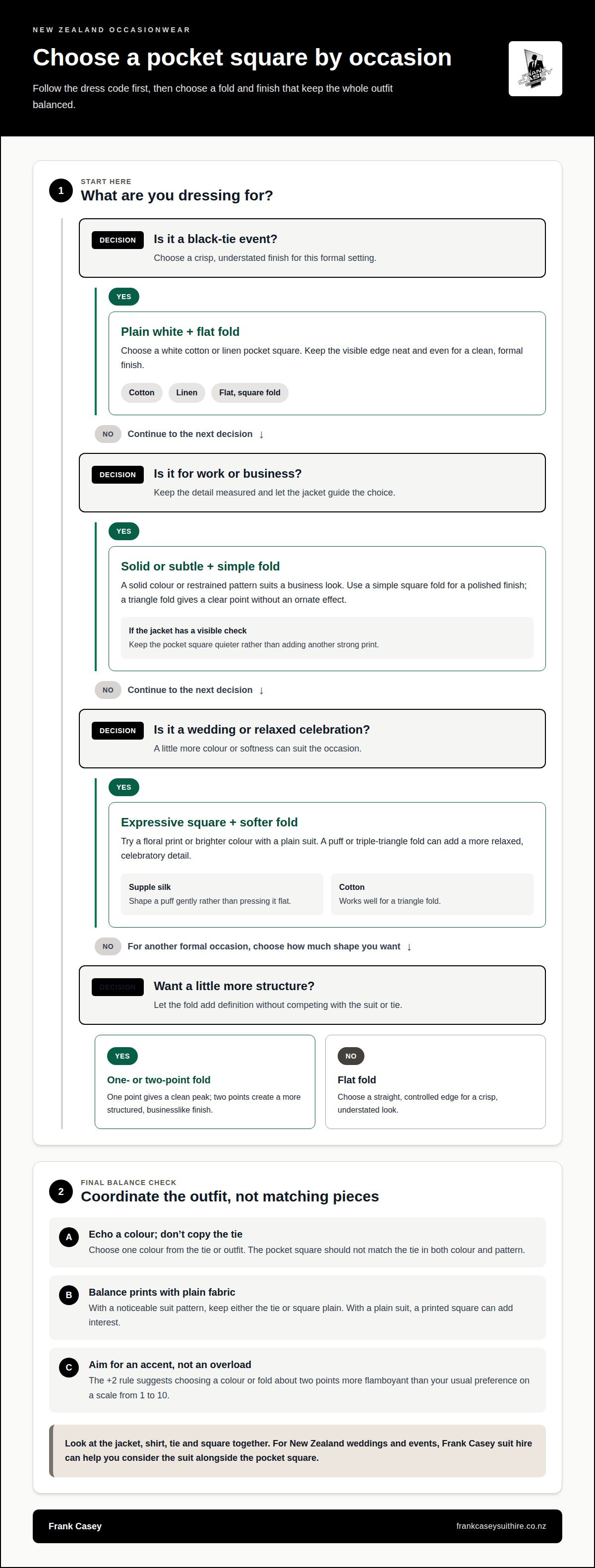
- Choose a colour with the +2 rule. On a scale from 1 to 10, choose colours or folds about two points more flamboyant than your usual preference. If you normally choose a restrained look at 3, try a more expressive option around 5. The aim is a noticeable accent, not a colour that overwhelms your jacket or draws attention away from the rest of your outfit.
- Start with the suit colour. Earthy tones traditionally complement tan, brown, olive or red suits. With a plain navy or grey suit, a coloured pocket square can add contrast without competing with a jacket pattern. A white square is a versatile choice for a clean finish, while a colour already present in your outfit can make the combination feel deliberate. Frank Casey suit hire offers a range of suit styles to consider when choosing your colours.
- Balance prints against plain fabric. If your suit has a check or another noticeable pattern, keep either the tie or pocket square plain. With a plain suit, a printed square can add visual interest. A paisley square, for example, can work with a simple suit, while a patterned jacket benefits from a quieter square that gives the eye room to rest.
- Coordinate a colour, not an exact match. A pocket square shouldn’t match the tie in both colour and pattern. Instead, choose one colour from a patterned square that echoes a main shade in the tie. For example, a square with a small blue detail can sit comfortably beside a blue tie, even when the square’s background and print differ.
- Let the occasion guide the expression. For a wedding or special event in New Zealand, a floral or delicate print can add a celebratory note, especially with a plain suit. For a more restrained business look, choose a solid colour or subtle pattern. A flat fold gives a crisp, understated edge; a bolder print can still suit the event if the jacket and tie remain balanced. Frank Casey’s suit hire services can help you find a suit for the occasion.
- Check the whole outfit before settling on the square. Look at the jacket, shirt, tie and square together rather than judging the pocket square alone. If the jacket and tie already have strong patterns, choose a plain square. If the suit is plain, a print can provide the focal detail. This final check helps avoid clashing colours and patterns.
Pocket square folds for different occasions
Choose the square and its fold together, using the dress code and setting as your guide. A neat shape suits formal occasions, while a softer or more expressive fold can work for weddings and relaxed events.
Choose the Pocket Square for the Occasion
Start with the event’s formality, then choose fabric, colour and pattern to suit it. For a conservative business setting, a plain square keeps the look measured. A wedding or relaxed celebration allows more colour and expressive folds. Keep the jacket and tie in mind so the square adds interest without competing with the rest of the outfit.
- For black tie, choose a plain white cotton or linen pocket square. Its crisp finish suits the formality of the occasion without adding a distracting print.
- For a wedding in New Zealand, consider a floral print or a brighter colour with a plain suit. A more expressive choice can feel celebratory, while the simpler suit keeps the outfit balanced.
- For work, choose a solid colour or restrained pattern. If the jacket already has a visible check, keep the square quieter rather than adding another strong print.
Select a Fold for the Occasion
Next, select a fold that suits the setting and the material. A flat fold creates a straight, controlled edge, while pointed folds add more structure. A puff fold looks softer and works well with supple silk. Avoid an elaborate shape for a conservative event if it competes with the suit or tie.
- Use a flat, square fold for black tie or a simple square fold for work. White cotton or linen suits the formal version; keep the visible edge neat and even.
- Choose a one- or two-point fold for formal occasions when you want a little more shape. One point gives a clean peak; two points create a more structured, businesslike finish.
- For weddings or relaxed events, try a puff or triple-triangle fold. With supple silk, shape a puff gently rather than pressing it flat. Cotton works well for a triangle fold.
- For a business event or casual blazer, a triangle fold offers a clear point without an ornate effect. Check that the fold sits securely and doesn’t overpower the jacket’s lapel or tie.
For a wedding outfit, the fold should work with the suit as a whole. Frank Casey suit hire for weddings can help bring the formal pieces together for the occasion.
Pocket squares for business, formal and casual outfits
Match the pocket square to the outfit’s formality, then choose a fold that suits the occasion. A polished business jacket, black-tie suit and blazer with chinos each call for a different level of detail. For New Zealand events, Frank Casey suit hire offers suit hire options to pair with a pocket square.
-
Identify the Outfit’s Formality
First decide whether you’re dressing for business, a formal event or a casual setting. A suit for a work meeting calls for a restrained finish; black tie calls for a crisp, traditional detail. A blazer with chinos allows more relaxed styling, especially when the rest of the outfit still looks considered.
Check the jacket, shirt and tie together. If they already feature strong patterns, avoid adding another busy detail. A pocket square is optional with a jacket, but its formality should suit the full outfit rather than stand apart.
-
Choose a Pocket Square for the Outfit
For formal dressing, choose a plain white pocket square for a clean, classic accent. Solid colours also work for business and can create a minimalist casual look. With a plain jacket, a printed square adds interest; with a patterned suit, a plainer choice helps keep the outfit balanced.
Consider the fabric alongside the jacket. Linen or cotton squares pair naturally with linen or cotton suits, while silk suits woollen jackets. For a conservative combination, choose a square only one or two shades lighter than the jacket. Avoid a print that repeats the suit’s pattern too closely.
-
Select a Fold to Match the Formality
Choose a flat, presidential or square fold when a formal outfit needs a straight, tidy edge. This understated shape suits black tie and business wear. A one-point fold adds a visible peak and works with formal attire or a casual blazer; a two-point fold has a more structured, businesslike appearance.
For relaxed styling, use a puff fold to create a softer profile, particularly with supple silk. A winged puff works best with a solid square or minimal print. Keep the fold proportionate to the jacket pocket, and make sure the fabric sits neatly rather than looking bulky.
Leave out the pocket square with a T-shirt-and-trainers outfit; the accessory works better with a jacket-led look. For a blazer and chinos, add one when the overall outfit leans formal, then keep the fold and colour in step with the occasion. If you’re hiring a suit through Frank Casey suit hire, choose a square that complements its style.
Pocket square size by fabric
Choose a pocket square size that suits its fabric and the depth of your jacket’s breast pocket. Silk, linen, cotton, wool and tweed fold differently, so the right dimensions help the square stay in place without adding bulk. Whether you’re dressing for an event in New Zealand or hiring a suit from Frank Casey, check how the square sits with your jacket.
- Size silk to keep it in the pocket. A silk pocket square should measure at least 40 cm by 40 cm, and a size between 40 cm and 45 cm helps reduce the chance of it slipping down. Silk is soft, so a smaller square can lack the structure needed to hold its position after folding. If you’re choosing a silk square, use its dimensions as a practical starting point before deciding on the fold.
- Choose linen or cotton for a crisp edge. Linen and cotton pocket squares can work in a range of sizes, depending on the fabric and the jacket pocket. Their more structured feel helps create a defined fold, including a triangle or flat shape. A 33 cm by 33 cm square can also work in linen because the fabric holds its form more readily than silk. For a clean finish, smooth creases before folding.
- Keep wool and tweed proportionate. Wool pocket squares are commonly sized between 30 cm and 33 cm. A 33 cm by 33 cm square can work in wool because the fabric is more structured than silk. Heavy tweed needs less fabric: choose around 30 cm or smaller to avoid a bulky fold. This matters especially in a slim breast pocket, where thick layers can push the jacket fabric out of shape.
- Match the fabric’s weight to the fold. Supple silk can form a soft puff, while cotton and linen hold sharper creases for triangle and flat folds. Wool and tweed have more body, so avoid forcing excess fabric into a narrow pocket. Aim for a stylish shape that sits neatly in the jacket, not a lump that pulls the pocket opening forward.
- Set the amount showing above the pocket. For a flat fold, leave 1-2 cm of fabric visible above the breast-pocket edge. More than 2 cm can look as though the square is escaping; too little can make the fold disappear. After placing it, check the height against the pocket from the front. Adjust the fold rather than pushing the fabric down until it bunches.
- Consider the jacket as well as the square. A blazer pocket’s depth and width affect how the fabric sits, so test the folded square in the pocket before settling on its shape. If it slips, a larger silk square can provide more fabric to anchor inside. If the pocket looks bulky, choose a smaller size in heavy tweed or reduce the layers in the fold. When hiring a suit from Frank Casey in New Zealand, you can check the pocket fit with your chosen square.
Rules for coordinating ties and pocket squares
Build a coordinated look by repeating a colour, not copying the tie. Treat the pocket square as a separate accessory, then balance its fabric and pattern against the jacket and tie.
- Choose the tie first. It usually takes up more visual space, so use it to guide the pocket square’s colour and scale. With a navy tie, for example, choose a square with a small navy detail rather than the same navy background and identical pattern. This creates a connection without making the two accessories look like a matching set.
- Repeat one colour, not the whole design. Pick a colour from a patterned tie and look for it in the square’s print. A burgundy tie with a small cream motif could sit beside a cream square with burgundy details. The shared colour links the pieces, while different patterns keep the combination from looking overly uniform.
- Balance pattern against pattern. If the tie has a bold print, use a plain square or one with a restrained design. If the tie is plain, a patterned square can add interest. For a checked jacket, keep either the tie or square plain. Avoid prints that are so similar in scale that they compete across the chest.
- Let the jacket complete the combination. Consider its colour, texture and pattern before settling on the square. A pocket square in a fabric similar to the jacket can help the outfit feel cohesive. For a woollen jacket, silk offers a different texture; for linen attire, linen or cotton can create a closer fabric connection.
- Adjust the contrast to suit the occasion. For a conservative business outfit, choose a square with a subtle colour echo and modest print. A wedding or special event allows more expressive colour, provided the tie and jacket remain balanced. For example, a plain tie can make a floral square the outfit’s main accent without creating competing focal points.
- Review the accessories together. Lay the tie and pocket square beside the jacket before dressing. Check that one detail leads, the other supports it, and their colours relate without matching exactly. If both prints draw attention, replace one with a solid colour. This simple final check keeps the classic look intentional rather than overly coordinated.
A versatile combination starts with the jacket and builds outward. For a formal outfit, explore formal suit hire with Frank Casey, then choose tie and pocket square details that suit the occasion.
Frank Casey
Frank Casey helps New Zealanders put together formal attire for weddings, business occasions, school balls and black-tie events. Choosing a pocket square is easier when the suit, tie and other details work as one outfit, so start with the occasion and level of formality. Frank Casey offers Wedding Suits, Business Suits, School Ball Suits and Black Tie Suits, giving you a clear foundation for deciding which colours, fabrics and folds suit your look. The guidance in this article can help you coordinate those details without making the pocket square an exact match for your tie. If you’re planning an outfit for a special event, contact Frank Casey to discuss your suit options.
Make your next outfit feel considered
Use pocket square rules and etiquette as a practical guide, not a reason to overthink every detail. For your next event, start with the suit and dress code, then choose accessories that feel balanced and comfortable to wear. A pocket square should support your style, not compete with it.
Frank Casey offers Black Tie Suits, Wedding Suits and Business Suits for different occasions. If you’re preparing for a formal event, style advice can help you bring the suit and finishing details together. Contact Frank Casey for style advice and take the next step towards an outfit that feels right for the occasion.
Frequently Asked Questions
Should your square match, complement or contrast with your outfit?
Choose a pocket square that complements the outfit, with enough contrast to remain visible. For example, a muted blue square can add definition to a navy jacket without matching it exactly. With a light grey suit, a deeper colour creates clearer contrast. Consider the shirt and jacket together: a square that stands out against both can look disconnected, while a shared colour detail ties the outfit together. When hiring a suit from Frank Casey in New Zealand, you can choose a pocket square that brings the look together.
What are the basic rules for wearing a pocket square?
Wear it in the jacket’s breast pocket as a decorative accessory, and keep the fold tidy. A pocket square isn’t a handkerchief, so carry a separate handkerchief for practical use. These pocket square rules and etiquette help keep the accessory looking intentional: check that it sits securely and doesn’t bulge beyond the pocket. For a polished finish, make sure the visible fabric looks even from the front.
How should a pocket square coordinate with a tie or shirt?
Let one colour connect the accessories, then vary their patterns or backgrounds. For instance, a small green detail in a pocket square can relate to a green tie, while a white shirt keeps the combination visually calm. Applying pocket square rules and etiquette means avoiding an exact tie-and-square match. If the shirt, tie and jacket already include several colours, repeat just one in the square.
Which pocket square folds are appropriate for different occasions?
Use a flat fold when you want a quiet, formal finish, such as for a black-tie dinner. A one-point fold adds a defined peak for a presentation or polished blazer outfit. A two-point fold has a structured appearance suited to business attire. For a wedding reception or relaxed celebration, a puff fold brings a softer shape. Keep the fold in proportion to the jacket and event.
How do you fold a pocket square step by step?
For a simple Presidential Fold, start with a clean, flat square and follow these steps:
- Lay the square flat, then fold it in half to form a rectangle.
- Fold one side inward to suit the width of the breast pocket.
- Fold the bottom edge upwards so it sits about 1 cm below the top edge.
- Place the folded square in the pocket, then straighten the exposed edge.
What pocket square colours and patterns work for formal events?
A plain white square is a classic option for formal attire, especially when you want a clean detail against a dark jacket. For a wedding, a restrained floral print can feel celebratory with a plain suit. If the jacket has a check or visible weave, choose a simpler square to avoid competing patterns. The tie can provide a colour cue, but the square’s design should remain distinct.
Should a pocket square match the tie exactly?
No. An identical tie-and-square combination can make the accessories look like a pre-matched set. Instead, repeat one colour while changing the pattern, scale or background. A navy tie with small dots, for example, can work with a square featuring navy in a larger floral design. This approach keeps the outfit coordinated while giving each accessory its own role.
When is a pocket square appropriate for business, weddings, and casual wear?
A pocket square suits business attire when the jacket is part of a polished outfit, such as a blazer worn with a collared shirt. At weddings, it can add a personal touch to a suit, particularly when the rest of the outfit stays balanced. For casual wear, use one with a blazer-and-chinos combination. It generally looks out of place with a T-shirt and trainers. For New Zealand occasions, Frank Casey suit hire can help you put together a suitable look.


