

A pocket square can be folded neatly and still look untidy if it sits poorly in the breast pocket. Choose a shape that suits your outfit, then adjust the fabric so it stays in place. These pocket square folding techniques show you how to create a relaxed puff or crisp peaks, with simple steps to help each sit smartly against your suit. If you’re arranging Frank Casey suit hire for an occasion, a well-folded pocket square adds a polished finishing touch.
It’s understandable to want an accessory that looks polished without feeling overdone. A puff offers a softer outline, while peaks create a more defined finish; neither needs to match your tie exactly. This guide walks you through both folds, explains how to position the square and shows how to make small adjustments if it shifts or looks bulky. Whether you’re dressing for a wedding, a school ball or a business occasion in New Zealand, you’ll have a straightforward way to finish your look with confidence.
Key Takeaways
- Choose a fold to suit the occasion and the look you want, from an easy puff to a sharper peak.
- Use the pocket square’s fabric and pattern to guide your choice of fold and create a polished finish.
- Learn how to shape triangular peaks and keep their lines looking crisp.
- Make small adjustments in the breast pocket so the square sits neatly instead of slipping or looking bulky.
- For a complete occasion outfit, explore Frank Casey suit hire for wedding, school ball, business or black tie events.
How do I fold a pocket square?
Choose a fold to suit your outfit, then shape the fabric to fit the breast pocket. These pocket square folding techniques take into account the occasion, material and finish you want. When choosing a suit for an occasion in New Zealand, Frank Casey suit hire can help you find a suitable style.
-
Match the fold to the occasion and outfit
Choose a square fold for restrained businesswear or a triangular fold for a formal event. For a more relaxed look, try a double triangular fold, which creates a sporty yet elegant impression and holds its shape longer than simpler folds. Check the lapel before choosing a pointed shape: its tips should sit neatly beside it, not compete with it. A crown fold suits formal or festive dressing, though it takes practice to shape evenly.
-
Consider fabric and size when choosing a fold
Pick a fold that works with the fabric’s weight and feel. Fine, smooth silk suits a triangular fold, while cotton, wool and linen hold a flat fold’s clean edge. Thin silk gives a puff a natural look. Check the folded square against the pocket opening. If it’s too wide for a square fold, fold it three times to make a narrower shape.
- If you’re new to folding, start with a simple option. The square fold, also called the Presidential fold, creates a straight edge and suits business outfits. Fold the square into a rectangle, then adjust its width to fit the pocket. A white square, with or without coloured edging, is a useful choice if you’re unsure about patterns or colour.
- Make a triangular fold by folding the square in half to form a triangle. Fold both corners inward, then place it in your pocket with the point visible. This option suits formal and festive occasions and can also complement a classic business outfit. Smooth fabric helps the point stay defined instead of forming a soft ridge.
- Let the pattern guide your choice. A patterned square works particularly well in a puff, where gathered fabric creates a softer outline. Avoid matching the square too closely to your tie, and don’t choose the same fabric for both. Instead, select a colour that complements the outfit and adds contrast.
- Try more detailed shapes once you’re comfortable arranging the fabric. Rose and Stairs folds are more challenging. A crown fold also takes practice, so balance its visible points before placing it in the pocket. Practising pocket square folding techniques with a simpler fold first helps you handle the fabric more confidently.
- Check the finished fold against your suit before settling on a shape. A dark or coloured square can contrast with a light suit, while white keeps the look understated. Keep the bulk manageable: thick fabric can bunch in a small pocket, while lighter material is easier to shape. These pocket square folding techniques help you choose a finish that suits both the square and your outfit. Frank Casey suit hire offers another option when selecting a suit for the occasion.
Puff fold
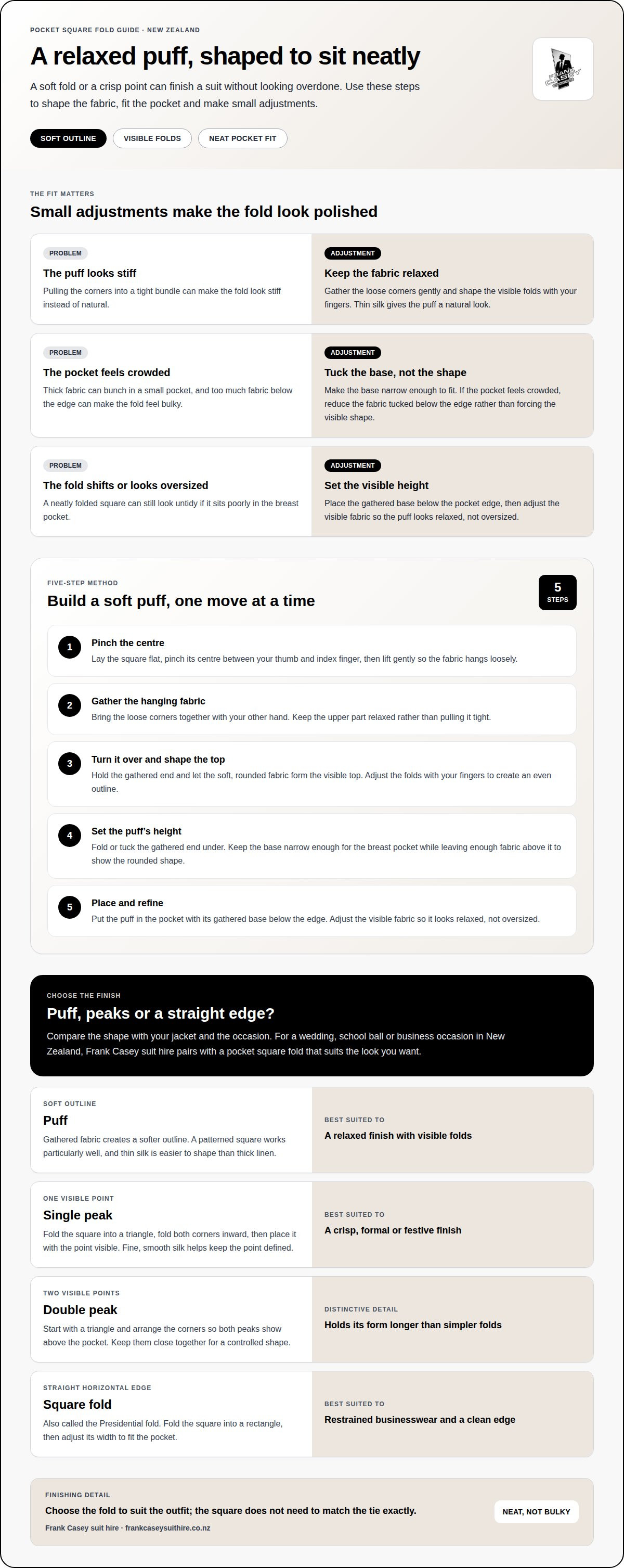
Use this five-step method to shape a soft puff with visible folds rather than sharp points. A thin silk square works particularly well, and a patterned design makes the gathered fabric stand out.
- Lay the pocket square flat, then pinch its centre between your thumb and index finger. Lift it gently so the fabric hangs loosely; don’t pull the corners into a tight bundle.
- Gather the hanging fabric with your other hand, bringing the loose corners together. Keep the upper part relaxed, since tight folds can make the puff look stiff rather than natural.
- Turn the square over and hold the gathered end. Let the soft, rounded fabric form the visible top, then adjust the folds with your fingers to create an even outline.
- Fold or tuck the gathered end under to set the puff’s height. Make the base narrow enough to fit the breast pocket, but leave enough fabric above it to show the rounded shape.
- Place the puff in the pocket with its gathered base below the edge. Adjust the visible fabric so it looks relaxed, not oversized. A thin silk square is easier to shape than thick linen.
- For a defined point, try a triangular, or one-corner, fold. Fold the square in half to form a triangle, then fold both corners inward. Position the point neatly above the pocket, with the fabric lying smoothly beneath it. Fine, smooth silk helps keep the point crisp.
- Choose a double triangular, or two-corner, fold when you want two visible peaks. Start with a triangle, then arrange the corners so both points show above the pocket. Keep the peaks close together for a controlled shape. This fold holds its form longer than simpler folds.
- Make a square, or Presidential, fold for a clean horizontal edge. Fold the square into a rectangle, then adjust its width to fit the pocket. White fabric keeps this business-ready style understated, while cotton, wool or linen can hold the flat shape well.
- Compare the four results against your jacket, including one from Frank Casey suit hire, before choosing one. A puff softens a patterned square, while triangular folds add visible points. The square fold gives a straighter finish. If the pocket feels crowded, reduce the fabric tucked below the edge rather than forcing the visible shape.
Single, double, triple and four-peak folds
- Choose how many points to show before folding. A single peak gives a clean, restrained outline; extra peaks create a more detailed finish. Three Peaks, Winged Peak and Angled Peaks folds suit a precise look. Start with a smooth square and keep its edges aligned so each point stays clear.
- Make a single peak by folding the pocket square in half diagonally. Fold both corners inward to narrow the base, then place the triangle in your breast pocket. Leave one point visible. Keep it parallel to the lapel for a tidy line, and adjust the base if the square sits too high.
- Shape a double peak by positioning two corners side by side above the pocket edge. Start with a diagonal fold, then bring one corner slightly across the other rather than stacking them exactly. This creates two distinct tips. Keep them close in height for a balanced finish, or vary them slightly for a more relaxed effect.
- Build a triple-point fold by arranging three tips in a gradual fan. Fold the square diagonally, then angle the fabric so another corner sits beside the first two. Tuck the lower material inward to reduce bulk. The Three Peaks fold gives a crisp, structured result, but uneven points can make it look crowded.
- Create four peaks by exposing a fourth corner behind the three front points. Make small adjustments, shifting each corner until all four tips show, then fold excess fabric into a compact base. This layered shape needs enough pocket depth to hold its bulk. If the peaks collapse together, reduce the number of visible layers.
- Choose silk with a fine, smooth finish for sharp points. Its surface helps triangular edges sit neatly, while thick fabric can make layered folds bulky. Cotton, wool and linen suit flat folds better, so avoid forcing them into a dense four-point arrangement.
- Check the fold against your jacket before settling on the final shape. A three-point fold can extend over the top of the lapel, so keep the tips deliberate rather than sprawling. For a formal outfit, align the points carefully; Frank Casey suit hire can help you choose a suit that complements the fold. For a less structured look, a slight difference in height can soften the result.
- Place the folded base in the breast pocket, then adjust each point from the outside. Gently lift a tip if it disappears, or tuck fabric lower if the arrangement looks too tall. Angled Peaks uses slanted tips for definition, while Winged Peak offers another precise option to practise.
Adjusting a pocket square in a breast pocket
Once folded, place the square in your jacket’s front breast pocket for a decorative finish. Adjust its height, width and visible shape until it sits neatly. For a polished look with your suit, Frank Casey suit hire can help you complete the outfit.
- Set the fold before inserting it. A puff, flat edge or pointed fold each needs a different visible outline. Hold the shape at its base so the exposed fabric doesn’t unravel as you place it in the pocket.
- Slide the folded base into the pocket gradually. Keep the visible section above the pocket edge, then release the fabric. Pushing the whole square down at once can flatten a puff or hide the point of a triangular fold.
- Check how the square fills the pocket. It should occupy the pocket’s depth rather than slip to the bottom. If it sinks, lift it out and refold the hidden section to make the base broader.
- Adjust the height from the top edge. For a square fold, keep the visible band straight and level. For a pointed fold, leave the tip showing and align it parallel to the lapel. A puff should look softly rounded, not squeezed flat.
- Correct the width by easing the fabric towards either side. If the square bunches in the centre, remove it and narrow the folded base. If a flat fold looks too short, widen the rectangle before reinserting it.
- Use your fingers to separate layered peaks individually. A double-point fold should show two distinct tips; a three-peak fold needs each point visible. Gently adjust one tip rather than tugging the whole square and disturbing the other folds.
- Check for bulk around the pocket opening. Thick layers can make the jacket front sit awkwardly, while excess fabric may disappear inside. Refold the lower portion to reduce bulk, keeping enough material inside to hold the visible shape.
- Look at the square while standing naturally, then make one final adjustment. A puff that looks balanced up close may appear too tall against the jacket. Smooth stray edges, centre a straight fold or reposition a pointed tip beside the lapel.
- Recheck the pocket after moving your arms or fastening the jacket. If the square shifts, lift it and reshape the base rather than repeatedly pulling the exposed fabric. A well-filled pocket helps the fold stay in position and keeps the finish tidy.
What are the most popular pocket square folds?
Choose a fold for its shape, setting and the finish you want. Square, puff and pointed folds each offer a distinct look, from understated businesswear to sharper formal styling in New Zealand.
- Choose the square fold, also called the Presidential fold, for a simple, elegant finish. Fold the square into a rectangle and show a narrow, straight edge above the pocket. It suits business outfits and works especially well with a plain white square. Cotton, wool and linen hold its flat shape neatly.
- Try the puff fold for a softer outline, particularly with a patterned square. Pinch the fabric’s centre, lift it so the material hangs loosely, then gather the corners. Tuck the gathered end into the pocket and adjust the top. Thin silk helps the puff look natural rather than stiff.
- Select a single-point fold when you want a defined peak without several layers. Fold the square diagonally into a triangle, then fold both corners inward. Position the point above the pocket and keep it parallel to the lapel. Fine, smooth silk helps the triangular shape stay crisp.
- Use a double triangular fold to show two distinct points. Arrange the corners beside one another, then tuck the lower fabric into the pocket. This fold creates a sporty yet elegant impression and holds its shape longer than simpler folds. It can suit a relaxed outfit or add detail to classic tailoring.
- Choose the crown fold for formal or festive dressing when you want several tips. Shape the corners into a crown-like outline, then tuck the base away. This fold takes practice, so keep the points balanced and avoid bunching the fabric beneath them.
- Explore Three Peaks, Winged Peak or Angled Peaks folds for a more precise finish. These styles use defined points rather than a soft puff. Align the tips carefully and keep the layers compact. A three-point fold can extend over the lapel, so check that its shape complements the jacket. Frank Casey suit hire can help complete the look.
- Reserve Rose and Stairs folds for a more challenging finish. Their detailed shapes need careful handling, so practise before wearing them to an occasion. For an easy starting point, choose the Classic or Presidential fold, then try more elaborate peaks as you gain confidence.
- Match the fold to the square and outfit, not just the occasion. A patterned square suits a puff, while a plain white one gives the Presidential fold a clean finish. Avoid matching the square too closely to your tie. For a complete formal look in New Zealand, explore formal suit hire options from Frank Casey suit hire.
Frank Casey
Frank Casey helps you put together a polished outfit for a formal occasion, with suits for weddings, school balls, business and black-tie events. Once you’ve chosen a pocket square fold, consider how its colour and shape work with your suit’s lapel and overall look. Suit hire from Frank Casey is a practical next step when organising an event outfit.
Whether you’re planning weddingwear, businesswear or black tie, Frank Casey suit hire lets you bring your suit and finishing details together. Explore formalwear for your occasion with Frank Casey.
Make the finishing touch your own
Give yourself time to settle on a finish before your next event in New Zealand. Practising pocket square folding techniques with the jacket you plan to wear lets you see how the fold sits with its lapel and pocket. Try the same square in a different shape, then choose the one that feels most natural with your outfit. A look in a full-length mirror helps you judge the overall effect, not just the fabric above the pocket.
For a wedding, business occasion or black-tie event, the pocket square is one small part of dressing with care. Next, choose a suit that suits the occasion and gives your finishing details a considered backdrop. Frank Casey suit hire can help you find formalwear for your plans.
Contact Frank Casey suit hire for advice and take the next step towards a look that feels polished and personal.
Frequently Asked Questions
How do you fold a presidential pocket square?
Fold the square into a neat rectangle, then set it in the pocket with one straight edge visible. For a precise finish, align the top edge with the pocket opening and smooth any wrinkles before inserting it. If the rectangle looks too wide, fold the sides inward again. A plain white square gives this restrained fold a classic look with a dark business suit.
How do you fold a one-point pocket square?
Fold the square diagonally to make a triangle, then bring the corners towards the centre to create a narrow base. Insert it with one tip showing above the pocket. Keep the point centred for balance, or position it slightly towards the lapel for a softer line. Check the jacket while wearing it, as the pocket angle can affect how the point appears.
How do you fold a two-point or three-point pocket square?
Begin with a diagonal fold, then arrange the corners so two or three tips sit visibly beside one another. For two points, overlap the corners slightly; for three, fan another corner into view. Tuck the lower fabric inside the pocket without flattening the peaks. Adjusting the spacing can make the points distinct rather than one uneven cluster.
How do you fold a puff pocket square?
Pinch the square’s centre and lift it, allowing the fabric to hang. Gather the loose corners, turn the square over and tuck the gathered end into the pocket. Shape the exposed fabric into a rounded puff with your fingers. If the outline looks too tight, loosen the folds before setting it in place. A patterned silk square can make the soft shape more noticeable.
How do you fold a casual or winged puff pocket square?
For a casual puff, pinch and lift the centre, gather the fabric loosely, then tuck the base into the pocket without smoothing every crease. For a winged puff, use silk or cotton and arrange the corners so folded edges frame the centre. Keep the wings visible but not overly spread. This creates a more structured outline while retaining the puff’s relaxed texture.
Which pocket square folds suit formal, business, and casual outfits?
A Presidential fold suits business outfits, while a pointed fold works for formal occasions and can complement classic businesswear. For a formal outfit in New Zealand, Frank Casey suit hire can help you choose a suit and pocket square combination for the occasion. A crown fold is another option for formal or festive dressing. For a more relaxed outfit, choose a double triangular fold or loose puff. Let the suit’s formality guide your choice, then consider whether your tie and lapel already create strong visual detail.
How do you keep a pocket square fold from slipping in the pocket?
Make the folded base broad enough to fill the pocket instead of dropping towards the bottom. If the square sinks, remove it and fold more fabric beneath the visible section. Avoid leaving a narrow, loose base under a heavy puff or layered peaks. Once inserted, press the fabric gently against the pocket lining and recheck the shape after moving your arms.
Should a pocket square match or contrast with a tie?
Choose a pocket square that complements the tie and outfit without matching them too closely. For example, a burgundy tie can work with a patterned square that includes a small burgundy detail, rather than one in identical fabric and colour. A simple white square is a useful choice if you’re unsure. Consider the suit colour too, since contrast helps the square stand out against the jacket.


