

A black tie can work with a navy suit, but the combination reads as formal and sombre rather than an easy everyday pairing. A black knit tie can feel more relaxed for an evening event or a colder setting. In New Zealand, Frank Casey suit hire is one option when choosing a suit and tie pairing; consider the occasion, then balance colour, width and fabric.
It’s easy to second-guess a tie. Its colour needs to work with your shirt and suit, while its width and texture should look intentional. A few simple principles make the decision much easier.
This guide explains how to pair tie colours and patterns, choose a width that works with your suit’s lapels, and match materials to the suit fabric and occasion. You’ll also find practical advice on wearing a black tie with navy, so you can put together a polished outfit with confidence.
Key Takeaways
- When combining patterns, keep the suit, shirt and tie from competing: limit the outfit to two patterned pieces.
- A black tie can pair with a navy suit for a formal, sombre look; other colours can shift the outfit’s tone.
- Match tie width to your suit’s lapels so the proportions look balanced.
- Choose tie fabric to complement both the suit’s texture and the occasion’s formality.
- A darker tie can add definition to a lighter suit, while a similar colour in a different shade offers a subtler pairing.
How to Match Your Tie With a Suit?
Start with the occasion, then coordinate the suit, shirt and tie as one outfit. For a formal event in New Zealand, use the dress code as your guide. Frank Casey suit hire can help you choose a suit for the occasion. In a more casual setting, you have greater flexibility with colour and pattern.
-
Choose a tie style
Choose a tie style to suit the event before settling on its colour. A black silk bow tie fits a black-tie dress code, while a necktie works for formal and semi-formal occasions. For daytime or semi-formal events, a patterned or pastel bow tie can feel less traditional. Frank Casey suit hire is another option for getting formalwear ready for an event.
For a modern bow tie, consider a matte finish or textured fabric such as cotton, tweed or denim. A plain silk or satin tie gives a crisp, elegant effect, while a subtle woven texture adds interest without a bold print. This helps you choose a tie for your suit without relying on colour alone.
-
Pair patterned ties with patterned suits
Pair a patterned suit with a solid-colour tie for a simple, balanced look. Choose a tie colour that’s analogous or complementary to a colour in the suit, so the pieces feel connected. For example, a subtle blue tie can pick up a blue detail in a checked suit without repeating the full pattern.
If you prefer a patterned tie, choose a pattern at a different scale from the suit. A small, discreet tie motif can sit comfortably with a larger suit check, while stripes in similar sizes may compete. Keep the tie pattern subtle, and avoid combining styles such as paisley and strong checks.
-
Mix suit, shirt and tie patterns
Count the patterned pieces across your suit, shirt and tie, and limit them to two. For instance, wear a checked suit and plain shirt with a patterned tie, or pair a solid suit with a striped shirt and a subtle patterned tie. The plain piece gives the eye a break.
Keep patterns compatible, and vary their scale when wearing two together. A fine shirt stripe can work with a broader suit check, while a small tie pattern adds detail. Polka-dot and striped ties generally use no more than three colours, making them easier to coordinate with the rest of the outfit.
-
Avoid unsuitable tie and suit combinations
Avoid wearing a loud patterned tie with a strongly patterned suit and shirt. Three competing patterns can make an outfit look busy, so use a plain shirt or solid tie to create a clearer focal point. Also avoid mixing noticeably different styles, such as paisley and bold stripes.
There’s no single amount to spend on a quality tie in New Zealand. Set your budget according to the material, finish and how often you expect to wear it. A versatile plain tie may suit regular use, while a distinctive pattern may be better for occasional events. For a formal occasion, Frank Casey suit hire can help you put together a suitable outfit.
Don’t choose a tie without considering the event’s dress code. A black silk bow tie suits black-tie attire, while a black tie with a black suit is appropriate for funerals and other sombre occasions. For a less sombre outfit, choose a colour or pattern that complements the suit instead.
Can I wear a black tie with a navy suit?
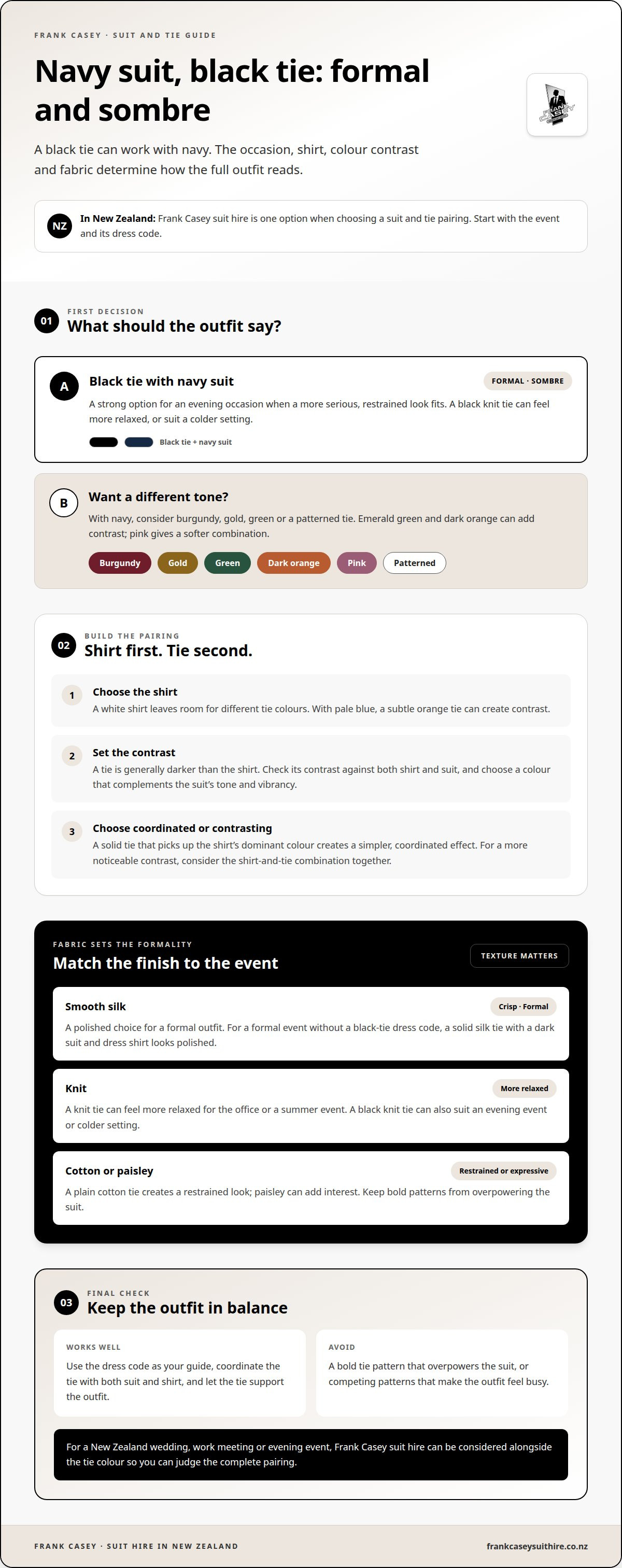
Yes. A black tie with a navy suit creates a formal, sombre combination, especially for evening occasions. Choose the shirt and tie together, then consider how the colour, fabric and event dress code affect the overall contrast.
-
Choose a tie colour to complement the suit and shirt
Start with the shirt, then select a tie that complements both it and the suit. A white shirt gives you room to choose different tie colours; with a pale blue shirt, a subtle orange tie creates contrast. A solid tie that picks up the shirt’s dominant colour gives a simpler, coordinated effect.
With a navy suit, consider a burgundy, gold, green or patterned tie. Emerald green and dark orange can also provide contrast, while pink offers a softer combination. A black tie is another option, but it gives the navy suit a more sombre appearance. A black knit tie can suit an evening event or colder setting.
With a black suit, silver can add a formal accent for a wedding or anniversary, while a solid black tie suits funerals and sombre occasions. Brown suits work with earth tones such as green, mustard, rust and deep red. For charcoal, try cool colours such as blue, grey or pastel shades. A blue suit can take a navy tie for a tonal look or a contrasting colour for more definition.
-
Balance contrast, fabric and formality
Check the contrast between your shirt and tie, as well as between your tie and suit. A tie is generally darker than the shirt and should complement the suit’s tone and vibrancy. For a formal event without a black-tie dress code, a solid silk tie with a dark suit and dress shirt is a polished choice.
Match the tie’s finish to the occasion and the suit’s character. Smooth silk works well with a crisp, formal outfit; a knit tie feels more relaxed for the office or a summer event. Paisley can add interest, while a plain cotton tie creates a restrained look. Keep bold patterns from overpowering the suit, and use the tie to support the outfit rather than compete with it.
For a considered outfit, explore Frank Casey suit hire options alongside the tie colour you have in mind. Viewing the suit and accessory as a combination helps you judge whether the contrast feels balanced for a New Zealand wedding, work meeting or evening event.
What tie width works with my suit?
Choose a tie width by comparing it with your jacket lapels, then consider your frame and knot. Balanced proportions keep the tie from dominating the outfit or disappearing into it.
-
Match tie width to suit proportions
Start by looking at the jacket’s lapels and overall shape. A tie in proportion with the lapels creates a classic, sophisticated outline; one that is much narrower or wider can make the outfit feel unbalanced. Check the tie while wearing the jacket rather than judging it on its own.
Consider the whole front of the suit, including the shirt collar and jacket fastening. A broad lapel usually looks more harmonious with a fuller tie, while a narrow lapel tends to suit a slimmer blade. Keep the tie visually centred between the collar points, and make sure its width doesn’t overwhelm the shirt opening.
-
Compare tie width with lapel width
Use the lapel’s widest point as a practical guide. With a suit that has 3-inch lapels, choose a tie between 2.75 and 3.25 inches wide. This keeps the tie close to the jacket’s visual scale without requiring an exact match.
Check the proportions again with the jacket buttoned and the tie knotted. The knot changes how much width shows at the collar, while the blade creates the main line down the shirt. A very small knot can make a broad tie look unbalanced; a fuller knot can give a narrower tie more presence.
For a spread collar, a Windsor knot creates a fuller, formal shape. A small knot can work better with a tight collar. Choose the knot and tie together, so neither crowds the collar nor leaves too much empty space.
-
Choose a width to suit your frame
Consider your proportions as well as the suit. A broader frame can carry a wider tie more naturally, while a slimmer frame may suit a narrower blade. Use these as visual guides, then compare the tie with the jacket’s lapels and collar to balance the whole outfit.
Check tie length as well as width. An average men’s tie is around 57-60 inches long, while ties up to 63 inches are available for taller people or larger frames. Taller wearers may need more length; a shorter tie can suit a shorter torso. After tying it, aim for the tip to touch the top of the belt buckle.
A fuller knot uses more fabric, so adjust the starting position before tying. Keep the narrow blade behind the front blade, then check the finished length and width with the jacket on. This helps the tie sit neatly with the shirt collar and keeps the suit’s proportions looking intentional.
Choosing tie materials to suit the formality and fabric of a suit
Choose a tie fabric with the suit’s texture, the occasion and the season in mind. Silk works across seasons; cotton and linen suit spring and summer, while wool and cashmere suit autumn and winter. For New Zealand occasions, Frank Casey suit hire can help you choose a suit to suit the season and formality.
-
Match tie texture and formality to the suit
Match the tie’s surface to the suit fabric and the event’s formality. A smooth, plain tie creates a crisp contrast with textured tweed, while a knit tie complements textured suits such as tweed, hopsack or flannel. For business wear, a regimental silk tie offers a considered option without adding unnecessary texture.
For a casual summer event, a knitted tie gives a suit a more relaxed feel; for a formal occasion, choose a smoother finish. Keep textures complementary rather than identical: a visibly textured tie with a heavily textured suit can make the outfit feel crowded. Consider the shirt and any pocket square as part of the same combination.
For example, pair a plain tie with a tweed jacket when the suit already has strong texture. With a smooth business suit, a subtly textured or patterned tie can add interest without changing the outfit’s level of formality. If you’re hiring a suit for a New Zealand event, Frank Casey suit hire can help you choose a suitable style.
-
Wear silk ties for formal events
Choose a silk tie for a formal event or a polished finish with a dark suit and dress shirt. Silk suits all seasons and works for festive occasions as well as formal gatherings. A plain silk tie keeps the effect crisp; a subtle pattern adds detail while maintaining a refined look.
For a black-tie dress code, wear a black silk bow tie rather than treating a long silk tie as a substitute. At a wedding or other formal event without a black-tie requirement, a silk necktie can complement a dark suit. Let the event guide the style: a neat, understated finish suits formal settings better than a bold, casual texture.
Keep the rest of your accessories in proportion. A pocket square can echo a colour from the tie without duplicating its pattern. This coordinates a formal outfit without making every detail match exactly.
-
Select tie fabrics for seasons and occasions
Choose cotton or linen ties for spring and summer outfits, especially with linen or cotton suits. A linen tie can look out of place beside a wool suit, so keep the tie and suit fabrics in the same seasonal register. For autumn and winter, wool or cashmere ties pair naturally with heavier seasonal clothing.
Silk remains a versatile choice when the season or event calls for a clean, elegant finish. A wool tie can bring a softer, textured effect to a winter suit, while cotton offers a less formal option for warm-weather occasions. Use the suit’s weight and surface as your guide, then check that the tie suits the event.
For a polished New Zealand business outfit, consider a silk tie with a smooth suit. For a summer celebration, cotton or linen can make a lighter pairing; for a winter wedding, wool or cashmere brings a more seasonal finish. Frank Casey suit hire can help with a suitable outfit for New Zealand celebrations in any season.
Choosing ties darker or lighter than the suit
Use the suit’s shade as a starting point, then choose a tie that adds definition or creates a tonal look. A darker tie is a useful guide, especially with a light-coloured suit, but it isn’t a strict rule.
- With a light suit, choose a darker tie to give the outfit definition. A dark tie can also pick up details such as buttons or shoes. If an exact colour match is difficult, stay within a similar colour family but choose a different shade, such as a deeper blue with a pale blue suit.
With a dark suit, a lighter or more vivid tie can create contrast without clashing. Compare the tie with both the suit and shirt in the same light, since a colour that works beside the jacket may compete with the shirt. A tone-on-tone pairing also works when the shades remain distinct.
- A navy tie is a versatile option: it works with most suits and can create a coordinated, tonal effect. With a grey suit, navy adds colour while keeping the outfit restrained; with a blue suit, choose a noticeably different shade so the tie doesn’t disappear against the jacket.
For business meetings or job interviews, olive green and navy blue are restrained choices. A subtle striped tie can add detail to a plain suit, while a single-colour tie keeps a patterned shirt from looking too busy. Let the occasion guide how much contrast you introduce.
- Choose a knitted tie for a more relaxed finish at the office or a summer event. Its texture makes the outfit less formal, so pair it with a suit that suits that mood. A darker knitted tie can still contrast with a lighter jacket.
For a wedding or a day at the races, consider a tweed tie to bring vintage character to the outfit. Keep its colour connected to the suit, shirt or another detail, rather than matching every piece exactly. A tweed tie works best when its texture sits naturally beside the suit.
- Use a paisley tie to introduce pattern and colour, then pick a restrained accent from the suit lining. Treat the lining as a subtle reference, not a colour you must copy precisely. For example, a muted green detail in the lining can complement a paisley tie with a similar green accent.
Check the whole outfit before settling on a matching detail. If the suit, shirt or tie already has a strong pattern, keep the other elements quieter. For a wedding outfit, explore Frank Casey suit hire options and consider how the tie’s shade and texture will sit with the suit.
Frank Casey
Frank Casey offers suit hire and purchases across New Zealand to help you bring your suit choice and tie pairing together for an event. Its Black Tie Suits, Wedding Suits and Business Suits suit different occasions. Choose the suit for the event and your preferred look, then coordinate the tie to complete the outfit.
For wedding, work or formal attire, Frank Casey suit hire offers a practical starting point for putting together a considered look. Contact Frank Casey to discuss your suit options and the tie pairing you have in mind.
Make the final choice with confidence
Before your next event, think about the impression you want your outfit to make. A tie can feel understated, expressive or traditional, so let the occasion and your own style guide the final choice. The best way to choose a tie for your suit is to see the complete outfit together, rather than judging each piece in isolation.
Take your suit and shirt choice as the starting point for a considered look. Then bring your preferred tie colours or patterns into the conversation, especially if you’re dressing for a wedding, work occasion or formal evening. A second opinion can help you settle on a combination that feels like you and suits the event.
For tailored guidance on putting your look together, contact Frank Casey for style advice. You’re ready to make a choice that feels polished and personal.
Frequently Asked Questions
How Long Should a Tie Be?
A tie should finish with its tip touching the top of your belt buckle. Most men’s ties are around 57-60 inches long, while ties up to 63 inches suit taller wearers or larger frames. The knot affects the finished length, so start with extra blade length if you’re tying a fuller knot. Adjust before tightening, then check the tip with your jacket on. When hiring a suit from Frank Casey suit hire in New Zealand, check the tie length with the jacket for a polished fit.
How many ties do I actually need?
For a working wardrobe of three suits, around eight to ten ties gives you options for different outfits and occasions. Build variety gradually: include versatile plain colours for business, a few patterns for interest, and a more formal choice for special events. Choose ties that coordinate with more than one shirt or suit, rather than buying one for a single combination.
Should Your Tie Be Darker or Lighter Than Your Suit?
A darker tie often gives a light-coloured suit more definition, but it’s a flexible guideline, not a strict rule. With a dark suit, a lighter or brighter tie can create contrast. For a tonal effect, choose a similar colour in a different shade, such as a deeper blue with a pale blue suit. Judge the tie against both your shirt and jacket.
Should my tie match my pocket square?
No, your pocket square doesn’t need to match your tie exactly. Instead, let it pick up a subtle colour or pattern from the tie, shirt or suit. For example, pair a burgundy tie with a white pocket square that has a small burgundy detail. Matching the fabric and print precisely can make accessories look overly uniform, so vary their pattern or scale.
What Are the 3 Tie Size Rules for Suits?
Use three checks: match tie width to the lapels, finish the tie at the top of your belt buckle, and keep the narrow blade behind the front blade. For 3-inch lapels, a tie between 2.75 and 3.25 inches wide is a balanced choice. Check the finished knot with your shirt collar and jacket on, as both affect the tie’s proportions.
Which ties are best for black or white tie events?
For a black-tie dress code, wear a black silk bow tie. Traditional white-tie attire calls for a white bow tie, worn with a black tailcoat, white waistcoat and white wing-collar dress shirt. These dress codes are distinct, so follow the event invitation rather than treating a black necktie as equivalent to black tie. For other formal events, a silk necktie may be appropriate. If you’re preparing for a formal event in New Zealand, Frank Casey suit hire can help you choose a suit to suit the dress code.
How should a tie colour coordinate with a suit and shirt?
Choose a tie that relates to both the suit and shirt, rather than selecting its colour in isolation. A white shirt gives you broad colour options, while a pale blue shirt can pair with a subtle orange tie. With a navy suit, burgundy, gold or green can introduce contrast. For business meetings or interviews, olive green or navy offers a more restrained combination.
What tie patterns work best with plain or patterned suits and shirts?
With a plain suit, a subtle patterned tie can add visual interest. If the suit or shirt already has a pattern, use a solid tie or one with a different pattern scale. Keep no more than two of the suit, shirt and tie patterned, and avoid mixing unrelated styles, such as bold checks and paisley. This keeps each pattern distinct without overwhelming the outfit.


