

Your invitation says “lounge suit”, and you’re wondering whether to wear a business suit or something closer to black tie. The lounge suit dress code NZ events use calls for a polished, occasion-ready outfit, but not a dinner suit.
For men, the usual choice is a matching suit with a shirt and tie. Women can opt for a cocktail dress or another smart outfit. The event, invitation and time of day help determine how formal to make the details. Get those right and you’ll look well-presented without feeling underdressed or overly formal.
This guide explains what lounge suit means in New Zealand and how to choose your suit, shirt, tie, shoes and accessories. It compares lounge suit with black tie and business attire, and offers practical ways to use the invitation and occasion as cues. You’ll also learn when hiring can be a useful alternative to buying a whole outfit.
Key Takeaways
- Use the lounge suit dress code NZ as your starting point, then let the event and invitation guide the level of formality.
- Build a coordinated look with a well-fitting suit, neat shirt, considered tie and polished shoes.
- Reread the invitation before choosing your outfit, especially for a wedding where the couple may share colour or styling guidance.
- Check that your jacket feels comfortable, your trousers sit well and you can move easily. A professional fitting can help when you hire.
What does the lounge suit dress code mean in New Zealand?
A lounge suit is a matching jacket and trousers worn with a shirt. On an invitation, “lounge suit” means daytime or general formalwear, not clothes for relaxing at home. In New Zealand, it usually signals a tailored, polished outfit that is more formal than smart casual but doesn’t call for eveningwear.
The term has a history: the origin of the lounge suit is linked to the development of the modern suit. Today, the dress code gives you a clear starting point. The event and invitation help you decide how formal to make the rest of your outfit.
A lounge suit is a matching suit with a shirt and tie; black tie calls for a dinner suit and bow tie. Use that distinction alongside the event context, as invitations and conventions can vary.
What is included in a lounge suit outfit?
The matching jacket and trousers are the foundation. A collared shirt, an appropriate tie and polished shoes complete the usual outfit. A pocket square or cufflinks can add a considered finishing touch, but neither replaces the tailored suit.
Keep the pieces neat and in proportion. If your tie has a bold pattern, for example, a plain shirt can help the outfit feel balanced. Choose details that suit the occasion rather than competing for attention. The aim is to look put-together, not dressed for a different dress code.
What does lounge suit mean on a New Zealand invitation?
Treat the stated dress code as your starting point, then read the rest of the invitation for clues. Consider the event type, time and venue. A daytime function may call for a different feel from an evening celebration, even if both specify lounge suit. The setting can help you decide whether to keep the outfit classic or make it more celebratory.
There isn’t one outfit formula for every New Zealand event. A wedding, work function and formal celebration can each interpret the phrase a little differently. Follow any guidance about colours or the wedding party. In practice, the lounge suit dress code NZ means starting with a matching suit and adjusting the details to fit the occasion. Don’t step up to black tie unless the invitation says so.
How to put together a lounge suit: jacket, shirt, tie and shoes
Start with a well-fitting matching suit. For a practical lounge suit dress code NZ outfit, choose pieces that work together and feel comfortable throughout the event. Extra details won’t improve the look if the suit is ill-fitting or the outfit feels uncomfortable.
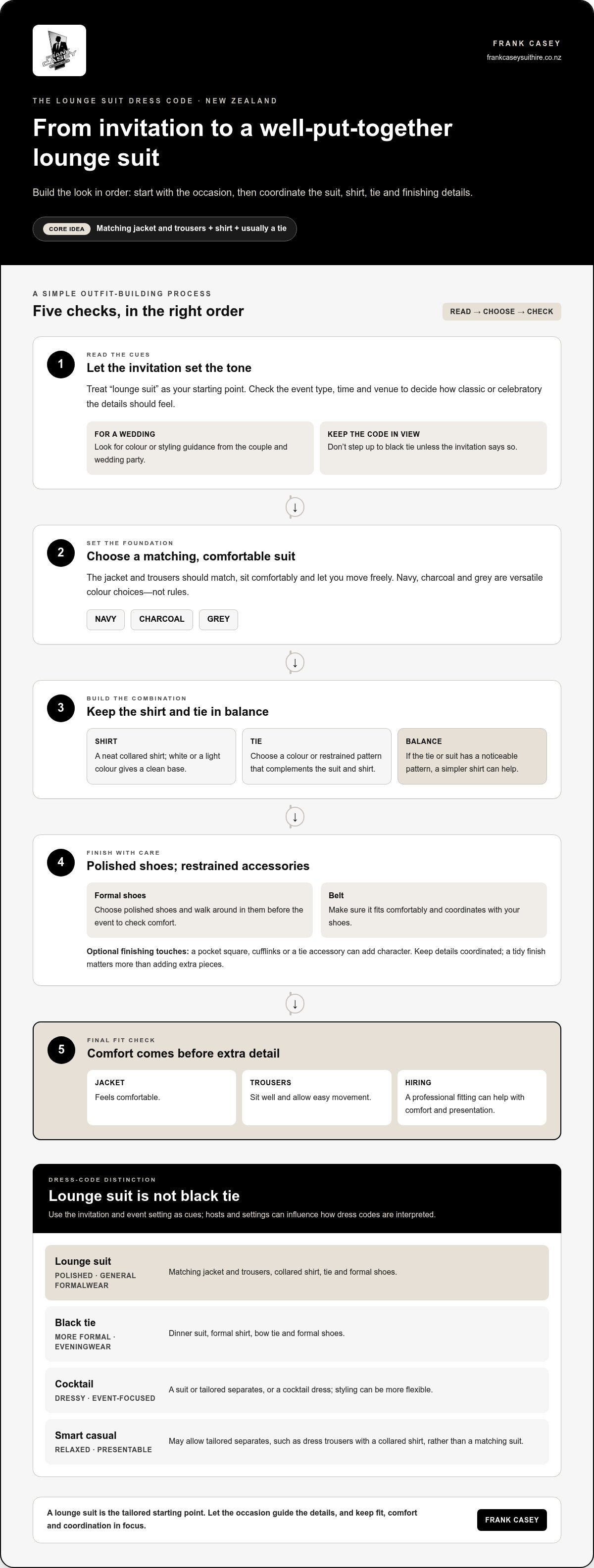
The core lounge suit outfit is a well-fitting matching jacket and trousers, a neat collared shirt, a considered tie and polished formal shoes.
Choosing a suit, shirt and tie combination
Navy, charcoal and grey are versatile suit colours, not rules. Choose a shade that suits the occasion and feels right for you. A white or light-coloured shirt gives you a clean base. Then choose a tie in a complementary colour or a restrained pattern.
Keep the overall balance in mind: if the suit or tie has a noticeable pattern, a simpler shirt can make the combination feel more cohesive. Before deciding on colours for a wedding, check the invitation for wedding-party colours or other styling cues. A specialist modern lounge suit guide also explores how fit, fabric and colour shape the overall look.
- Suit: Check that the jacket and trousers match, sit comfortably and allow you to move freely.
- Shirt: Choose a clean, neat collared shirt that works with the suit colour.
- Tie: Pick a colour or pattern that complements the suit and shirt.
- Shoes and belt: Choose polished formal shoes and a comfortable belt that coordinates with them.
Shoes and accessories that complete the look
Polished formal shoes are a reliable choice for most lounge suit occasions. Walk around in them before the event to make sure they’re comfortable enough to wear throughout. Check that your belt fits comfortably and doesn’t disrupt the line of your outfit. A tidy finish matters more than adding extra pieces.
Keep accessories restrained and coordinated. A pocket square, cufflinks or a tie accessory can add character, but choose details that complement the suit. For ideas on finishing touches, see this formal accessories hire guide.
Fit brings the whole combination together. If you’re hiring for an event, a professional fitting can help you feel comfortable and look well-presented without buying an entire outfit. Explore suit hire options as one practical way to get event-ready.
Lounge suit vs black tie, cocktail and smart casual: what changes?
Dress codes can sound similar, but they signal different levels of formality and outfit choices. This comparison makes the lounge suit dress code NZ easier to interpret. Use it as a guide, as hosts and event settings can influence what each term means.
| Dress code | Typical formality | Common outfit direction |
|---|---|---|
| Lounge suit | Polished, general formalwear | Matching jacket and trousers, collared shirt, tie and formal shoes |
| Black tie | More formal eveningwear | Dinner suit, formal shirt, bow tie and formal shoes |
| Cocktail | Dressy and event-focused | A suit or tailored separates, or a cocktail dress; styling can be more flexible |
| Smart casual | Relaxed but presentable | May allow tailored separates, such as dress trousers with a collared shirt, rather than a matching suit |
Is lounge suit the same as black tie?
No. Black tie is generally more formal and centres on a dinner suit. A lounge suit is built around a matching jacket and trousers with a shirt and usually a tie. A lounge suit doesn’t mean a tuxedo or dinner jacket. For more detail on eveningwear, read the black tie dress-code guide. Follow the invitation’s wording rather than treating the two terms as interchangeable. For further background, the Lounge Suit Dress Code reference explains the classic conventions.
How does lounge suit differ from cocktail or smart casual?
Cocktail attire is dressy and tied to the occasion, but it can allow more variation in colour, silhouette and accessories. Smart casual usually gives you more freedom to combine tailored pieces without wearing a matching suit. Lounge suit sits between those approaches: the matching suit sets a more defined level of formality.
Conventions aren’t identical at every function. If the invitation pairs a dress code with extra guidance, use that detail to fine-tune your outfit. For an event that calls for formalwear, suit hire is a practical way to get a professionally fitted outfit without buying a whole suit.
Adapting lounge suits for weddings, work and functions
The same lounge suit can work for different events, but the details should reflect the occasion. Use this quick sequence before choosing what to wear:
- Reread the invitation: Look for dress-code notes and any extra styling guidance.
- Identify the occasion: A wedding, work function and evening celebration may call for different finishing touches.
- Refine the outfit: Adjust your shirt, tie, accessories and colour choices to suit the setting.
This approach helps you apply the lounge suit dress code NZ thoughtfully, instead of assuming every event expects the same outfit.
What to wear to a wedding with a lounge suit dress code
Start with a well-fitting suit, then choose a shirt and tie that look polished together. Before settling on colours or accessories, check whether the couple has shared preferences for guests or the wedding party. As a guest, aim to complement the occasion without competing with the couple’s chosen styling.
If you’re part of the wedding party, coordinated outfits may be part of the plan. For guidance focused on grooms and wedding-party dressing, see the New Zealand wedding suit guide.
How to read the invitation and avoid common mistakes
Small details can shape your choices. Check for notes about ties, colours, ceremony timing or a theme, and let any additional instructions take precedence over general dress-code conventions. The venue and time can also help you judge whether to keep the outfit classic or make it more celebratory.
For a work function, aim for a neat, coordinated look suited to the event rather than simply wearing your everyday office outfit. A restrained tie or carefully chosen accessory can make a familiar suit feel occasion-ready. For other formal functions, use the host’s wording and venue as cues, not assumptions. If the invitation specifically requests a lounge suit, don’t substitute a dinner jacket, which points to a different level of formality.
Hiring can be a practical way to dress appropriately for a particular occasion without purchasing an entire outfit. A professional fitting can also help the suit feel comfortable and look well-presented. Explore suit hire for your event.
Getting lounge suit dress code ready: fit, hire and final checks
A final check before you leave helps your outfit look considered and feel comfortable throughout the event. For the lounge suit dress code NZ invitations call for, fit matters as much as the individual pieces. A jacket that pulls across the shoulders or trousers that need constant adjusting can distract from an otherwise polished look.
What should a well-fitting lounge suit feel like?
Your shoulders should sit comfortably within the jacket, with enough room to move your arms naturally. Fasten the jacket, then sit, stand and walk in it to check that it doesn’t feel restrictive. Trousers should stay secure at the waist and finish neatly over your shoes, without dragging or needing repeated adjustment. This professional suit fitting guide explains what to look for in a balanced fit.
Use this checklist before the event:
- Fit: The jacket feels comfortable through the shoulders and allows easy movement.
- Trousers: They sit securely and fall neatly over your shoes.
- Shirt: It’s clean, pressed and sits neatly beneath the jacket.
- Accessories: Your tie and other details coordinate with the suit rather than competing with it.
- Shoes: They’re polished, comfortable and ready to wear for the event.
Should you hire or buy a lounge suit?
Think about how often you expect to wear a suit. Hiring can suit a one-off event, such as a wedding or formal function, especially if you’d rather not purchase a whole outfit for occasional use. Suit hire includes a professional fitting and post-event cleaning, making it a practical option when you need an event-ready look without adding a suit to your wardrobe.
Buying may make more sense if you expect to wear a suit regularly for work, events or both. A suit you’ll wear often can become a useful part of your wardrobe. The right choice depends on your plans and how frequently formalwear features in them.
Once you’ve considered the occasion, fit and likely wear, the choice is straightforward. If hiring suits your needs, explore Frank Casey’s suit hire and formalwear as a practical next step.
Get event-ready with confidence
The lounge suit dress code NZ is easier to get right when you start with the invitation, choose a well-fitting matching suit and finish with coordinated details. It’s a polished choice for many occasions, but it isn’t the same as black tie. Let the stated dress code guide your decisions.
Fit is key to looking sharp and feeling comfortable throughout the event. Check that your jacket allows natural movement, your trousers sit neatly and your shirt, accessories and shoes are ready to wear. If you only need formalwear for a particular occasion, hiring can be a practical alternative to buying an entire outfit.
Frank Casey offers suit hire and formalwear for customers across New Zealand. Suit hire includes a professional fitting and post-event cleaning, with nationwide delivery and service. Explore Frank Casey’s suit hire and formalwear to find an option for your event. With the invitation as your guide and the right fit, you can arrive feeling comfortable, polished and ready to enjoy the occasion.
Frequently Asked Questions
What is the lounge suit dress code in New Zealand?
In New Zealand, a lounge suit dress code generally means a matching suit jacket and trousers worn with a shirt, usually a tie, and formal shoes. It’s polished daytime or general formalwear, less formal than black tie. Treat the invitation as your guide, as the event, venue and any extra notes can influence how traditional or relaxed your outfit should feel.
Does lounge suit mean I need to wear a tie?
A tie is a common choice for a lounge suit and helps create a formal, coordinated look. Unless the invitation says otherwise, wearing one is a reliable way to meet the expected level of polish. Consider the event and any styling notes before choosing the colour or pattern. If the host gives specific instructions, follow those rather than relying on a general dress-code convention.
Is a lounge suit the same as a tuxedo or dinner suit?
No. A lounge suit is a matching jacket and trousers, typically styled with a collared shirt and tie. A tuxedo, also called a dinner suit, is associated with black tie and is more formal eveningwear. The terms aren’t interchangeable, so follow the exact wording on your invitation. If it says “lounge suit”, a dinner suit may feel more formal than the event calls for.
Can I wear a lounge suit to a wedding?
Yes, a lounge suit is suitable for a wedding that specifies this dress code. Choose a well-fitting suit and a shirt-and-tie combination that works for the ceremony and celebration. Read the invitation for colour preferences, theme details or guidance about the wedding party. As a guest, aim for a polished look that complements the event without drawing attention away from the couple.
What shoes should I wear with a lounge suit?
Polished formal shoes are a dependable choice with a lounge suit. Choose a pair that coordinates with your suit and belt, and make sure it’s comfortable enough for standing, walking and dancing during the event. Clean and polish your shoes before you go. The invitation and setting can help guide how formal the overall outfit should feel, but tidy footwear completes the look.
Can I wear a lounge suit without a tie?
You can, but a tie is the conventional choice for a lounge suit, so leaving it off may make the outfit feel less formal. Check the invitation for guidance, then consider the event and venue. If you decide to go without one, keep the rest of your outfit sharp: wear a clean collared shirt, a well-fitting suit and polished shoes. A tie-free look won’t suit every occasion.
Should I hire or buy a lounge suit for an event?
Hiring can be practical if you need a suit for an occasional event and don’t want to purchase a whole outfit. Frank Casey suit hire includes a professional fitting and post-event cleaning. Buying may suit you better if you expect to wear a suit regularly for work or future functions. Consider how often you’ll use it, then choose the option that best fits your wardrobe needs.


