

What if the suit size you usually wear is the wrong place to start? A men's formal wear size chart NZ shoppers can use is a guide to measurements, not a guarantee that every brand or garment will fit the same way. Suit sizing isn’t standardised in New Zealand, so your usual clothing size may not match the chart in front of you.
That can make choosing formalwear online feel uncertain. A jacket might fit across the chest but pull at the shoulders, or the trousers may sit awkwardly at the waist. Accurate measurements give you a more reliable starting point than a familiar size label.
This guide explains how to measure your chest, waist and neck, and how to read a chart without relying on your everyday size. You’ll also learn why jacket length and the specific garment matter, and how to use your measurements to prepare for a professional fitting. Whether you’re choosing a suit to buy or hire for a wedding, school ball or another formal occasion, you can use these steps to plan for a more comfortable fit.
Key Takeaways
- Use a men's formal wear size chart NZ as a garment-specific guide, not a direct match for your everyday clothing size.
- Take measurements with a flexible tape measure, close-fitting clothing and a natural stance for more consistent results.
- Compare the chart fields for jackets, trousers and shirts, as sizing labels and conventions can differ between garments and brands.
- Before your event, record your measurements, identify the garment and chart you’re using, and allow time for a professional fitting.
- Frank Casey offers formalwear to hire and buy, with professional fitting included in suit hire.
Men’s Formal Wear Size Chart NZ: What the Measurements Actually Tell You
A size chart connects a garment size with stated body or garment measurements. Use a men's formal wear size chart NZ as a starting point, not a promise that the same label will fit identically across brands. There is no single standard suit size chart in New Zealand. Brands can use different measurements, cuts and fit preferences.
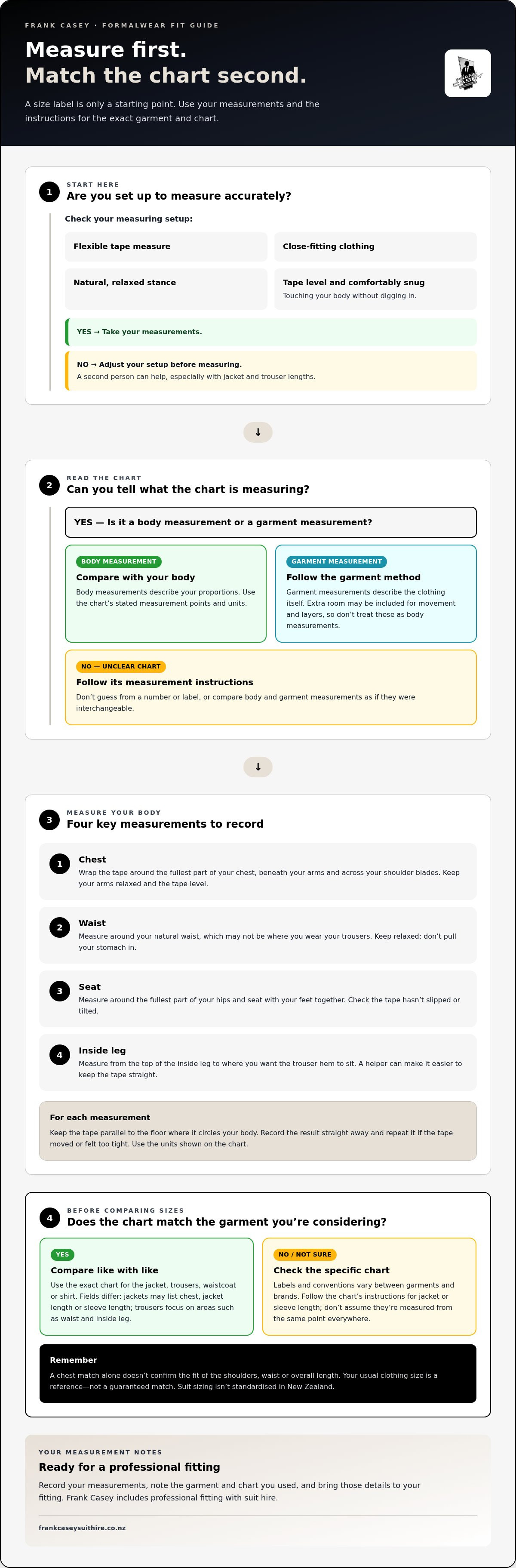
Start by checking what the chart measures. Body measurements describe your body, while garment measurements describe the clothing itself. A jacket measured around the garment, for example, includes extra room beyond the body measurement to allow movement and accommodate layers. Don’t compare the two as if they were interchangeable. If the chart doesn’t make the distinction clear, follow its measurement instructions instead of guessing from a number or label.
Chest sizing has a long association with men’s clothing, including U.S. standard clothing sizes, whose history includes measurement systems developed for military uniforms. This helps explain why chest is a key reference for jackets, but it doesn’t create a universal standard for modern formalwear. A chest match alone won’t tell you whether the shoulders, waist or overall length will feel right.
Which measurements matter for a formal suit?
Common suit-sizing references include chest, waist, seat and inside-leg measurements. Jacket charts may also include jacket length or sleeve length, while trouser charts focus on different areas. The fields and labels vary by garment and brand, so check what each entry refers to before comparing sizes.
Waistcoats and shirts have their own fit considerations. A waistcoat sits close to the body, while a shirt chart may include neck or sleeve measurements. Don’t assume that a measurement point applies to every chart. Follow the instructions for the specific item, and avoid using example size values from a different brand or garment.
Why your usual clothing size may not translate directly
A casual shirt size, trouser size and formal jacket size describe different garments and may use different sizing conventions. Cut matters too: a closer-fitting shape can feel different from a more relaxed one, even when both are intended for similar body measurements. The room allowed for movement and layering can also affect how a garment feels.
Body measurements are more useful than a remembered label when comparing charts. Treat your usual size as a reference, then compare your measurements with the chart for the exact jacket, trousers, waistcoat or shirt you’re considering. This gives you a more dependable starting point before a professional fitting.
How to Measure for a Men’s Formal Wear Size Chart
Accurate measurements make it easier to use a men's formal wear size chart NZ and give you useful information for a professional fitting. Use a flexible tape measure over close-fitting clothing. Stand naturally and keep the tape level and comfortably snug, touching your body without digging in. A second person can help, particularly with jacket and trouser lengths, where it can be difficult to check that the tape is straight.
Take and record each measurement in the units shown on the chart. Don’t use a labelled size from another garment as a substitute. It won’t tell you your body measurements.
Measure your chest, waist and seat accurately
- Chest: Wrap the tape around the fullest part of your chest, passing it beneath your arms and across your shoulder blades. Keep your arms relaxed and check that the tape sits level all the way around.
- Waist: Measure around your natural waist, which may not be where you wear your trousers. Keep your posture relaxed and avoid pulling your stomach in.
- Seat: Measure around the fullest part of your hips and seat, with your feet together. Check in a mirror or ask someone to make sure the tape hasn’t slipped or tilted.
- Inside leg: Measure from the top of the inside leg down to the point where you want the trouser hem to sit. A helper can make it easier to keep the tape straight.
For each body measurement, keep the tape parallel to the floor where it circles your body. Write down the result straight away, and repeat the measurement if the tape moved or felt too tight.
Check jacket length, sleeve length and trouser fit
A chart may ask for jacket length, sleeve length or additional trouser details. These measurements may refer to your body or to the garment itself, so follow the instructions for the exact chart. Don’t assume “sleeve length” or “jacket length” is measured from the same point across all brands.
If a chart asks you to measure a jacket or trousers, lay the garment flat and use the method stated in the chart rather than wrapping the tape around your body. The distinction matters: garment measurements may include room for movement, while body measurements describe your proportions. Consumer NZ’s guide to clothing label regulations covers garment information such as fibre and care details, which is separate from taking fit measurements.
Once your notes are ready, use them to prepare for a fitting. Frank Casey includes professional fitting with suit hire. Explore Frank Casey formalwear options.
How to Read NZ Suit Sizes and Choose Between Formalwear Sizes
A chart is useful only when you’re comparing like with like. Suit sizing isn’t standardised in New Zealand, and brands may use different labels or measurement conventions. A jacket chart might list chest size and jacket length, while a trouser chart focuses on waist and inside leg. Some labels also describe the garment’s cut or length, so read the chart notes before choosing a size.
| Garment | Chart fields to look for | What to compare |
|---|---|---|
| Jacket | Chest, jacket length, sleeve length | Your body measurements and the chart’s stated jacket fit or length options |
| Trousers | Waist, seat, inside leg | Your measurements at the points specified by the chart |
| Shirt | Neck, chest, sleeve length | The measurements requested for that shirt, not the jacket chart |
Use the chart for the exact garment you’re choosing. A jacket size label won’t automatically tell you which trouser size to select, even if the items are intended to be worn together. Compare each garment with its own chart instead of assuming one size applies throughout.
What if your measurements sit between two chart sizes?
Check the chart’s measurement ranges and note where each of your measurements falls. Don’t decide from one number alone. Your chest measurement may point to one jacket size, while the shoulders or waist raise other fit considerations. Think about whether you prefer a closer or roomier feel, but don’t treat that preference as a universal sizing rule. The garment’s cut and a professional fitting can help refine your choice.
How jacket, trouser and shirt sizes relate
Matching labels across separate garments don’t necessarily mean they’ll fit as a set. Jacket, trouser and shirt charts measure different parts of the body, and brands may use different conventions for each category. Check the relevant fields individually, then consider how the pieces work together when worn. If the outfit is for a black-tie event, the dress code also shapes which garments and accessories are appropriate. Our Black Tie Suit Hire NZ guide explains the formalwear considerations.
Keep your measurements beside the men's formal wear size chart NZ you’re using, and note which garment each result applies to. This gives you a clearer starting point for choosing formalwear and discussing fit at a professional fitting.
A Practical Size-Chart Checklist Before Your Formal Event
A chart result can help you prepare, but it can’t show how a suit feels as you move. Before an important event, use this checklist to turn your measurements into a practical fitting plan:
- Measure: Take and record the body measurements requested for the garment.
- Identify the garment: Make sure you’re looking at the chart for the jacket, trousers, shirt or waistcoat you need.
- Consult its chart: Compare your measurements with the relevant fields and notes, rather than relying on a familiar size label.
- Record the result: Keep your measurements and likely starting size together, and note anything you’d like checked during a fitting.
Allow time for a professional fitting before the event, particularly if you’re organising several formalwear pieces. The men's formal wear size chart NZ you consult helps you prepare, while a fitting gives you the chance to assess comfort, movement and how the full outfit works together.
What to prepare before a suit fitting
Bring your recorded measurements and mention any fit preferences or areas that feel uncomfortable in other suits. Explain the occasion and which pieces you need, such as a jacket, trousers, shirt, waistcoat, shoes or accessories. This helps focus the fitting on the outfit as a whole, not just one chart result. For more detail on what to expect, read our professional suit fitting guide.
How to judge comfort as well as appearance
Check how the jacket feels through the shoulders and whether it closes without strain. Then move naturally: raise your arms, reach forward and sit down. A jacket that looks smart while you’re standing still should also feel comfortable during ordinary movements.
Assess the trousers both standing and seated. Notice whether the waist feels restrictive, whether you can sit comfortably and whether the length works with your shoes. The mirror matters, but so does ease of movement. Tell the fitting professional about any pressure, pulling or looseness so they can advise on garment-specific adjustments and refine the fit.
Frank Casey’s suit hire includes a professional fitting, helping you move from chart research to an in-person assessment. Explore formal suit hire for your event.
Find Your Formalwear Fit with Frank Casey
Your measurements give you a useful starting point. Match them to the chart for the garment you need, then refine your choice with professional fitting guidance. Frank Casey offers formalwear to hire and buy, including black-tie, wedding, business and school-ball suits. Suit hire includes professional fitting services and post-event cleaning.
When formal suit hire may suit your plans
Hiring can be a practical option for a one-off event or when your formalwear needs change from occasion to occasion. The right outfit depends on the event: black-tie functions call for different formalwear choices than weddings, business occasions or school balls. Knowing the dress code and which pieces you need helps you plan what to try, whether you’re hiring or buying.
A men's formal wear size chart NZ can help you prepare, but measurements are only one part of choosing a suit. Use them alongside the event details and discuss your fit preferences during the professional fitting. You can then assess the garments in person rather than relying on a chart label alone.
Plan your next step with confidence
Have your recorded measurements ready when exploring formalwear, and note the occasion and pieces you’re looking for. Frank Casey serves customers across New Zealand, with nationwide service and online ordering, so you can explore formalwear options from wherever you’re based.
Ready to look at suits for your event? Explore formalwear hire and retail options.
Take the Next Step Towards a Confident Fit
A men's formal wear size chart NZ is most useful when you pair it with accurate body measurements and the chart for the specific garment. Use the result as a starting point, then consider how the suit feels through the shoulders, waist and legs when you move. A professional fitting can help refine your choice for the occasion.
Frank Casey offers formalwear for hire and purchase to customers across New Zealand. Suit hire includes professional fitting services and post-event cleaning, giving you support beyond choosing a size online. The range includes formalwear for weddings, black-tie events, business functions and school balls.
Have your measurements and event details ready, then explore Frank Casey formalwear hire and retail. Use the chart as your starting point and arrange a professional fitting for your event.
Frequently Asked Questions
How do I measure myself for a men’s suit size chart?
Use a flexible tape measure over close-fitting clothing, stand naturally and keep the tape level and comfortably snug. Measure your chest around its fullest part, your waist at your natural waist, and your seat around the fullest part of your hips. For trousers, measure the inside leg as directed by the chart. Record each result, and ask someone to help with measurements that are hard to take accurately on your own.
Are New Zealand and Australian men’s suit sizes the same?
Don’t assume New Zealand and Australian suit sizes match exactly. Size labels and measurement conventions can differ between brands, so a familiar label from one country may not correspond to the same fit elsewhere. For a men's formal wear size chart NZ, compare your body measurements with the chart for the specific garment and brand. Check the chart’s measurement units and instructions rather than relying on an assumed country-to-country conversion.
Should I choose a suit size based on chest measurement or my usual size?
Use your chest measurement as an important reference for a jacket, but don’t choose by chest or your usual size alone. The jacket’s shoulders, length and cut also affect how it sits, while trousers have their own waist and leg measurements. Compare all the fields requested by the relevant chart. Your everyday clothing label can be a rough reference, but measured results are a more useful starting point.
What should I do if my measurements fall between two suit sizes?
Compare each measurement with the chart’s stated ranges, then consider the garment’s cut and whether you prefer a closer or roomier fit. Don’t automatically size up or down based on a universal rule: your chest, shoulders or waist may point to different considerations. Note which measurements fall between sizes and raise them during a professional fitting, where the fit can be assessed on the garment itself.
Do jacket and trouser sizes need to match?
No. Jacket and trouser size labels refer to different garments and may use different measurement points, so matching numbers don’t guarantee a coordinated fit. Use the jacket chart for fields such as chest and jacket length, and the trouser chart for fields such as waist and inside leg. Check each piece individually, then assess how they sit together as part of the full formal outfit.
Can I use a regular clothing size to choose formalwear online?
Your regular clothing size can give you a rough reference, but it’s not a dependable substitute for measurements when choosing formalwear online. Casual garments and suits may have different cuts, sizing labels and fit allowances, and brands don’t necessarily follow the same conventions. Measure the areas requested, select the chart for the exact garment, and use its guidance to find a starting size before arranging a professional fitting.
How can I tell whether a formal suit fits properly?
A suit should feel comfortable as well as look balanced. Check that the jacket sits comfortably through the shoulders and closes without strain, then raise your arms and sit down to test movement. Try the trousers both standing and seated, and notice any pulling or restriction. A chart can guide your initial choice, but a professional fitting helps assess the garment on you and discuss any fit concerns.


