

The best starting size for alterations is the one that fits the widest part of your body, not the one that feels closest everywhere. A professional suit fitting service can assess how the garment sits and what can be adjusted. Choosing a size that fits comfortably at your widest point can help make alterations more practical.
It’s understandable to focus on areas that feel loose or look long, especially when you want a polished fit for an important occasion. But the fit through the shoulders, chest, waist and hips helps determine whether alterations are practical. Suit pants also need attention to their waist, seat, leg shape and length, as changing one area can affect how the trousers hang.
This guide explains how to choose a garment size with alterations in mind and what to consider when resizing suit pants. You’ll learn which fit issues are usually more straightforward to adjust, what a fitter looks at during an assessment, and how to decide whether your suit from Frank Casey is a suitable starting point for alterations.
Key Takeaways
- Choosing a garment that fits your widest point can make alterations more practical.
- Suit-pants adjustments depend on how the waist, seat, leg shape and length work together.
- A fitting helps identify which changes are practical and how they may affect the garment’s overall drape.
- Understand the difference between altering a ready-made suit and having one made to measure before choosing your next step.
- Frank Casey suit hire offers options for formal occasions, including weddings, business events and school balls.
Choosing a garment size for alterations
For clothing alterations, choose a size that fits the widest point of your body. Garments are generally easier to adjust when there is enough fabric to work with, so choosing a size that fits the widest point can help. For example, if a jacket fits your chest but pulls across your shoulders, a larger starting size may provide a better basis for alterations.
Assess the whole garment before focusing on a loose waist or long hem. Check that the jacket’s shoulder seams sit near your shoulders and the chest closes without pulling. For trousers, look at the waist, seat and thighs together. Suit alterations can refine a hem or take in a waist, but the fabric and construction affect what can be changed.
There’s no reliable basis here for naming Auckland suit fitting services with the “best” customer reviews. Compare review comments that specifically discuss fitting, communication and alteration results, rather than relying on star ratings alone.
Off-the-rack suits are ready-made in standard size ranges, then adjusted where the garment allows. Made-to-measure suits adapt a base pattern to a wearer’s measurements; bespoke suits are developed around an individual pattern and fitting process. The terms can vary between businesses, so compare what each process includes before deciding.
A fitting commonly considers chest, waist, hips, shoulders, sleeve length, inside leg and outside leg. Those measurements help assess proportion and mark changes, rather than simply selecting a labelled size. Frank Casey offers professional fittings in store, with no appointment required, or you can use the online measurement form.
Wear a shirt and shoes similar to those planned for the event. Bring the suit, trousers or shoes that need to work with the outfit, plus any reference garment you want the fit to resemble. For example, dress shoes help show the intended trouser break and hem length.
Before arranging alterations, clarify which work is included, how additional work is priced, and whether a deposit applies. Read the written terms for collection, cancellations, returns and garments changed through alterations. These details help you understand the arrangement before work begins.
For clothing repairs and alterations, describe the specific issue, such as a split seam, loose button or trouser hem. A fitting can then distinguish a straightforward repair from a change that affects the garment’s shape. Bring the item clean and dry, with matching shoes or layers where they affect the fit.
Listed task prices can provide a point of reference, but they do not establish a standard charge for every garment or alteration. The work involved and the garment’s construction may differ, so these listings should not be treated as directly comparable quotes or as a guarantee of what a tailor will charge.
When discussing a possible size adjustment, ask what the listed or quoted work covers and whether further changes would cost extra. Explain which areas feel restrictive and which have surplus fabric, and ask whether the planned adjustment can preserve the garment’s shape. A clear description helps the tailor assess the work before you decide whether the garment is a suitable candidate for alteration.
Suit-pants resizing
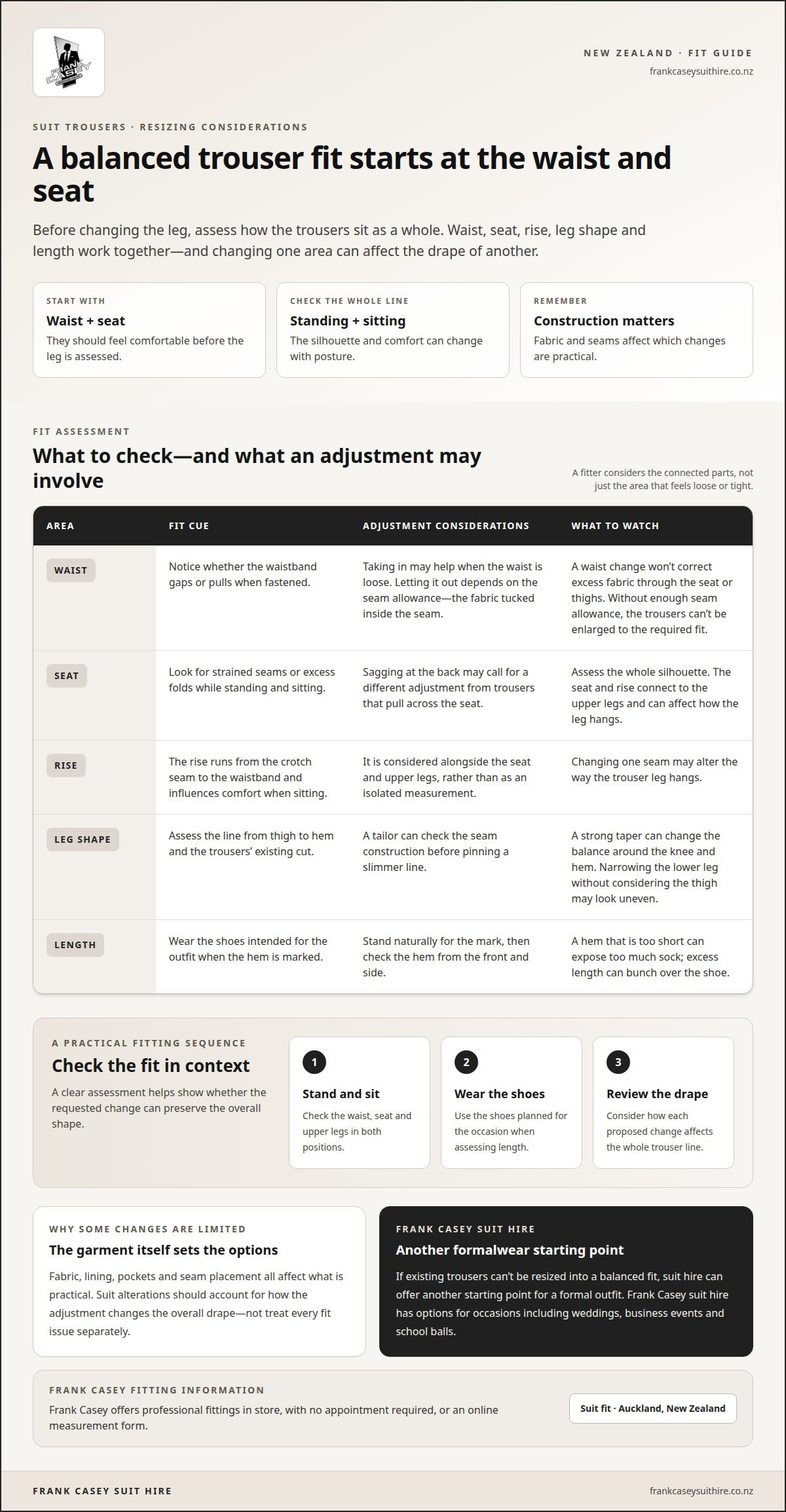
Suit trousers need to sit comfortably at the waist and seat before a tailor considers the leg. A waistband can often be adjusted, but the result depends on its construction and available fabric. For example, trousers that close neatly but sag at the back may need a different adjustment from a pair that pulls across the seat. The first step is assessing the whole silhouette while standing and sitting.
Waist adjustments change the circumference at the top of the trousers. Taking in a waistband can help if the waist is loose, but it won’t correct excess fabric through the seat or thighs. Letting the waist out depends on seam allowance, which is the fabric tucked inside the seam. If there isn’t enough allowance, the trousers can’t be enlarged to the required fit.
The seat and rise affect how the trousers sit between the waist and upper legs. Pull lines across the seat can signal tightness, while excess folds may indicate extra room. The rise, from the crotch seam to the waistband, also shapes comfort when sitting. These areas are connected, so changing one seam may alter the way the leg hangs.
Leg tapering narrows the trousers from the thigh towards the ankle. A tailor can assess the existing cut and seam construction before pinning a slimmer line. A strong taper may change the balance around the knee and hem. For example, narrowing the lower leg without considering the thigh can make the trousers look uneven, even if the ankle opening feels right.
Length is judged with the shoes intended for the outfit. Dress shoes affect where the hem falls and how much fabric rests over the shoe. Ask the fitter to mark the hem while you stand naturally, then check the result from the front and side. A hem that is too short can expose too much sock; excess length can bunch over the shoe.
- Waist: Check whether the waistband gaps or pulls when fastened.
- Seat: Look for strained seams or excess folds while standing and sitting.
- Leg: Assess the line from thigh to hem before requesting a taper.
- Length: Wear the shoes planned for the occasion when the hem is marked.
Fabric, lining, pockets and seam placement all affect what changes are practical. A fitting should identify how each proposed adjustment affects the overall drape, rather than treating every issue separately. If existing trousers can’t be resized into a balanced fit, suit hire options offer another starting point for a formal outfit.
Where can I get a suit fitted or tailored in Auckland?
A formalwear retailer can help you select a suit and assess its fit, while a tailoring and alterations specialist focuses on changing a garment you already own. The right option depends on whether you need a suit selected, measured, altered or made to order. For example, a loose trouser waist may need alteration, while an ill-fitting jacket calls for a broader assessment. Frank Casey offers suit hire or purchase, professional fittings, and custom-made suits for weddings.
Start by identifying the job. If the shoulders and chest fit but the sleeves are long, a retailer or alterations specialist can assess the sleeve adjustment. If the jacket pulls at the shoulders, a simple sleeve change won’t fix the underlying fit. Take the full suit, including trousers, so the fitter can consider how the pieces work together. Bring the shoes planned for the event if trouser length is part of the fitting.
Ask what the fitting includes before setting aside time. A fitting may involve trying on the garment, reviewing its shape while you stand and move, and pinning proposed changes. The work itself may happen later, so clarify whether another fitting or collection is part of the process. For a wedding suit, have the outfit assessed with the shirt and shoes you intend to wear.
Suit alteration work is limited by the garment’s construction. A tailor can assess seam allowance, lining, pockets and the placement of existing seams before recommending changes. For instance, taking in a jacket body can affect the position of its pockets, while narrowing trousers can alter their drape. A professional assessment should explain which requested changes work together and which may affect the finished silhouette.
When comparing Auckland options, focus on the work required rather than a general promise of a “perfect fit”. Look for clear explanations of the fitting steps, alteration scope, timing and any further fitting needed. Review comments about suit-specific work, such as trouser hems or jacket sleeves, offer more relevant detail than general feedback about unrelated purchases.
- For a suit you already own: Choose a tailoring service that assesses the garment before pinning changes.
- For a new outfit: Choose a formalwear retailer that can guide selection and fitting.
- For a major fit issue: Ask for an assessment of the whole garment, not just one seam.
A suit fitting service in Auckland is most useful when it connects the garment, the occasion and the alterations needed. Bring the complete outfit and explain where it feels uncomfortable or looks out of balance. That gives the fitter a clear starting point for assessing practical changes.
It describes sewing fabric lengths rather than a specified jacket or trouser alteration, so treat it as a separate example of tailoring work, not a suit-fitting quote. The listing provides no further details about garment type, fitting appointments, turnaround or what the task includes.
Which Auckland suit fitting services offer made-to-measure and bespoke suits?
In Auckland, start with a formalwear business that clearly describes its suit-making process. Made-to-measure and bespoke are different approaches, not interchangeable labels. A made-to-measure suit adapts an existing pattern to a customer’s measurements. A bespoke suit is developed around an individual pattern, with fittings shaping the garment during construction. Ask what the service includes before choosing either option.
Made-to-measure can suit someone whose proportions differ from standard sizing but who wants guidance selecting a style. The process generally begins with measurements and a choice of garment details. For example, the jacket length or trouser shape may be considered alongside the overall fit. The finished suit is still based on an existing pattern, so the provider’s explanation of adjustments matters.
Bespoke is a more individual process, built around the wearer and a pattern made for them. It may involve discussion of the design, measurements and fittings as the garment takes shape. This approach can be useful when the wearer has specific preferences or wants a suit developed for a wedding. Ask how the pattern is created and how fittings contribute to the final garment.
Before arranging a fitting, describe the occasion and the result you’re after. A groom may want a distinctive wedding suit, while someone attending a formal event may prioritise a particular silhouette. Bring reference images if they help explain the look, but discuss how the design works with your proportions and the event’s formality. A clear brief helps the fitting conversation stay focused.
Use these points to compare Auckland services:
- Pattern: Is the suit adapted from an existing pattern or created for the wearer?
- Fittings: At what stages will the garment be tried on and adjusted?
- Design choices: Which details can be selected, such as lapel shape or pocket style?
- Alterations: What changes are part of the process, and how are further adjustments handled?
Those answers help distinguish a custom-making process from buying a ready-made suit and arranging alterations. They also clarify how much input the wearer has over fit and appearance. Avoid choosing by the word “bespoke” alone; the pattern, fitting stages and design process explain more than the label.
For a wedding, let the suit’s intended use guide your decision. Consider the ceremony setting, how formal the event is and whether the suit needs to work with a partner’s outfit. A made-to-measure or bespoke service is most relevant when its process matches your fit or design priorities. If an existing suit already works well, targeted alterations may be the simpler route.
How long does a suit fitting and alteration take in Auckland?
There’s no single timeframe for every suit fitting or alteration in Auckland. The schedule depends on the work involved, the garment’s construction and whether another fitting is needed. A trouser hem is a different task from reshaping a jacket, while a multi-part adjustment may require more work. Some Auckland tailoring jobs are requested as soon as possible, but urgency doesn’t change the steps needed to complete the work.
Start by separating the fitting appointment from the alteration period. During the fitting, the garment is assessed, changes are discussed and adjustment points may be marked. The tailoring work happens afterwards, followed by collection or another fitting if needed. For example, a jacket sleeve adjustment needs assessment and sewing, while a request to alter sleeves and reshape the body involves more than one area.
The garment itself affects the schedule. Lined jackets require work through both the outer fabric and lining, while pockets or decorative details can complicate changes. A trouser hem may be more direct, but the tailor still needs to consider the shoes and intended hem position. A suit needing several alterations may also need a final try-on to assess how those changes sit together.
Availability and workload also influence when a garment can be completed. Auckland task listings include requests marked as soon as possible, showing that some customers have urgent deadlines. That wording isn’t a completion timeframe. For a wedding, school ball or business event, share the event date when arranging the fitting, so the required work can be considered against the deadline.
Use these steps to plan the process:
- Set the deadline: Identify the event date and allow time for a fitting and any follow-up.
- Bring the full outfit: Include trousers, jacket, shirt and the shoes planned for the occasion.
- Describe each change: Point out the specific issue, such as a loose waist or long sleeve.
- Confirm the collection plan: Understand when the adjusted suit will be ready and whether another try-on is needed.
Booking earlier gives more room to address fit issues without rushing decisions. If the date is close, prioritise essential changes and explain the deadline at the outset. The fitter can assess the garment and requested work, then discuss the next steps.
For an upcoming formal event, explore suit options for your occasion and plan the fitting around the date you need to wear it.
Frank Casey
Frank Casey can help you choose formalwear for an Auckland occasion, whether you’re considering a ready-to-wear suit, suit hire or a custom-made wedding suit. The guidance in this article can help you identify fit priorities, while the occasion helps narrow your options. Frank Casey offers Black Tie Suits, Wedding Suits, Business Suits and School Ball Suits, so you can explore styles suited to different events.
If you’re weighing up suit sizing, hire or purchase, or a custom-made option for a wedding, contact Frank Casey to discuss your formalwear needs.
Choose your next step with confidence
Your next step is to decide what you need the suit to do: suit an upcoming occasion, work with an existing outfit or reflect a particular style. That decision can guide a conversation about fit and whether hiring or purchasing is right for you. Frank Casey offers Black Tie Suits, Wedding Suits and Business Suits, with options for different formal occasions.
If you’re considering a suit fitting service in Auckland, share the event, the fit you’re aiming for and any concerns about the trousers or jacket. A clear starting point makes it easier to discuss suitable formalwear and the practical next steps without losing sight of how you want to feel wearing it.
Contact Frank Casey about suit fitting to discuss your requirements. A considered fit can help you feel ready for the occasion ahead.
Frequently Asked Questions
Are suit fittings available in Auckland for weddings, school balls and business wear?
Yes, Frank Casey offers professional fittings for wedding, school ball and business formalwear. You can explore Wedding Suits, School Ball Suits and Business Suits, with suits available to hire or purchase. For a wedding, consider how the outfit will coordinate with the rest of the wedding party; for a school ball or business occasion, discuss the event and preferred look during your fitting.
Which Auckland suit fitting services have the best customer reviews?
Compare review comments about fitting, communication and alteration results rather than relying on star ratings alone.


