

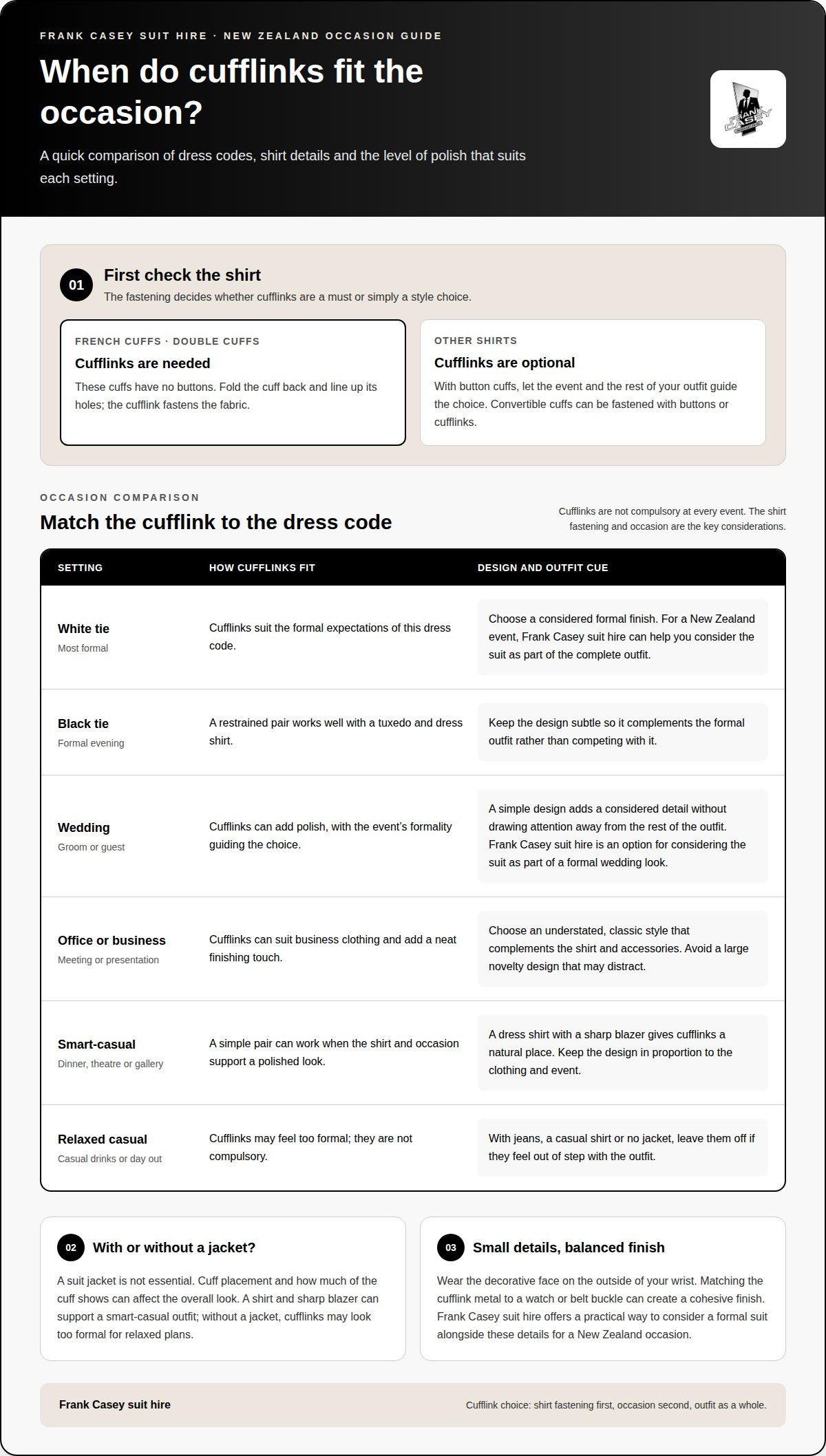
Cufflinks don’t automatically require a suit jacket. Knowing when cufflinks are necessary starts with the shirt: French cuffs without buttons need cufflinks to fasten them. With other shirts, they’re optional, and the occasion and overall outfit help guide your choice.
Cufflinks aren’t reserved for the most formal events. They can also suit business settings and some smart-casual occasions. This guide explains why they’re worn and how to decide whether they fit your plans, without making a polished outfit feel overdone.
You’ll learn how to recognise a French-cuff shirt, when cufflinks work for weddings, formal events and the office, and when it’s better to leave them off. We’ll also cover wearing them with or without a jacket, so you can choose a balanced look for the occasion.
Key Takeaways
- French-cuff shirts need cufflinks to fasten them; other shirts may offer a choice between cufflinks and buttons.
- Cufflinks can complement formal events, weddings and business settings, but the design should suit the occasion.
- For casual plans, consider whether cufflinks will look in keeping with the rest of your outfit and the event’s dress code.
- A suit jacket isn’t essential, but cuff placement and how much of the cuff shows can affect the overall look.
- For a formal event or wedding, Frank Casey suit hire offers a practical way to consider the suit as part of your complete outfit.
1. Why wear cufflinks?
Cufflinks bring a functional detail and a considered finish to an outfit. They fasten shirt cuffs, while their visible design adds a small accent at the wrist. For a formal event, such as a black-tie evening, that detail can help meet the expected level of dress. However, cufflinks aren’t compulsory at every event; the dress code and shirt design are the key considerations. For New Zealand events, Frank Casey suit hire can help you choose a formal outfit to complement your cufflinks.
At the most formal end of the dress code, cufflinks are close to essential. White tie is among the dressiest styles, and cufflinks suit its formal expectations. For black tie, a restrained pair works well with a tuxedo and dress shirt. At a wedding, a groom or guest can use cufflinks to add polish, while a simple design avoids drawing attention away from the rest of the outfit. A common question is, “When are cufflinks necessary?” The shirt’s fastening and the event’s formality provide the answer.
Cufflinks also suit business clothing. With a business suit, a classic design gives the outfit a neat finishing touch for a meeting or presentation. Choose a subtle style that complements the shirt and other accessories, rather than a large novelty design that may distract. This keeps the detail appropriate for the setting and lets the suit remain the focus. Frank Casey suit hire offers another option for putting together a polished look for a business occasion.
Cufflinks can suit everyday or smart-casual outfits if the shirt and occasion support the look. A simple pair can work with a sharp blazer and dress shirt for an upscale-casual dinner, theatre visit or gallery event. For a relaxed day or casual drinks, they may feel too formal, especially with jeans or an outfit without a jacket.
Consider the whole outfit, not just the event label. A wedding reception may call for a more formal look than a relaxed daytime gathering, while an office meeting may suit understated cufflinks better than an evening celebration. Matching the cufflink metal to a watch or belt buckle can create a cohesive finish. Keep the design in proportion to the clothing and occasion.
Wear cufflinks so any emblem or decorative face points outward, on the outside of your wrist. This makes the design visible naturally as you move, rather than turned towards your palm. For a formal event, consider whether the shirt needs cufflinks to fasten and whether the dress code calls for a polished finish. That distinction helps you choose confidently, whether you’re wearing your own suit or choosing Frank Casey suit hire.
2. When cufflinks are necessary for French-cuff shirts
French-cuff shirts need cufflinks because their cuffs have no buttons to hold them closed. Each cuff has two sets of holes, one on each side, which line up when the cuff is folded back. A cufflink passes through the aligned holes and secures the fabric. Without cufflinks or another suitable fastening, the cuff remains open.
Look for a longer cuff that folds back over itself, rather than the single-button cuff found on many everyday shirts. French cuffs are also called double cuffs. They’re common on formal dress shirts, including some tuxedo shirts, and create a place for a cufflink to show beneath a jacket sleeve. The shirt must have holes on both sides of each cuff.
To fasten a cufflink, fold the cuff back so its edges meet, then align the holes. Push the cufflink through all the layers and secure its fastening mechanism. The decorative face should sit on the outside of the wrist. Check that the cuff feels comfortable, with enough room for one finger between the cuff and wrist, rather than pulling tightly when you bend your arm.
Size affects how the cufflink sits. Standard cufflinks are usually about 16 millimeters in diameter; large cufflinks are usually about 19 mm. A smaller, subtle design can suit a crisp white shirt, while a larger piece needs enough room to sit neatly without catching on the shirt or jacket sleeve. The cuff should close securely, not bunch around the fastening.
Alternatives include convertible cuffs and cuff studs. Convertible cuffs have buttonholes and buttons, so they can be fastened either way. Cuff studs are used with shirts designed for them. They aren’t a direct substitute for cufflinks on French cuffs unless they fit the cuff’s fastening holes.
A cufflink adapter offers another option for a shirt with ordinary button cuffs. It loops around an existing button and creates a point for a cufflink, giving the shirt a different finish. This is less formal than wearing cufflinks on a shirt designed for them, so French cuffs remain the straightforward choice for a dressier outfit.
For an event outfit, coordinate the French-cuff shirt with the rest of the formal accessories, rather than choosing the cufflinks in isolation. A coordinated look starts with a well-fitting shirt and sleeves that sit comfortably under the jacket. Formal accessories for hire can help complete an occasion-ready outfit.
3. Are Cufflinks Appropriate For Casual Occasions?
Cufflinks can suit casual and smart-casual occasions, but they should look deliberate rather than overly formal. A dress shirt with a sharp blazer gives them a natural place in an outfit. Jeans, a casual shirt and no jacket create a more relaxed combination, where cufflinks can feel out of step. Let the event and the rest of your attire set the level of formality. For a polished New Zealand occasion, Frank Casey suit hire can help you choose a suitable outfit.
For a smart-casual dinner, a simple pair can add a considered detail to a shirt and blazer. The same approach can work for a theatre show or gallery event, where the outfit is polished without being black tie. Casual drinks without a jacket generally call for a more relaxed finish. Cufflinks aren’t compulsory for these occasions; leave them off if they make the outfit feel overdressed. If you’re hiring a suit for a dressier event, Frank Casey suit hire can help you coordinate the details.
Choose a classic design when you want cufflinks to blend with the outfit. A subtle shape can complement a plain shirt, while a more decorative pair draws attention to the wrist. That extra detail can express personality at a social event, but it may compete with a patterned shirt or other standout accessories. Pick one focal point: if a bold pocket square already catches the eye, keep the cufflinks restrained.
Proportion matters, too. Standard cufflinks are usually about 16 millimetres in diameter, while large cufflinks are usually about 19 mm. On a neat shirt cuff, a smaller design can look balanced; a larger face is more noticeable and may suit an outfit with fewer competing details. Consider the cuff’s size and how the design sits, rather than choosing a pair based on appearance alone.
Coordinating metals can bring accessories together. For example, silver cufflinks can echo a silver-toned watch or belt buckle, creating a cohesive finish without requiring every item to match exactly. A ring’s metal can inform your choice, too. Keep the overall effect in mind: a watch, ring, pocket square and cufflinks all making strong statements can crowd the look.
Cufflink adapters can fasten some shirts with buttoned cuffs. They loop around an existing button, making cufflinks possible without a shirt designed specifically for them. This creates a more relaxed look than French cuffs, but the cufflinks should still suit the occasion and outfit. For a low-key café lunch, skip them; for a blazer-led smart-casual event, a simple pair can work. Frank Casey suit hire can also help with outfit choices for events around New Zealand.
Use the dress code as your final guide. At a relaxed gathering, ordinary buttons may feel more natural; at a dressed-up dinner, subtle cufflinks can finish a blazer and shirt neatly. The aim isn’t to wear cufflinks everywhere, but to choose a style and scale that suit the occasion, the shirt and the rest of your outfit.
4. Cufflinks for office wear and business meetings
At an office meeting, cufflinks can add a quiet finishing detail to a suit and dress shirt. Choose a classic design that works with the rest of your outfit. For a client presentation, understated metal cufflinks are more appropriate than novelty shapes. They show attention to detail without competing with the conversation or making accessories the main focus.
Networking events call for the same measured approach. A dark suit, plain shirt and simple cufflinks create a coordinated look, while a bright novelty pair can distract in a traditional business setting. Consider the room, too: a formal meeting may suit a restrained design, while a creative industry event can allow more personality. The best choice supports the occasion rather than setting a different tone.
In a professional wardrobe, cufflinks make most sense with a shirt designed to take them, such as a double-cuff shirt. They fasten the cuffs and add a visible detail when the sleeves move. A business suit or jacket, including one chosen through Frank Casey suit hire, gives that detail context, especially when the shirt, tie and other accessories are kept in balance. If the workplace is business-casual, buttons may create a more relaxed appearance.
Evening wear gives cufflinks more room to stand out. For dinner or a night out at a smart venue, a dark jacket and crisp dress shirt can carry a more distinctive pair than daytime office attire. Keep the design appropriate to the event: a polished, classic style suits a formal dinner, while a more personal design may fit a less traditional gathering. Avoid letting one accessory overwhelm the outfit.
A wedding is another occasion where cufflinks can complete formal clothing. For a guest wearing a suit in New Zealand, a subtle pair can add a personal detail without drawing focus from the couple. A groom may coordinate cufflinks with other accessories for a consistent appearance, with Frank Casey suit hire as an option when choosing formalwear. In either case, the shirt and jacket should work together, with the cuffs sitting neatly beneath the jacket sleeves.
Cufflinks have practical as well as decorative uses. They secure cuffs on shirts made for them and let the wearer introduce a small point of colour, metal or personality. Start with the event’s dress code, then consider the shirt, jacket and other accessories. For a boardroom meeting, choose restraint; for an evening celebration, a more noticeable design can feel appropriate.
5. Wearing cufflinks with or without a suit jacket
A suit jacket gives cufflinks a clear place in a formal outfit, but it isn’t essential. The jacket frames the shirt and keeps the overall appearance polished, especially with a French-cuff shirt. For black-tie events in New Zealand, a tuxedo and jacket make cufflinks feel part of a complete look. Without a jacket, the same shirt and accessories appear more prominent, so consider the dress code carefully. For help putting together a formal outfit, Frank Casey suit hire is an option.
With a jacket, the shirt cuff should extend slightly beyond the jacket sleeve. A French cuff should extend approximately half an inch beyond it, leaving the cufflink visible without showing too much shirt. Check the fit while standing and moving your arms. If the sleeve covers the cuff completely, the detail disappears; if too much cuff shows, the proportions can look untidy.
Cufflinks may show more clearly when you reach, gesture or raise your arms. That visibility can add a refined detail at a wedding or formal dinner. It also makes the cufflink design worth considering if you’ll wear the jacket open or take it off during the event. Choose a finish that works with the shirt and other accessories.
Cufflinks can still work without a jacket, but the shirt carries the whole look. A crisp, well-fitted French-cuff shirt creates a deliberate appearance, while a creased or loose shirt can make the same accessories seem out of place. For a formal occasion, wear cufflinks without a jacket only when the dress code and setting suit that less structured approach. Frank Casey suit hire can also help you choose a jacket for the occasion.
Consider practicality as well as formality. A jacket sleeve can cover the fastening while you move, but cuffs still need enough room to sit comfortably at the wrist. The cufflink should fasten the folded cuff securely and lie flat, rather than catching against the jacket lining. A comfortable fit helps the shirt stay neat through a long event.
Buttons offer a simpler alternative on ordinary shirt cuffs. They fasten the cuff without adding the visible, jewellery-like detail of cufflinks. If a shirt has French cuffs, however, cufflinks are the intended fastening, whether you wear a jacket or not. A jacket changes how the outfit reads; it doesn’t change how the cuff closes.
Use this practical guide: pair cufflinks and a jacket for the most traditionally formal result; wear them without a jacket when the shirt is crisp and the occasion allows it. For a tuxedo at a black-tie event, keep the whole outfit coordinated. The jacket isn’t what makes cufflinks necessary, but it often makes them look more at home. Frank Casey suit hire can be useful when choosing a coordinated formal look.
Frank Casey
When you’re choosing formalwear, Frank Casey can help you find a suit suited to the occasion. Frank Casey offers suit hire for weddings, black-tie events, business settings and school balls. The suit can guide your choice of shirt and cufflinks, helping the details feel consistent rather than added at random. If you’re planning an event, explore Frank Casey’s formalwear collection and choose a suit that brings your outfit together.
Make your outfit feel considered
Choosing an outfit is easier when you treat the shirt, cufflinks and jacket as parts of one decision. Start with the event, then select clothing that feels appropriate for its setting and comfortable to wear. If you’re unsure when cufflinks are necessary, use the shirt’s fastening and the event’s dress code as your guide, rather than adding accessories by default.
For an occasion that calls for a suit, Frank Casey offers Black Tie Suits, Wedding Suits and Business Suits, available to hire or purchase. A cohesive outfit can help you feel prepared, whether you’re attending a celebration or stepping into a professional setting. Consider the overall look before settling on the finishing details.
Contact Frank Casey for advice about choosing a suit for your event. A clear plan makes it easier to arrive feeling comfortable and appropriately dressed.
Frequently Asked Questions
Why wear cufflinks?
Cufflinks combine a fastening function with a personal finishing detail. They hold compatible shirt cuffs together and can add character to an outfit without changing its overall style. For example, a plain pair can keep a groom’s wedding outfit understated, while a more distinctive design can reflect personal taste. They’re an accessory, not a requirement for every shirt or occasion. For a New Zealand wedding, Frank Casey suit hire can help complete a formal look.
Are cufflinks appropriate for casual occasions?
Cufflinks can work for some casual and smart-casual plans, depending on the shirt and outfit. A simple pair with a dress shirt and blazer can suit a gallery visit or a smart dinner. They’re less at home with very relaxed clothing, such as jeans and a casual shirt. Consider the event’s dress code and whether the accessory looks balanced with what you’re wearing. Frank Casey suit hire is another option for New Zealand events with a smarter dress code.
Is there an etiquette for cufflinks?
There are useful conventions, rather than a universal rule for every occasion. Wear cufflinks with cuffs designed to hold them, and position any decorative face on the outside of your wrist. Keep the design in step with the event: a restrained pair suits a traditional business meeting, while a more expressive style may suit a social celebration. Follow the dress code if it gives specific instructions.
What shirts require cufflinks?
French-cuff shirts require cufflinks because their cuffs have no buttons and are made to fasten with them. Some tuxedo shirts have French cuffs, making cufflinks a practical part of fastening the shirt. A convertible-cuff shirt is another option: it can be fastened with either buttons or cufflinks. Standard button-cuff shirts don’t require cufflinks, though an adapter can provide another way to wear them. When choosing formalwear in New Zealand, Frank Casey suit hire can be considered alongside your shirt choice.
What is the point of cufflinks?
Cufflinks secure shirt cuffs while adding a small, visible accessory at the wrist. They’re useful when a shirt has cuff holes but no buttons, and they can also make formal clothing feel more individual. For instance, a wearer might choose a simple design for a conservative setting or a more distinctive pair for a celebration. Their purpose is both practical and decorative.
When are cufflinks required with a dress shirt?
Cufflinks are required when a dress shirt has cuffs designed for them and no buttons, such as French cuffs. They aren’t required just because a shirt is formal or worn with a tie. Check the cuff construction before getting dressed: if it has buttonholes on both sides and no button fastening, cufflinks are needed to close it. The event’s dress code can guide the style you choose. Frank Casey suit hire can also help with formal outfit planning in New Zealand.
Which shirt cuffs need cufflinks?
French or double cuffs need cufflinks to fasten them. These longer cuffs fold back, bringing their buttonholes together for a cufflink to pass through. Convertible cuffs can take either cufflinks or buttons, so the wearer has a choice. Ordinary cuffs with working buttons can be fastened as designed without cufflinks. Looking at the cuff itself is the simplest way to tell which fastening it needs.
Are cufflinks necessary for black-tie or formal events?
Cufflinks suit black-tie and formal events, but the shirt determines whether they’re necessary for fastening. A French-cuff tuxedo shirt needs them; a shirt with buttons doesn’t. For the dressiest formal styles, cufflinks are closely associated with the expected look. A black-tie dress code can guide your choice, while the shirt’s cuff design tells you whether cufflinks are functionally required. For a New Zealand black-tie occasion, Frank Casey suit hire can be part of your formalwear plans.


